Musical skyscrapers afloat

Screen Shot 2016-06-29 at 5.37.05 PM.png

Painting by Geoff Hunt, artist for many O’Brian covers. (julianstockwin.com)

Here is a passage from The Nutmeg of Consolation, the 14th volume of Patrick O’Brian’s 20-volume naval novel, set in the Napoleonic era. Capt. Jack Aubrey and his surgeon friend Dr. Stephen Maturin, one evening in the South China Sea, are playing on their violin and ‘cello as they often do, this time enjoying a musical game that, it seems to me, can be compared to aspects of structure and creativity in classical architecture. (A skyscraper is a high triangular sail lofted to take advantage of a light wind.) Aubrey and Maturin are overheard on the other side of the bulkhead by the captain’s steward and his mate:

They tuned, and at no great distance Killick said to his mate, “There they are, at it again. Squeak, squeak, boom, boom. And when they do start a-playing, it’s no better. You can’t tell the one from t’other. Never nothing a man could sing to, even as drunk as Davy’s sow.”

“I remember them in the Lively [replies William Grimshaw]; but it is not as chronic as a wardroom full of gents with German flutes, bellyaching night and day, like we had in Thunderer. No. Live and let live, I say.”

“Fuck you, William Grimshaw.”

The game they played was that one should improvise in the manner of some eminent composer (or as nearly as indifferent skill and a want of inspiration allowed), that the other, having detected the composer, should then join in, accompanying him with a suitable continuo until some given point understood by both, when the second should take over, either with the same composer or with another. They, at least, took great pleasure in this exercise, and now they played on into the darkness with only a pause at the end of the first dog-watch, when Jack went on deck to take his readings of temperature and salinity with Adams and to reduce sail for the night.

They were still playing when the watch was set, and Killick, laying the table in the dining-cabin, said “This will stop their gob for a while, thank God. Keep your great greasy thumbs off the plates, Bill, do: put your white gloves on. Snuff the candles close, and don’t get any wax or soot on the goddam snuffers – no, no, give it here.” Killick loved to see his silver set out, gleaming and splendid; but he hated seeing it used, except in so far as use allowed him to polish it again: moderate, very moderate use.

He opened the door into the moonlit, music-filled great cabin and stood there severely until the very first pause, when he said “Supper’s on the table, sir, if you please.”

O’Brian’s ability to milk the quirks of class differences is well illustrated. That, along with what parallels may be drawn on innovation in classical design, exemplify the sort of literary dance that plays merrily (or otherwise) in the widest variety of keys throughout this series. O’Brian’s subtle weaving of contemporary prose with period inflection conveys the tone of Regency period English usage without (modernists will love this) any affectation of “copying the past”: the joy of the sound and the feel of history without the difficulty. The writing of this Englishman who pretended through most of his life to be Irish (at age 30 he changed his surname from Russ in 1945; he died in 2000) has been compared by respectable critics with that of Jane Austen and others of equal renown.

Screen Shot 2016-06-29 at 5.07.38 PM.png

Dr. Maturin and Capt. Aubrey (Paul Bettany, Russell Crowe) in the 2003 film “Master and Commander,” a disappointment to many Patrick O’Brian fans. (Warner Bros.)

Posted in Architecture, Art and design | Tagged , , , , , , | 1 Comment

Yale’s ‘edifice complex’?

Screen Shot 2016-06-28 at 6.19.13 PM.png

Rendering of new residential colleges under construction at Yale. (RAMSA)

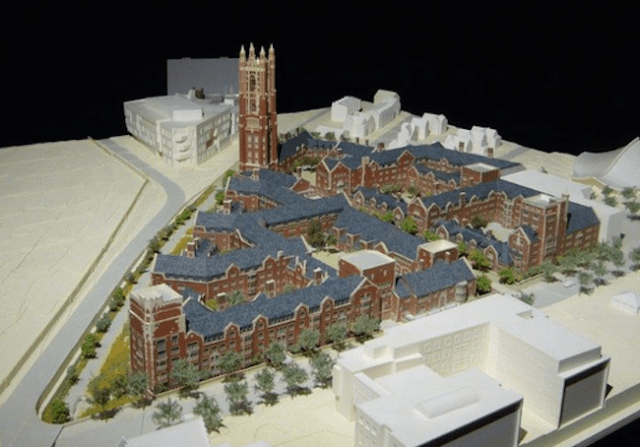
Hartford Courant architecture critic Duo Dickinson has written a fine piece on Yale’s two new residential colleges, under construction in New Haven. Yale’s expenditure of more than half a billion (b) to recapture the work of architect James Gamble Rogers’s eight pre-WWII colleges speaks well of the university’s public spirit, and adds to hopes that beauty is no longer verboten on the Yale campus or, for that matter, among the elite of the nation’s elite.

The work is of course by Robert A.M. Stern Architects, probably the world’s largest firm doing classical architecture. Stern himself recently stepped down as Yale’s dean of architecture, though one hopes that’s not exclusively the reason he got the job (RAMSA also does more than its share of modernist work). Dickinson seems to have spoken with Stern at some length, and with satisfying results. These are Yale’s first new colleges in half a century, making room for 800 more Yale students each year.

Though “Yale’s Edifice Complex: University Is Building a Modern History for its Future” contains an item or two of the obligatory architecture-critic snickers at revivalist classicism (the buildings are Collegiate Gothic), it is remarkable how straightforward it is in its admiration for this major project at Yale. Here is how he describes the design of the colleges’ exteriors:

The exteriors are equally sumptuous. The carefully scaled and shaped facades have hundreds of carved appointments and the kind of crafted stone and brick detailing that is unprecedented on this scale in any other facility built in this era. The landscaping lives up to the intricately burnished exteriors with generous plantings and trees.

Snicker though they may, university know-it-alls will someday come to realize that the donations their institutions receive from alumni ($250 million from alum Charles Johnson, the financier, toward the cost of these new colleges) will be generated by the feelings accrued over four years of study (and play) in what were once commonly called “these hallow’d halls.” They are rarely such memorable edifices anymore, and those colleges that understand the implications will go with the flow. Nobody ever accused Yale of stupidity.

Here is a RAMSA video of the plans for the two colleges that show the luxuriousness that Dickinson describes in splendid detail.

Screen Shot 2016-06-28 at 6.32.59 PM.png

Model showing detail and layout of colleges. (RAMSA)


Posted in Architecture | Tagged , , , , , | 2 Comments

Library of place in Newport

DSCN9165.JPG

Ronald Fleming’s library under construction in Newport.

Ronald Lee Fleming, an internationally recognized expert on placemaking, has a modest cottage on Bellevue Avenue that masks a series of interlocking gardens – each focusing on a “folly” or architectural toy, of no real utilitarian use but to set off the beauty of his grounds. I visited last year for a meeting of the Royal Society of the Arts, before Fleming had advanced far on his latest venture, a personal library of “place.” This year, the outside of the building – not large, and not a folly, really, as it boasts function – was almost complete.

Fleming has been working with Providence architect J.P. Couture (now president of the Providence Preservation Society) on its design and construction. The library and a partly done arcade reaching toward an existing greenhouse (not really a folly either) sit at one end of a long rectangular granite pool that runs by a cabana and concludes at a genuine folly – a domed octagonal temple.

Inside the library all is ahoo. But you can see how Fleming’s personal collection of perhaps 7,000 volumes about individual cities and towns – the kind of books, he says with a sort of self-deprecatory shrug, that nobody really wants to read, since either they already live there and know the place or they don’t live there and don’t care. I would beg to disagree. All places have visitors who want to learn of a place before they get there, or want to have a memento once they have left. Also, residents are often interested in what an observer has to say about where they live. And then there are those who might be interested in what the particular city or town contributes to the lore of cities and towns in general.

Fleming will have a little apartment upstairs, looking forward to the day when his children and their children take over the main house. A retreat. Makes sense – even without anticipating eviction by his descendants. Not that there aren’t other facilities on the grounds that might also serve!

The photo on top shows the exterior of the library seen from the temple. Below is an elevation of the library as seen from the point of view of someone standing behind the arcade. Below that is a view from a year ago, shot from behind the temple toward where the library would be built. Next is the view from the library to the temple, then a view over a pond toward the temple blocking the library beyond, then a close-up of the bow front of the library, and then a couple of interior shots that show how much work remains to be done. So I hope to supply readers with an interior shot of book-lined walls in the not-too-distant future.

Here is my post on last year’s visit to the grounds of Bellevue House.

DSCN7585.JPG

DSCN7636.JPG

DSCN9172.JPG

DSCN9150.JPG

DSCN9156.JPG

DSCN9170.JPG

DSCN9174.JPG

DSCN9173.jpg

Posted in Architecture | Tagged , , , , , , , , | 1 Comment

Brexit and architecture

Screen Shot 2016-06-24 at 9.23.05 PM.png

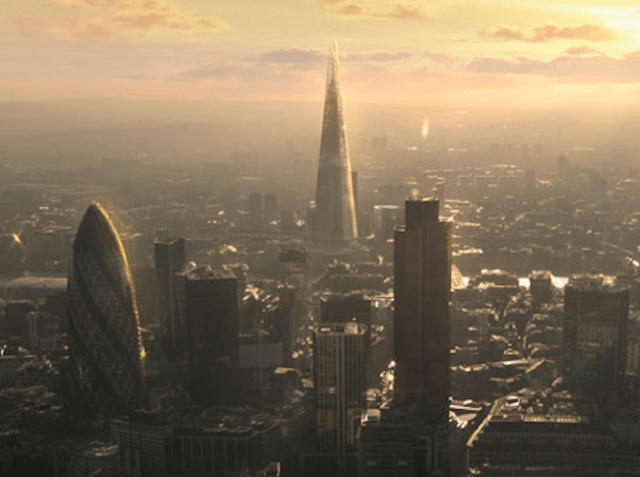
London’s skyline abandoned history and tradition decades ago. (Dezeen)

British voters’ startling decision to opt out of the European Union dismayed many British architects. Dezeen found no one to quote supporting Brexit in a story just before the vote. “We love EU, declare UK architects and designers ahead of referendum” quoted nobody who opposes Britain’s membership in the E.U. in its article, and tacked on statements by 15 architects and designers, all of whom opposed Brexit.

They could not find a single one who supported it? There can be little doubt that most favored the remain vote. But could they find not just one with the alternative opinion – if only to gin up some slight sense of verismilitude in their reporting? Or did they merely decide not to include any naysayers in the article? In short, was the June 22 report pure propaganda?

To belabor the obvious, it is this sort of elitism that fueled the opposition to remaining. I got an email today saying Brexit would redound to the benefit of architectural diversity – that is, tradition. He might well have been right. Modern architecture is the brand of the elite economic establishment whose unpopularity drove the Brexit. Is anyone on this side of the pond taking a look at the architectural implications of the vote? Let’s see what happens.

Posted in Architecture | Tagged , , , , , , , | 7 Comments

Betsky’s Venice Biennale

Screen Shot 2016-06-23 at 4.33.29 PM.png

Architecture is … more than just pretty buildings. – Aaron Betsky

If you follow Aaron Betsky, the chief critic for Architect, the mouthpiece of the American Institute of Architects, to the Venice Biennale, you get to experience the absence of pretty buildings – right smack in the kisser. And there you are in Venice! Betsky waxes poetic in “Postscript from the 2016 Venice Biennale” about buildings that do not even seem to be buildings – but rather scaffoldings inside or outside of buildings, or exclusive of buildings altogether. Buildings as buildings are secondary, to say the least, and you can be sure you won’t be confronted by any pretty ones, at least not inside architecture’s ritziest event, which happens in the city every two years.

Most intriguing to me … was the Polish Pavilion. Curators Dominika Janicka, Martyna Janicka, and Michał Gdak filled their space not with either buildings or representations of buildings, but with the stuff out of which you make buildings—and which Colin Rowe once thought should be the model for future architecture: Scaffolding. … Within this space, haunting in itself, they showed videos and photographs of Polish construction workers on site, highlighting the often dangerous and onerous conditions in which they work. The installation was effective both because it once again proved the old saw that a building under construction is much more beautiful than when it is finished, and because it raised an issue some critics have pointed out in far-away places like the Emirates and China, but that is just as germane in the Western world: Oppression and worker abuse are part of the building materials of many of our most beautiful structures.

You don’t say! A whole lotta subterfuge going on here.

Scaffolding provides not only a way to avoid discussing the look of a building but disguising it altogether. That has enabled the biennale, its exhibitors and its visitors to focus more intensely on the part of Betsky’s quote that I elided at the outset of this post: “Architecture is more than buildings, and more than just pretty buildings.” Just as at the inaugural Chicago Biennial earlier this year, the Venice one sought to browbeat itself for how little it was doing to cure the ills of the world while revealing how much it really is doing.

Upon reflection, my “take-away” from the usual sea of projects and people was this: The importance of the idea that architects have the power to use their knowledge and skills to do something good.

Color me impressed. What a powerful rebuttal to the late Zaha Hadid’s chief factotum Patrik Schumacher, who dished the Chicago affair for focusing on how architecture can help fix society. Personally, I agreed with him. I think making buildings beautiful, or at least contributing factors to a city’s beauty, is a great goal. Beautiful parts of town are among the few really great things that the poor can enjoy for free. And frankly, why shouldn’t the poor parts of town be beautiful? They used to be. Of course, architects these days don’t like thinking or talking about beauty, since it naturally focuses too much attention on how incapable they’ve become at creating it.

Fortunately, the biennale offers plenty of opportunity to drown sorrows in the usual bottles of liquid refreshment. Lo and behold, immediately after issuing his “take-away,” Betsky pops the cork on this biennale finale:

I was especially frustrated when, at some of the discussions that swirl around the Biennale in both informal and formal ways, architects fell back on blaming others for their failings. At the Dark Side for instance, Patrik Schumacher used this wine-fueled debate, organized at each Biennale by Robert White, to blame clients and outdated technologies for hindering designers’ abilities. I tried (in my somewhat inebriated state) to make it clear during this debate that I think architects need to stop blaming clients, budgets, sites, codes, or anything or anyone else for what they themselves do not achieve. They should come to this Biennale and learn from the many techniques and hopeful examples on display to figure out what they can do, and then go do it with the beauty that has the power to move our hearts and minds.

Go do it with beauty? Right. Did you read your article before you hit the send button? Might there be something you wanted to say at this “wine-fueled” debate about what have you not achieved, Mr. Betsky? Hmm?

Say what you will about the critic, he not only has fun channeling his inner masochist at the biennale every two years, but he also entertains his readers – though perhaps not in the manner he intends. Bless him for that. He may be architecture’s most consummate bloviator.

Here is my piece “Diss the Chicago Biennial!,” on Schumacher’s diatribe.

Posted in Architecture | Tagged , , , , , | Leave a comment

Lighting London bridges

Screen Shot 2016-06-22 at 3.11.11 PM.png

London’s Tower Bridge. (Flickr/Simon & His Camera)

Kristen Richards’s indispensable ArchNewsNow.com website today has a cry of outrage (“Are They Serious?”) from a lighting designer who is disturbed by that profession’s exclusion from a panel of judges for a design competition to light up 17 bridges crossing the Thames in London.

Consider me outraged, too!

I am not sure how these bridges are lit now, but the idea of changing the lighting according to the whims of a panel of people who, according to lighting expert Joachim Ritter, have “opinions” but not “expertise” on lighting is, as he puts it, “gross negligence.”

I feel Ritter’s pain because I assume that the purpose of the competition is to transform the bridges’ lighting from largely functional within a traditional ornamental context to some sort of artistic, interactive light show. This is a bad idea, and perhaps having a bona fide lighting expert on the panel can put the brakes on the judges’ aspirations. Not sure, but Ritter’s complaint seems to arise from within the reign of aesthetic sanity. He writes:

[In the] Call for Proposals the boundary between lighting design and light art seems to be more blurry than is helpful. The competition claims to be looking for a public art installation, while the strategic priorities contained in the brief give the impression that it is a lighting design they are looking for. To be honest, it is hard to decipher exactly what the expectations are.

I am not sure that London’s bridges have not already been turned into a ridiculous expression of lighting as “art.” Maybe a commission just wants to replace that with a different but equally idiotic scheme whose sole benefit is that its members can claim credit for it.

Lighting is one of those relatively inexpensive ways that cities can reinforce the strength of their character. Lighting can be used to highlight aesthetic features and to assure that those walking or driving on a street or a bridge have enough light to do so safely. In Rhode Island, the town of Barrington improved its appearance just by erecting elegant period lampposts at close intervals along County Road. It had a remarkable effect.

Two notably beautiful streets in Providence, Benefit and Westminster, each has a different set of period lampposts. The Victorian type, on Benefit, sheds an amber light that deepens the street’s historical ambiance at night. At the time, Ada Louise Huxtable, the architecture critic for the New York Times, called the lamp posts “faux.” Her contempt proves that they were quite nice. And they still are. The more urbany acorn style of period lamp post does the same for Westminster, though without the charming golden glow.

Providence recently muffed an opportunity to signal developers in a new economic development zone to offer superior architecture for their projects. Instead, the city planted cobrahead highway lamps along the streets of the zone, in effect asking the developers to build ugly. In recent years, the city has treated its street lighting system as a mechanism for saving money rather than for beautifying the city. Penny wise, pound foolish!

I hope Ritter manages to get himself or a colleague on the panel of judges for the London bridge-lighting competition. Shed some sense on light, please.


Posted in Architecture | Tagged , , , , , , , , | Leave a comment

Downtown’s apt. bandwagon

Screen Shot 2016-06-21 at 11.44.32 AM.png

The Case-Mead Building will house microloft-style apartments. (Providence Journal)

The Case-Mead Building, erected in 1859 and one of my favorite buildings downtown, is joining downtown’s microloft bandwagon. The building is still fondly known by some as Paolino World Headquarters, though the Paolino family’s property development company moved out to the nearby Fleet Center not long after Paolino père’s passing in 2012.

I recently ran into Paolino fils emerging from the building onto Dorrance Street, and I congratulated him for his recent purchase of the Tilden-Thurber Building (1895). After Paolino informed the group he was with that he had asked my advice on architecture often in the past, I remarked how rarely he had followed that advice. “You chose the colors for this building,” he replied, pointing up at the Case-Mead. Frankly, I don’t recall choosing those colors. They are splendid. But any colors would have improved the monochrome mustardly color that had been flaking off of its façades for years.

For years, Paolino and his father vied with Johnson & Wales University in the popular imagination as owner of virtually all the buildings still standing in downtown. The Paolinos demolished the Hoppin Homestead Building (1878), early homes to both RISD and Bryant College. It was torn down in 1978. No major old downtown buildings were razed after that until 2005, which saw the demise of the Providence Bank Building (1929, 1950) and in 2007 the Police & Fire Headquarters (1940). That was a remarkable stretch of preservation success. In the late 1980s, Paolino presided as mayor over the merciful demolition of Westminster Mall – as Westminster Street had been known since 1964 after it became one of the nation’s first and perhaps its ugliest pedestrian mall, which saw many of its beautiful buildings sheathed in faux modernist façades. After Paolino let cars back on the street, property owners started removing the faux façades, and a host of old buildings have since been turned into apartment complexes by Buff Chace, bringing a liveliness to downtown that had been absent since the late 1960s.

But that brings me back to the point from which I have strayed. The proposed 44 microloft apartments in the Case-Mead Building would be sized at 275 square feet and rent at from $900 to $1,200 a month. As at the Arcade (1828), which now serves as the local model for microloft housing, retail would continue on the ground floor. Next door, the Union Trust Bank Building (1901) is being transformed into apartments. Up Westminster, the Old Journal Building (1906) recently sold for $1.8 million and its neighbor, the Kresge Building, an Art Deco built in 1920 that still boasts its Casual Corner marquee, went in the same deal for $533,000. Both could end up hosting apartments. Even farther up Westminster, the Lapham Building (1904), an L-shaped building that cuddles Tilden-Thurber in its crook, is also being transformed into apartments.

Of course, the Industrial Trust (“Superman”) Building (1928) sits vacant, crying out to be filled with apartments, possibly including microlofts. Neither it nor the projects mentioned above would be financially viable without city and state help. That’s because while the cost of construction is as high here as in Boston, the rents here are half as much as in Boston. That’s a huge and unyielding bar to the incentive to redevelop. The buyer of the Old Journal Building, William Thibeault of Boston, told the Journal back in April that it would easily fetch up to $50 million were it located in the Hub.

Today’s Journal has an editorial, “Tough math for Superman building,” on the fate of the Industrial Trust that maps out with considerable intelligence the judgment that citizens must make in deciding whether that (or any) development project is a worthy candidate for government assistance. The historic tax credits that were revived as part of the new RebuildRI program were the most powerful economic development program in the state’s history until they were cancelled in 2008. Without them, Mayor Cianci’s bowling balls might still be hurtling down Westminster Street. Downtown’s revival shows what kind of return such spending can bring. Now it seems to be continuing at full throttle, and that is a good thing, not just for developers and property owners but for all Rhode Islanders.

Posted in Architecture, Development | Tagged , , , , , , | Leave a comment

Bridges to Father’s Day

Screen Shot 2016-06-20 at 4.07.17 PM.png

Captain McGinn heads upriver in Proud Mary on Father’s Day. (Photo by Christopher Garrison)

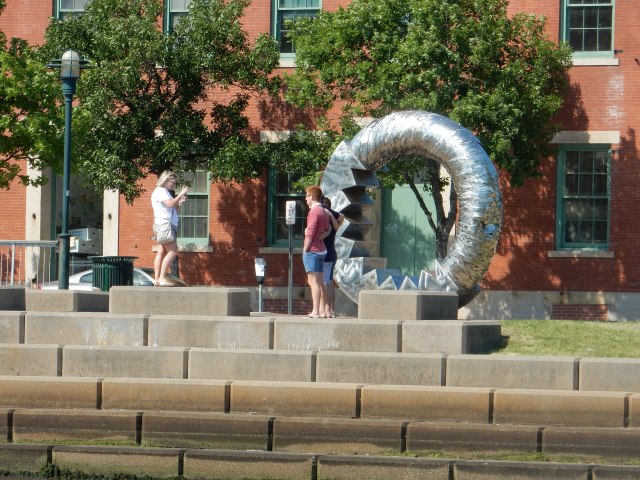
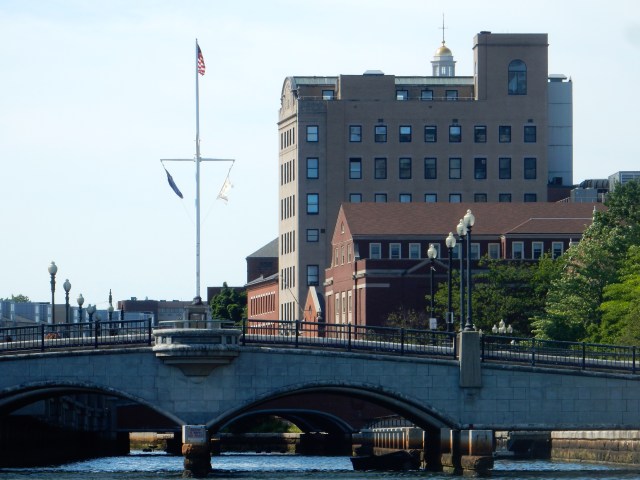
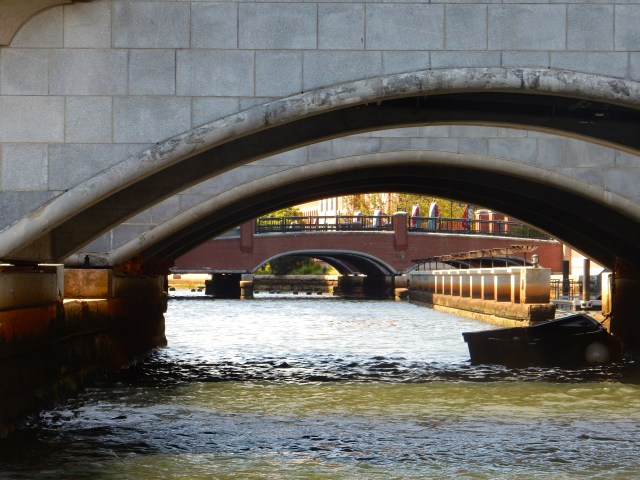
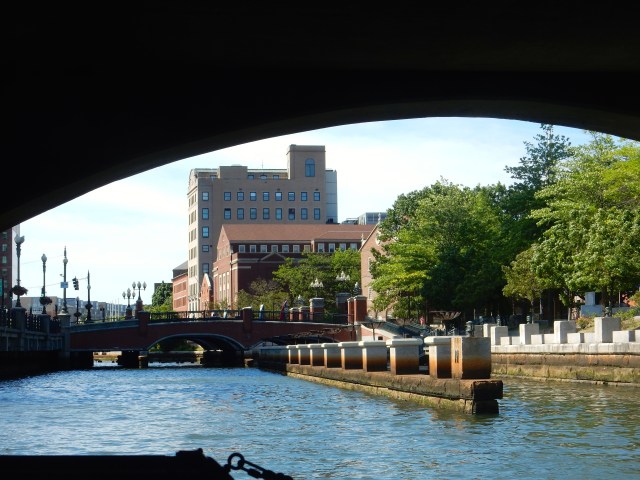
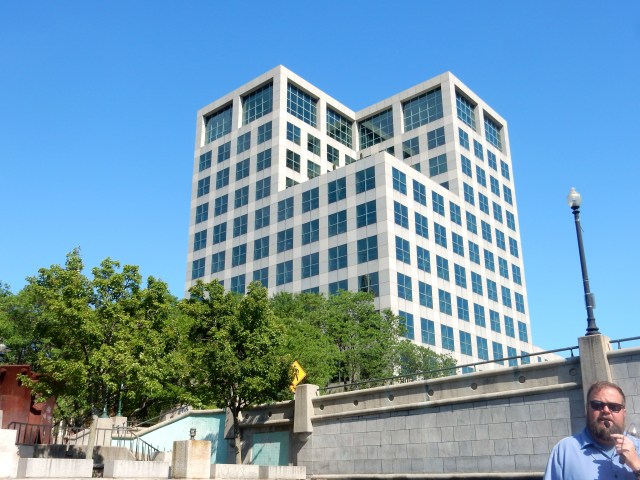
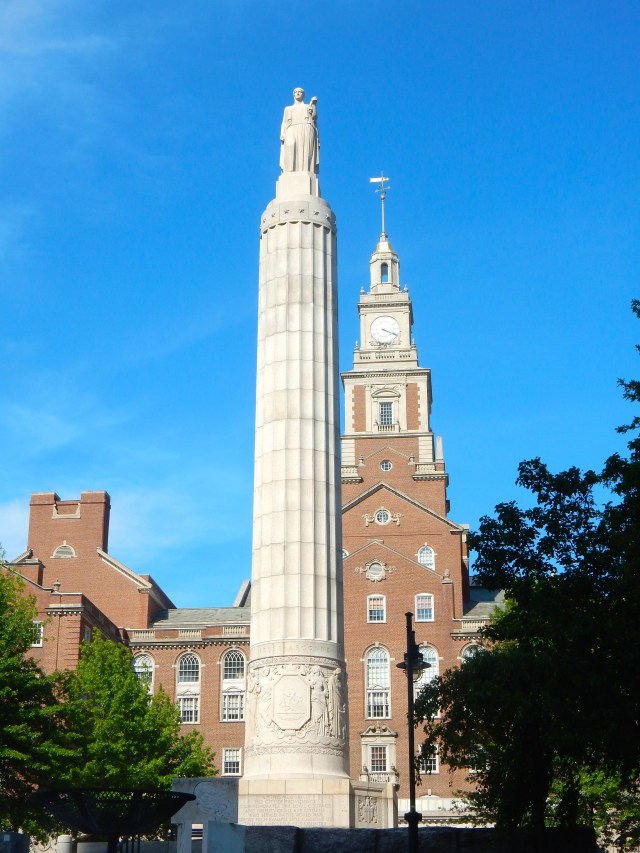
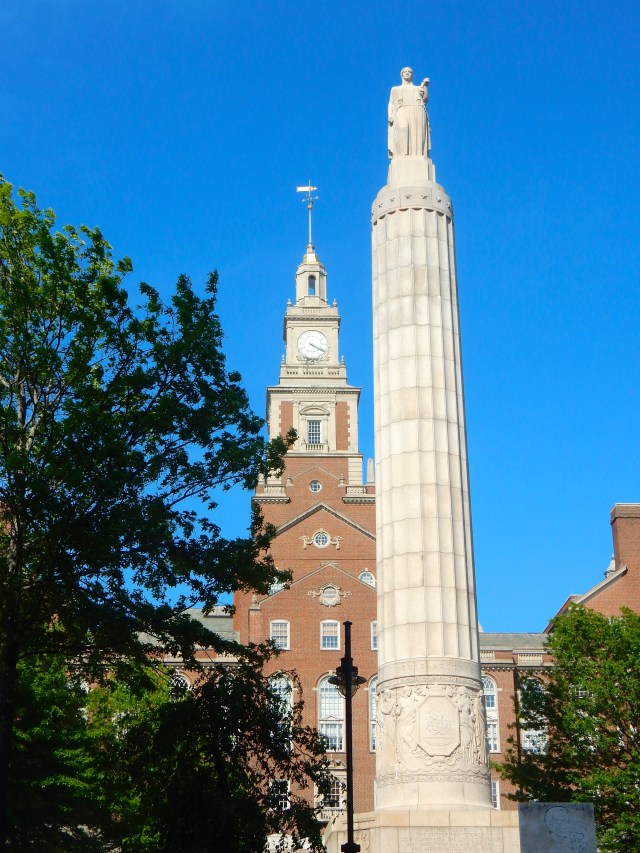
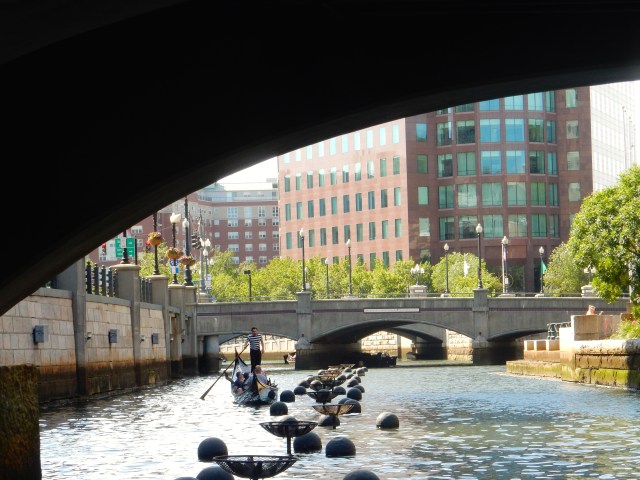
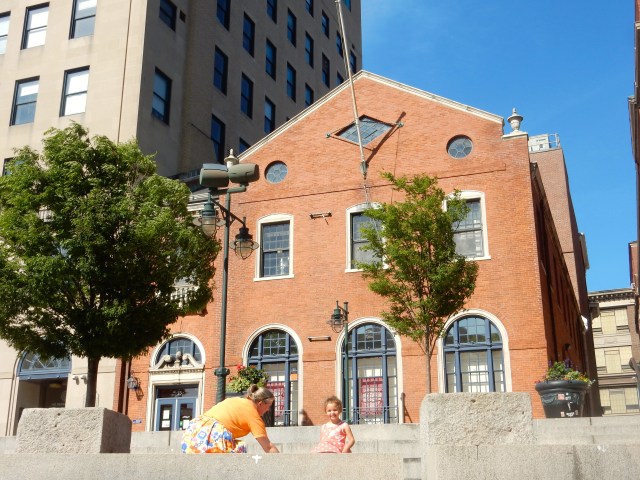
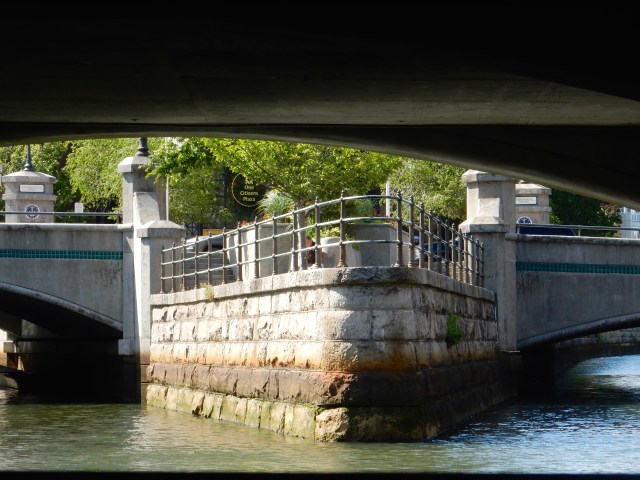
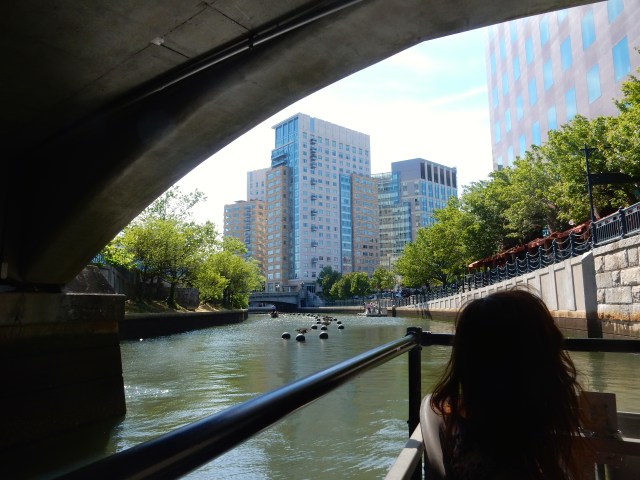
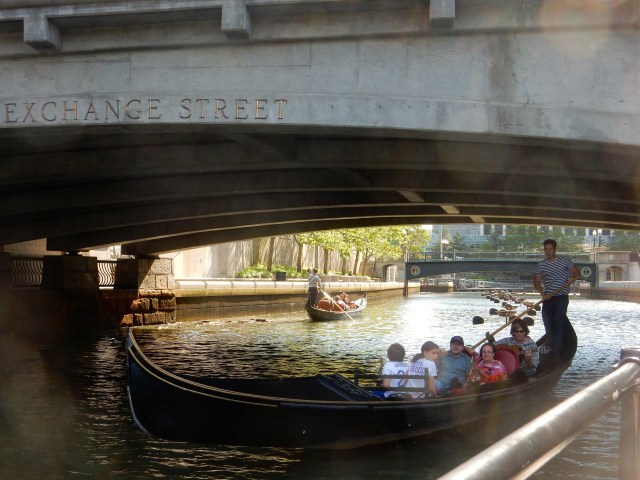
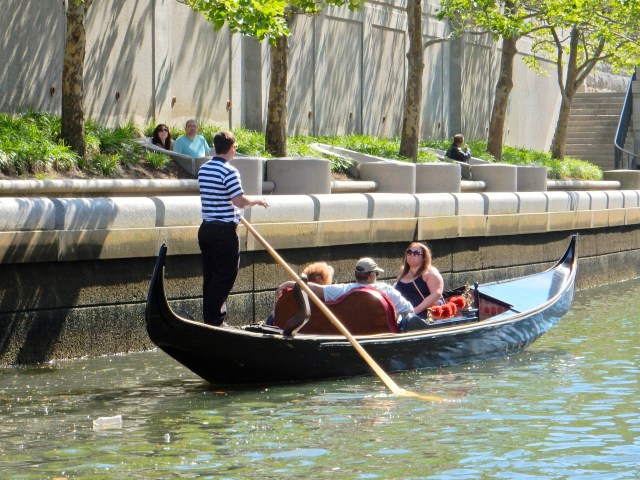
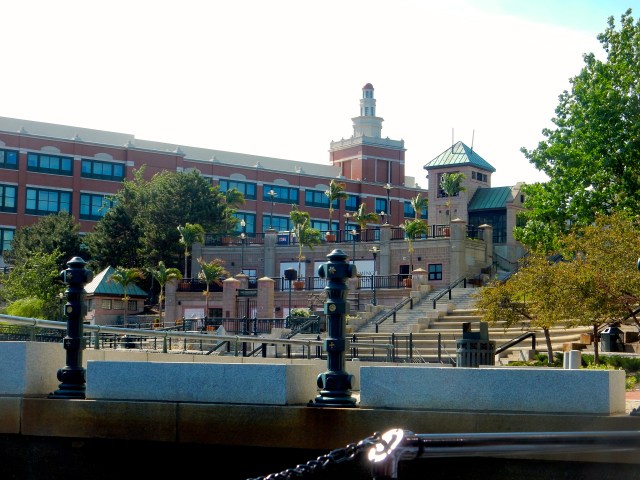
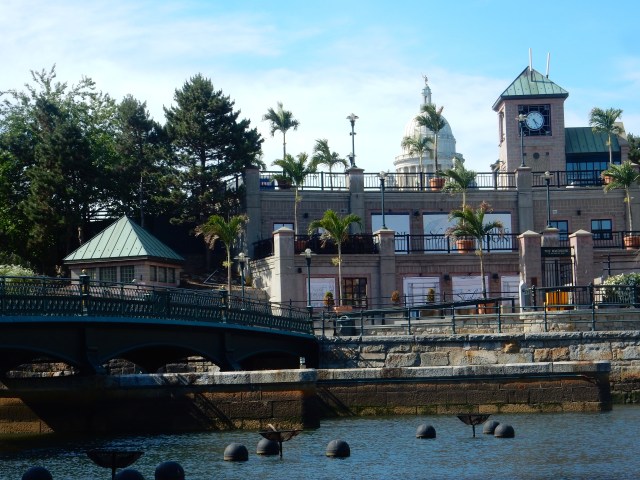
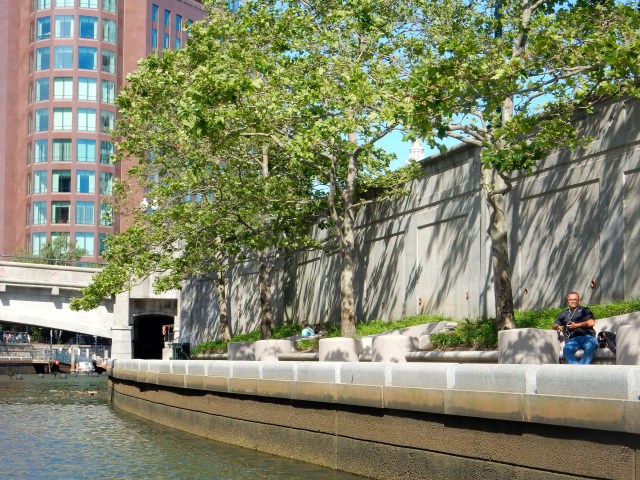
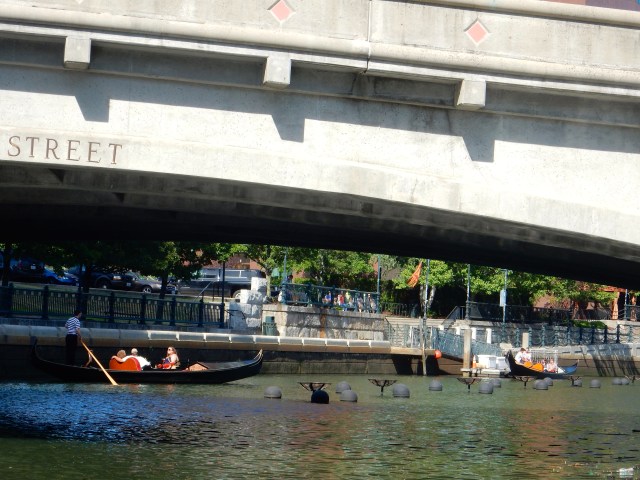
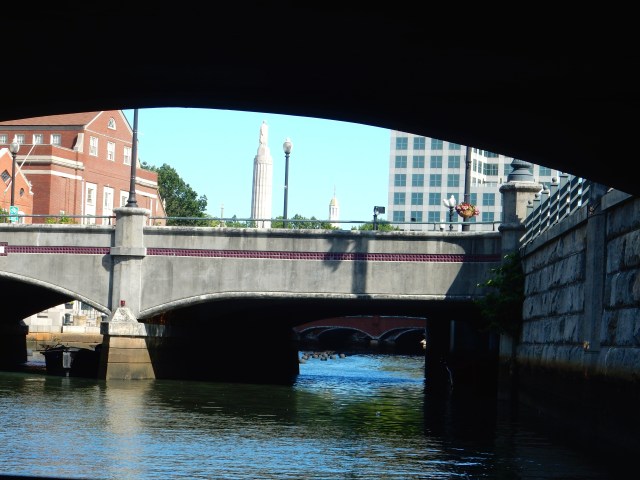
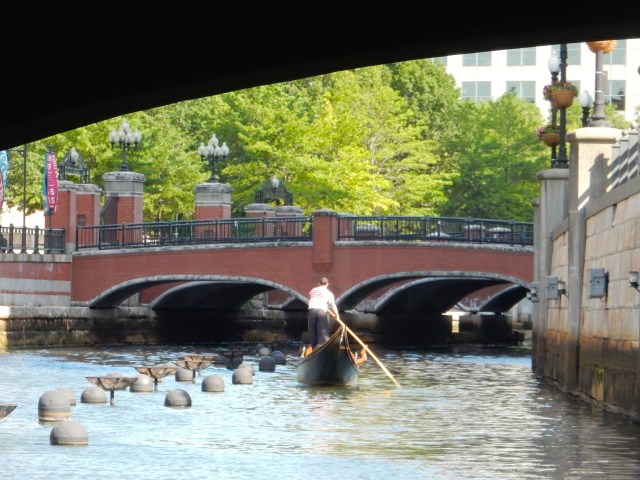
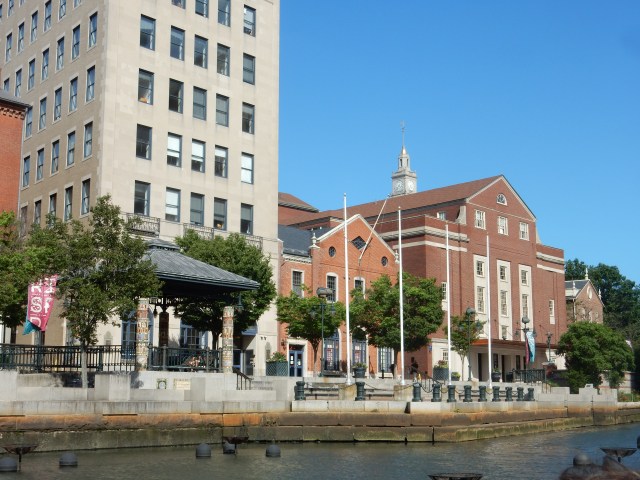
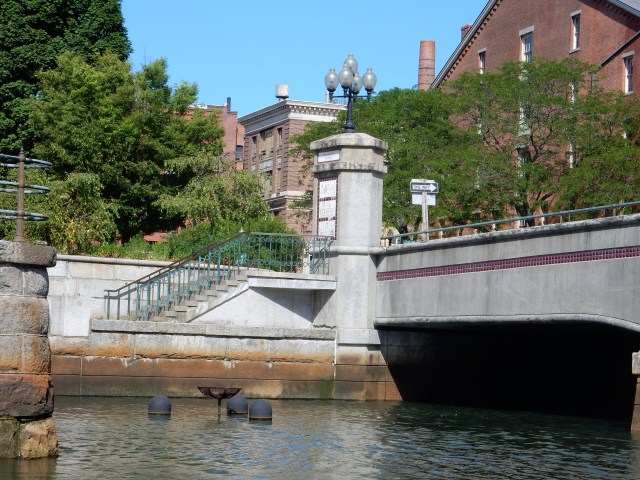
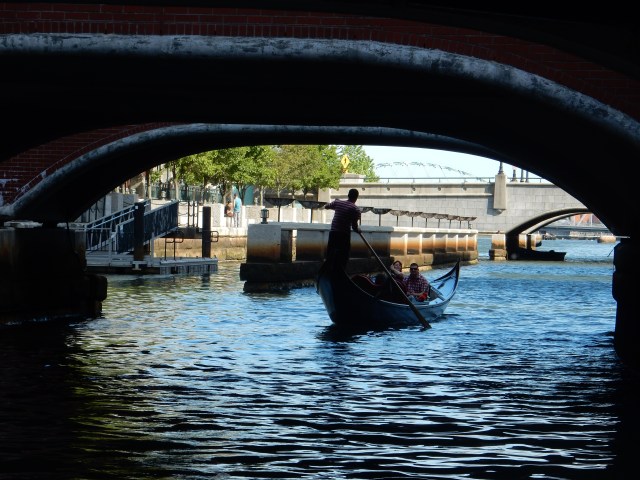
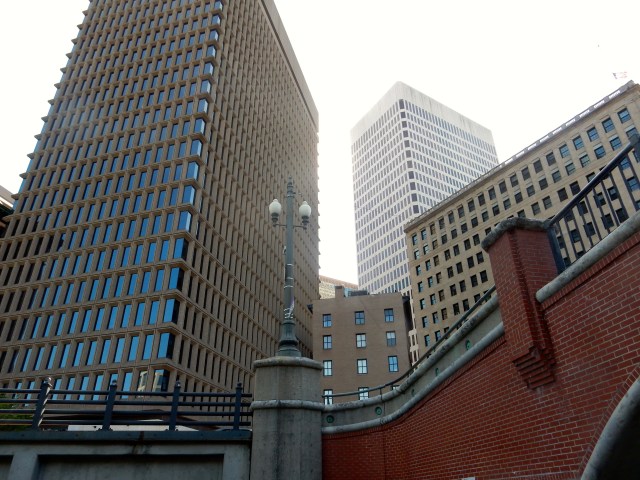
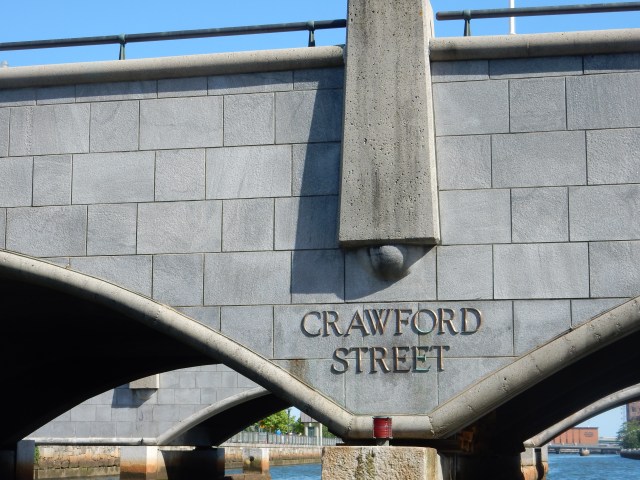
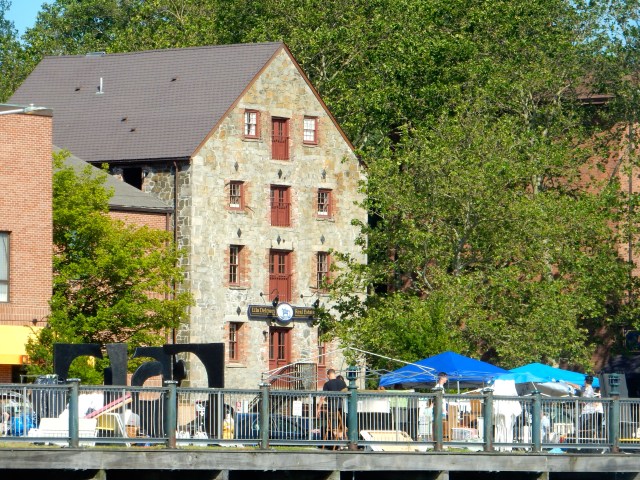
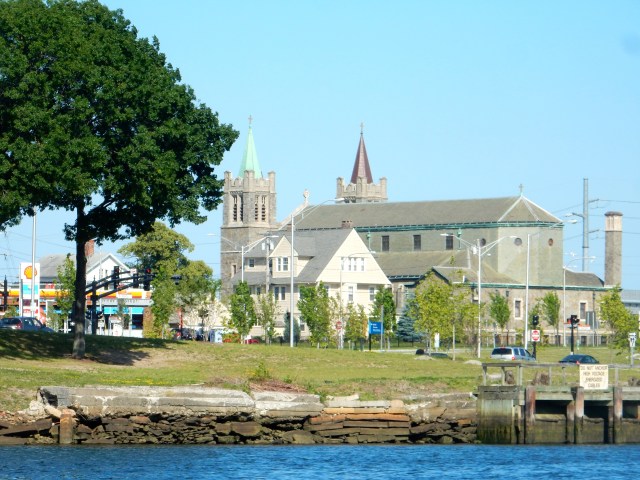
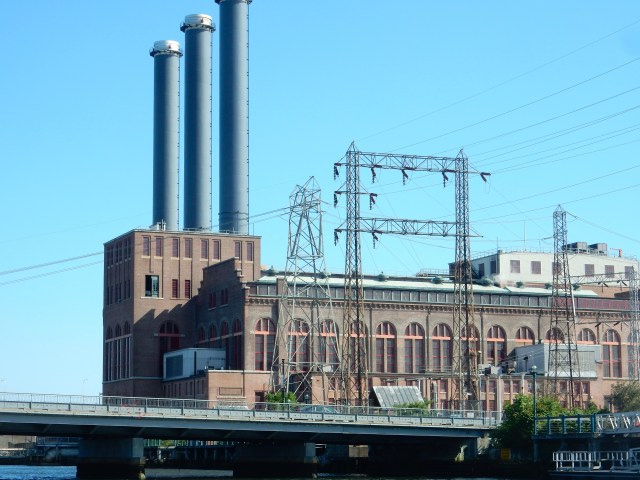
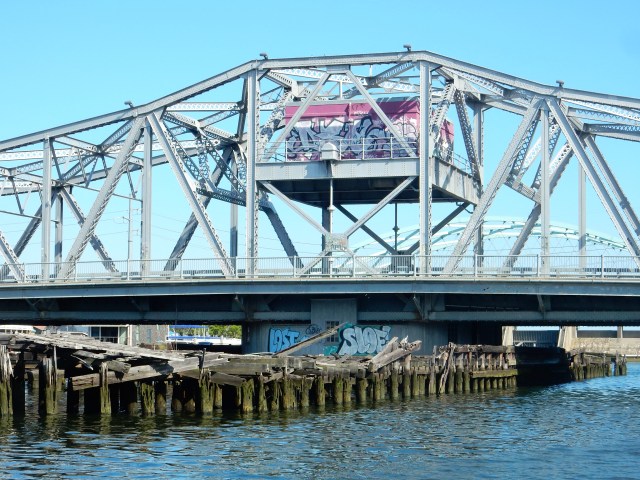
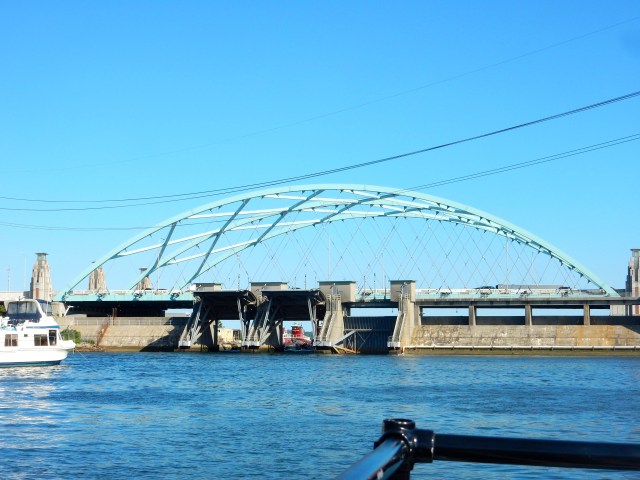
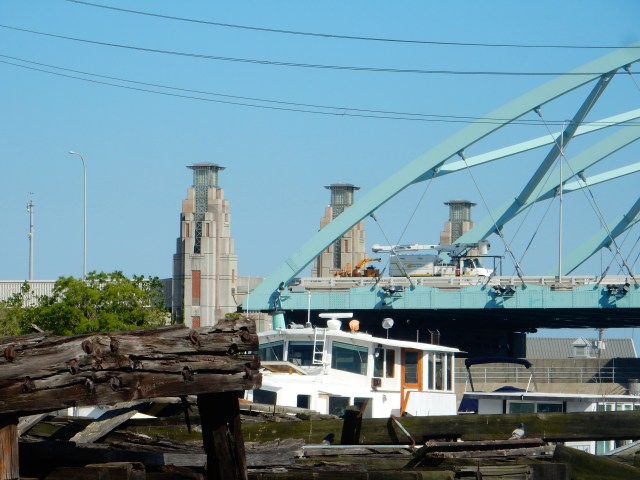
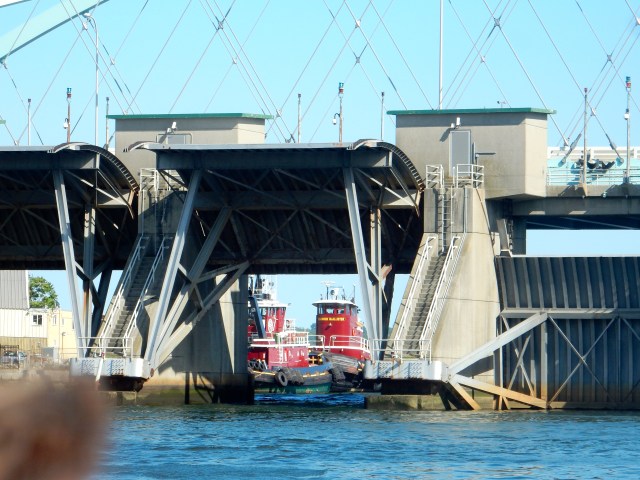
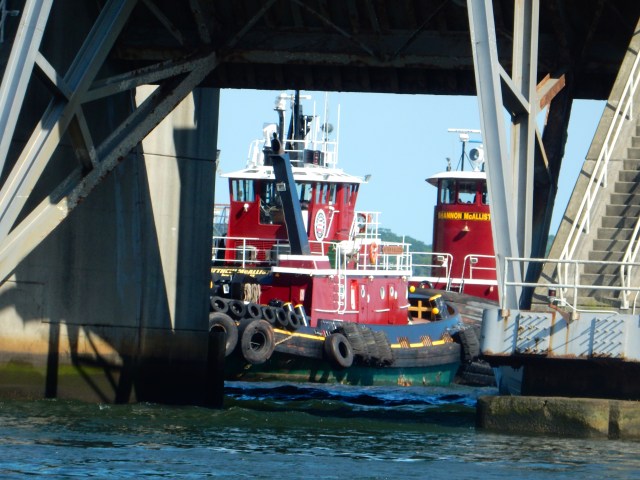
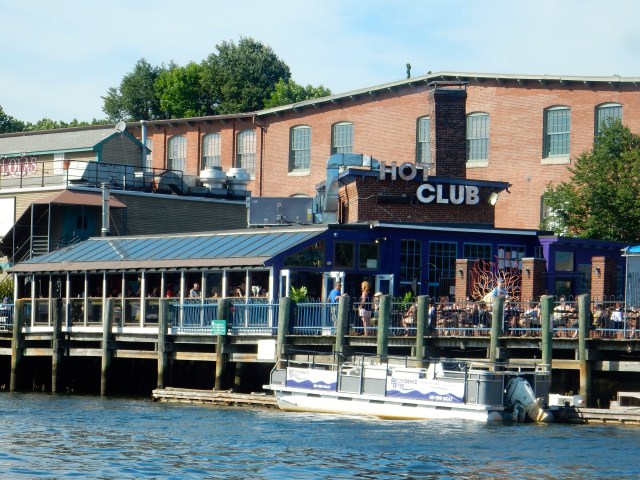
Sunday afternoon my wife Victoria, our son Billy, 7, and I took a delightful tour through downtown Providence on the Proud Mary, the oldest vessel in the fleet of the Providence River Boat Company. Embarking at the Hot Club, we rode upriver to Waterplace Park and back downriver to the Hurricane Barrier, but no farther after Capt. Tom McGinn declared that the water’s roughness argued against taking the last leg of the tour. Peering through the two open gates of the barrier, it certainly looked like the wind was whipping the waves into a sauciness sufficient to induce seasickness if not capsizement.

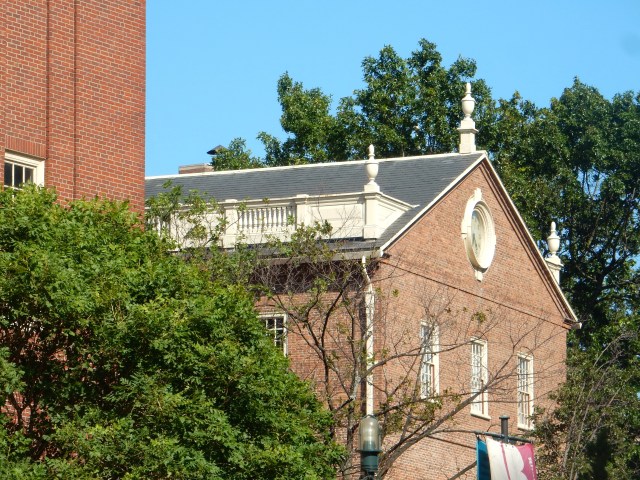
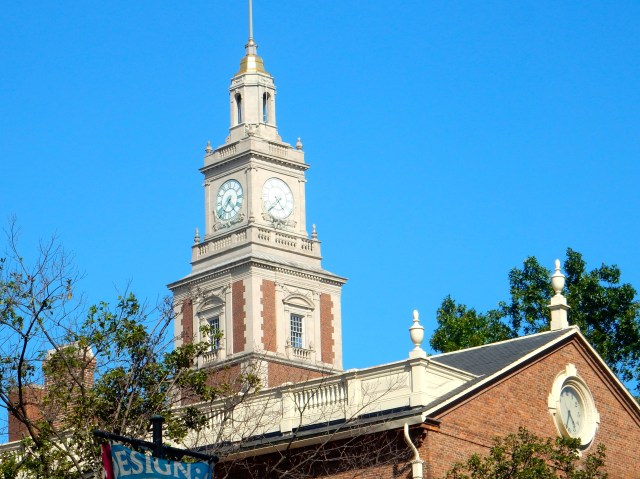
The new Providence waterfront, designed by the late Bill Warner, loves to mug for the camera, and I did not forget mine. The ones below will help me long remember my boy’s lovely Father’s Day gift. Billy is familiar with the Proud Mary, since we frequently book passage on WaterFire evenings. I’ve been doing this for eons, since the boat service was founded in 1992 – two years before the new waterfront was finished – by Capt. Joe Dempsey, whom I still bump into now and then.

On top I have placed a photograph by Christopher Garrison from the boat company website. The shot, in which Capt. McGinn seems to be pointing to my favorite section of the embankment, gives a fabulous sense of the riverfront on a glorious sunny day.

DSCN9085.JPG

DSCN9083.JPG

DSCN8945.JPG

DSCN8946.JPG

DSCN8953.JPG

DSCN8955.JPG

DSCN8960.JPG

DSCN8969.JPG

DSCN8971.JPG

DSCN8973.JPG

DSCN8977.jpg

DSCN8978.jpg

DSCN8979.JPG

DSCN8980.JPG

DSCN8985.JPG

DSCN8988.JPG

DSCN8989.JPG

DSCN8991.jpg

DSCN8993.JPG

DSCN8994.JPG

DSCN8995.JPG

DSCN9000.JPG

DSCN9002.JPG

DSCN8999.JPG

DSCN9006.JPG

DSCN9011.JPG

DSCN9012.JPG

DSCN9019.JPG

DSCN9030.JPG

DSCN9020.JPG

DSCN9022.JPG

DSCN9032.JPG

DSCN9023.JPG

DSCN9034.JPG

DSCN9036.JPG

DSCN9038.JPG

DSCN9042.JPG

DSCN9045.JPG

DSCN9048.JPG

DSCN9054.JPG

DSCN9058.JPG

DSCN9061.JPG

DSCN9062.JPG

DSCN9067.JPG

DSCN9065.JPG

DSCN9073.JPG

DSCN9070.JPG

DSCN9072.JPG

DSCN9081.JPG

Posted in Architecture, Photography | Tagged , , , , , , | 3 Comments

The parking meter idiocy

Screen Shot 2016-06-19 at 11.13.43 AM.png

City Planning. (Julian Archer/Architectural Record, 1943)

Providence Mayor Jorge Elorza appears determined to serve a single term. How do I know? Just look! He is trying to offend every constituency he can by installing parking meters where they shop. Several neighborhoods on the East Side have successfully resisted – Hope Village north of Rochambeau is one example – at least for now. Thayer Street is the latest victim.

Its merchants have mounted a revolt against the parking meters, advertising a petition against them on the marquee of the Avon Theater. Merchant Kenneth Dulgarian, who owns the Avon with his brother Richard, has written a rousing denunciation of the policy for the Providence Journal’s shrinking oped section: “Parking meters spread economic plague“:

Parking meters have become an economic plague in Providence. Their continuing proliferation is enraging customers, destroying businesses, and undermining City Hall’s repeated boast that the capital city is “open for business.”

He goes on to question the idea that parking meters will help solve the city’s budget deficit. The meters are costly to install, break down frequently, are thus costly to maintain, and require more employees to fix them and keep them operational. Now that I no longer live downtown I drive a lot (I used to take the bus to work, but the bus service is not reliable enough to use it for chores or occasional meetings) and am often able to find a spot whose meter is broken or still has time left on it. Perhaps it is just broken, and that was the time left stuck on it – free parking for those lucky enough to find it.

Dulgarian argues that the costs of the meter system combined with the reduction in taxes from shops hurting or already closed probably comes close to drowning out any revenue the meters bring in.

The meter policy reminds me of the state’s bus policy. Instead of improving bus service, the Rhode Island Public Transit Authority has historically used the strategy of raising fares and cutting routes to make up annual budget deficits. So people increasingly find the bus inconvenient for a wider and wider range of uses, causing RIPTA to raise rates higher and reduce more services – so that people increasingly perceive the bus as a less reliable mode of transit that still costs ever more to use.

As they say, this is no way to run an airline.

The municipal adoration of parking meters reveals a similarly shortsighted management of the public weal. Recently it was reported that more and more managers in City Hall are costing the taxpayers more and more money. The city seems capable of thinking up more and more things to do, some of them necessary to fix previously enacted things that don’t work, and many entirely unnecessary except to stroke this or that narrow constituency.

This is a problem with municipal government not just in Providence but across the state and the nation. It is not just taxpayers who suffer higher taxes for fewer and less efficient basic services. The same strategy of leadership affects private business and nonprofit institutions as well. Just go to the Brown University job site and look at the titles of the jobs available.

Parking meters are just one of many camels’ noses under the tent. Pretty soon, the city will want to meter not just local shopping districts but every parking space along every residential street curb. Don’t look now but this has already been done! Instead of simply reversing its decades’ long ban on residential overnight parking, the city recently started forcing homeowners to buy permits if they want to park overnight in front of their own houses.

This set of interlocking city problems, addressed with an abiding stupidity, reminds me of the movie Idiocracy, in which the Pentagon sends a couple operatives into the future. They find that DNA of Americans has become stupider and stupider, to the point where citizens, themselves all stupid, have internalized the inconveniences of a society run according to a regime of official stupdity. Among the many hilarious touches by the director of scenery, buildings often collapse and those still standing are held up by duck tape. Sometimes I think we are already there.

This post goes under my Urban Planning category but also Architecture, because in the past half century we have massively traded down, accepting ugly buildings designed to need replacement in three or four decades for buildings of a certain dependable degree of beauty that are designed to last a century or more. A rationale for this was officially adopted decades ago, even though it is idiotic, barely even plausible under the slightest examination. We see this in the buildings proposed for the Route 195 corridor – not only ugly (see illustration below) but increasingly financed by taxpayers.

Maybe Thayer Street’s revolt against parking meters will be a revolution’s shot heard round the world.

Screen Shot 2016-06-19 at 12.03.34 PM.png

Proposed Wexford Science & Technology project, Route 195 corridor. (gcpvd.org)

Posted in Architecture, Urbanism and planning | Tagged , , , , , , | 6 Comments

‘Lost Providence’ and readers

Screen Shot 2016-06-18 at 10.34.50 AM.png

Proposal by Patrick Conley to redevelop Conley’s Wharf off Allens Ave. (gcpvd.org)

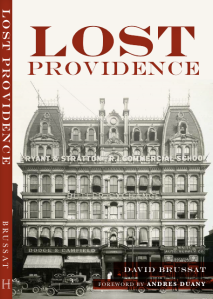
In this digital age, with its mobility and its easy interactivity, I have been trying to imagine how to get readers of this blog interested in helping me write my book Lost Providence, an initiative just now under way. It will be about buildings and houses that have bit the dust in the march to progress. For a long time, progress generally tended to be just that, but since … ahh! Let’s not get into that rubbish just now!

The book was conceived by an editor at History Press, Edward Mack, who saw one of my last columns from my Journal days, “Providence’s 10 best lost buildings” and asked me to turn it into a book. I asked him if I could bring in not just lost buildings but lost projects – projects to improve the city that somehow fell through – on occasion thankfully so.

But I also would like readers to help by suggesting their own ideas for lost buildings or lost projects. For example, a reader might suggest that I mention the succession of designs that were proposed for Parcel 9, especially the nearly nice one by architect Kip McMahan of Robinson Green Beretta, where the GTECH headquarters eventually arose to stink up Waterplace. One reader, Rhode Island Historian Laureate Patrick Conley, has already urged me to include his proposed Conley’s Wharf project to redevelop part of the industrial waterfront along the west bank of the Providence River.

There are all sorts of possibilities, and if some are interesting enough they could result in new chapters in the book, or a chapter that lists and describes the suggestions, along with the reader’s name and the author’s comments. At the proper time, I might also put out on my blog the list of lost buildings that will be described in the book and ask readers to rank which ones are the best. Such a survey would be an interesting addition to the book.

I mentioned some of this in an earlier post several months ago called “Your best lost building here!” Now that the writing is under way, I want to issue the call for lost buildings again. See you name in lights! Or at least in print! Contribute to history!

Screen Shot 2016-06-18 at 10.50.00 AM.png

Design for Parcel 9 by Kip McMahan, supereceded by GTECH. (RGB)

Posted in Architecture, Books and Culture | Tagged , , , , , , | 6 Comments