More of Yale’s new campuses

Screen Shot 2017-12-05 at 1.46.38 PM.png

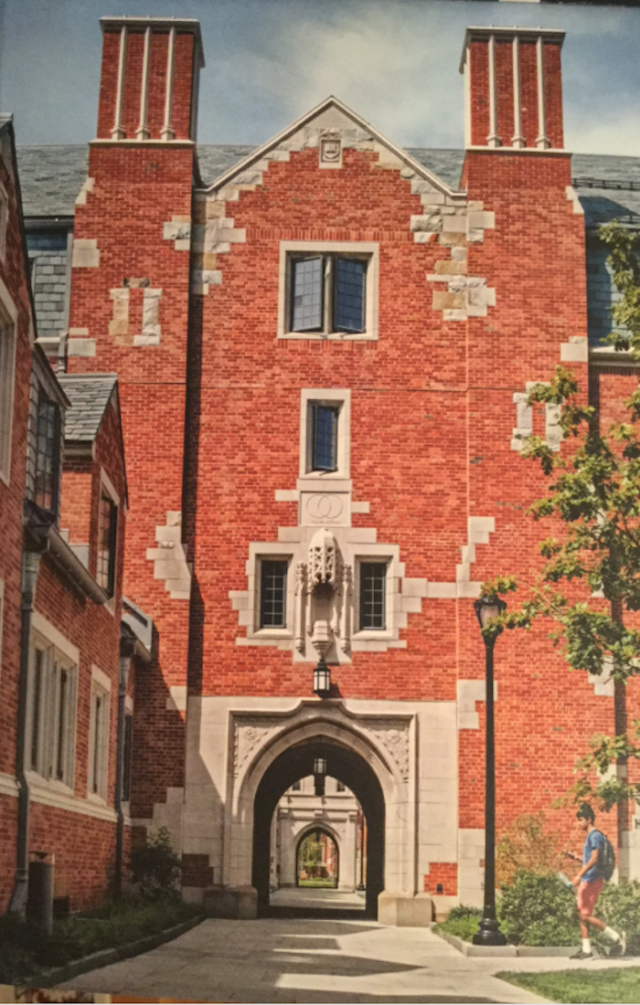
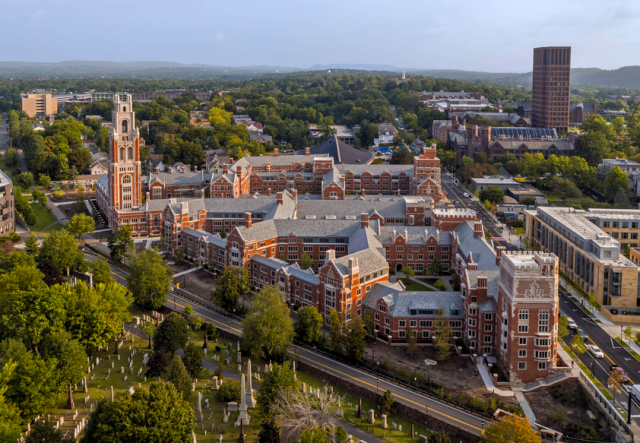
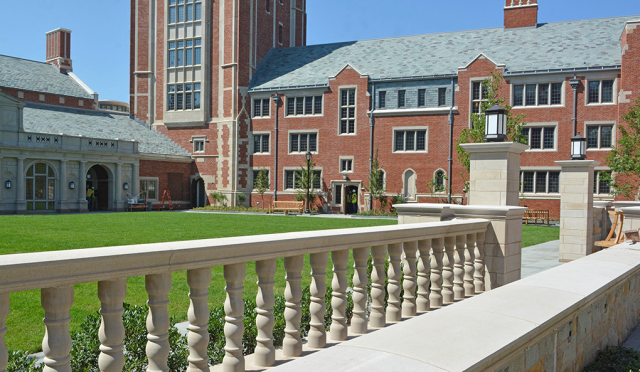
Central image from RAMSA card celebrating two new Yale residential colleges.

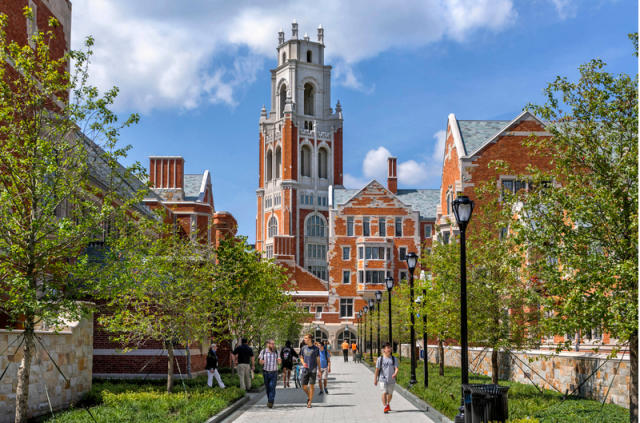
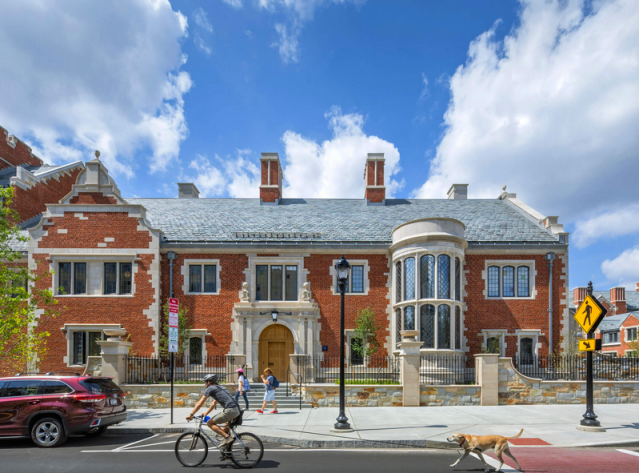
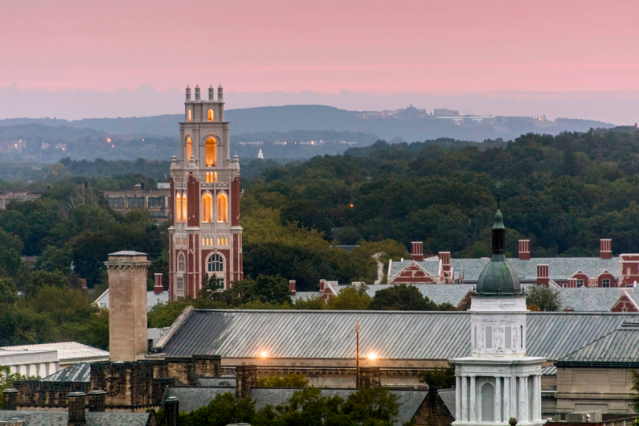
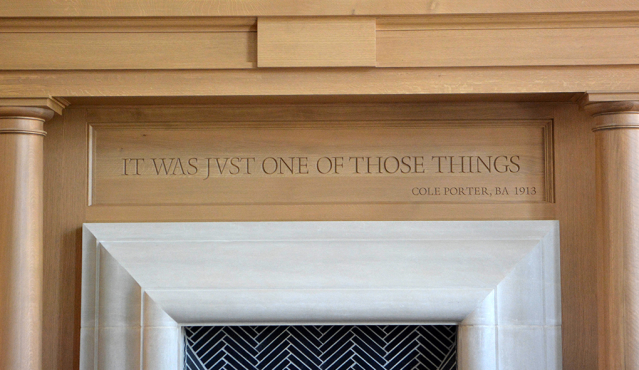
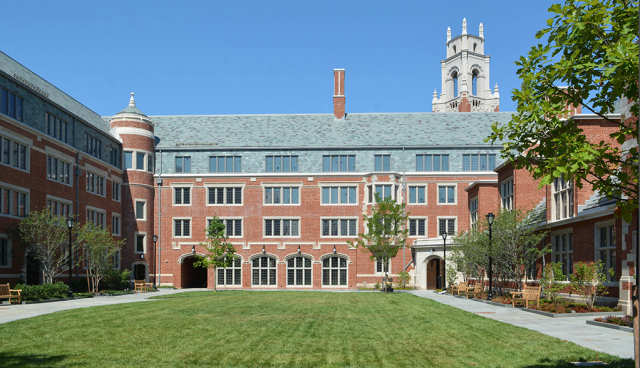
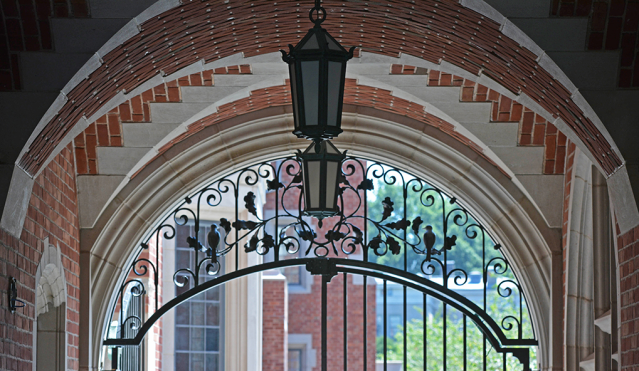
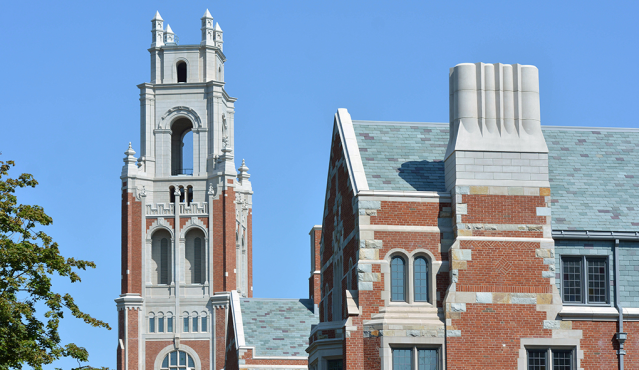
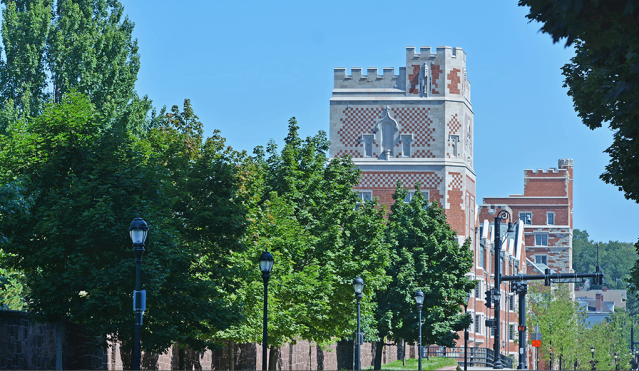
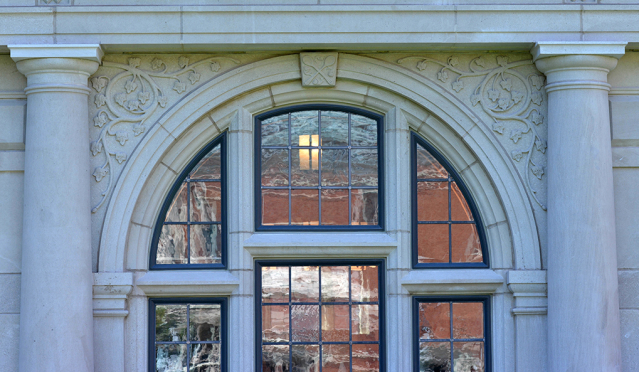
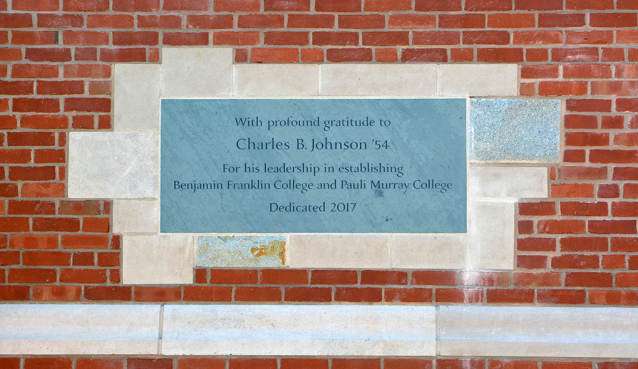
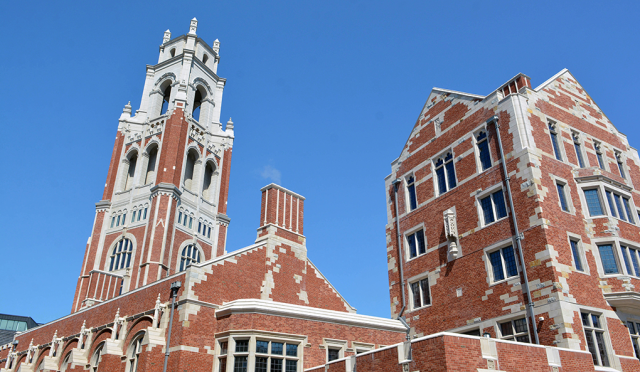
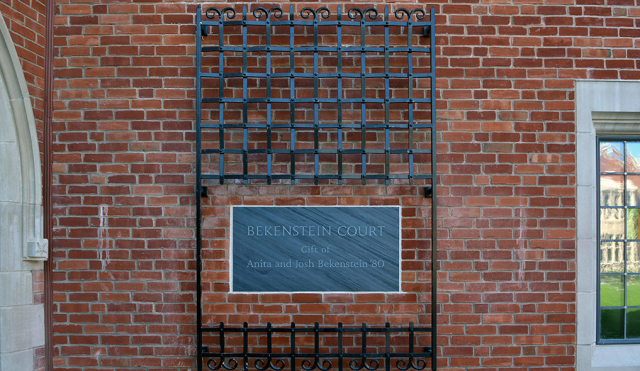
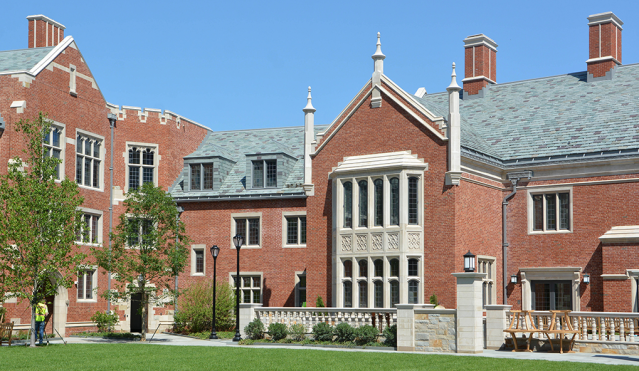
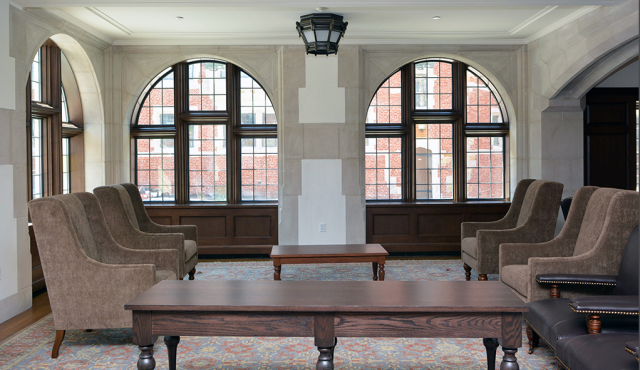
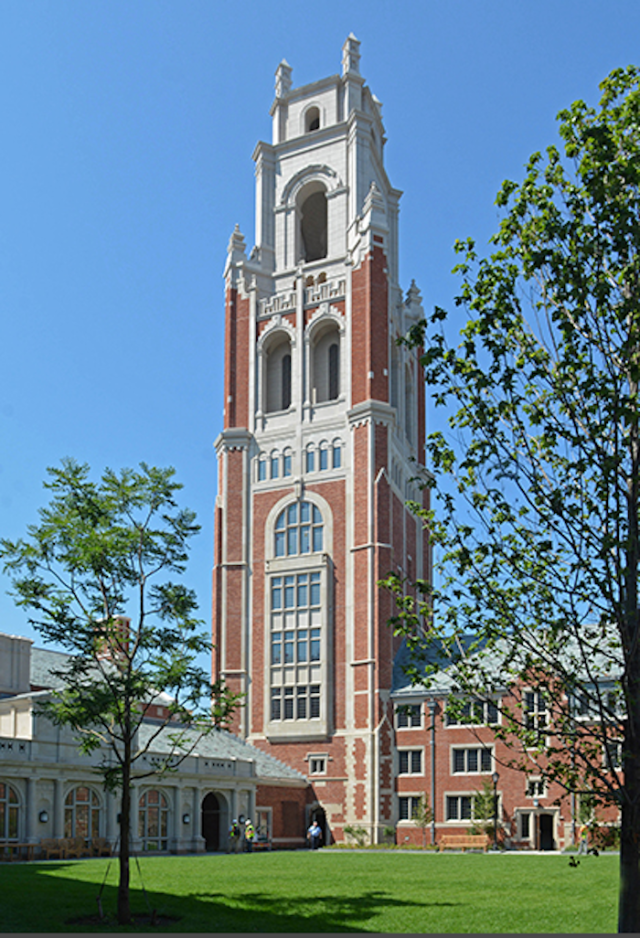
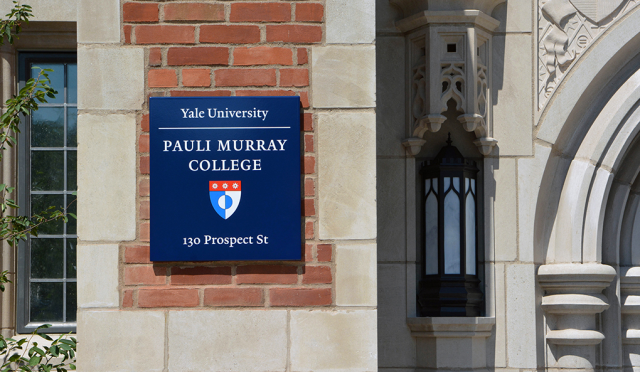
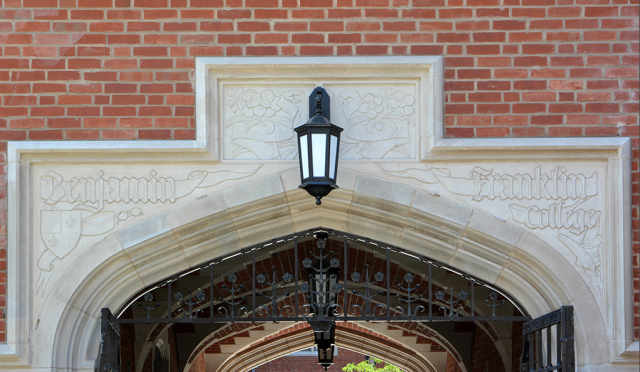
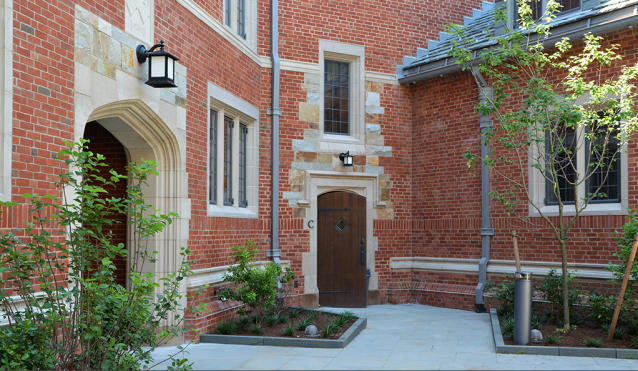
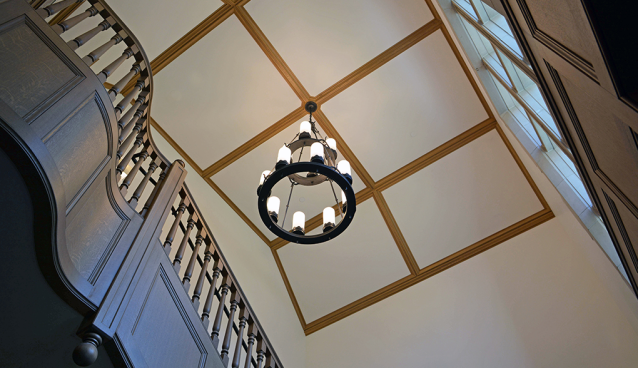
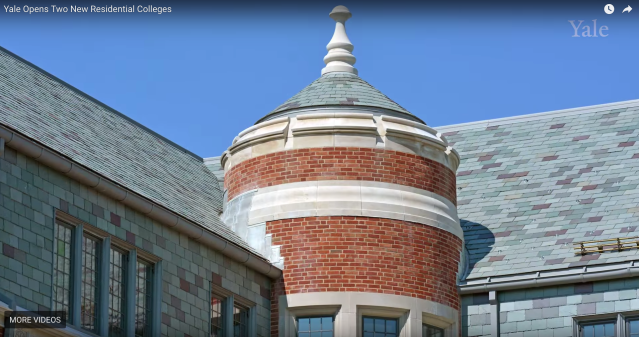
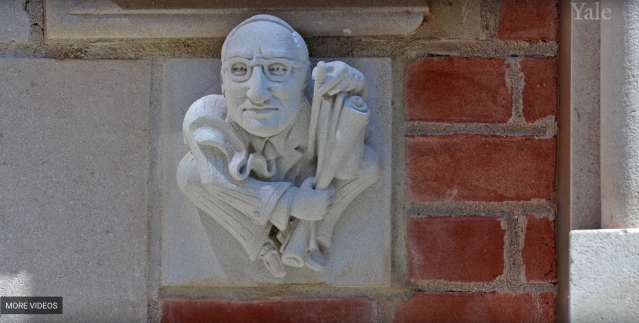
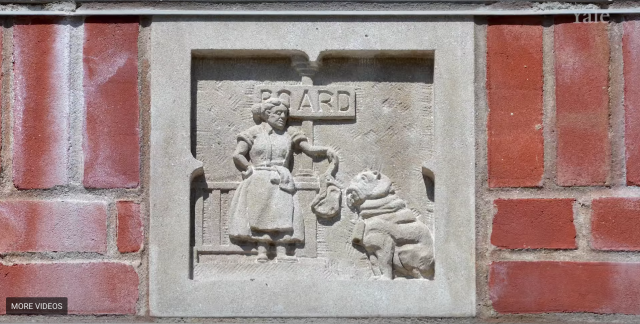
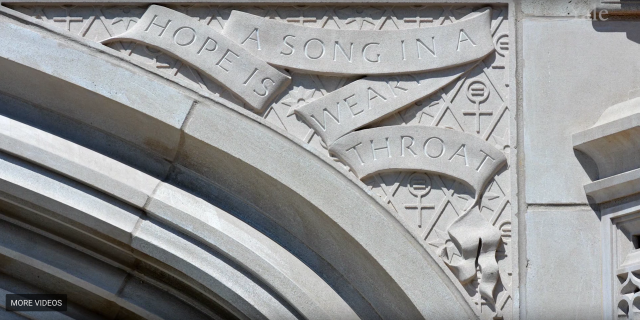
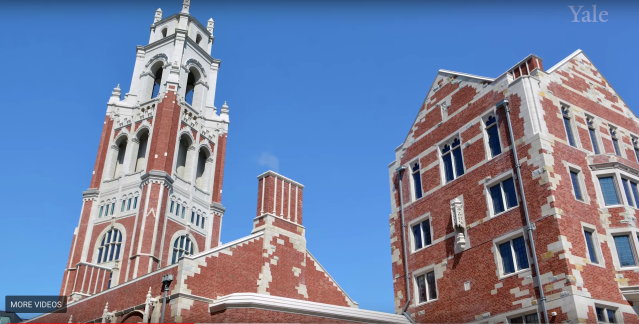
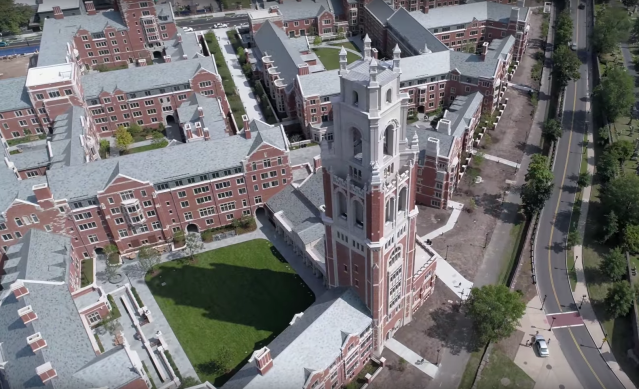
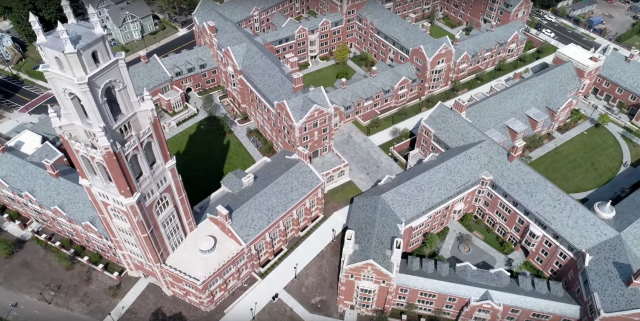
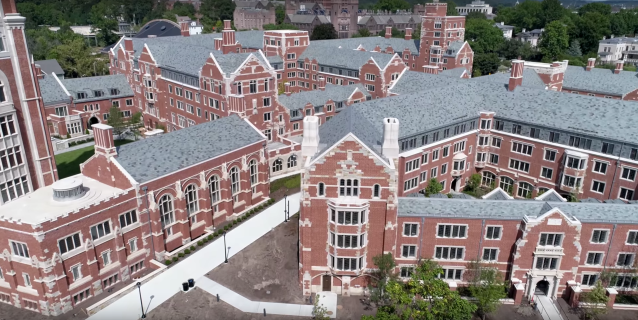
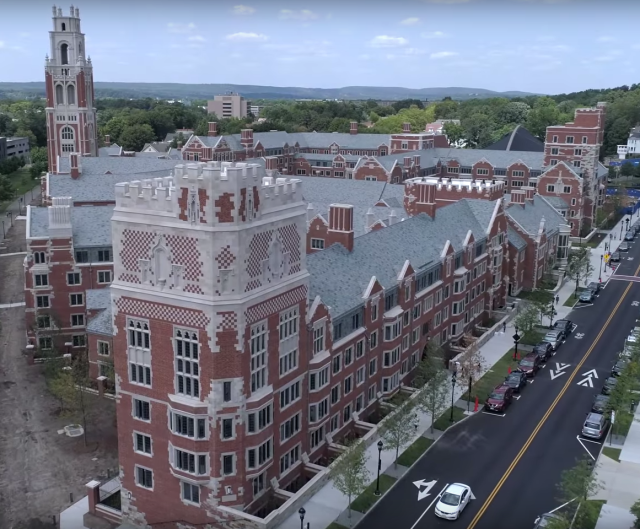
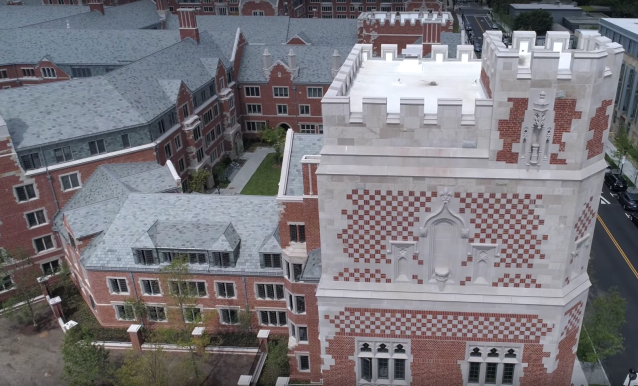
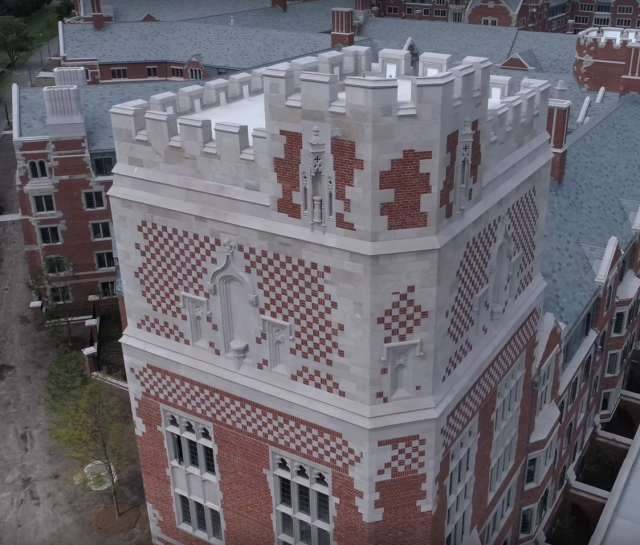
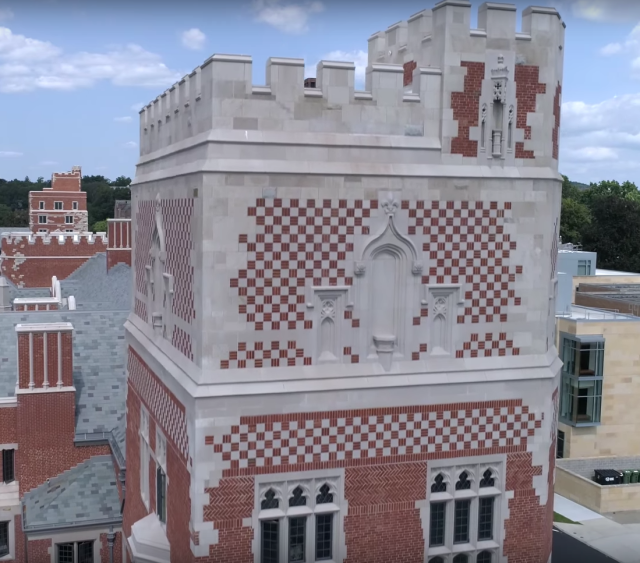
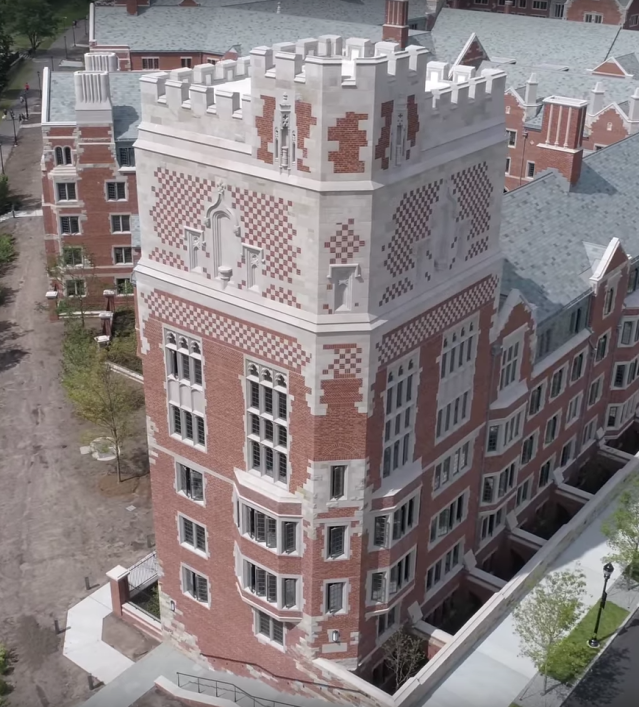
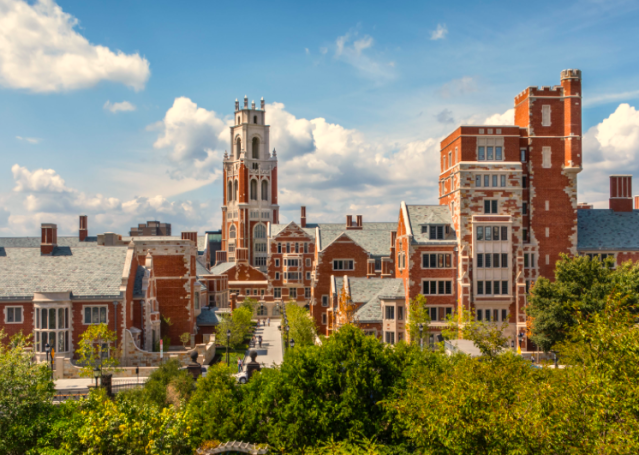
Got a wonderful gift in the mail today. It was a card from Robert A.M. Stern Architects, of the sort I often get, and which often give me pleasure. But this was more – more pleasure, because more photos of Yale’s new Benjamin Franklin and Pauli Murray residential colleges. Beautiful!

It is impossible to have too many for conveyance to readers.

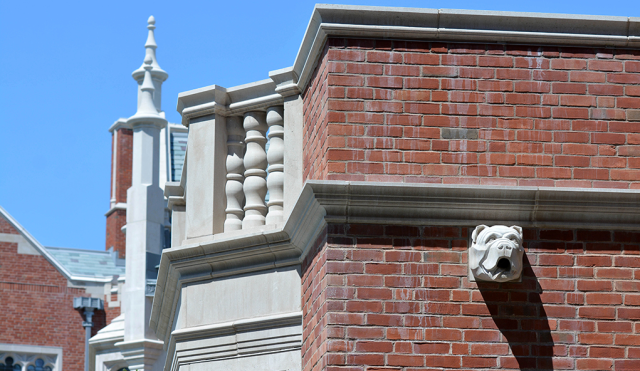
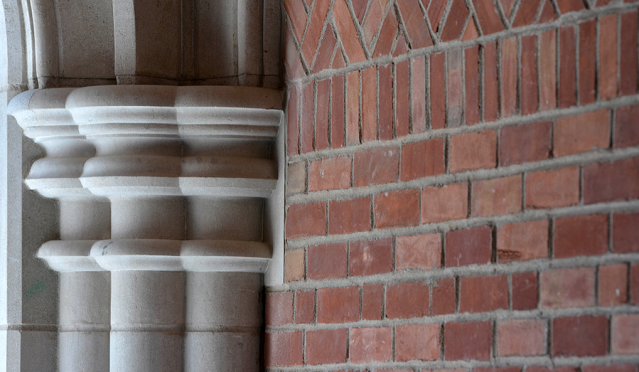
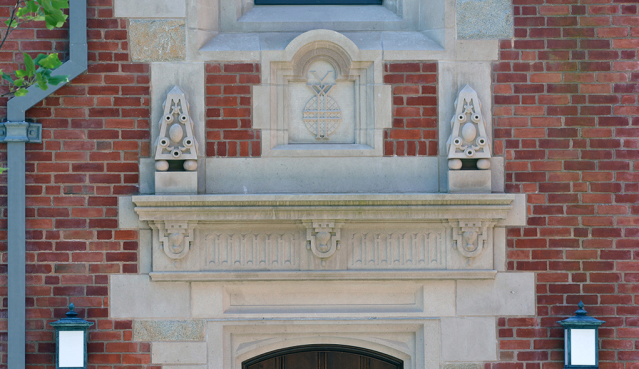
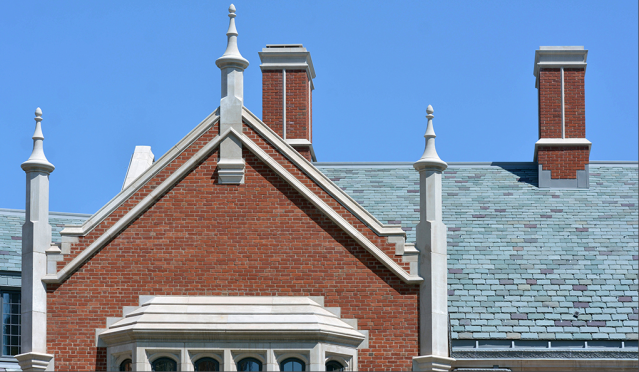
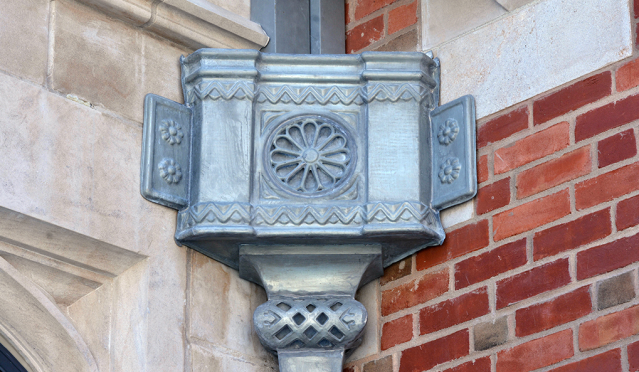
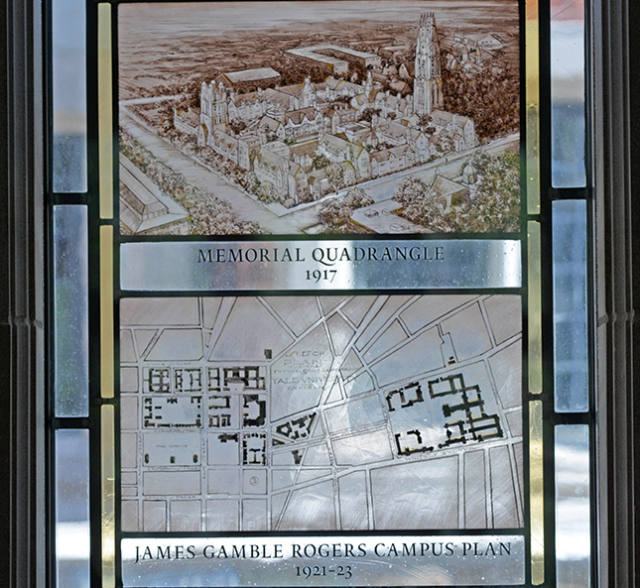
Much of the Yale campus built in the decades before World War II was designed by James Gamble Rogers. Robert Stern, who led the team from RAMSA that designed the two campuses (including Melissa DelVecchio, Graham Wyatt and Jennifer Stone), took his inspiration from Rogers’s Collegiate Gothic, a refreshing break from the modernists who built most new Yale buildings since, including Paul Rudolph’s school of architecture, of which Stern was dean for quite a while until recently.

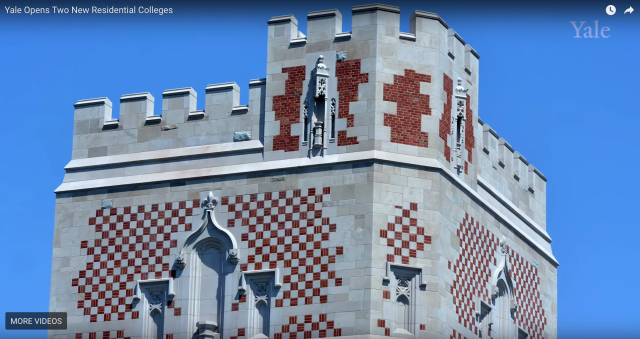
The photos printed with the card gave me fits to photograph myself for transfer to this post, since it was late afternoon before I got around to it, forcing me to use unnatural light. I gave up. I went online for shots. These come from a combination of the RAMSA and Yale sites, including RAMSA’s usual project mini-monograph and a Yale slideshow of photos by Michael Marsland. I’ve added a Yale publicity video of the campuses (unavoidably, Yale officials serve as talking heads), and a drone video of the campuses, and have taken some shots from these, and also I have added a very interesting time-lapse of the construction, which is followed by some video of scenes on the new campuses, from which I’ve taken yet more screenshots. Yet, inspired by the photography on the card, I went back and tried my best to reproduce them digitally for this post.

Dinner is approaching, so I am just going to slap them up as orderly as I can and hope for the best.

I can say that the top photo and first two photos below are by Peter Aaron/OTTO from the card from RAMSA, the next three are from the RAMSA website, and the next score or so are from Yale, either by photog Marsland or from Yale videos. Finally, there are shots from the drone video for Yale. The Yale time-lapse video from YouTube is here.

If RAMSA wants to send me a better version of the top shot, without the crease in the card so faithfully reproduced, I will happily sub it out. [Done.] Finally, I apologize in advance if some of these shots are either credited wrongly or uncredited. I will gladly print corrections. I put up with these looming credit woes because the photographs, by whomever, are so lovely. And credit for that goes to Yale, for insisting on such beauty in the first place.

Screen Shot 2017-12-04 at 7.42.25 PM.png

Screen Shot 2017-12-04 at 8.14.16 PM.png

Screen Shot 2017-12-04 at 8.08.53 PM.png

Screen Shot 2017-12-04 at 8.09.35 PM.png

Screen Shot 2017-12-04 at 8.09.54 PM.png

Screen Shot 2017-12-04 at 5.17.47 PM.png

Screen Shot 2017-12-04 at 5.20.54 PM.png

Screen Shot 2017-12-04 at 5.21.22 PM.png

Screen Shot 2017-12-04 at 5.21.42 PM.png

Screen Shot 2017-12-04 at 5.22.04 PM.png

Screen Shot 2017-12-04 at 5.22.24 PM.png

Screen Shot 2017-12-04 at 5.22.40 PM.png

Screen Shot 2017-12-04 at 5.22.57 PM.png

Screen Shot 2017-12-04 at 5.23.15 PM.png

Screen Shot 2017-12-04 at 5.23.29 PM.png

Screen Shot 2017-12-04 at 5.23.45 PM.png

Screen Shot 2017-12-04 at 5.24.06 PM.png

Screen Shot 2017-12-04 at 5.24.19 PM.png

Screen Shot 2017-12-04 at 5.24.43 PM.png

Screen Shot 2017-12-04 at 5.25.00 PM.png

Screen Shot 2017-12-04 at 5.25.12 PM.png

Screen Shot 2017-12-04 at 5.25.26 PM.png

Screen Shot 2017-12-04 at 5.25.55 PM.png

Screen Shot 2017-12-04 at 5.26.16 PM.png

Screen Shot 2017-12-04 at 5.26.45 PM.png

Screen Shot 2017-12-04 at 5.27.03 PM.png

Screen Shot 2017-12-04 at 5.27.24 PM.png

Screen Shot 2017-12-04 at 5.27.38 PM.png

Screen Shot 2017-12-04 at 5.28.08 PM.png

Screen Shot 2017-12-04 at 5.28.29 PM.png

Screen Shot 2017-12-04 at 5.28.43 PM.png

Screen Shot 2017-12-04 at 5.28.59 PM.png

Screen Shot 2017-12-04 at 5.29.24 PM.png

Screen Shot 2017-12-04 at 5.29.39 PM.png

Screen Shot 2017-12-04 at 5.30.00 PM.png

Screen Shot 2017-12-04 at 5.31.04 PM.png

Screen Shot 2017-12-04 at 5.34.38 PM.png

Screen Shot 2017-12-04 at 5.35.06 PM.png

Screen Shot 2017-12-04 at 5.35.35 PM.png

Screen Shot 2017-12-04 at 5.36.04 PM.png

Screen Shot 2017-12-04 at 5.36.31 PM.png

Screen Shot 2017-12-04 at 5.37.58 PM.png

Screen Shot 2017-12-04 at 5.49.11 PM.png

Screen Shot 2017-12-04 at 5.49.47 PM.png

Screen Shot 2017-12-04 at 5.51.13 PM.png

Screen Shot 2017-12-04 at 5.52.10 PM.png

Screen Shot 2017-12-04 at 5.52.56 PM.png

Screen Shot 2017-12-04 at 5.54.19 PM.png

Screen Shot 2017-12-04 at 5.55.00 PM.png

Screen Shot 2017-12-04 at 5.55.35 PM.png

Screen Shot 2017-12-04 at 5.57.44 PM.png

Screen Shot 2017-12-04 at 5.56.19 PM.png

Posted in Architecture, Photography, Video | Tagged , , , , , , | 8 Comments

Graceful pavilion at Grace

Screen Shot 2017-12-03 at 12.25.11 PM.png

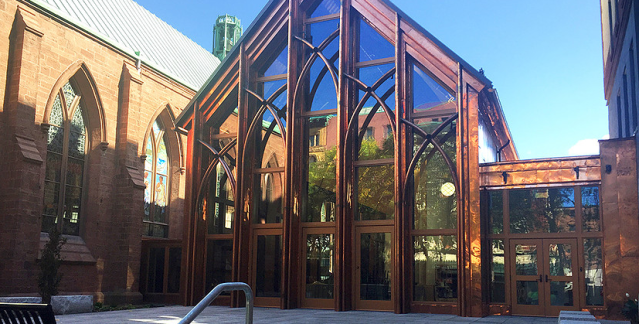
The Pavilion at Grace, Grace Episcopal Church, Providence. (Bowerman Associates)

The new addition to Grace Episcopal Church has opened on Westminster Street in downtown Providence. In this day and age, all additions to lovely old buildings are potentially hair-raising affairs. Churches are not immune to the insult of poor taste and modernist conceit, often boring from within. So when word got out that Grace planned an addition, concern was the proper response – in spite of assurances from its rector, the Rev. Canon Jonathan Huyck, that a design sensitive to the original was the goal.

Now that the Pavilion at Grace is open, no worries. Centerbrook Architects & Planners, in Centerbrook, Conn., has updated Richard Upjohn’s 1844 original Gothic Revival church – the first asymmetrical church of that style in America – with a touch of the Art Nouveau. A most inspired choice, given the pressure the rector must have felt to go full-tilt modernist.

Maybe the Pavilion at Grace also provides us with the true distinction between the terms modern (or modernist) architecture and contemporary architecture. Both modern and contemporary have similar connotations, and for most of their lives as words in the English language merely meant “of today.” But modern(ist) architecture implies a degree of devotion, at least, to its founding principles’ rejection of the past in general and, especially, of past styles, from which it rarely if ever deviates. Contemporary can then perhaps be interpreted, in architecture, as meaning (at its best) that which uses the latest design and construction techniques, without any sense of snubbing the past or past styles. (The Pavilion was built by Bowerman Associates.)

That’s what the Pavilion at Grace does so graciously, fulfilling (if I may be so bold as to suggest) the churchly role of anchor. At any time when change destabilizes society (often in good ways), religion should remind us that the future must be as much a continuation as a reformation of the past.

The Pavilion is an engaging and evocative, not to mention useful, feature of Westminster Street and downtown, whose strengths build on continuity with the past. Congratulations to Rev. Huyck, to his congregation at Grace, and to the downtown community!

Screen Shot 2017-12-03 at 2.04.15 PM.png

Screen Shot 2017-12-03 at 1.57.55 PM.png

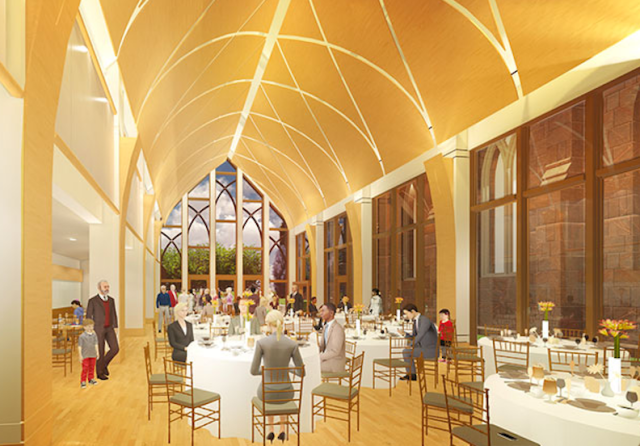
These two images are the interior (lower top) and the plan (lower bottom) of the Pavilion. (Centerbrook)

Posted in Architecture | Tagged , , , , , , , | 4 Comments

Review: “Classic Columns”

Screen Shot 2017-12-01 at 11.19.57 AM.png

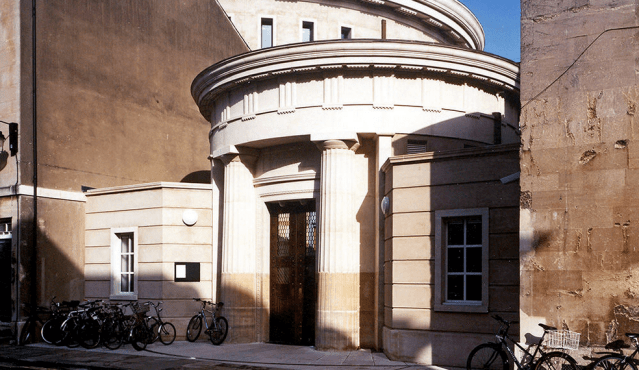
Sackler Library at Oxford University, designed by Robert Adam. (ADAM Architecture)

Aside from my own book Lost Providence, Robert Adam’s Classic Columns, published by Cumulus Books, London, is the recent book that I would place highest on my list of books to give to friends or family members interested in architecture – or you could gift yourself. It’s the holidays. This is allowed.

Gifting oneself may or may not be fully ensconced in holiday tradition at this point. In fact, we should ask Robert Adam himself. In Classic Columns Adam reveals himself as the most subtle and fecund thinker about tradition, as the proper basis for architecture, in our era. Adam is the founder and a principal of the London firm of ADAM Architecture, so his theorizing has its basis in practice. In the past year I have written three posts quoting from his book (while also promising a review, which you are reading at this moment). The three posts are here, here and here.

Each post has arisen from my being bowled over by passages that engagingly describe the differences between traditional and modernist architecture. Here are three passages exemplary of Adam’s clear yet profound thinking.

Passage the First:

The word “authentic” is so closely linked to the concept of “truth” and we are so respectful of the experts who believe that historical authenticity is important that we rarely question its relevance. To whom does it really matter? Take a casual visitor to an old building; is his experience spoiled or devalued if he mistakes a new repair for an original part of the building? How far do you have to go to make sure this doesn’t happen? Do you have to go so far that you contradict one of the key objectives of doing it in the first place – to restore the wholeness of the original work of art so that it can be appreciated? Indeed, this seems to be the case. … The coherence of the design is less important than making sure that every visitor knows for sure which stones are new and which old? Surely not. But this is the ridiculous situation that the principle of historic authenticity forces on us. This kind of thing only matters to academics and experts, and if they really want to know, they can find out anyway.

Passage the Second:

Living languages are not scrapped and reinvented every fifty years. We may express ourselves a little differently from Charles II or Nicholas Hawksmoor but we can use their expressions today because what they were is part of what we are. Our civilisation and means of expression are modern but they carry their past with them and we are the richer for it.

We are not limited to the use of the past. We can use the latest technology. It is no longer necessary to learn a special language to use a computer, really advanced technology does what we want it to do. As new technology becomes – to use the buzz phrase – “user friendly,” we can, quite literally, make it speak our language. Voice simulators can quote Jane Austen and injection moulding can quote John Soane.

Passage the Third:

Until the later twentieth century, all buildings were traditional or customary. That is, either they deliberately drew upon some aspect of the past either unselfconsciously in customary or vernacular buildings or they made conscious references to the past in tradi- tional or high-style revivals. While the desire to be up-to-date and the wish to be different have always existed, there was no theory of a complete aesthetic disengagement from the past. It is this absence of complete and deliberate disjunction that allows older villages, towns, and cities to have a harmony while containing buildings of quite different styles and periods.

In all three passages, Adam describes the most essential differences between modern architecture and traditional architecture. Without the flapping of arms and gnashing of teeth in which I usually engage, Adam describes the crossroads that humanity has reached in the style wars, which modernists try to ignore but which not a few traditional architects acknowledge with some degree of uneasiness. That is because we are all part of our culture, like it or not, and right now this choice, supposedly just a matter of taste, is exactly not just a matter of taste. And since society has wrongly embraced the wrong choice at the highest levels, talking back is literally to speak truth to power. So no, it is not easy or comfortable to do. But the consequences of not doing it will be horrifying.

It is the great unacknowledged issue of our time. If humans want to continue to follow the path of modern architecture, it will take society down one of two roads. We are on the road that takes us toward a totalitarian state. This is what modern architecture is about. Modernism is cold because its chosen metaphor is the machine. It exalts the spirit of a governance that treats each citizen as a cog in a machine. If we want a better future, humanity must turn toward traditional architecture, which has evolved its path, on our behalf, slowly over many centuries through trial and error that seeks honestly to identify and develop the techniques in design and building that reflect nature and thus benefit humanity.

This is our choice, and nowhere is it writ more clearly and forcefully than by Robert Adam in his book Classic Columns.

So buy it for those you love and respect, and for yourself, and for the future.

***

I apologize for confusing some readers of my last post on parks in Providence. If you got it through an email with an introduction beginning “Is Providence without …” I accidentally flipped the yes and no at the end. It should read “… Zipf says yes, I say no.”

Here it is, corrected:

Is Providence without “City Beautiful-era” parks? Catherine Zipf says yes, I say no:

https://architecturehereandthere.com/2017/11/30/city-beautiful-parks-of-la-prov/

Posted in Architecture | Tagged , , , , , , , | 4 Comments

Prov’s City Beautiful parks

Screen Shot 2017-11-30 at 8.35.02 PM.png

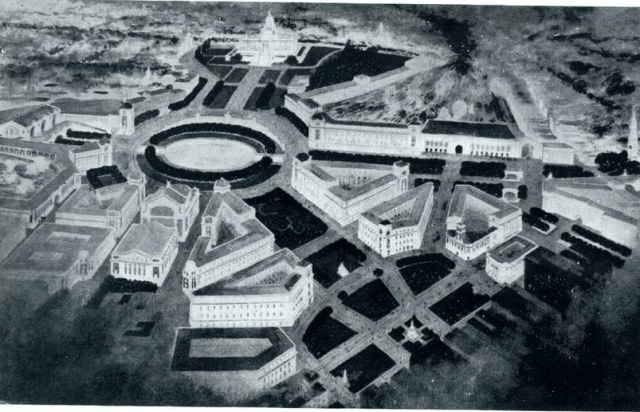
“Providence 1950,” a 1910 proposal by RISD president Huger Elliott. (Providence Public Library)

Catherine Zipf’s piece in today’s Providence Journal, “Bus proposal is appalling,” is dead on. The more you think about it, as Zipf has clearly done, the more difficult it is to imagine a rational reason for the state’s proposal to build a new transit hub on open space around the Rhode Island State House, which Zipf would rather see transformed into a “City Beautiful-era park.”

I would quarrel with Zipf’s claim that Providence does not have a “City Beautiful-era park.” We have the State House Lawn, with its allée of trees from the capitol (designed by Charles Follen McKim) down to Francis Street, edged also by the Masonic Temple (now a hotel), the charmingly classical headquarters of a shipping company, and the Nordstrom end of Providence Place, all in the mode, more or less, of a City Beautiful landscape.

We also have Burnside Park next to Kennedy Plaza, also edged around by monuments to the City Beautiful – Union Station, the federal courthouse, City Hall and the Post Office – the last is not outright classical but Art Deco, which is of classical lineage. Plus Burnside Park has both the lovely Bajnotti Fountain and the equestrian statue of Civil War general Ambrose Burnside beneath its canopy of elegant old trees. Both are fine examples of classical sculpture. True, the city seems to want to undermine this gem with its events shed and its recent kiddie playground, but the park remains overwhelmingly classical. (I’ve long felt that Burnside Park should have its verdure extended into Kennedy Plaza, creating a small Central Park for downtown.)

We also have our recent linear riverfront, whose dozen bridges, artful river walks and “necklace” of small parks, including Waterplace Park, are surely inspired by the City Beautiful. I can’t imagine what else might have been going through the mind of its great creator, the late Bill Warner.

We also have Prospect Terrace along Congdon Street on College Hill, whose magnificent view, or prospect, as it were, is also of Beaux Arts inspiration, as is its splendid monument to Roger Williams, even if his tomb is modernist and his statue is not strictly classical. (The trees between the terrace and the city should be trimmed. It is getting hard to see from this overlook!)

None of these has the boulevard Zipf craves. On the other hand, there’s Blackstone Boulevard, designed by City Beautiful landscape architect Horace W.S. Cleveland and completed in 1894, the year after the White City of the World’s Columbian Exposition, which inspired the City Beautiful Movement in cities across the country, including Providence.

And we have the Roger Williams National Memorial, a reasonably large park (given our city’s size) stretching from Park Row to Smith Street between North Main and Canal streets. Maybe it strays farthest from the classical City Beautiful ideal, yet … well, I believe I have made my point. But wait!

Finally, we have Roger Williams Park as our primary example of a Beaux Arts park, notwithstanding Zipf’s demurral. She writes:

To be clear, Providence has wonderful open spaces, Roger Williams Park being one. But that’s a naturalistic landscape, where visitors are immersed in nature. I’m talking about a different type of urban park, where large-scale landscape elements are introduced into an existing city with the goal of improving civic life. Roger Williams Park is for getting away. City Beautiful parks are part of your everyday experience.

Yes, Roger Williams Park is a naturalistic landscape, but it has classical architecture and statuary liberally sprinkled throughout its hills, glens, ponds, lakes and dales, from the Rhode Island Museum of Natural History to the Temple to Music and a host of others along the way. They may be seen down every prospect (now known as view corridors). Is Roger Williams Park “for getting away”? Sure. That seems to me, however, a distinction without a difference. Tell it to the residents of the surrounding neighborhoods! All parks are for getting away, the distinction of how far away being of less importance in a city of this size.

Zipf did not make it perfectly clear how she imagines that the State House Lawn and State House Park (the lawn west of Providence Station) could be made, if it is not already, into a City Beautiful-era park. Surely she does not want a Versailles. But would she like the park to be classical through and through? Would she like the classical proposal, atop this post, by early RISD president Huger Elliott, printed in a 1910 edition of the journal of the Rhode Island chapter of the American Institute of Architects? Probably not. But it sure makes my spine tingle with pleasure!

(I wrote about Huger Elliott’s plan and others in my book Lost Provicence.)

Posted in Architecture, Landscape Architecture | Tagged , , , , , , , | 3 Comments

Our eyes poke back at mods

Screen Shot 2017-11-29 at 6.37.40 PM.png

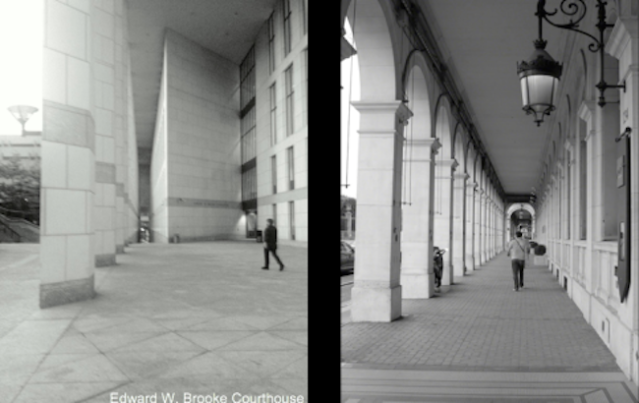
Boston City Hall and Paris street arcade (rue de Rivoli) show little detail and much detail, a factor in which scene most humans prefer to inhabit. (geneticsofdesign.com)

A thrilling new report on how biometric technologies assess human taste in architecture was published yesterday on Common/Edge. As I’ve said before, good on C/E for running an essay, as it occasionally does, that refrains from trashing new traditional architecture, as it usually does, often in the guise of even-handedness.

I mean that as praise. Most architecture journals are unrelentingly negative in their assessment of new traditional architecture, when they don’t just ignore it. C/E is an important break from convention.

Game-Changing Eye-Tracking Studies Reveal How We Actually See Architecture” is by architect and researcher Ann Sussman, who sent me the C/E piece the day before yesterday. Then Kristen Richards, the founder and editor of the indispensable ArchNewsNow (ANN) compendium of reporting and criticism on architecture worldwide, sent me Sussman’s piece. She was sure that I’d be interested. So I am actually reading Ann on ANN. Ha ha! Sorry ’bout that, couldn’t resist. But now let’s get serious.

Sussman wrote the essay with Janice Ward. Last year, the two wrote what may be the most in-depth description of Sussman’s findings up to that point. “Planning for the Subconcious” was the cover story for the June 2016 issue of Planning, the magazine of American Planning Association.

In the APA article, the authors are more vague about what eye tracking and other biometric tools (such as EEG to track brain waves) say in regard to how people respond to architecture. They quote architecture professor Mark Collins, of Columbia University, pointing out that “[b]iometric techniques hold so much potential for planning because they ‘make quantifiable what we intuitively know and show us what we don’t expect.'”
Screen Shot 2017-11-29 at 7.39.45 PM.png

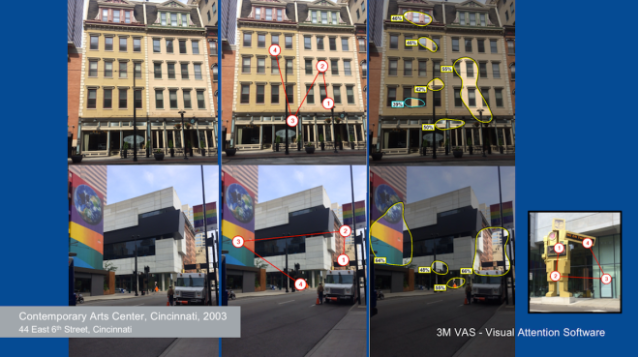
Eye tracking by Ann Sussman shows how the eye is drawn to the building above whereas the eye tends to avoid the building below. (geneticsofdesign.com)

Over time, Sussman has become bolder in her willingness to articulate what those tools are telling her. Most emphatically, biometrics tell us that people like to look at other people most, which certainly qualifies as what we already know intuitively. We look at people because people’s faces are the kind of detail that is most interesting to the brain. So our experience of places and individual buildings are more pleasing when the places have more people in them and when the buildings have details that suggest the human face or simply more detail rather than less detail.

And what does that say? It says what we know intuitively, and have seen measured frequently in surveys and anecdotally for decades, that people prefer traditional architecture to modern architecture. The one architecture revels in detail and ornament; the other largely rejects detail and ornament, preferring simple (or blank) spaces that don’t offer up much detail for the human brain to subconsciously enjoy. (For early humans, such detail was a matter of life or death out on the savanah.)

This is both intuitive and, as Collins says, shows us what we don’t expect. Why don’t planners, architects and people in design and artistic circles expect what they know intuitively? Because architecture and design schools have, since the 1950s, purged students of their instinctive respect for beauty, or at least it has taught them to suppress all that, and to express only what is conventional in such circles. And that’s what they do.

Most people have not had an education in architecture, art or design, and so remain capable of acknowledging the feelings they get when they see things that do – or do not – tickle their intuitive respect for beauty. That is a respect built up in all people from a very young age because, unlike other arts, we experience architecture (interior and exterior) minute by minute from near birth through adulthood. Most people have a more sophisticated ability to judge architecture than the experts. This is why adults feel a greater comfort and joy in traditional rather than modernist architecture. They may not be able to design a house, but they certainly can have an opinion of it. People are less confident in their ability to judge art, music and other products of the design world, but they judge it nevertheless. Appreciating traditional architecture is an instinctive response whereas appreciating modernist architecture is a learned response.

The key passage in Sussman’s C/E essay is:

People don’t tend to look at big blank things, or featureless facades, or architecture with four-sides of repetitive glass. Our brains, the work of 3.6 billion years of evolution, aren’t set up for that. This is likely because big, blank, featureless things rarely killed us. Or, put another way, our current modern architecture simply hasn’t been around long enough to impact behaviors and a central nervous system that’s developed over millennia to ensure the species’ survival in the wild. From the brain’s visual perspective, blank elevations might as well not be there.

The sentence beginning with “our current modern architecture” suggests that if we give modern architecture enough time, it will affect the brain in ways that might someday counteract the brain’s love for faces and details. But most people won’t be around 3.6 billion years, or even half of that, or a millionth (3,600 years), waiting for that to happen. Recognizing this fact, architects often argue that people just don’t “understand” why modern architecture is superior to traditional architecture. They simply need to be re-educated. Well, good luck with that!

Meanwhile, research in more basic biological and mathematical fields supports the biometric research by Sussman. Studies in fractals and biological reproduction by the University of Texas mathematician and architectural theorist Nikos Salingaros, partly in association with architect and complexity theorist Christopher Alexander, show how architectural change mimics biological processes in nature. This research, which was initiated decades ago, confirms that architectural processes change in ways that mimic natural reproductive processes. Builders over centuries and millennia select best practices through trial and error that reflect almost Darwinistic incentives. Architects of every stripe design under the influence of this historical methodology, though traditional work fits more easily into the resulting biological parameters than modernist work.
Screen Shot 2017-11-29 at 6.32.11 PM.png

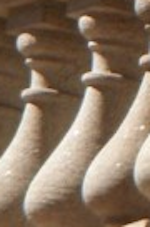
My own evidence for what Sussman has found is in the photograph at left, a detail from my blog’s header. It is the balustrade in front of the Providence Public Library. The baluster is my favorite architectural feature. I never knew why but it must be because it resembles part of the human body. Some readers see a line of noses – the central if not necessarily the most important feature (the eyes) of a human face. Or maybe it’s a multiple set of … um, well, I don’t want to have to resign from this blog, so I will just say maybe they resemble thoractic appendages of the distaff kind.

Not sure whether my choice was an example of direct or intuitive cognition.

But the key thing is to read Sussman’s essay on Common/Edge. It focuses attention on how many uses are being found for eye tracking technology by product designers and advertising specialists. Very interesting stuff!

Posted in Architecture | Tagged , , , , , , , , | 9 Comments

TBC symposium in Brooklyn

Screen Shot 2017-11-28 at 2.12.30 PM.png

Manhattan Bridge as seen from one of Brooklyn’s city streets. (NYCgo.com)

The latest Traditional Building Conference, next week in Brooklyn, will feature a host of seminars that together emphasize how major traditional projects can influence the evolution of traditional building techniques.

The Dec. 5-6 symposium, spanning Tuesday and Wednesday, at Grand Prospect Hall (263 Prospect Ave.) and other venues, will assemble various themes that feed into the close relationship between what is being built and how it is being built. The opening lecture will be by Francis Morrone, the noted architectural historian with his finger on the interplay between historical preservation and development in booming Brooklyn.

To the extent that development projects feature restoration of old buildings and new construction that fits into Brooklyn’s range of historical settings, the tools, materials and practices used in construction will differ to some degree from those used on modernist projects. The evolution of each factor proceeds along largely separate tracks, just as evolution in traditional and modernist design proceeds gradually or lurchingly, as the case may be.

In this regard, the most intriguing seminar could be about the proposal by Richard Cameron, of Atelier & Co. in Brooklyn, to rebuild Pennsylvania Station, in Manhattan, as originally conceived by Charles Follen McKim of the Gilded Age firm of McKim Mead & White. The proposal got a major boost from the journals Traditional Building and Period Homes, whose editor emeritus, Clem Labine, will join Cameron on the panel.

Penn Station opened in 1910 and was demolished in 1963. Its foundation and trackage remain intact, and elements of its granite structure and decoration may still be where they were dumped in New Jersey’s Meadowlands. Clearly, however, so much has changed since it was built that its cost requires total reconceptualization. To an extent, whether the proposal moves forward depends on the degree to which supporters and major donors (private or public) can be persuaded that new techniques and new methods of practicing old techniques can play a major role in producing savings.

The latest thinking on this subject will form a part of the Penn Station presentation, as the seminar’s first “learning objective” suggests:

Explain the original building craft work lost when Penn Station was destroyed and how rebuilding a new building would use both traditional craft and modern design and construction technologies.

A major project like rebuilding old Penn Station would also affect the market for traditional products and services, leading not only to the expansion of firms and the increase in competition among them, but to speeding market entry for new products and services that would be needed for such a grand endeavor, especially to reduce its cost.

Other panels of the symposium might also be framed to elicit useful information about the influence of major traditional projects on the construction methods at all levels of traditional design and construction. Here is a list, in order, of the other panels:

  • On Tuesday, the headquarters of Brooklyn’s fire department, built in 1894 and designed in the Romanesque style by Canadian-born architect Frank Freeman, will be used as a case study in restoring terra cotta roofs.
  • A tour of Brooklyn’s Green-Wood Cemetery, with work by Stanford White, Warren & Wetmore, Richard Upjohn, Augustus Saint-Gaudens, will update attendees on the latest practices for repairing stonework.
  • A tour of the Brooklyn studio of EverGreene Architectural Arts will directly convey the wisdom of traditional architects’ long practice of treating art and artisans as integral to architecture, not as the pathetic afterthoughts of most architecture today.
  • Principals of the Atlanta firm of Historical Concepts will present the Georgia town of Senoia (“sun-noy“) as a model of how to “extend existing historic districts through precedent-based infill and redevelopment.”
  • The Penn Station panel will conclude Tuesday’s presentations.
  • On Wednesday, Aaron Ruby of Allison+Partners, in Little Rock, Ark., will address the reclamation from near-extinction of long-leaf yellow pine as the species of choice for beams and structural members, in new or in restoration work, as at Little Rock’s William Woodruff Print Shop. (Code compliance officers, call your office!)
  • Robert A.M. Stern Architects will discuss the relocation of the Hartford campus of UConn from West Hartford to downtown Hartford as part of an ongoing trend in higher education, including the preservation of the classical Hartford Times newspaper building as part of RAMSA’s role.
  • Gerner Kronick & Valcarcel Architects will present a case for why its project in New York – The Beekman, involving preservation and adaptive reuse of two old buildings and the addition of a modernist 46-story condo tower – deserved one of this year’s Palladio awards.
  • The work of Old World Stone, of Burlington, Ont., on Albany’s Cathedral of the Immaculate Conception will offer information about Brooklyn’s beloved brownstone, including “essential documentation, assessment, and replication of missing architectural elements and provide insights into the performance characteristics and proper installation of brownstone.”
  • The advantages and disadvantages of steel window frames and doors in restoration or new construction will be explored and compared, new vs. old, by representatives of the world’s leading supplier of its product, Critall Windows Ltd., of Witham, Essex, U.K., in the symposium’s final presentation.
Posted in Architecture, Preservation | Tagged , , , , , , , | 3 Comments

London perceived, tortured

Screen Shot 2017-11-26 at 8.07.22 PM.png

Painting of London sent by Malcolm Millais as a comparison to photos he took recently.

By torture, we’re not talking pins under fingernails, the Iron Maiden or Philip Glass, but how else to describe what the leadership of London has done to the city of London in the last several decades? If a city is a grand metaphor that embodies its citizenry, its history, its character and its spirit, no major urban agglomeration has been so resolutely bent out of shape, its beauty expurgated, its greatness tortured, as London.

Malcolm Millais, author of Le Corbusier, the Dishonest Architect, sent me some photos he’d shot on a recent trip to London, where he grew up. (He now lives in Porto, Portugal) His photos are taken from a Thames cruise and show the vandalism along its river banks that most photographers of London seek to avoid by posing shots from angles that crop modernist abominations out of the frame. Millais’s photographs force us to stare “modern” London in the face. We cannot look away. It is a train wreck writ large. How can this have happened? How can a civilized people have allowed it? The questions beggar the imagination. They are unanswerable. We can only gape in horror.

Above is London seen before it was wrecked by modern architecture, along the Thames near Greenwich Hospital. Below, in the photo series taken by Malcolm Millais, bare witness, if you can, to what has been done to London. The final image, of London during the Blitz, strikes me as more beautiful than any images today produced without the benefit of narrow framing.

Screen Shot 2017-11-26 at 7.50.10 PM.png

Screen Shot 2017-11-26 at 7.50.22 PM.png

Screen Shot 2017-11-26 at 7.50.35 PM.png

Screen Shot 2017-11-26 at 7.50.49 PM.png

Screen Shot 2017-11-26 at 7.51.05 PM.png

Screen Shot 2017-11-26 at 7.51.19 PM.png

Screen Shot 2017-11-26 at 8.06.05 PM.png

Posted in Architecture, Photography | Tagged , , , , , , | Leave a comment

Museum of National Identity

Screen Shot 2017-11-24 at 1.04.52 PM.png

The Museum of the American Revolution, in Philadelphia. (New York Times)

Christopher Hawthorne, the architecture critic for the Los Angeles Times, wrote a piece on Philadelpia’s new Museum of the American Revolution, by Robert A.M. Stern Architects, back in June that I somehow missed. “An Identity Crisis for American Architecture” cries out for rebuttal.

He asserts that in Stern’s eyes, the museum “had to embody a certain Americanness: It had to look as though it belonged in a group of buildings hugely important to the country’s early history,” such as Independence Hall, as if there was something wrong with that. After noting that Philadelphia Inquirer critic Inga Saffron had called it “stodgy,” but without mentioning that her chief objection was that it was not “revolutionary,” he writes:

It would be a mistake to say that a museum dedicated to exploring the roots of the American Revolution has some obligation to be explicitly revolutionary in its architecture — that it should suggest upheaval, radicalism or rupture in its very shape.

But he reverses himself in the next breath:

But there’s a significant gap between that architectural attitude and the one embodied by Stern’s design, which assumes that the most important questions about national identity have long been settled. What’s really missing from the museum’s architecture, perfectly well-turned but also perfectly complacent, is any noticeable sense of curiosity.

I will assume that by “curiosity” he means “revolutionary” – that is, rejecting the supposed complacency about our national identity somehow revealed by the museum. He, like Saffron, wanted the building to be modernist. He doesn’t want to admit that, but he fairly shouts it between the lines.

Of course, that betrays a misunderstanding of the particular revolution at issue. Both seem not to understand what the American Revolution was all about. Yes, the colonies revolted against King George, but they were reacting to the king’s refusal to grant the colonists the same rights as English citizens. The colonists did not object to English rule or English law or England per se, they objected to being allowed only partial participation in it. That’s what “No taxation without representation” meant.

Understanding this might put a different spin on the idea that a museum about the Revolution necessarily requires a specifically rejectionist attitude in its design.

Twisting the meaning of the American Revolution to fit the modernist narrative fits into a long tradition among modernists. Here is a short list of words that have been stripped of their real meaning by a culture, including architecture, that embraces the modernist project of rejecting American traditions and cultural mores:

Nostalgia means yearning for the good things of the past. It has been twisted to mean wallowing in that yearning to the point of refusing to accept change.

Authenticity means the quality of being authentic, not false. It has been twisted to mean the quality of skepticism toward traditional or conventional attitudes, including buildings designed to reflect those attitudes.

Modern means current, of today, up to date. It has been twisted to emphasize discontinuity above continuity in attitudes, practices and traditions, including those relating to design.

Of course most people who embrace traditional architecture have their own favorites, and reject the idea that buildings that reflect the continuity of tradition also represent a rejection of all change. It is the modernists who, harboring a warped view of tradition, believe that modern architecture represents a stage in progress that need not further evolve and that certainly must not, as they see it, regress.

Which brings us back to national identity. New traditional architecture does not assume that national identity has been long settled. Rather, it seeks to suggest that continuity in our attitudes toward and expressions of national identity is as valid as discontinuity. Tradition is as important as change in national life. They are two sides of the coin that represents our national identity. Tension between them is natural.

Modern architecture is part of a deconstructivist program to deny that reality and to do so in part by introducing new meanings to words, undermining traditions and institutions, and enforcing new mandates in the language of architecture. A natural and inevitable opponent of that program is new traditional architecture.

I don’t think most modern architects today buy into the deconstructivist program or are even aware of it, but it is implicit, and often explicit, in the writings of founding modernists such as Corbusier, Mies and Gropius. All modern architects help carry out that program whether they realize it or not.

It is no surprise that in a free society some will emphasize its ideals, and want to move toward them, and others will emphasize its flaws and want to start from zero. They are in disagreement. So be it. But I really wish people like Hawthorne and Saffron would acknowledge the degree to which people like Stern bend over backward to embrace the challenge posed by modern architecture. (That’s the understatement of the week. Much design by RAMSA, the firm founded by Stern, is in fact modernist.)

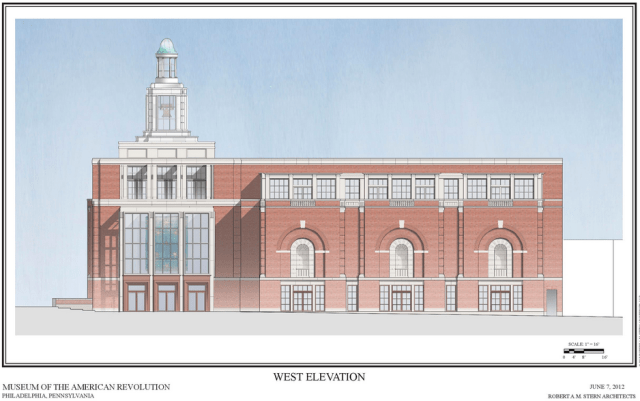
Just look at one of the earlier drawings of the Museum of the American Revolution. It originally had a cupola. Those who wished that the design were modernist badgered Stern into removing it. Other aspects of the building also compromise between tradition and change in architecture – in my opinion too much so. Why Hawthorne and Saffron are loath to acknowledge this is understandable, but it nevertheless amounts to rhetorical dishonesty in the discourse of architecture.

Screen Shot 2017-11-24 at 11.56.36 AM.png

Early elevation of museum featured a cupola, which was removed. (RAMSA)

Posted in Architecture | Tagged , , , , , , , | 3 Comments

Oldest trees in the world

Screen Shot 2017-11-23 at 1.17.24 PM.png

Trees. Isn’t that next month? Well, we can be thankful that these are not Christmas trees. Some of the trees are, allegedly, thousands of years old. Some of them are said to be older than Christianity. Some of them have developed branch systems of overwhelming complexity, suggesting the articulation of Mother Nature, and why traditional architecture – mankind’s reflection of Mother Nature’s science – beats modern architecture hands down. And beneath them all, beyond seeing, are root systems of equally overwhelming complexity, suggesting the same. Some even have trunks that compel a similar fascination, though their rings are beyond counting. Be thankful for them all. Feel free to discuss them around the table today.

The photo above is labeled “Diksom Forest,” which is in Yemen.

These photographs of trees are from Beth Moon’s book Ancient Trees: Portraits of Time. Moon spent 14 years traveling around the world to shoot the trees, for which she deserves our thanks. Some of her fine photographs appear on the website A New Kind of Human, courtesy of its founder, Gavin Nascimento. He demands credit in return for using “his work,” and demands also that credit to him be accompanied by his list of social media profiles rendered “in the EXACT FORMAT as above.” Okay. Here they are:

Find me also on;
Facebook
Twitter
Instagram

“Me” as rendered above is Gavin Nascimento. The list is a precise copy, errors included. And a happy Thanksgiving to him as well!
Posted in Architecture, Art and design | Tagged , , , , , | Leave a comment

Flirtation and architecture

Screen Shot 2017-11-22 at 7.59.15 PM.png

The progression from flirtation to seduction may be comparable to the progression between the stages of embellishment in architecture. The parallel may be drawn from an article by the Associated Press on how the French are reacting to the sexual harassment crisis here. In “France wrestles with the line between seduction, harassment,” Thomas Adamson describes the concern of some in France that overreaction might end up “throwing out its Don Juan national identity”:

“France is a country of men who love women,” Guillaume Bigot, who has written about the [Harvey] Weinstein fallout in France, told the Associated Press. “Seduction is a profound part of our national identity … the culture of the ‘French lover’ and the ‘French kiss’ is in danger because of political correctness.”

Leaving aside the dissolution of French culture, citizens in both countries can be forgiven for worrying that flirtation might someday disappear from the workplace. The transitions from yearning to fantasy to the exchange of glances to innocent touching and beyond in shops and offices across the land resemble, in certain ways, the transitions of embellishment in a building façade from the barely articulated base to the gentle stringcourse to the bolder treatments of the architrave upholding the cornice line beneath the edge of the roof.

The gentle and principled embellishments of traditional architecture resemble the modest and controlled gradations of civilized behavior.

Of course, progressions of behavior and of embellishment can both spin out of control. In the workplace the exchange of glances can lead to aggressive touching or worse. In architecture, society long ago stumbled past the gentle embellishments of tradition to the rejection of embellishment altogether by modern architecture, with its discomforting angularity, passive-aggressive sterility, vertigo-inducing gigantism of mass and its rejection of human scale, not to mention its thumbing its nose at the laws of nature.

Sexual assault and modern architecture both reject the idea that no means no. The abuse of authority over victims of sexual aggression in the workplace stretches back a long time, but so has the abuse of the built environment by modern architecture. Architects have known very well since the outset of modernism in the 1920s and ’30s that the public dislikes it by very wide margins. Like the smirk of a boss who has got away with victimizing his secretary, the modern architect treats the public’s dislike of his work as a feather in his cap.

Sexual assault and harassment perpetrated upon an individual is heinous, but so is modern architecture’s aggressive, coercive assault on the built environment. Both sexual assault and modern architecture have gone far enough. It is time to return to more civilized norms.

On one side of this comparison, bad behavior is finally being confronted. On the other side, not so much.

Has this comparison itself spun out of control? Maybe. Or maybe not.

Posted in Architecture | Tagged , , , , , , , , | 1 Comment