Put Fane tower downtown

Screen Shot 2018-05-21 at 6.57.17 PM.png

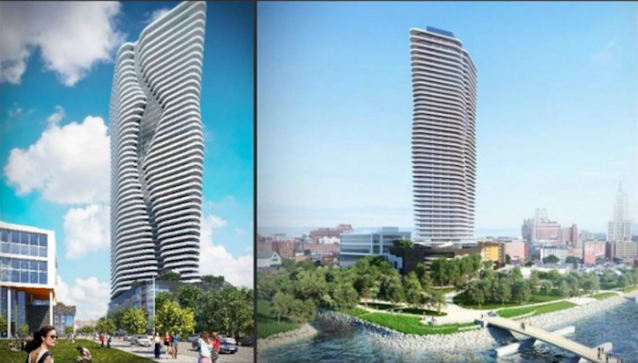
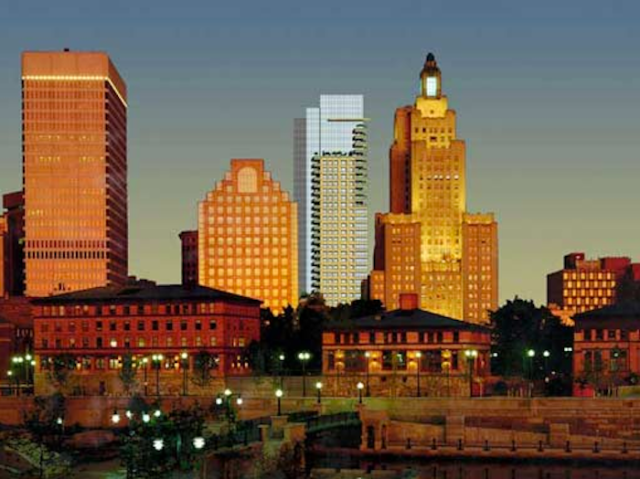
Rendering of OneTen luxury residential tower proposal from circa 2005. (Art In Ruins)

In 2005, Mayor Cicilline permitted a developer from Boston to demolish the dear old Providence National Bank (1929, addition 1950), near the Arcade downtown, before the developer had its financing sewn up. Even before the 2008 recession pulled the rug out from what remained of the proposal, OneTen Westminster died slowly, shrinking from the tallest building in Providence to the chimera of a W luxury hotel before going poof!

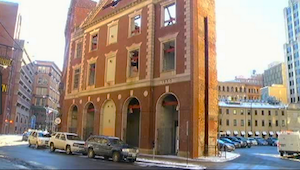
After the collapse, the Providence Preservation Society swung into action to save the Weybosset Street façade of the bank building, which the developer had promised to preserve and to incorporate into his proposed modernist residential skyscraper. The façade remains in place, and should serve as the base of whatever eventually arises there.

Indeed, this elegant parking lot is where the Fane tower should go.
Screen Shot 2018-05-21 at 9.42.40 PM.png

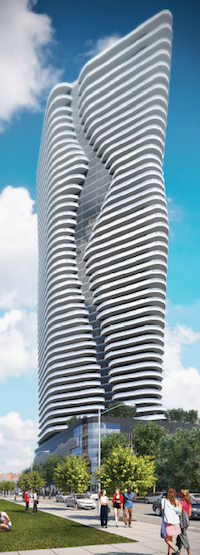
Fane tower. (pbn.com)

A couple of other downtown possibilities exist in that immediate vicinity. There is a parking lot on the other side of the Arcade, between it and the former Paolino World Headquarters, now rehabbed as a residential building. And there are two parking lots on either side of Custom House Street near Pot au Feu, Capriccio, and the Providence River.

A collection of parking lots in Downcity (the old commercial district) between Washington and Weybosset streets is probably the largest available space in the old downtown, but it should be reserved for a mixed multi-building development better calculated to fit into the historic character of that part of downtown. Of course, there are also the vast stretches of Capital Center that remain undeveloped four decades after that project began in 1978. Much of Capital Center’s architecture undermines the vaulting quality of the Providence skyline.

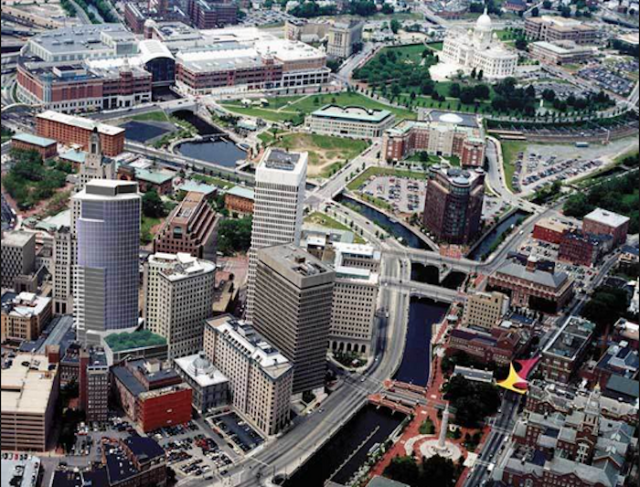
The grand shaper of cities in me calculates that the Weybosset facade lot would be the best place for a very tall building to strengthen the crescendo of the Providence skyline. Second best would be the lots next to the river, and this could even be the best if the alternative is putting the Fane tower too close to the Industrial Trust, as seems to be the case with the defunct OneTen tower in the images at the top and bottom of this post.

I consider the latest design for Fane’s tower ridiculous and even plagiaristic, but even in its current form I would support its construction in the Financial District. Nestled closely up among our other towers, its goofy form would certainly be eye-catching. A downtown location would enable a very tall tower to strengthen the skyline’s crescendo, relieving it from the wandering pustules of height built since 1990. To move the Fane tower there would improve the city in so many ways that the sacrifice might be worthwhile.
Screen Shot 2018-05-22 at 10.56.23 AM.png

Downtown site for Fane tower. (WJAR)

Momentarily I’ll cite these benefits, most of which come from an email dialogue among opponents of the Fane tower and assembled by the Jewelry District Association. But first I’d like to point out that a very tall building of traditional design, inspired perhaps by, say, New York’s Woolworth Building, would be best – if Fane is interested in a truly iconic building rather than a sham iconic building that belongs in Dubai.

The JDA bunch includes Olin Thompson, Lewis Dana, Bob Burke, Brian Heller, Tim Empkie, and Stewart Martin. I hope I haven’t left anyone out. They have been batting this around for a day or so. They have set up a couple grids that stack the advantages of moving the Fane tower downtown versus remaining at its currently proposed site. At a downtown site, the developer would benefit from a more generous height limit more easily relaxed, and a better fit within a denser urban context nearer to transportation and other amenities. The city would benefit from the above, plus the retention of the Fane tower’s initial 195 site for possible uses more amenable to high-tech opportunities and its parkside environment.

To save space I’ve summarized the two very interesting grids of benefits. The JDA bunch cites additional advantages accruing to the city, the state and the developer, but the biggest would be citizen and government support for the Fane rather than opposition. I’m sure that the discussion I’ve described just above will continue, teasing out even more benefits from a new location of the tower for both Providence’s citizens and Citizen Fane.
Screen Shot 2018-05-21 at 7.02.14 PM.png

Computer rendering of OneTen residential tower proposal from 2005. (BHP Development)
Posted in Architecture, Development | Tagged , , , , , , , , | 20 Comments

Architecture’s debt to Wolfe

Screen Shot 2018-05-20 at 2.20.37 PM.png

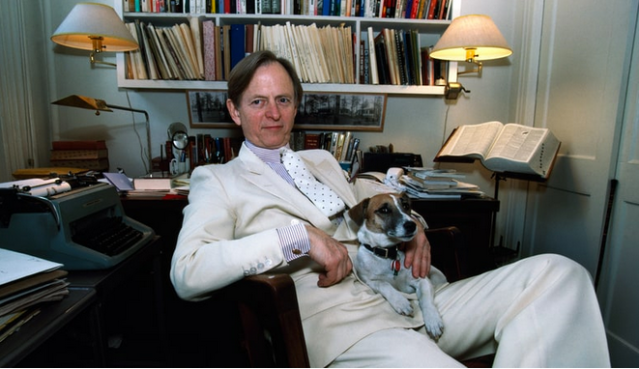
Tom Wolfe at his Manhattan apartment in 1987. (Rolling Stone/Bruce Davidson/Magnum Photos)

The possibility exists that someday architecture will shuck its cult status and return to its roots. If that day ever comes, the late writer Tom Wolfe will deserve much credit. His 1981 book From Bauhaus to Our House opened the eyes of many to the crazy tale behind the emperor’s new clothes. He was in the upper firmament of my own pantheon of heroes. May he rest in peace.

Readers, enjoy Wolfe’s Bauhaus preface below in its vivid entirety:

***

O BEAUTIFUL, for spacious skies, for amber waves of grain, has there ever been another place on earth where so many people of wealth and power have paid for and put up with so much architecture they detested as within thy blessed borders today?

I doubt it seriously. Every child goes to school in a building that looks like a duplicating-machine replacement-parts wholesale distribution warehouse.

[My own oft-repeated version is “cardboard-box factory.” Lame!]

Not even the school commissioners, who commissioned it and approved the plans, can figure out how it happened. The main thing is to try to avoid having to explain it to the parents.

Every new $900,000 summer house in the north woods of Michigan or on the shore of Long Island has so many pipe railings, ramps, hob-tread metal spiral stairways, sheets of industrial plate glass, banks of tungsten-halogen lamps, and white-cylindrical shapes, it looks like an insecticide refinery. I once saw the owners of such a place driven to the edge of sensory deprivation by the whiteness & lightness & leanness & cleanness & bareness & spareness of it all. They became desperate for an antidote, such as coziness & color. They tried to bury the obligatory white sofas under Thai-silk throw pillows of every rebellious, iridescent shade of magenta, pink, and tropical green imaginable. But the architect returned, as he always does, like the conscience of a Calvinist, and he lectured them and hectored them and chucked the shimmering little sweet things out.

Every great law firm in New York moves without a sputter of protest into a glass-box office building with concrete slab floors and seven-foot-ten-inch-high concrete slab ceilings and plasterboard walls and pygmy corridors – and then hires a decorator and gives him a budget of hundreds of thousands of dollars to turn these mean cubes and grids into a horizontal fantasy of a Restoration townhouse. I have seen the carpenters and cabinetmakers and search-and-acquire girls hauling in more cornices, covings, pilasters, carved moldings, and recessed domes, more linenfold paneling, more (fireless) fireplaces with festoons of fruit carved in mahogany on the mantels, more chandeliers, sconces, girandoles, chestnut leather sofas, and chiming clocks than Wren, Inigo Jones, the brothers Adam, Lord Burlington, and the Dilettanti, working in concert, could have dreamed of.

Without a peep they move in! – even though the glass box appalls them all.

These are not merely my impressions, I promise you. For detailed evidence one has only to go to the conferences, symposia, and jury panels where the architects gather today to discuss the state of the art. They profess to be appalled themselves. Without a blush they will tell you that modern architecture is exhausted, finished. They themselves joke about the glass boxes. They use the term with a snigger. Philip Johnson, who built himself a glass-box house in Connecticut in 1949, utters the phrase with an antiquarian’s amusement, the way someone else might talk about an old brass bedstead discovered in the attic.

In any event, the problem is on the way to being solved, we are assured. There are now new approaches, new movements, new isms: Post-Modernism, Late Modernism, Rationalism, participatory architecture, Neo-Corbu, and the Los Angeles Silvers. Which add up to what? To such things as building more glass boxes and covering them with mirrored plate glass so as to reflect the glass boxes next door and distort their boring straight lines into curves. …

[Wolfe’s book was written and published well before the architectural establishment had fully routed the insurgency of postmodernism. PoMo theorists had modernism dead to rights but then wimped out when it came to proof by design. Instead of reviving the traditions to which their critique invariably pointed, the postmodernists designed glass boxes with cartoonish “ironic” classical elements plopped on. Meanwhile, establishment modernists replied by dumping their own playbook in favor of a total abandonment of precedent – abjuring not only the styles of history but those of any and every contemporary rival, leaving fewer and fewer creative alternatives, flying higher and higher in ever-decreasing concentric circles until – to continue Wolfe’s famous line about Corbusier – their options “disappear up his own fundamental aperture.” Wolfe would have had a field day if he had followed up with an updated version of Bauhaus. Must read A Man in Full again to see whether his take on Atlanta’s glitz picks up on this.]

… I find the relation of the architect to the client in America today wonderfully eccentric, bordering on the perverse. In the past, those who commissioned and paid for palazzi, cathedrals, opera houses, libraries, universities, museums, ministries, pillared terraces, and winged villas didn’t hesitate to turn them into visions of their own glory. Napoleon wanted to turn Paris into Rome under the Caesars, only with louder music and more marble. And it was done. His architects gave him the Arc de Triomphe and the Madeleine. His nephew Napoleon III wanted to turn Paris into Rome with Versailles piled on top, and it was done. His architects gave him the Paris Opéra, an addition to the Louvre, and miles of new boulevards. Palmerston once threw out the results of a design competition for a new British Foreign Office building and told the leading Gothic Revival architect of the day, Gilbert Scott, to do it in the Classical style. And Scott did it, because Palmerston said do it.

In New York, Alice Gwynne Vanderbilt told George Browne Post to design her a French château at Fifth Avenue and Fifty-seventh Street, and he copied the Château de Blois for her down to the chasework on the brass lock rods on the casement windows. Not to be outdone, Alva Vanderbilt hired the most famous American architect of the day, Richard Morris Hunt, to design her a replica of the Petit Trianon as a summer house in Newport, and he did it, with relish. He was quite ready to satisfy that or any other fantasy of the Vanderbilts. “If they want a house with a chimney on the bottom,” he said, “I’ll give them one.” But after 1945 our plutocrats, bureaucrats, board chairmen, CEO’s, commissioners, and college presidents undergo an inexplicable change. They become diffident and reticent. All at once they are willing to accept that glass of ice water in the face, that bracing slap across the mouth, that reprimand for the fat on one’s bourgeois soul, known as modern architecture.

And why? They can’t tell you. They look up at the barefaced buildings they have bought, those great hulking structures they hate so thoroughly, and they can’t figure it out themselves. It makes their heads hurt.

***

Wolfe goes on to explain why. And his book became a bestseller, enchanting millions, and generating such hatred from the modernists as to curl anyone’s toenails, and to show how far under their skin he got. But by 1981 it seemed beyond impossible to turn back.

Or maybe not. Wolfe’s scathing look at American society – at modern architecture and every wrinkle of our collective folly – is at heart a book of optimism, written in the hope if not the expectation that foolishness will out and simple good sense will prevail. The problem of architecture may be the most easily solved major problem in the history of mankind. Society need only remove its blinders and flip a switch. If such an essentially effortless revolt happens, it will be fair to finger Tom Wolfe as the ultimate instigator.

Tom Wolfe, RIP.

Posted in Architecture, Books and Culture | Tagged , | 9 Comments

Not over till fat lady sings

Screen Shot 2018-05-16 at 10.25.50 AM.png

Latest Fane tower design is 46 floors and 600 feet. (wpri.com)

High-fives aplenty greeted last night’s vote by the City Plan Commission to urge the city council to reject the Fane tower. The commission wisely ignored its staff’s argument that a 600-foot tower in a 100-foot zone is consistent with the city’s comprehensive plan. Zoning regulations are designed to carry out a city’s comprehensive plan. The Providence Journal could not find enough space in its story to even hint at what staff were thinking.

The staff did have conditions. The 100-foot limit should be changed, it said, only if the developer, Jason Fane, agrees to 1) offer 15 percent of the units at affordable rates, 2) abandon the possibility of a second tower, 3) abandon its plan to build on a slice of the park next door, and 4) accept a sunset provision on the 600-foot limit if the tower is not done in two years.

The recommendation to change the height limit was defeated by 5 to 2. The conditions were a project killer. Both the yes and the no votes amounted, as a practical matter, to opposing the tower. Politically speaking, a yes vote was a get-out-of-jail-free card for those who for some reason felt uncomfortable doing the people’s will.

All of that said, the decision remains in the hands of the city council. Critics of the tower should not relax. Council members have no more obligation to follow the commission’s recommendation against upping the height limit than commission members had to follow the recommendation of staff. The council can ignore the commission just as the commission ignored its staff.

There is a lot of talk about greased palms, but many proponents of the Fane proposal honestly believe that it will create jobs and help boost the economy. And maybe it will. There is a boomtown feeling around here that may or may not reflect reality, regardless of the crane population. Nevertheless, a proposal that fits into the character of the city will boost a truly booming economy more than a proposal that undermines the character of the city. A city does not seek to create a “brand” for no reason.

“We don’t need a 600-foot tower to propel us into the modern era,” said the Providence Preservation Society’s Brent Runyon in sensible contradiction to the assertion by architect Friedrich St. Florian that we “have to break the rules because we have to move forward.” St. Florian is a native of Austria, which spent four decades in the shadow of the Iron Curtain.* So the idea that you must break a few eggs to make an omelette should be abhorrent to him. America has spent more than half a century breaking its cities. It is time to stop.

Anyway, a comprehensive plan written in concert with the public mustn’t be abandoned under the sort of flimsy pretext represented by the Fane tower, whose dubious financials have already raised eyebrows among members of the I-195 Redevelopment District Commission. It is the commission’s job to successfully develop the land created by moving Route 195 downriver.

The height limit is a vital facet of the opposition’s case against the tower, but so are the objections of those who find its design disrespectful to the city’s heritage. Americans of our time lack a vocabulary to express disagreement over aesthetics much beyond “Yuck!” But beauty is important. It is not just in the eye of the beholder. Its rejection by modernist architects and planners has damaged our society and our quality of life. It is depressing that the Journal, in an editorial titled “Soaring addition to the downtown,” and Friedrich St. Florian cannot get their heads around these plain facts.

In this battle over urban form, citizens have exerted the power of citizenship as they must in a democracy, using facts to oppose a development project whose wrongheadedness is clear to most of the public. Last night’s vote of the City Plan Commission against the Fane tower was a great victory, but opponents should not relax until the city council has nixed the developer’s attack on the citizens’ own vision for the future of their city.

*The original version of this blog erroneously stated that Austria spent four decades under communist rule.

Posted in Architecture, Development | Tagged , , , , , , , , , | 3 Comments

Steampunk vid of New York

Screen Shot 2016-03-28 at 8.00.13 PM.png

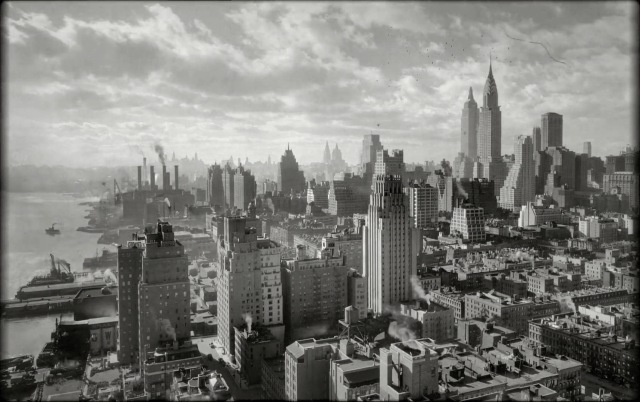
Came across this film, “The Old New World,” of New York and bits of Boston and Washington, D.C. (the Capitol), in about 1931, on the Kuriositas website. It is the Old New World Project run by Alexey Zakharoff. It is pretty amazing, and I really haven’t the foggiest idea how they do it, even though it is vaguely explained below:

Take a trip to times past in a steampunk time machine.  This amazing animation has been created with camera projection based on photos.  The result is something wonderful – if eerie – as the past comes to life in front of your eyes. A number of the large cities of the New World are included here, including New York, Washington and Boston.  Just wonderful!

The gizmo gears that unfold to expose the pictures are in the Steampunk style, a sort of takeoff on industrial design when industry was allowed to be beautiful (before the so-called “form follows function” era). You may think I have stolen the thunder because of all the pictures I’ve screenshotted from the project. But keep in mind that the pictures move. They are, as the squib above puts it, just wonderful! I regret only that it continues for merely 3:46 minutes, and that includes an end segment that seems to give some hints as to how it was all put together – but I would not stake my steak on it, if I had one before me.

Screen Shot 2016-03-28 at 8.04.46 PM.png

Screen Shot 2016-03-28 at 8.01.20 PM.png

Screen Shot 2016-03-28 at 8.02.33 PM.png

Screen Shot 2016-03-28 at 8.04.00 PM.png

Screen Shot 2016-03-28 at 8.06.08 PM.png

Posted in Architecture, Old Video | Tagged , , , , , | 2 Comments

House of (52,000) Cards

Screen shot of CBS Evening News segment on Brian Berg's houses of cards.

Here’s something from CBS Evening News involving architecture – a Harvard grad named Bryan Berg who builds houses of cards. He may not have (as he admits) a full deck but he certainly uses more than one of them to create his masterpieces. He does his card tricks for casinos, Disney, anyone who will pay, around the world – and he says it adds up to more than he would make as a real architect. And, he says, if a wing of his architecture falls down he doesn’t get sued. Furthermore, knocking them down is fun and that’s what he does when he’s done putting them up. And let us add that, based on CBS’s video of what he builds in the medium of cards, his work is superior to what he was taught at Harvard’s GSD, Graduate School of Design.

Good for him. Here he is:

https://videopress.com/embed/UZPyyv4h?hd=0&autoPlay=0&permalink=0&loop=0

Posted in Architecture, Video | Tagged , , , , | Leave a comment

Plymouth after World War II

Screen Shot 2016-01-28 at 10.35.41 AM.png

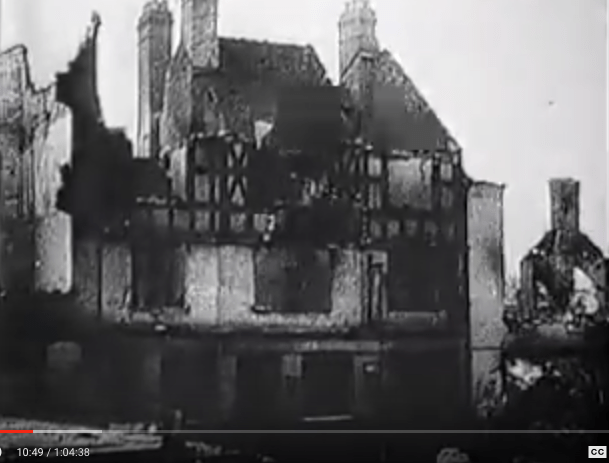
Mark Motte, author with Francis Leazes of Providence: The Renaissance City, urged me to view an old documentary on video called “How We Live Now,” filmed in 1946, about the effort to rebuild Plymouth, the most heavily bombed city per capita in Britain, after the war. It is a great example of propaganda. I include some screen shots above and below.

It is a fascinating romp through a postwar of pessimism-tinged optimism. The argument for a new beginning for Plymouth via a big government plan conceived by Sir Patrick Abercrombie is pushed by a narrator who, in the film, portrays a writer seeking answers. All the answers seem to sound really great, but the public is not so easily convinced. This comes out in the film. It is an hour but very much worth watching – very amusing in how it seeks to rope in the average family, and very frank in how the average family has the narrator grinding his teeth.

Here are some lines from the film. Expert planners, led by Abercrombie, are brought in to “fix” Plymouth, and one of them plays a film of the plan for the public. It describes the need for better roads and more integration with outlying areas (to preserve them). Then the presentation of the plan gets down to the nitty-gritty, what it will look like.

“Nor is there any need for petrol stations to become eyesores,” says the expert as a rendering of a sleek modernist gas station appears on-screen.

“In the home, we don’t try to eat in the bathroom or sleep in the kitchen. All we’ve tried to do is to plan a city as we might try to plan an ideal home.” Here the expert seems to be setting up the single-use zoning that became the bane of cities in the postwar era, pre-ordaining the constant need to drive in order to do anything.

The expert’s pitch reaches a crescendo with this: “Right down the centre, we’ve allowed for one monumental feature – a vista.” (Swelling instrumental music as images unfold, grander and grander!) Sketch after sketch of what Plymouth could look like rolls onto the screen, each featuring sleek (its designers would say) blotches of God’s wrath on cities.

Then the expert intones: “The key bit is that you, the citizens, must own the land. Mr. Baker, Mr. Watson and I propose the vista as as victory memorial for those who lost their lives in the Blitz. The symbol of a standard of living with spaciousness and beauty for all!”

The presentation ends to applause, but in the audience is the family that is the focus of the documentary’s effort to reach down to the little guy.

“This sounds all right, but who’s going to pay for it?” says the father. “We paid for the war,” says the daughter. “We paid for the war and we’ll pay for this.” replies the father. “But it’s worth it, Daddy!” she rejoins. “If we get it,” adds the mother.

Shortly after this, the narrator is walking down the street and sees the daughter, named Alice, with her boyfriend, a sailor. He catches up with them, intending to deploy his strategy for getting average people to talk about the plan. He invites them into the Museum of Natural History that they happen to be in front of in downtown Plymouth, and where the city happens to have a model of the plan on display for the public to see.

“They seemed quite eager to go into the museum,” says the narrator. “I doubt they’d ever been here before. Alice seemed to know all about the plan but she’d never seen the model.”

They step into the model room. The camera pans the model, ending with a focus on the girl’s face. The music gulps, reflecting her skepticism.

“I don’t think there’s anything in it,” Alice says.

“But aren’t you interested in your own city?” replies the narrator. (Huh?!)

“Yes. But not this.”

“They’ll never do it,” says the sailor.

“But what makes you say that?” replies the narrator.

“They’re not sufficiently go-ahead,” says the sailor. “Now if this were America it would be different.”

“Don’t you understand? ‘They’ means ‘you.’ If you want it enough you’ll get it.”

“I don’t know if I want it or not,” says Alice. “I don’t think it matters much.”

“Now that we’re here,” says the sailor, “let’s go and look at the fossils.”

The narrator grumbles to himself: “Not interested. They just don’t understand. That’s how ideas are killed. So much easier to kill an idea than look into it.”

In the next scene the city council debates legislation to support the plan but a councilor proposes an amendment to slow things down and consider a more modest plan.

“In the interests of the ratepayers,” he states, “in whose minds there is uneasiness at the great size of the plan, and the fear that they would have to carry an intolerable burden, with heavy rates. In the plan, imagination has been allowed to run riot. I am informed that to acquire the land for the city centre will cost 20 million pounds. On top of that there is this gross extravagance, this boulevard from the North Road Station to the Hoe [the waterfront area].

Another councilor replies: “I view the amendment offered by Mr. Taylor, my Lord, with grave misgivings. For whom does Councilor Taylor think he is speaking? Where there is no vision, the people perish. And I cannot help thinking that Councilor Taylor is speaking for the people with no vision. His illustration of the traveler coming to Plymouth and unable to drive his car through the picturesque highway that has been the dream of Plymouth citizens for years. To what does it amount? If he goes on foot it is the shortest route to the city centre. If he goes by car, he can but add two minutes to his journey. The argument is a ridiculous one. The opportunity of raising the city, magnificent in proportions, and affording glorious opportunity for all its citizens, is an ideal for which we should happily aim.”

(You add to your journey by taking a car instead of going on foot? That is to the plan’s advantage?)

Soon there is footage of Michael Foot, the perennial Labour P.M. wannabe, here quite young, arguing for the plan. The name of his opponent, Leslie Hore-Belisha, appears in a shot of the ballot for the upcoming parliamentary election as a sometime Churchill ally during the war. He is often cited in the great biography by William Manchester.)

The narrator takes a stroll to think things through and, regarding the new homes that he passes that look like Philip Johnson’s Glass House, he says, “And the new houses looked horribly reminiscent of barracks.”

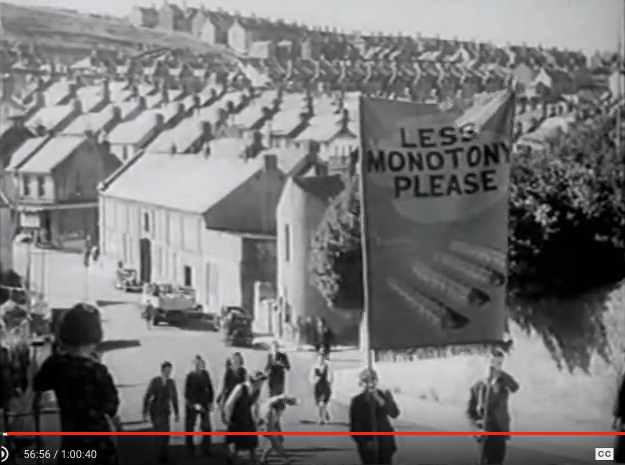
Then he sees a parade with young people calling for their elders to do something: “Youth. I’d forgotten the impatience of youth. Will they help bring the plan to fruit?”

Here is the documentary’s final lines spoken by the narrator:

“In a country where every shade of opinion is allowed, almost anything is possible. Cities of tomorrow: What will they be? Who can tell? For their story is still being written by the citizens of today.”

As I say, watch the film. It’s a trip and a half. Of course, I think the doubtful citizens were smarter than the experts, and what happened to Plymouth – which we now know – bears me out.

Screen Shot 2016-01-28 at 12.26.25 PM.png

Screen Shot 2016-01-28 at 12.27.34 PM.png

Screen Shot 2016-01-28 at 12.30.17 PM.png

Screen Shot 2016-01-28 at 12.28.44 PM.png

Screen Shot 2016-01-28 at 12.24.30 PM.png

Screen Shot 2016-01-28 at 10.12.52 AM.png

Screen Shot 2016-01-28 at 10.19.18 AM.png

Screen Shot 2016-01-28 at 10.38.18 AM.png

Screen Shot 2016-01-28 at 11.15.28 AM.png

Screen Shot 2016-01-28 at 10.34.08 AM.png

Screen Shot 2016-01-28 at 10.35.41 AM.png

Screen Shot 2016-01-28 at 11.19.18 AM.png

Screen Shot 2016-01-28 at 11.27.57 AM.png

Screen Shot 2016-01-28 at 11.20.20 AM.png

Screen Shot 2016-01-28 at 11.26.25 AM.png

Posted in Architecture, Old Video, Urbanism and planning | Tagged , , , , , | 2 Comments

Sir Roger Scruton on beauty

lostprov11.jpg

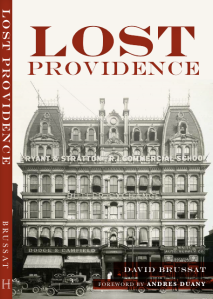
Here is a lovely video of the British philosopher and architectural theorist Roger Scruton called “Why Beauty Matters.” The usefulness of beauty in uplifting human lives serves as the bottom-line rationale for my book Lost Providence.

But if you have time, watch “Why Beauty Matters,” from the BBC.

Posted in Architecture, Video | Tagged , , , , , , , | Leave a comment

See blogs while I’m in D.C.

Screen Shot 2018-05-11 at 7.51.12 AM.png

Readers who get my blog posts by email from my blog lists (including folks on TradArch and Pro-Urb) may visit my blog directly to get my posts while I’m in the Washington area these next few days. Just type: Architecture Here and There into Google or some other search engine.

Or click:

www.ArchitectureHereAndThere.com

They will appear at 7 a.m. sharp.

Happy reading, or in the case of these four vacation video posts, happy viewing.

Posted in Architecture, Video | Tagged , , | Leave a comment

Come visit these videos

tourisms

[Today, I fly off for several days in my hometown, the District of Columbia. While I am away, instead of giving my blog a vacation, I will steal some old posts (all featuring videos) from my archives. Enjoy. Back next Wednesday.]

Chris Michael of the Guardian assembles the 10 worst city tourism spots in history – they go back as far as 1960 (Vancouver). These were great fun, some of them were actually impressive in a macabre modernist way. Atlanta and Miami are a hoot. You will not believe Astana (capital of Khazakstan). Get sexy in Amstermadam! (Actually Riga, but who could resist?) Get sexy (guys) in (gay) Stockholm! Sexual innuendo galore! But the most consistent fun are Michael’s blurbs for each video, describing their sins, which one then waits with bated breath for. Enjoy!

Posted in Architecture, Video | Tagged , , , , | Leave a comment

I-195 eastern front heats up

Screen Shot 2018-05-10 at 9.09.45 PM.png

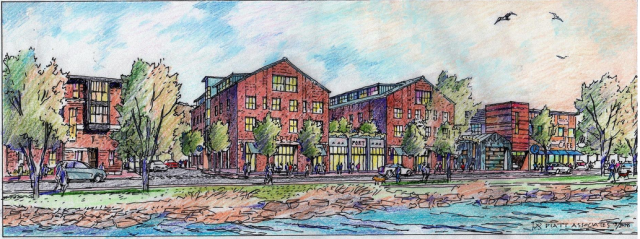
Rendering of Spencer Providence plan for three parcels of 195 land east of river. (Providence Journal)

The I-195 Redevelopment District Commission hosted the latest skirmish in the war among three developers to win the commission’s approval to build on the east bank of the Providence River. I arrived at the public hearing but had to leave early, but from what I’ve read since, not much has changed.

My spies are working to get the deep poop on what happened.

At any rate, feeling for and against the projects seems to be solidifying, as Paul Edward Parker of the Providence Journal reported today. His story, “Three developers vie for Rte. 195 lots in Providence,” features this passage:

Public comment during the meeting was split roughly into two camps: neighborhood and nearby residents, who favored the middle-sized project, whose architectural theme mimics the 19th-century Providence waterfront, and construction labor union representatives, who favored the largest project, with a more modern theme that included the research and development labs.

Parker did not indicate whether the comments split evenly or otherwise.

Neighbors prefer the Spencer Providence proposal, which seems inspired by Fox Point’s architectural history, at least to some degree. (Parker for some reason used the pejorative word “mimics”). Construction union officials prefer the Carpionato proposal because it takes up all three development parcels compared with the Spencer proposal’s two, and would require hiring more construction workers. Nobody seems much interested in the Post Road Residential proposal, a suburbanish apartment complex with ground-floor retail that would take up only one of the three available parcels.

Parker described the Carpionato plan as having “a more modern theme,” but I’m sure he was referring not to its style but to the fact that research labs are among its features. My spies will no doubt inform me of any major design shifts in the Carpionato project, which has shown traditional aesthetic tendencies since its 2013 unveiling, and quite lovely, but has suffered backsliding in the gradual replacement of gabled roofs with flat roofs.

So far as I can tell, none of my usual journalistic sources have provided any new illustrations from last night’s event. I am traveling to Washington, D.C., tomorrow, and hope to have more to go on when I return next week. (I have pre-scheduled a host of videocentric blog posts from the past to assure readers that my blog has not taken a leave of absence.)

Posted in Architecture, Development | Tagged , , , , , | 2 Comments