How to capture territory

25471851.thb[1]The classical revival has been expressed, in numerous threads over several years on the TradArch listserve discussion of classical architecture, as a matter of “recapturing territory” captured by modernism from classicism decades ago. Andres Duany, rightly famous for successfully leading the New Urbanist movement, is responsible for the muscular military rhetoric that has framed at least his contribution to this debate. He is publishing a treatise, “Heterodoxia Architectonica,” on how this must be done.

I have long feared that his treatise will go beyond recapturing old classicists like Louis Sullivan. I worry that he will try to capture actual modernists, like Corbusier (well, maybe not him), relabeling modernists as classicists because, say, a work of theirs may have columns, even though they are completely unadorned. I think that would confuse the issue. Those who favor a classical revival have as their chief strategic asset the greater regard of the public for traditional over modernist architecture. There is territory that classicism should not want to capture.

Participating in many threads, Andres and I have debated this subject, including whether classicists are too wedded to the classical canon. Here is a summary, sent at his request, of how I view what classicists must do to strengthen their attempt at revival in the 21st Century:

The issues of the 21C are mainly the same as in the late 20C:
        – spreading the word on tradition and beauty.
        – expanding opportunities for tradition and beauty in academia.
        – rolling back restraints on the free production of beauty through tradition.
        – identifying and publicizing weak points of modernism and modernist preservationism.
        – waiting for, or creating, events to leverage the public against actual modernist projects. Some examples:
             a. Ground Zero (failure to engage style war; no process, except for Lohrsen/McCrery proposal)
             b. Chelsea Barracks (success in style war publicity; in process, waiting to see)
             c. Eisenhower memorial (near success in publicity; limited success in process – Gehry implosion only partly due to style war concerns)
        – using said events and others to bring reform to a process that today prevents even playing field for tradition – e.g., Prince Charles pressing in Britain to strengthen the public voice in development projects 
        – positioning an increasingly educated and revitalized classical/traditional architecture (and allied arts & crafts) to recapture market forces if and when the above actions result in a tipping point.

* * *

In short, although a lot of intelligent reflection has taken place on this list regarding a Fifth Recall [as Andres refers to the movement he hopes to generate via his treatise] and other issues, including important ones like sustainability, attracting youth, educating the bad trads, etc., the real action in moving tradition forward into the 21C is taking place on other fronts. Actual traditional architects, including those working on New Urbanist projects, are taking back territory by building in tradition. Let classical be classical – canonical, heterodoxical, whatever.  Those who engage the enemy (and know who the enemy is) are preparing the ground for more progress.

Posted in Architecture, Architecture Education, Architecture History | Tagged , , , | 1 Comment

Column: Help save history and Peter Pan

High Street, Winchester, southwest of London.

High Street, Winchester, southwest of London.

Winchester, a city 68 miles southwest of London, was the seat of government in England until the 12th century, and the center of its trade in wool. The town figures as Kingsbridge in Ken Follett’s novel “The Pillars of the Earth.” Winchester Cathedral is memorialized in song for “bringin’ me down” when “my baby left town.” Winchester’s High Street is northern Europe’s oldest active main street. It retains its historical character but is about to be vandalized.

At the same time, Moat Brae House, in Dumfries, Scotland, is also about to be vandalized. The garden at Moat Brae is where the 8-year-old J.M. Barrie played at pirates. It inspired the Neverland of “Peter Pan: Or, the Boy Who Would Not Grow Up.” Moat Brae now cowers in the shadow of our era’s Captain Hook.

The vandalization looming over both places, common nearly everywhere, is that of insensitive architecture set into beloved places. The plan in Winchester would drop a huge retail development just off its High Street. In Dumfries, a much smaller but equally irksome plan would add a café/book shop and an “education suite” to Moat Brae House. Designed in 1823 by Walter Newall, it was saved from demolition five years ago and has now been restored. The additions are not yet designed but, as described in proposals, sound out of character with the enchanting effort — including a restoration of the Neverland garden — to revive a site that had fallen into ruin and use it to teach children about their own branch of literature.

The Winchester plan would slash at the historic weave of the city’s intact fabric. The buildings proposed are hugely out of proportion and of poor design. To judge by images available, they vaguely mimic historic shapes, like bones tossed out to placate the hounds of opposition. The shallow setbacks and contemporary materials seem unlikely, even with the assistance of time and weather, to help the project blend into the historic context. Rather, they would plug up the keyhole by which residents and visitors alike peek into the history of Britain.

This threat to Winchester should have Britons up in arms, along with the British diaspora, not to mention citizens from lands, like America, that value British history as a cornerstone of nation and freedom.

But the looming fate of Moat Brae pulls on the very heartstrings of our youth, for who among us has not visited Neverland?

“When the shades of night began to fall,” recalled Barrie of the Moat Brae garden, “certain young mathematicians shed their triangles, crept up walls and down trees, and became pirates in a sort of Odyssey that was long afterwards to become the play of ‘Peter Pan.’ For our escapades in a certain Dumfries garden, which is enchanted land to me, was certainly the genesis of that nefarious work.”

Speaking of nefarious work, these developments are familiar to Americans. British architects and planning authorities, like ours, are taught to consider new architecture inspired by the patterns of history in the places we love as mere nostalgia. They believe that architecture should “reflect its era.” Fine. But their conception of our era reflects a narrow, ideological vision that worships the machine, cuts humanity’s link to life apart from the machine, and harks back to a future inspired by vintage early ’60s Jetsons cartoons, of all things!

Any third grader would understand (Barrie was of that age when he played at Moat Brae) that however it may look, anything built in our era is of our era. So why not let it fit in with the streets of Winchester or Dumfries?

The Captain Hooks of development, scowling beneath their skull and crossbones, can declare all they like that an inappropriate project fits in. Peter Pan, Tinker Bell and their friends will know what to think about it.

My son, Billy, who is 5, loves “Jake and the Neverland Pirates,” which I endure better than I do his infatuation with reruns of the egregious “Scooby Doo.” I long for the day we introduce him to the real Neverland. The possible vandalization of Moat Brae saps the idea of a visit.

In Britain, planning officials are obliged by law to treat the public as a stakeholder. But unofficial feelings about that seem to be reflected in the difficulty of submitting an official objection, especially for those lacking a British postal code (required by the form). There is even a list of “material” reasons that must be heeded.

Those who want to object to the Winchester project should Google “Winchester Deserves Better” to reach a site that offers one email link to all the city councilors involved. Objections to the Moat Brae project might as well be directed, it seems to me, to Tinker Bell. Those with finer Google skills might have better luck.


Note: Below are websites for the two planning offices involved. There you can read the kind of objections that are allowed, or not, and follow instructions:

For Winchester: http://planningapplications.winchester.gov.uk/PlanningWeb/help.aspx?obj=index,

For Moat Brae: http://www.dumgal.gov.uk/index.aspx?articleid=1882

Posted in Architecture, Architecture History, Books and Culture, Development, Other countries | Tagged , , , | 2 Comments

Plecnik revisited

A weir is a structure less ambitious than a dam designed to alter the behavior of a river.

A weir is a structure less ambitious than a dam designed to monitor or alter the behavior of a river.

WordPress offers bloggers, among many other things, a list every day enumerating which posts get read by how many readers. I am continually amazed at how many posts from long ago (well, months) keep getting hits in drips and drabs. For example, a reader, Geoffrey James, just commented on a post from April 14, “Joze Plecnik, gone fishing.” Read it here. He answers a question I posed whether the Plecnik structure illustrated at the top of the post was a dam or a bridge. Here is Geoffrey’s very interesting comment:

It is indeed a weir, part of Plecnik’s extensive intervention into the river system which included river-banks, quays, bridges and landscape architecture. I don’t think humor or irony was part of his repertoire. Ljubljana is well worth a visit because of the extraordinary presence of Plecnik’s influence: he did squares, avenues, bridges, a remarkable market building, an incredible cemetery, a great university library, churches, office buildings, private houses, a terrific flat-iron building, and walks punctuated with archaeological remnants and pyramids. He was an outlier, and an original architect and urbanist who deserves to be better known, which is why I am working on a book of photographs that I hope will do justice to his work. As to the modernist-totalitarian link, I would think that this would only pertain to Italy – some of the Fascist architecture in the towns outside the Roman marshes is terrific. But Hitler loved grandiose, pallid classicism, and Stalin was into Wedding Cake. The Bauhaus didn’t survive the Nazis.

Maybe Plecnik was a sourpuss, but his weir is delightfully weird. Each of its towers is a human face. Very funny, but entirely unintentional? I think not. Though it may well be that these faces were depressed and about to drown themselves by leaping from the weir. Not funny. Nonetheless, I look forward to Geoffrey James’s book on Plecnik. As for the modernist-totalitarian link, I’m not sure Geoffrey grokked my point. But that’s neither here nor there, or at any rate it is not to be further pursued in this particular post.

Posted in Architecture, Art and design, Other countries | Tagged , , | 2 Comments

Tennessee sky scrape

The skyline of Nashville. (globeimages.com)

The skyline of Nashville. (globeimages.com)

Continuing with A History of the Future, here’s what happens to skyscrapers after nobody can afford to keep them juiced. The passage begins in Nashville, with the protagonist’s first view of the former Capital of Country Music. Every American city had its poor collection of skyscrapers, which after the collapse became useless, and in the new times were ignored. In Nashville, people are begining to build the place anew:

I finally came into Nashville on a hot morning late in August. The very center of the town around the north side of the old statehouse had mostly been parking lots when the collapse happened. Men were at work erecting buildings of two and three stories in red brick that they salvaged from elsewhere in the deserted quarters of the city: Many strangely shaped skyscrapers loomed balefully over the blocks between the old capitol and the Cumberland River. They were empty now. The glass had been removed, starting from the lower floors. The sort of office work they were built for no longer existed and they contained a lot of material that nobody manufactured anymore. You could image the work of careful disassembly going on for decades, centuries. I know from my history classes people were still pulling marble off the ancient Roman monuments a thousand years after the empire fell.

He then moves on to Franklin, further south, now capital of Foxfire, stitched together from border states between the federal enclave to the north and the black enclave to its south, made up of most of the old Confederate states.

The original heart of the town, where activity now concentrated, was a set of ten blocks disposed around a broad traffic circle with a square rose garden set within it and an obelisk in the middle. A lot of new construction was evident. Since the Foxfire government relocated from Nashville and extended its administrative tentacles far and wide, the wealth from its territories flowed into Franklin. Much of the town had been relegated to parking lots in the old times. The lots were being filled in now and the work was impressive. The new buildings were made in the traditional style of the region, using red bricks and wood trim painted white, sometimes with black shutters, which gave you the odd impression of being somewhere that was neither exactly the past nor the present. The buildings that stood out were the awkward and ugly things left over from the twentieth century, buildings that looked like machines, or packing crates, or spaceships, and were built with materials that aged badly. These were being torn down, to great public approval.

Posted in Architecture, Books and Culture, Urbanism and planning | Tagged , , , , | 2 Comments

Ben Deaver wakes up

09-30__88487.1405340780.480.480Here is a passage from the latest novel, A History of the Future, in Jim Kunstler’s World Made by Hand trilogy – he is working on making it into a quartet. The novels take place a few years after some parts of the country are able to regenerate life in a more natural way after the world runs out of oil, the electricity stops and the U.S. economy, along with most of the rest of the world, implodes, sending its regions into war with one another. But Union Grove, in upstate New York, is isolated enough to have avoided most of the violence and it is learning how to rebuild a worthy life in ways not seen since, say, 1850. In this passage, two characters approach the house of a prosperous farmer who was once a top airline exec “before the collapse.”

They continued [on foot] up Huddle Road, a steep grade, around the back of Pumpkin Hill, until they came to the drive that led up to Ben Deaver’s house. It was a new house, built in a style and using methods that had been long forgotten in the United States of America. Deaver built it after giving up on the so-called contemporary custom house he had originally bought when he retired from United Airlines, a few years before the collapse. That first house was a grandiose thing of soaring angles and gigantic triangular plate glass windows designed to erase the boundaries between being inside and being outside. It proved impossible to heat without propane gas and electricity, and as the economy dissolved the house’s conceits annoyed him to an extreme, so Deaver decided to build a new house in the traditional style and manner. At the center of it was a substantial sttack of masonry chimneys that acted as a heat reservoir for the house’s multiple fireplaces. The system incorporated several ovens and a cook surface made of sheet steel in the big kitchen. …

Savvy readers will find their minds harking back to the passage in my last column, on Brown’s engineering school, that describes how these traditional building methods are not a step back from science but an attempt to regenerate updated versions of the sustainable technologies that heated and cooled buildings in the pre-thermostat age. But, to continue …

On the outside, Deaver’s house looked like it was built in the times of James Madison, with a pedimented portico, a wood fan ornament in each gable end, and shutters that actually closed. Along the hundred-foot-long entrance drive he had planted a formal allee of shagbark hickories. They were still young and he knew that he would not live long enough to see them in their glory, but was it not the case, Ben Deaver thought, that everyone in history who planted a big tree did it for succeeding generations? As an investment in the future? To express confidence in the continuity of the human project?

Andrew and Jack approached the house between the ranks of the young hickory trees in silent reverence induced by the beauty of the large building and its setting.

Posted in Architecture, Books and Culture | Tagged , , , | Leave a comment

Bulfinch Awards announced

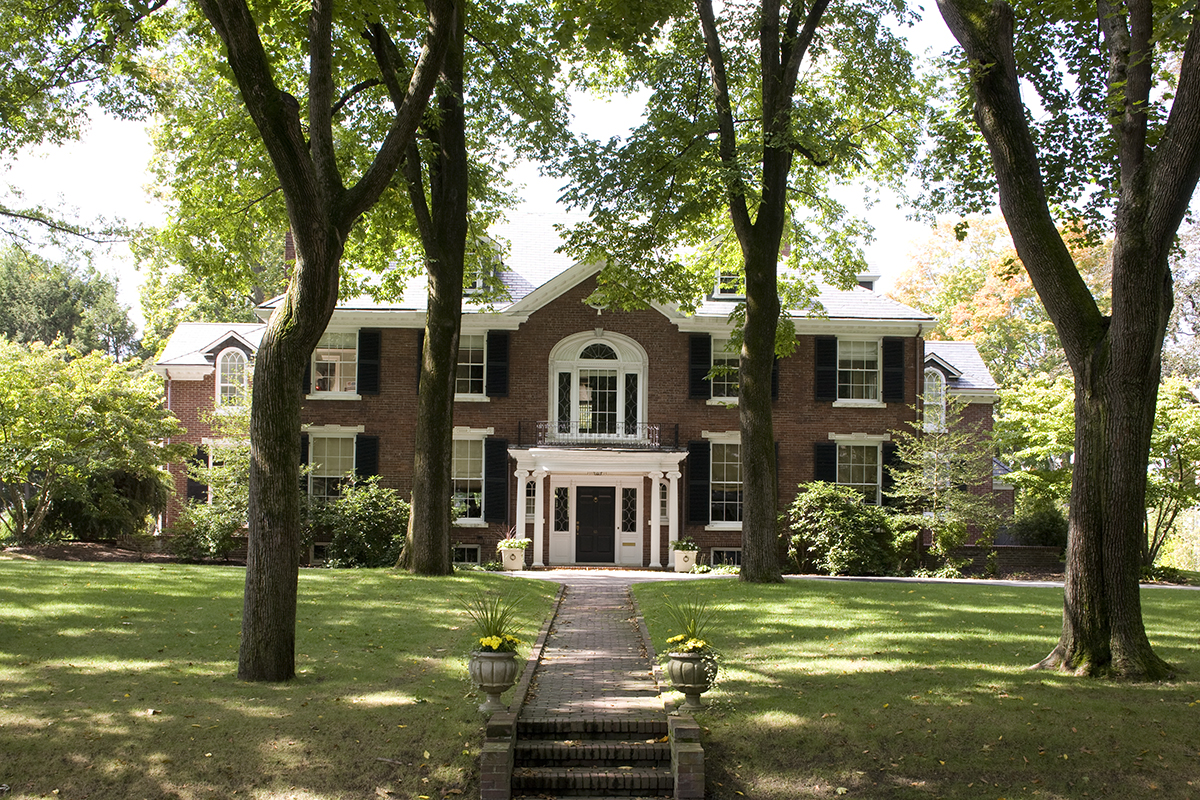
Admiral's House, Meyer & Meyer, in the category of Residential (Restoration, Renovation or Addition)

Admiral’s House, Meyer & Meyer, in the category of Residential (Restoration, Renovation or Addition)

The 2014 Bulfinch Awards have been announced. Founded in 2009 by the New England chapter of the Institute of Classical Architecture & Art, this prize is named for America’s first professional architect, Charles Bulfinch. It recognizes excellent work from the region in classical design and the allied arts. This fifth annual set of winners was selected by a panel of judges that included Gary Brewer, Michael Imber and Russell Versaci. The awards will be handed out, and their achievements celebrated, at a ceremony on Nov. 12 at the Massachusetts Statehouse, designed by Charles Bulfinch.

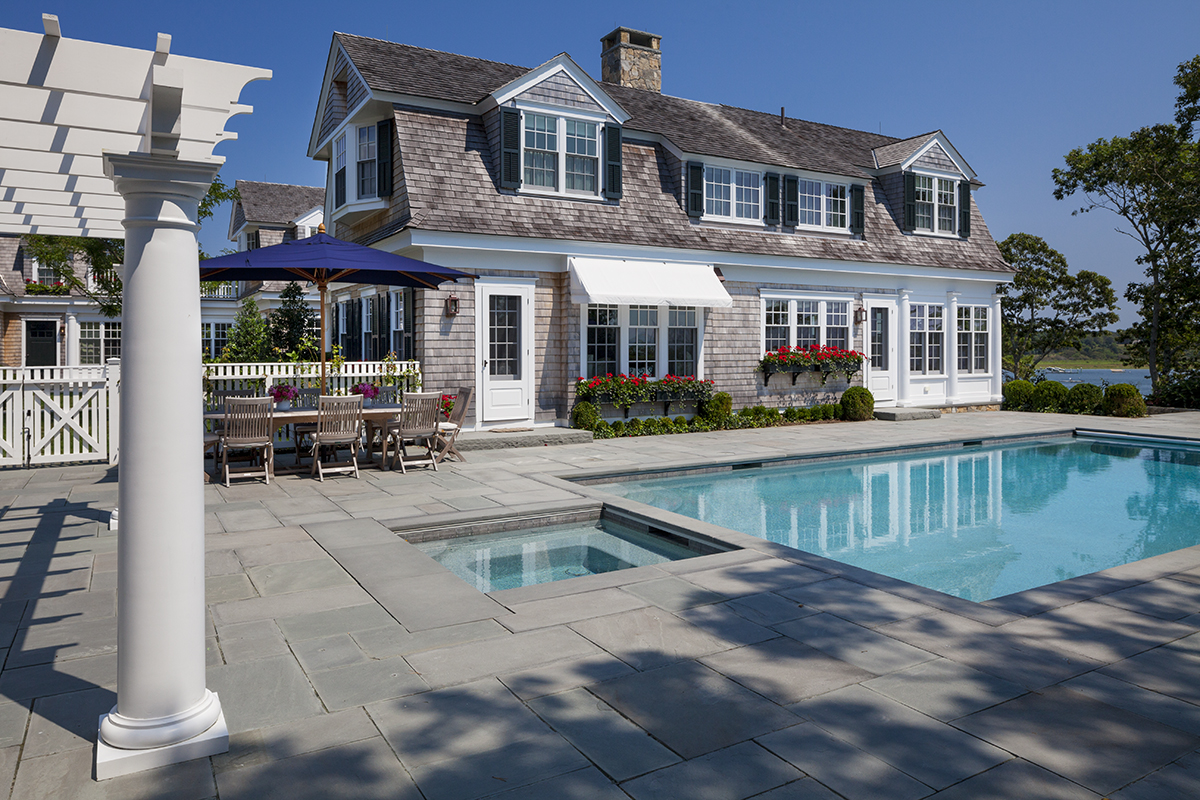
Coastal New England Harbor House, Patrick Ahearn Architect, for Residential (New Construction) Over 5,000 SF

Coastal New England Harbor House, Patrick Ahearn Architect, for Residential (New Construction) Over 5,000 SF

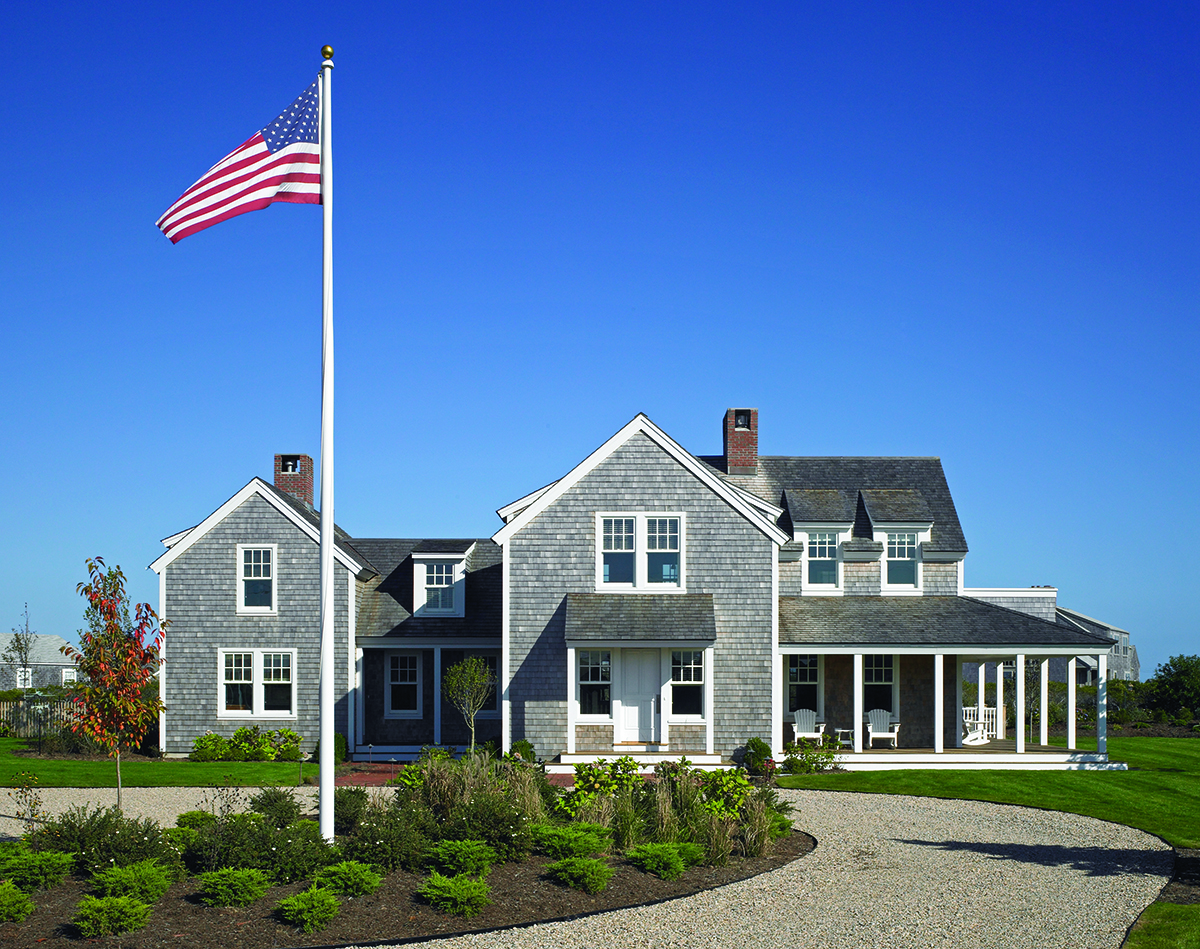
House at Surfside, Pothemus Savery DaSilva Architects Builders, for Residential (New Construction) Under 5,000 SF

House at Surfside, Pothemus Savery DaSilva Architects Builders, for Residential (New Construction) Under 5,000 SF

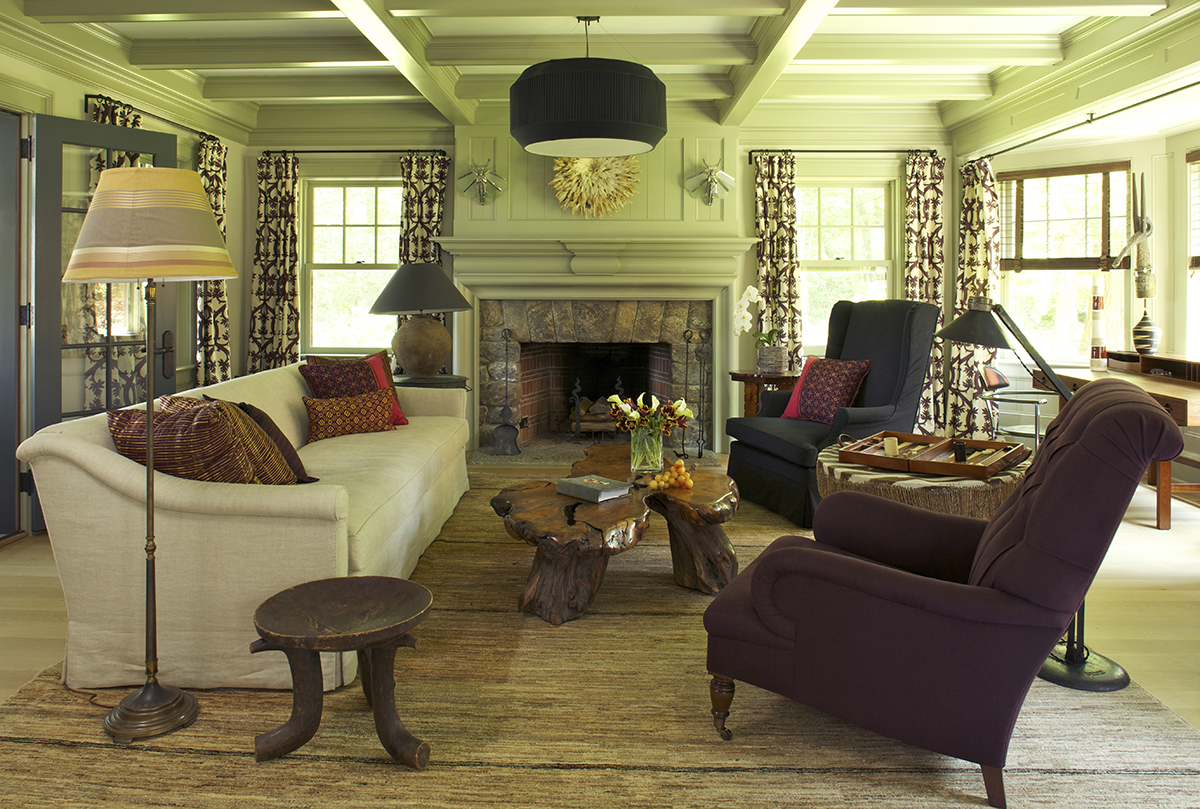
Sherborn Shingle Style, Rafe Churchill, for Interior Design

Sherborn Shingle Style, Rafe Churchill, for Interior Design

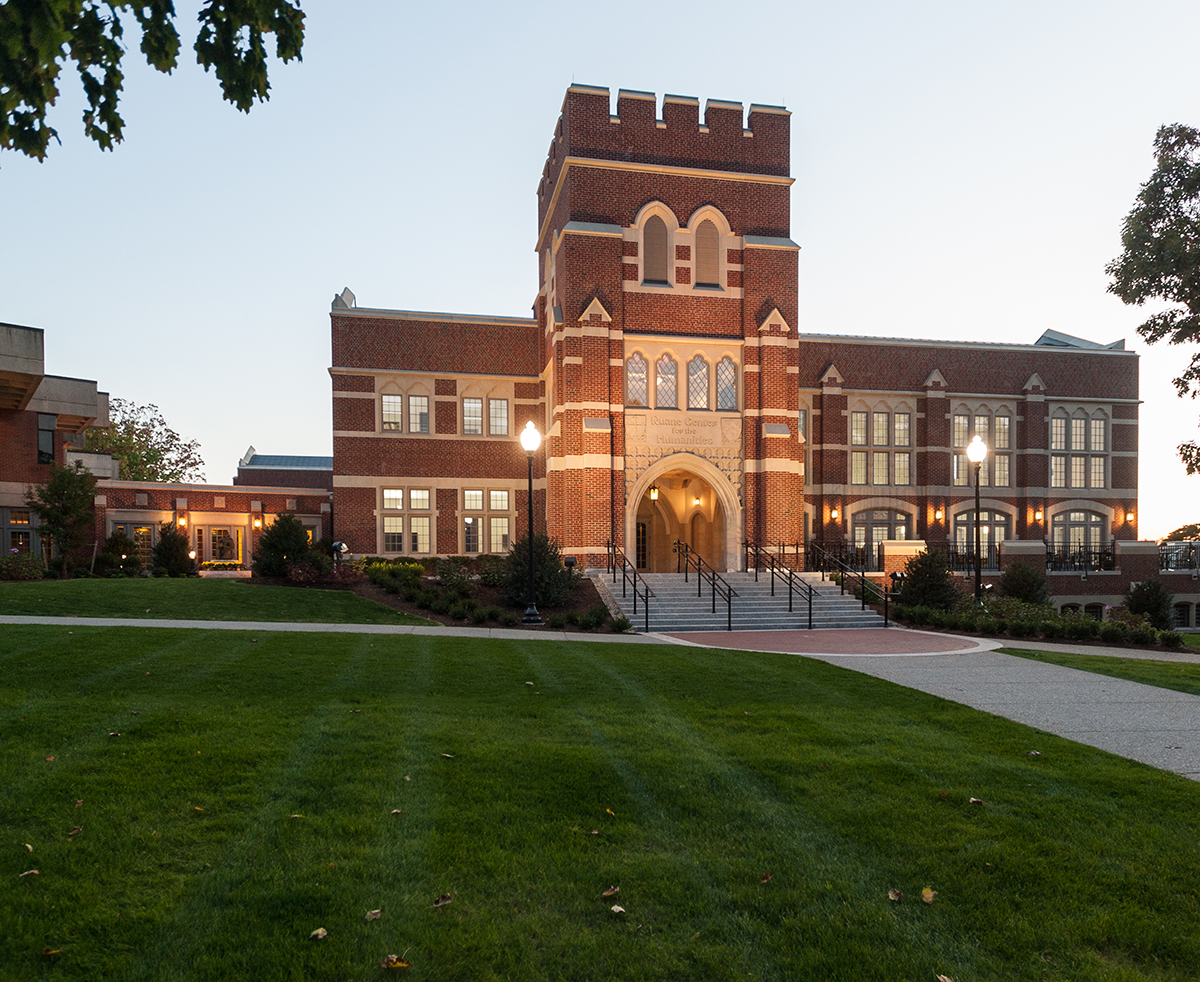
Ruane Center for the Humanities, Providence College, Sullivan Buckingham Architects with The S/L/A/M Collaborative, for Commercial/Institutional

Ruane Center for the Humanities, Providence College, Sullivan Buckingham Architects with The S/L/A/M Collaborative, for Commercial/Institutional

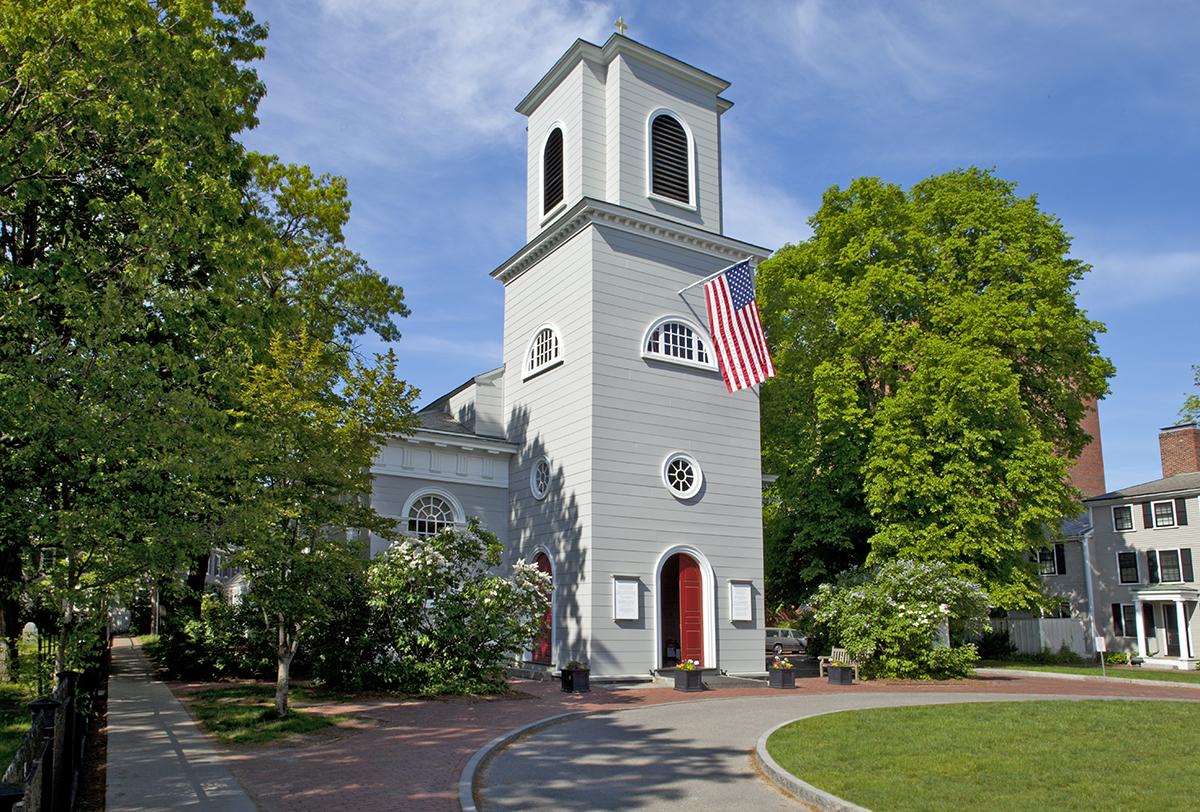
Christ Church Cambridge, Frank Shirley Architects, for Civic/Ecclesiastical

Christ Church Cambridge, Frank Shirley Architects, for Civic/Ecclesiastical

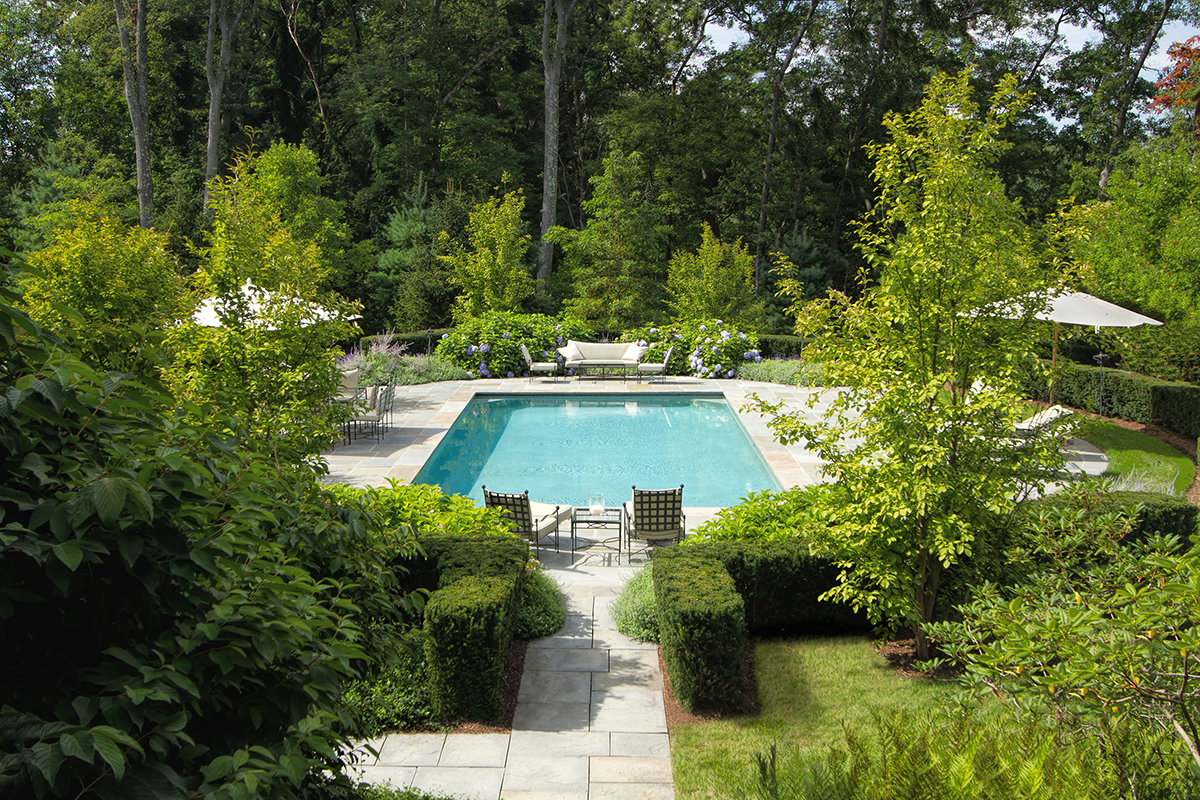
Earl Major Estate, Dan K. Gordon Associates, for Landscape Architecture

Earl Major Estate, Dan K. Gordon Associates, for Landscape Architecture

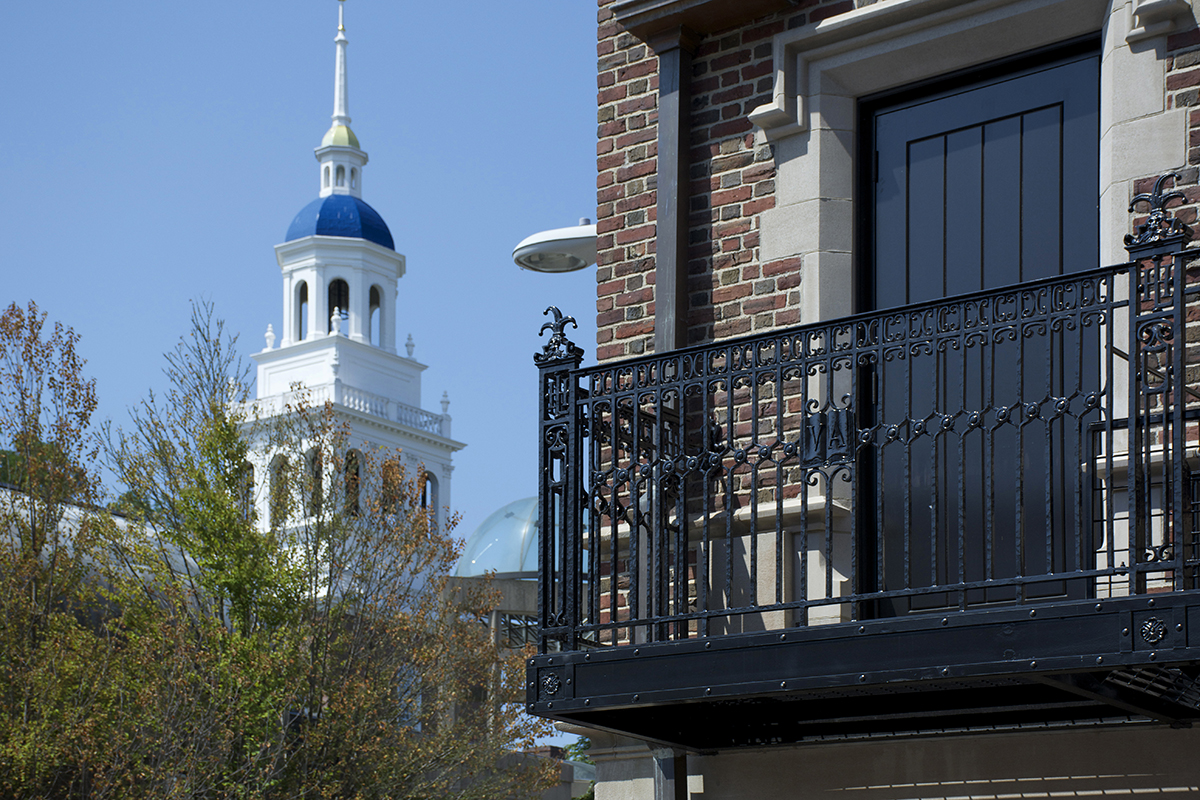
Balcony Railing for Harvard Lampoon, Hammersmith Studios, for Craftsmanship/Artisanship

Balcony Railing for Harvard Lampoon, Hammersmith Studios, for Craftsmanship/Artisanship

Sharon Farmhouse, Rafe Churchill, Merit Recipient, Interior Design

Sharon Farmhouse, Rafe Churchill, Merit Recipient, Interior Design

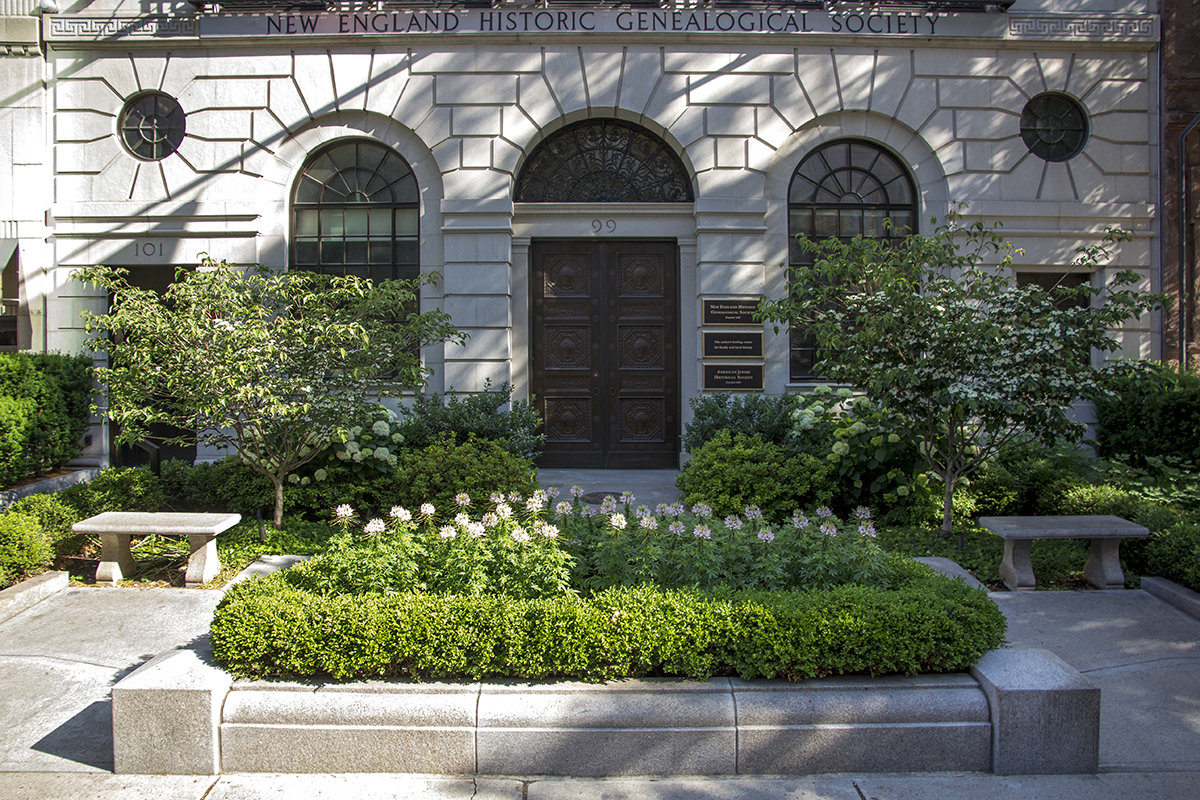
New England Historic Genealogical Society, Gregory Lombardi Design, Merit Recipient, Landscape Architecture

New England Historic Genealogical Society, Gregory Lombardi Design, Merit Recipient, Landscape Architecture

Sketch, Stephen Kivimaki, Merit Recipient, Student Portfolio

Sketch, Stephen Kivimaki, Merit Recipient, Student Portfolio


Posted in Architecture | Tagged , , , , | Leave a comment

Knockdown knockabout

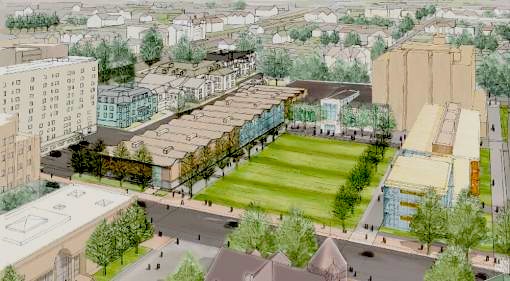
Plan for change at Brown's School of Engineering, with new building (undesigned) at far right.

Plan for change at Brown’s School of Engineering, with new building (undesigned as yet by newly hired KieranTimberlake) at the lower far right.

Many years ago, no later than the mid-90s, I was invited by Providence Preservation Society director Arnold Robinson to sit in on a meeting of the facilities planning staffs of Brown University and the Rhode Island School of Design. By that time I’d been on the warpath against modern architecture in my column for several years, and was in bad odor with this tribe, which considers modern architecture a form of creativity, and traditional architecture its opposite. So they are the typical artist-wannabes, with a hardline disregard for the opinions of any who disagree. The meeting swiftly devolved into a three-minutes hate, a la Orwell’s 1984, with me as the villain on the screen. But while somewhat startled, I escaped alive, with my retrograde opinions unshaken if not unstirred.

This little incident of long ago lept to mind when I read an e-mail from the mathematician and architectural theorist Nikos Salingaros, of the University of Texas at San Antonio, who had this to say about that part of my column today involving Brown’s plan to knock down some charming old houses to make way (say the planners) for a new engineering building:

Both you and I know that the elimination of Hinckley House is not due to the exigencies of any master plan, or architectural or planning need. It’s the annihilation of the traditional “enemy,” settling old ideological scores, and the modernist obsession with clearing space around their dead buildings so that they can be viewed at a distance. With the new building program, it’s a convenient way of getting rid of a thorn in the modernists’ side, a wonderful old building that they could never design or build themselves.

Working within a philosophy that respects and preserves architectural life (at odds with that of our times), the new building program should stake out Hinckley House as inviolable, and adapt any new construction to enhance it. That’s the best option. Next best is what is happening in campuses all over: leave some great old buildings but ignore them and cut them off with sordid new structures. The worst option (but seemingly preferred by fanatics) is to get rid of the old life altogether and replace it with death.

Pretty sad, if true. I will be reviewing the latest edition of Nikos’s pathbreaking book from 2004, Anti-Architecture and Deconstruction.

Posted in Architecture, Preservation, Providence, Urbanism and planning | Tagged , , , | Leave a comment

Column: New campus for Brown engineering?

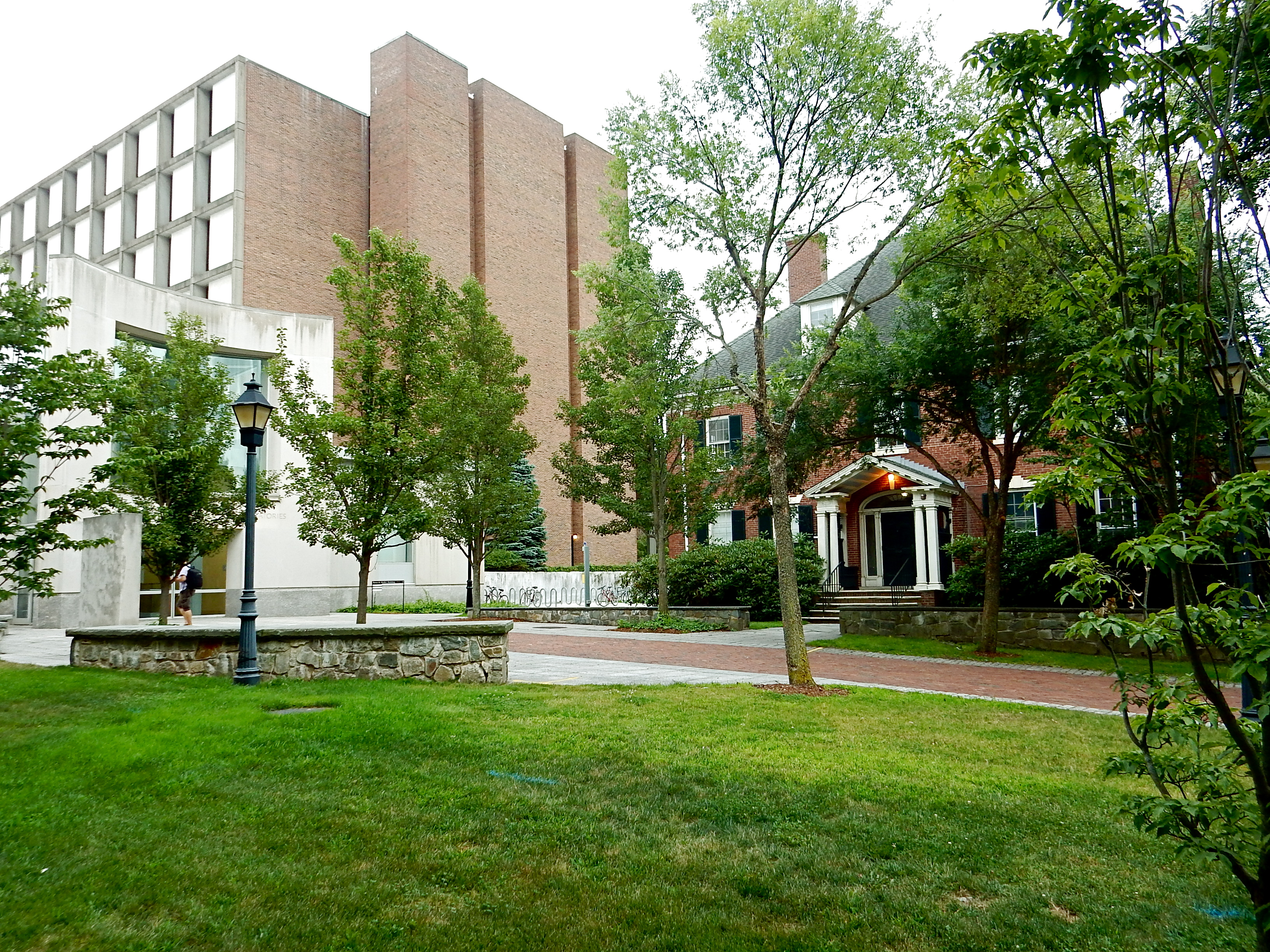
Barus & Holley Hall looms near Hinckley House, right, at Brown University's School of Engineering, in Providence. (Photo by David Brussat)

Barus & Holley Hall looms near Hinckley House, right, at Brown University’s School of Engineering, in Providence. (Photo by David Brussat)

Brown University’s School of Engineering is the oldest engineering program in the Ivy League, begun in 1847, and the third oldest in the country. Brown plans to build a new main engineering building on College Hill, in Providence.

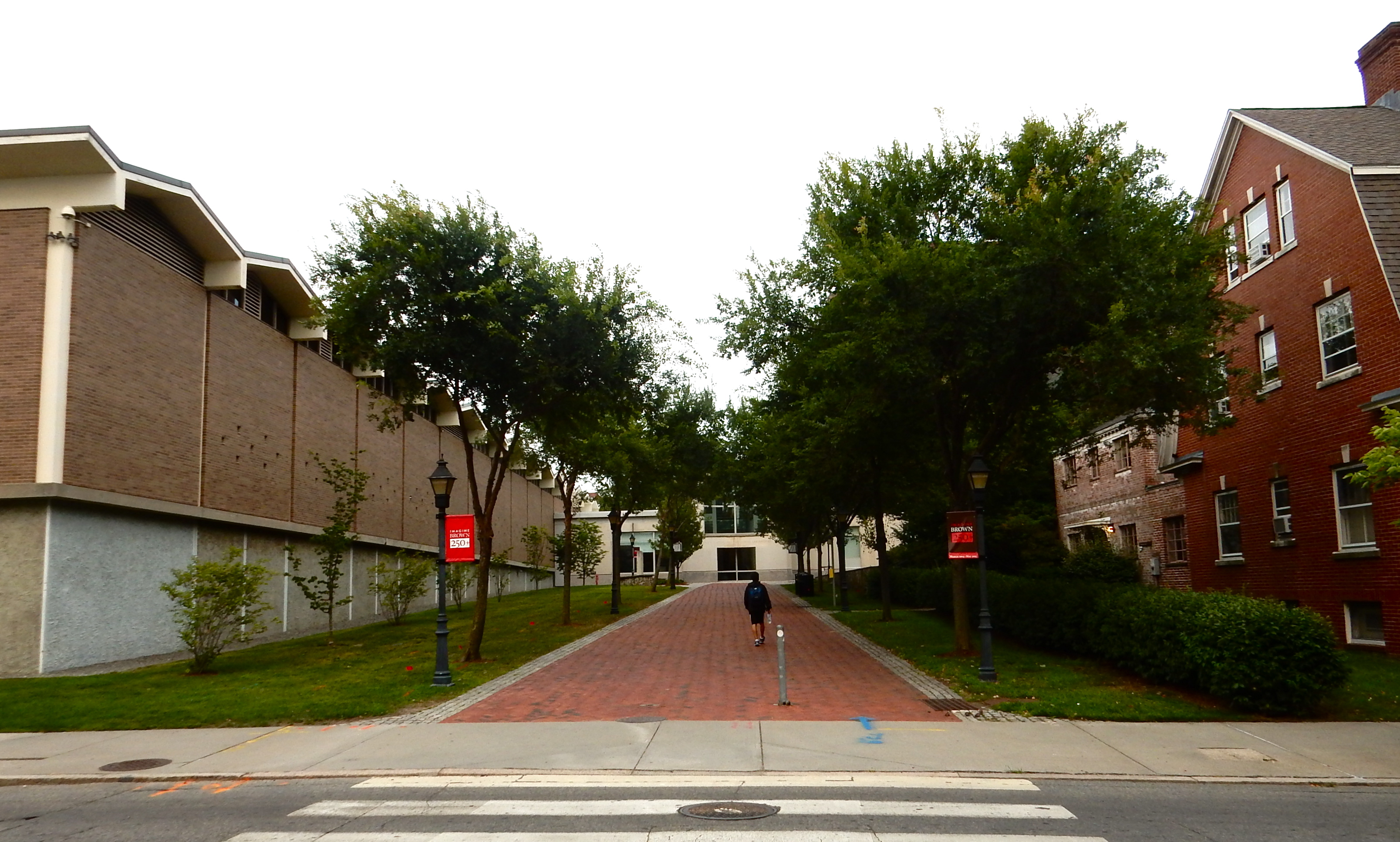
The university has hired the Philadelphia architects KieranTimberlake to design the new building. Its footprint would require removing only one of the four buildings whose demolition is planned. The three others, including elegant Hinckley Hall, built in 1900, would be demolished not to make way for the new building but mainly to widen Manning Walk.

Now, I love green space as much as the next guy, but this seems a stiff price for more grass. Four old houses would vanish but a modernist-style waffle iron, Barus & Holley Hall (1965), the school’s main building, would remain.

I taught Brown continuing-ed classes there in the 1990s. A more dispiriting place to teach can hardly be imagined. The bleakness of its interior was matched at Brown only by that of the Albert and Vera List Art Center. There are no plans to tear down Barus & Holley.

Even in its earliest stages, with no architectural renderings, the plan already flies in the face of the mission of the Engineering School to prepare grads to address global problems that include health care, climate change, dependence on oil, and other challenges.

“The problems are fundamentally engineering problems,” says Dean of Engineering Larry Larson. You are correct, sir! So instead of a campus that reflects old thinking — our wasteful, throwaway, bottom-line society — why not ask KieranTimberlake to design a new engineering campus that would reflect a more sustainable agenda, something friendlier not just to the world but to the neighborhood.

Barus & Holley is the epitome of unsustainability. It should be demolished, not the three Manning houses. They should be incorporated into a quadrangle of one or more new buildings around a more intimate green.

KieranTimberlake has been described as a versatile firm. It should design a campus that uses building methods that characterized architecture in the pre-thermostat age. This does not mean turning away from science or the future, but updating and reincorporating genuinely sustainable building technologies. Brown should reject the “gizmo green” that enables bogus corporate environmentalism.

Earth-friendly buildings kept folks warm or cool for centuries before petroleum-based climate control. Operable windows, shutters, awnings, courtyards, porches, deep eaves, thick walls, tall ceilings and ornament that protects building joints from water damage are design strategies that harness sun, breeze, shade, seasons and regional climate to regulate comfort.

Not coincidentally, a campus erected along those lines would also fit more snugly into College Hill. It should be conceived as the regeneration of a historic part of town. It should be part of Brown’s agenda to repair, whenever possible, its erosion of Providence’s architectural legacy. Beauty and engineering are not mutually exclusive. This would also boost future alumni donations by generating more enduring memories of life on campus.

Brown’s last major new building, the Nelson Fitness Center (2012), is a case in point. Its lead donor, Jonathan Nelson, was raised in Providence and still works here. He realized that the initial design by the modernist New York firm SHoP was unlovable. He refused to pay for it, and urged Brown to try a different approach. The result, designed by Robert A.M. Stern Architects, was the first new Brown building in decades to generate both institutional pride and the community’s appreciation.

Alumni who benefit greatly from great institutions have a duty to help them climb out of the institutional ruts that often hold them back. At Brown, alumni Theresia Gouw and Charles Giancarlo have such an opportunity. They have pledged a combined $35 million to the School of Engineeering’s $160 million expansion campaign. They and other donors can choose to let Brown continue to plow their money blindly into the same old furrows or they can help Brown keep faith with the missions of the university and the Engineering School.

Like many institutions of higher learning, heedless of positive new trends in their midst, Brown risks alienating its host city in ways that are entirely unproductive and unnecessary. Citizens have ways of fighting back — revoking a school’s tax-exempt status, for example — but these ways can cost the citizens, their city and the university itself lots of time, money and goodwill. Going forward, it would be much better for Brown to embrace a more natural architecture that reflects the commitment of its academic community to a more sustainable world. Its alumni can and should encourage Brown to take real steps in this direction.


Posted in Architecture, Development, Preservation, Providence | Tagged , , , , , , | 1 Comment

Engineering at Brown

Prince Laboratory, part of Brown University's School of Engineering, is at left.

Prince Laboratory, part of Brown University’s School of Engineering, is at left.

In the misty past I would cue readers of this blog – or was that its predecessor? – that my Thursday column was coming up. For some obscure reason I’ve decided that’s appropriate for tomorrow’s column about the School of Engineering at Brown University, which is in the process of expansion. It’s unclear just what will be added, but Brown has hired the Philadelphia architectural firm KieranTimberlake, which designed the ridiculous new U.S. embassy in London. No word yet what specifically they plan to do to Brown.

Still, Brown is taking down four nice old houses and not taking down two, arguably three regrettable modernist buildings, including Barus & Holley Hall, the main engineering building. In my column, for space reasons, I left out Prince Laboratory (1962), one of the apparent survivors, designed by Sherwood, Mills & Smith. Raymond Rhinehart had some choice things to say about it in his Campus Guide to Brown University:

Although fashions come and go – Victorian architecture was once roundly despised – it is difficult to imagine a day when Prince Engineering Laboratory will inspire wonder, much less affection. An isolated stand-alone shed with no urban aspirations, it is representative of an era when architecture, like much of what was created in the postwar consumer society, was considered disposable.

I doubt that Victorian architecture was ever “roundly despised,” even by the architectural historians in bed with the modernists to whom Rhinehart, as an architectural historian himself, has little option but to listen. That’s neither here nor there. He is right on the money about Prince.

He also had something equally on point to say about Barus & Holley, designed by the same firm and completed in 1965:

Although Sherwood, Mills & Smith had developed a positive reputation as a firm that produced handsome contemporary homes, here at Brown they designed a facility that, however functional inside, has no street presence and is strikingly insensitive to context. In today’s high-performance architecture, the envelope, or facade, is just as important a part of a building’s mechanical systems as it had been in the nineteenth century. At Barus and Holley it is not. Thermal massing, natural ventilation and evaporative cooling towers may make a building enclosure work as a passive mechanical system when power is not available. None of these are part of the design of Barus and Holley. If the power goes out, the building is inoperable. Barus and Holley is a creature of cheap fossil fuel.

Rhinehart is channeling Jim Kunstler, whose third “World Made by Hand” novel I’m a halfway through. It is called The History of the Future (not to be confused with Steven Semes’s The Future of the Past). And of course in my column tomorrow, I channel Kunstler (who coined the word “crudscape”) big-time.

The column will show up at http://www.providencejournal.com at about 2 a.m and will be linked to from this blog around 7 a.m. or so.


Posted in Architecture, Development, Preservation, Providence | Tagged , , , | 1 Comment

Sin-thetic ornament?


Old Executive Office Building, in Washington, since renamed the Eisenhower Executive Office Building. (noahhoffman.com)

Old Executive Office Building, in Washington, since renamed the Eisenhower Executive Office Building. (noahhoffman.com)

Here’s a column from the wayback machine in which I debunk the modernist claim – dishonest, as usual – that building traditionally with classical ornament is too expensive. If true, it’s only because the modernists themselves snuffed out the crafts that once made ornament affordable. The availability and the quality of “fake” ornament is even more robust today than in 1994 when the column below was written, but so is the reluctance among many classicists to use it. As I pointed out in my last column, “Building tradition in a modernist world,” the way to square this circle is to use natural materials as much as possible given its cost, and meanwhile use synthetic materials as well as possible – as high in quality as possible – to enable traditional architecture to be built at every level of affordability. That way, the public will be increasingly exposed to the alternative that good traditional design poses to modernist design – and bad traditional design. Ultimately, that exposure will contribute to a faster revival of traditional architecture, leading to a greater demand for natural materials, leading to a reduction in their cost and the spread of their use. But synthetic materials are a necessary bridge to that eventuality. I think this column from two decades ago makes that point equally well today, even though the nature of its subject, synthetic materials, has changed over time.

The low cost of high ornament
November 24, 1994 

MY FAVORITE BUILDING in Washington, D.C., would be unbuildable today, or so I had supposed. A huge old thing next to the White House, the Executive Office Building is such a mass of pillars, buttresses, pilasters, balusters, pediments and cornices that you can hardly see its walls.

Each item of ornament on the EOB (1875-88) had to be fashioned individually from marble, granite, limestone or whatever – not necessarily with a chisel, but with much time and artistic savoir-faire.

Even if such methods were affordable today, the trades are for the most part extinct. Nevertheless, I have argued that contemporary architects in Rhode Island should design buildings that make more use of traditional styles of ornament. “It’s too expensive,” comes the rejoinder. Well, I say, damn the expense!

Modern architecture rejected ornament early in this century – but not, as some say, because it was too costly. It was not too costly at the time of its rejection. Rather, it was denounced as “bourgeois” by architects who embraced a then-ascendent socialism along with modern design principles. They stopped putting decoration on buildings, and the craftsmen who produced it lost work, and their trades stopped attracting apprentices. The expense of hiring the few who remained in practice skyrocketed.

By the time modernism went out of vogue in the 1970s and ’80s, the high expense of ornament had become a handy excuse for modernists (and cheapskate developers) seeking to resist the growing popularity of traditional architectural styles.

On a recent trip to Washington, however, I noticed that many new buildings in the city’s old retail district had traditional decoration. I wondered how such costs could be borne. I addressed the question on Oct. 27 in “Old new architecture in D.C.”

That column got me a call from Norman Cook, of Architectural Forms, in Saunderstown. He consults with developers and architects who seek less costly decorative methods. He tells them how it can be done and puts them in touch with firms that can do it.

I met him for lunch Monday at the Union Station Brewery, and when I arrived he had already staked out a table, upon which sat a huge binder bursting with catalogues, photographs and articles detailing projects to which his firm had introduced the latest techniques, from Quinnipac College, near Hartford, to Disney World, to Market Square in Washington (a building I had used to illustrate my column “In search of the Providence Vitruvius,” on May 27, 1993).

Under the general heading of “composites,” these techniques use liquid gels, fibers and resins that are sprayed, layer by layer, into molds and left to harden with chemically induced speed into structural elements that closely resemble stone, wood or metal.

The items thus produced are stronger, lighter and more resistant to water and weathering than stone, wood or metal. The elastic molds are themselves swiftly and easily fabricated, and can hold designs more delicate than are possible with such competing technologies as precast concrete or Dryvit.

It takes far less time – minutes, once a mold is produced – to fabricate each composite item. Their average cost declines as more items are cast from each mold. They are relatively easy to transport and to erect on-site. Because composites are so strong, the cost of the walls onto which they are attached is reduced; the walls themselves can be made of composites. Although specific techniques vary in price from job to job, given the type of ornament sought, composites produce an aesthetic effect similar to that of traditional materials at about a fifth of the cost.

Cook handed me a four-inch sample of molding. I held it an inch from my nose. It looked and felt like brownstone, and if it had been attached to a building I would not have known the difference.

This Thanksgiving I will toast these new technologies, and pray that Norman Cook – who by his own testimony is their chief commercial evangelist – becomes a millionaire. The importance of low-cost architectural ornamentation is great nationally, but especially in Providence, partly for historical restoration but also for new buildings along the Woonasquatucket River. The quality of those buildings will help to determine the allure of this city and state to residents, tourists and investors who will decide where to create or relocate industries and jobs.

Chief among the new buildings whose style will influence that future is Providence Place. Now that the proposed shopping mall has received private financing of $130 million and a thumbs up from the Capital Center Commission, its ornament awaits detailed design. Its architects might serve their project well by placing a call to Saunderstown.

* * *

David Brussat is a Journal-Bulletin editorial writer and columnist.

The Old (now Eisenhower) Executive Office Building (OEOB), the French Renaissance pile pictured above, is where my father worked briefly before moving into the New Executive Office Building (NEOB), where he worked for the Bureau of the Budget, now the Office of Management and Budget (OMB). William K. Brussat was a budget analyst responsible for Budget Circular A-95, familiar to many aging local and state planners as a project clearinghouse before it was eliminated during the Reagan administration.

Posted in Uncategorized | Leave a comment