Lurking behind this facade

Old facade of a new business in Bucharest. (boredpanda.com)

Old facade of a new business in Bucharest. (boredpanda.com)

Behind this stern but elegant classical façade – in Bucharest! – lurks one of the most astonishing and effective mixtures of the old and the new that I have ever seen. And the fact that it is a bookstore, restored to its former dignity after being confiscated by Romania’s communist regime, tops all things. Open the link to the new Carturesti (Carousel of Light) Bookstore. The interior design is by Square One, of Romania, most of whose work, aside from this one project, stinks of the usual orthodoxy. Tell me if you agree that this fine-grained contemporary treatment of a classical interior meets with your approval, and whether it embraces the aesthetic criteria of rhythmic complexity that I have long considered a requirement for modernism to fit with coherence into a traditional setting (interior or exterior). Most attempts to “mix the old and new” are complete failures, examples of compromise that satisfies no one.

I take special joy from this resuscitation because I am a quarter Romanian myself. My mother’s people were Romanian and Hungarian. My father’s people were German (French Huguenot) and Norwegian. As much as ancestry and perhaps far more than the Dracula legend (Transylvania has switched back and forth in history between Hungary and Romania, which has it now), this bookstore adds to my desire to someday visit Romania.

A tip of the hat to Alex Taranu for sending this to the Practice of New Urbanism list, and for tracking down a shot of the classical exterior, which was not included with the website of the bookstore. I am afraid that may be because, unless five floors are underground, then five stories must have been added atop the original that would probably make me retch with displeasure. Please, someone, tell me that my fears are overwrought!

* * *

Correction

carousel-of-light-library-bucharest-8It appears that I was indeed led astray, probably by my own eagerness to believe. Fortunately, the error is no catastrophe. The old classical façade atop this post is another branch of the same Carturesti bookstore chain, the Carturesti Verona. And the façade of the Carturesti Carousel, to the left, is a delight as well, albeit in a different key. Here is a link to a different set of photographs of the Carturesti Carousel, the last of which (unlike the one I originally linked to above) has the façade of the store, which is new and more like the interior. I hope readers who see this correction will have enjoyed the rollercoaster ride anyhow.

Posted in Architecture, Art and design, Books and Culture, Development, Other countries | Tagged , , , , | 1 Comment

An idea for visual pushback

Steven Holl's aggressive new building confronts Rennie Macintosh's famous Glasgow School of Art building.

Steven Holl’s aggressive new building confronts Rennie Macintosh’s famous Glasgow School of Art.

Architecture, along with almost every other major human endeavor outside of food and music, is largely visual in its effect. Traditional architects rely on the appeal of their work to the eye as they try to push back against the dominance of modern architecture. Some people greet modernism’s increasingly twisted sterility as “the shock of the new,” ongoing now for a century. Most people prefer the gentle caress of tradition in building.

Alas, because of modernism’s ability for more than half a century to suppress tradition from participation in major building commissions in America and around the world, the effectiveness of new major works of tradition in prosecuting the style wars is limited. It does not compare with that of old buildings which have survived the modernist onslaught. People still flock to them, but even their power is undermined in the style wars by modernism’s fake but effective retort: That’s the past, not the future.

In Chicago, celebrating Thomas Beeby’s Driehaus award in 2013, I was astonished by the virtuosity of Carl Lubin’s painting on display at the ceremony of work by Driehaus winners assembled as a city. It was beautiful, and if it could somehow be transmitted into the collective consciousness of the world, the modernist movement would hit a wall and crash to the ground immediately. An equally powerful effect would be felt if the same could be done to implement a recent idea offered anonymously:

Being strategic and controversial is hugely important to get media attention.  For example INTBAU [International Network for Traditional Building, Architecture & Urbanism, an organization based in Europe] and the Classical Conference in Utah have had architects working together on a large drawing which is then auctioned off.  Instead of producing a classical vignette, however, why not find a controversial new modern building in a traditional urban context and paint over it a classical building that contributes to the urban scale?  This would certainly get much more press and start a conversation with the public and the profession about modernism and its contribution to the urban realm. I propose Holl’s Glasgow School of Art building for next year’s painting assignment.

Great idea. Above is Steven Holl’s travesty across from Charles Rennie Macintosh’s GSA building of 1897-1909. Too bad that idea cannot also be inserted into the collective consciousness with the snap of a finger. The participation of the media is required, and it will not be forthcoming. Nevertheless, press onward!

Carl Lubin's landscape composed of the architecture of Driehaus prizewinners.

Carl Lubin’s landscape composed of the architecture of Driehaus prizewinners.

Posted in Architecture, Architecture Education, Architecture History, Art and design | Tagged , , , , , , | Leave a comment

Restore Macintosh’s GSA

Charles Rennie Macintosh's drawing of his Glasgow School of Art. (list.co.uk)

Charles Rennie Macintosh’s drawing of his Glasgow School of Art. (list.co.uk)

Mackintosh Library. (The Guardian)

Mackintosh Library. (The Guardian)

I am pleased and indeed almost amazed that Rowan Moore, the Guardian’s architecture critic, has emerged in favor of restoration of the Macintosh Library that was the greatest loss in the fire last May at the Glasgow School of Art, by Charles Rennie Macintosh. “It is impossible to think of a single living architect who would do as good a job of putting a library in a Mackintosh building as the ghost of Mackintosh himself, speaking through his original designs.”

Moore is among the better of a sad lot of critics, so his “Glasgow School of Art: what architect could restore Macintosh’s masterpiece?” is filled with sensitive thoughts of the kind you would not expect from most of his brethren. The following paragraph shows a special sensitivity:

The particular challenge is to get right the balance of artistry and use and the exquisite and the everyday, without resorting either to a fetishism of wear and tear or to a deadly perfection. The presumption should be in favour of changing as little as possible. It will require a light touch and a high level of awareness of the qualities of surfaces, materials and light. The building may be made of hard, physical stuff, but it creates an atmosphere that could easily be wrecked.

Moore writes, “There have been calls to give up on it and commission something wholly new by a leading architect of today, as is often the case with losses such as this. I can’t see the point of this.” Good. I would add – not expecting Moore to agree – that almost all such cases something wholly new add to the tragedy of the loss. Restoration should be attempted in every case, except for when a modernist icon is destroyed.

For that matter, let us reflect on the Steven Holl building for the school across the street from Macintosh’s GSA. I would have to think about it if I were given the choice of restoring the Macintosh library or demolishing the Holl. The latter would have to have the proviso that the Holl itself must be replaced by something fitting to Glasgow, or what would be the point? But assuming some reliable architect can be found to restore the library, I guess I would have to choose that and pray that some patriot would find a way to destroy the Holl anyway.

It is good that Moore urges the GSA to find someone sensitive enough to restore the library, but if Macintosh is to be stopped spinning in his grave, some way to get rid of the Holl must be found. That would require, of course, the sort of revaluation of values in architecture generally that is unlikely to arise anytime soon.

Macintosh GSA on fire; Holl GSA hulks at right. (metro.co.uk)

Macintosh GSA on fire; Holl GSA hulks at right. (metro.co.uk)

Posted in Architecture, Architecture History, Art and design, Other countries, Preservation, Urbanism and planning | Tagged , , , | 2 Comments

‘The Hidden Light of Objects’

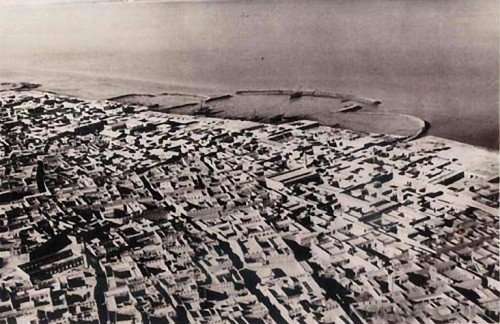
Kuwait City before the oil boom. (kora.com)

Kuwait City before the oil boom. (kora.com)

The fragility of culture, even of culture wrought in the hardness of masonry, is one of the themes of the ten short stories in Mai Al-Nakib’s first book, The Hidden Light of Objects. The second story, “Echo Twins,” is set after oil was discovered but before its exploitation. It is backdropped by life in traditional mud brick houses around courtyards and bunched in groups separated by very narrow winding alleys leading, mostly, to the nearest souk, or market.

Mai Al-Nakib. (thenational.ae)

Mai Al-Nakib. (thenational.ae)

Over dinner on her book-tour stop in Providence, Mai told me she thought this story would tickle my own interest in the natural rhythms of traditional architecture.

Throughout the Middle East, old residential patterns are being eradicated, leaving the culture and social mores in tatters. This is happening not only in Kuwait but in Mecca itself. The latter is not just a regrettable but an outlandishly sinister phenomenon, as I discussed in “Kismet, but not in Mecca” – a post that, unlike others that amount to digital bird-cage liner, has been read continuously since I published it on Oct. 2.

I heard Mai read on Tuesday at Symposium Books downtown. I’d known her since she moved into a condo where I lived in the Thomas Peckham House (1824) on Benefit Street. After I moved downtown to the Smith Building (1912), Mai moved there too – she was not, alas, stalking me – until she got her doctorate in English lit at Brown, moved back home to teach at Kuwait University, and now has published her first book of short stories.

As I say, I’d known Mai for years but not her work as a student. So I was not only pleased but astonished by the gentle but penetrating depth of her introduction to her reading from Objects. The passage itself was equal to the expectations set up by her intro, an exercise in profundity expressed in simplicity. Brilliant! I was relieved not to be called upon to mask disappointment at the work of a dear friend. “Echo Twins” plumbs the sorrow of change at a multiplicity of levels, but for this post Mai’s description of the mud houses of Kuwait is key:

The thick, mostly windowless outer walls enclosed a charming open courtyards overrun with pots of purple and yellow flowers reaching out to the sun all day, then tightly folding up their petals in the late afternoon. … Bright rooms with windows and paned doors opened onto the central courtyard which could be seen from every corner of the house. The courtyard was bordered by a shaded, arched corridor surfaced with tiles hand-painted blue, green, and rust. Burnished teak beams, likely scavenged from  one of the dhow-building yards nearby, supported the roof.

As the photo on top suggests, this settlement type spread like vegetation. I recall a train ride for miles along a ridge overlooking the Rhine, enthralled by how the villages seemed to creep up the slopes of the valley as if they were a biological growth, as in certain ways they actually are. (The magic was briefly shattered by the appearance of a single BP gas station, its pump roof seemingly designed by some sub-cartel of OPEC.) Mai describes the mechanisms by which the house handled the climate’s onslaught of heat:

The kitchen, like every other room in the house, was cooled by wind tunnels designed to suck in the sea breeze. Even during the hottest days of August, the temperatures of their home remained tolerable, even pleasant, the tiles refreshing under [the twins’] cracked bare feet. The sound of the wind wending through the rooms and corridors was constant, a familiar fourth member of the household. The family slept together upstairs in a loft with paned doors that opened onto a terrace. On summer nights, when the wind was still and the temperature hot enough to boil a pot of water, they would pull their mattresses out onto the terrace to sleep. … Spending the night on the terrace under the stars was part of summer life in Kuwait. In the days before air conditioning, everyone slept out on their terraces during the long, scorching months. It was like a slumber party to which the whole country was invited.

So the oil boom put the kibosh on the national slumber party.

The mad fantasy of riches would come, but it would come on a wave of seismic destruction. Long after the echo twins were wafers in the memory of only the oldest Kuwaitis, the destruction still rained down, harder and harder. Crystal waters no more. Bluest skies no more. Delicate white truffles bursting in the desert no more. Sidr trees no more. Razed and replaced. Out with the old. To this day nobody knows for certain what has come instead. In with some vicious, damaging thing. In with perplexity. In with loss.

They say change is inevitable, and so it is. Must it eradicate the best blessings of life long offered by a culture? Who is to blame? The neo-imperialists or the stewards of the societies they victimize?

To deplore what has happened to Kuwait and so many other cultures is not to suggest that Araby should have remained a place of camels and tents. But it is to sigh an inchoate regret, at least, and I think this regret is part of what Mai Al-Nakib expresses with impressive depth and elegance in the tales of The Hidden Light of Objects.

Posted in Architecture, Architecture History, Art and design, Books and Culture, Development, Urbanism and planning | Tagged , , , , , , | 1 Comment

The Cotton District

David Brussat's avatarArchitecture Here and There

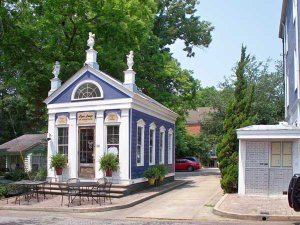
The Cotton District, in Starkville, Miss. (This and all photos below by Sara Hines) The Cotton District, in Starkville, Miss. (This and all photos below by Sara Hines)

InfillRetailSml7071

AccessoryAprt764

SmallYellow7065

Pre-Katrina.Katrinas763

VistaStreet7083

Not sure how this place eluded my classical radar, but Starkville, Mississippi, home of Mississippi State, has a neighborhood called the Cotton District, between the downtown of the city of 23,000 and its university campus. Wikipedia calls it the nation’s first New Urbanist district, but it was conceived by Dan Camp, a former shop teacher, 20 years before the Congress of the New Urbanism was chartered, and at least 15 years before the development of Seaside, Florida – long considered the first New Urbanist town.

Dan Camp, according to this history of the Cotton District on its website, started building on a shoestring for students (also mostly living on a shoestring), and ended up with a lovely, thriving place that I feel embarrassed never to have heard of. He eventually became mayor of Starkville for a…

View original post 217 more words

Posted in Uncategorized | Leave a comment

The human classical genome

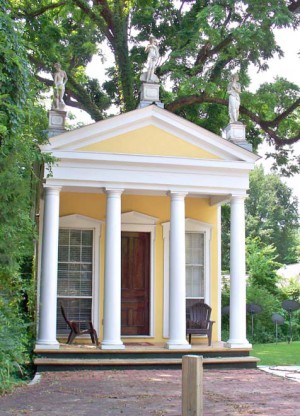
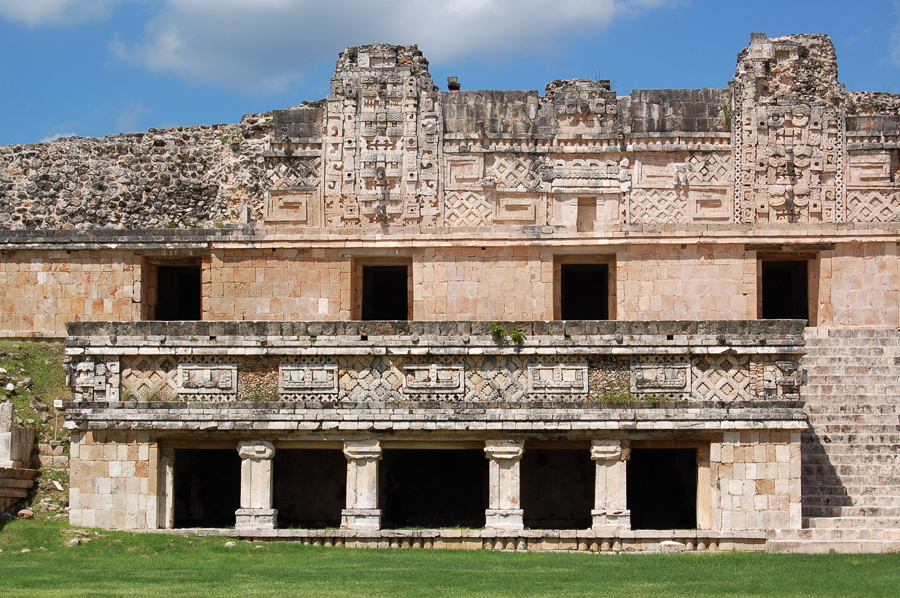
Pavilion at Uxmal, possibly a Maya royal residence or building of state. (Photo by Nathaniel Walker)

Pavilion at Uxmal, possibly a Maya royal residence or building of state. (Photo by Nathaniel Walker)

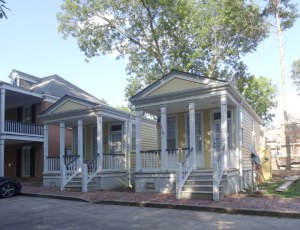
Commercial row houses in Malaysia. (Photo by Nathaniel Walker)

Commercial row houses in Malaysia. (Photo by Nathaniel Walker)

Nathaniel Walker, newly minted architectural historian and professor of same at the College of Charleston, recently joined the TradArch list and launched into debate on the vital issues facing architecture’s future. In discussion with others on the list, who were contemplating aspects of classical architecture in countries far from the roots of Euroclassicism, Nathaniel posted some photos he’d taken at a recent symposium in Malaysia and another he’d taken a while back of a Mayan structure – distinctive in this context because it predates contact with Western influences. The talk went back and forth about these examples, during which Nathaniel made a particularly interesting point, which I here share with non-TradArch readers of the blog He was discussing how classicism differs between that of Europe and of other continents, but that we must recognize that it has more in common than not – as is the case, he points out, with humans:

I think the DNA of Western Classicism was able to graft onto local traditions because all of these humanist architectural traditions were, despite their superficial differences in detail, of the same species – just like humans themselves. And modern humans are, of course, also the same species.  If one can demonstrate that Chinese Classicism is inherently compatible with Western Classicism, the inevitable, logical conclusion is that Classicism is not a product of history or culture, but is intrinsically dialed into what it means to be human.

Posted in Architecture, Architecture Education, Architecture History | Tagged , , , , , | 2 Comments

Save the Yale Club!

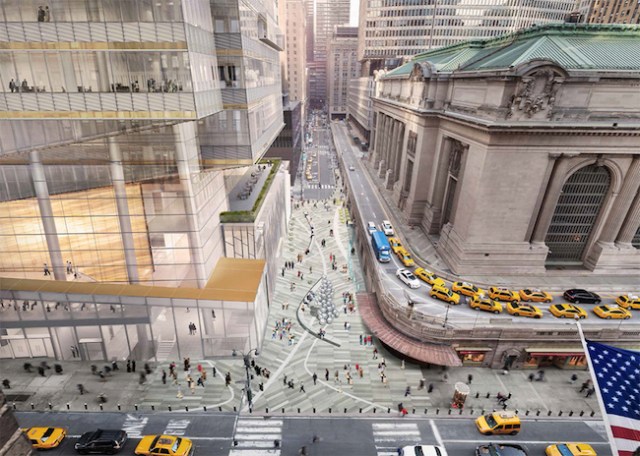
Proposaed One Vanderbilt across from Grand Central Terminal. (Kohn Pedersen Fox)

Proposaed One Vanderbilt across from Grand Central Terminal. (Kohn Pedersen Fox)

The title above could as easily have been “Save the Roosevelt Hotel!” or for that matter “Save Grand Central Terminal!” “Save the Chrysler Building!” might also be apt. Or it could be “All is lost!” … “Or maybe not!” could equally if perhaps over-optimistically be tacked on. The point is that a superproject is almost set to proceed across Vanderbilt Avenue from Grand Central, which will continue to chip away at the remaining grandes dames of the Beaux Arts in the terminal’s vicinity.
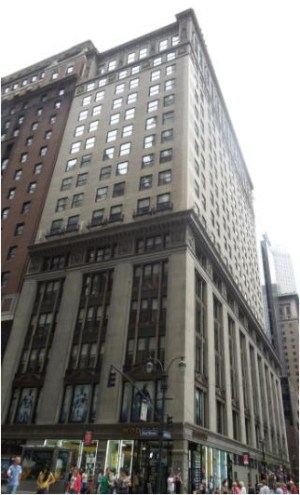
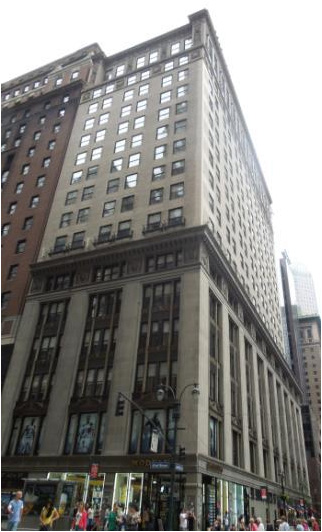
51 East 42nd St. (hdc.org)
51 East 42nd St. (hdc.org)

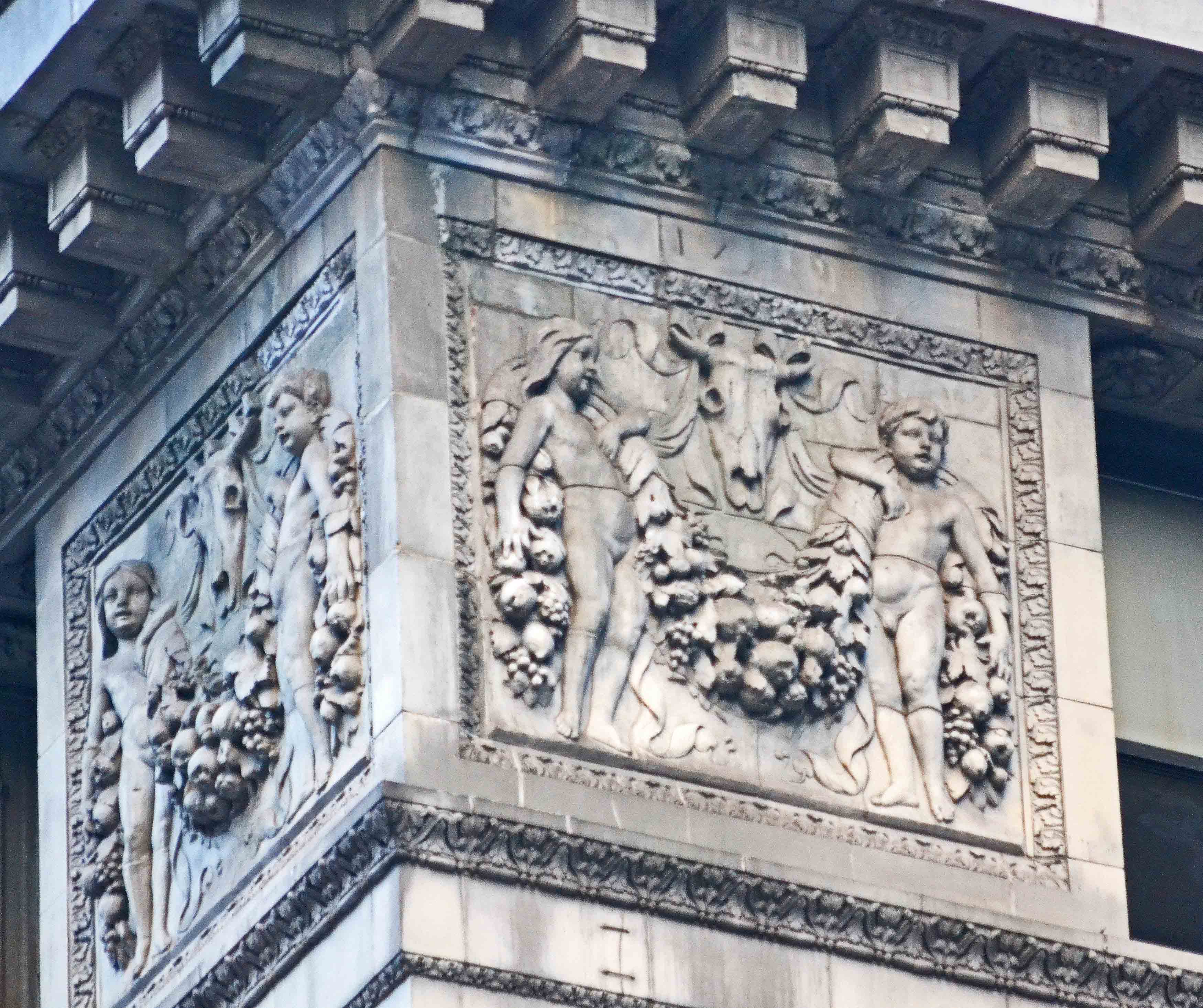
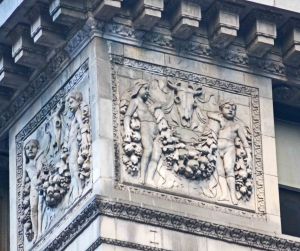
Detail of 51 East 42nd St. (Photo by Calder Loth)
Detail of 51 East 42nd St. (Photo by Calder Loth)

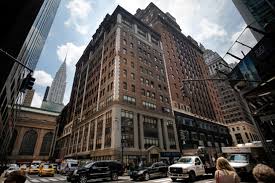
Block scheduled to be razed for One Vanderbilt. (Wall Street Journal)
Block scheduled to be razed for One Vanderbilt. (Wall Street Journal)

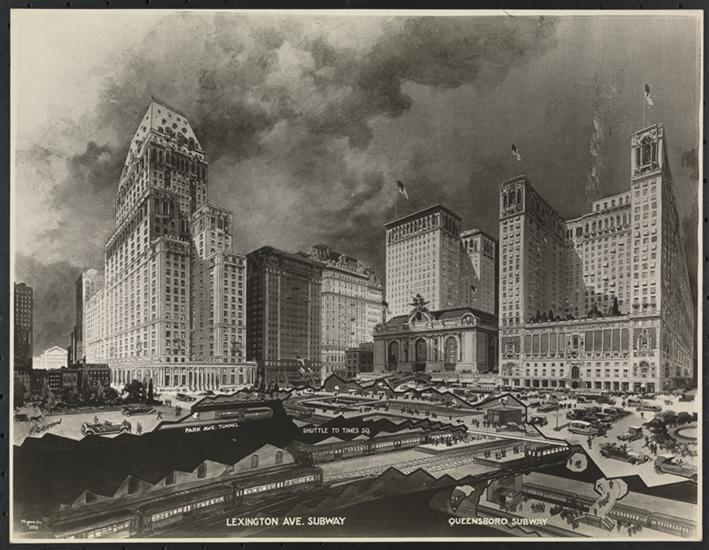
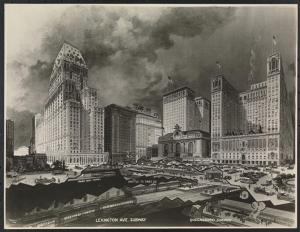
Terminal City, with Commodore Hotel to right of Grand Central. (collections.mcny.org)

Terminal City, with Commodore Hotel to right of Grand Central and a cutaway to the trains below. Click to enlarge. (collections.mcny.org)
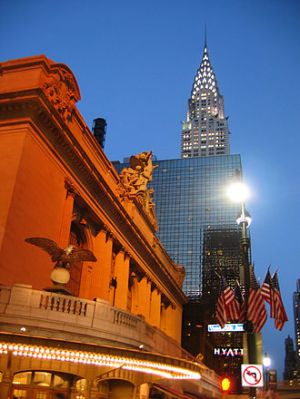
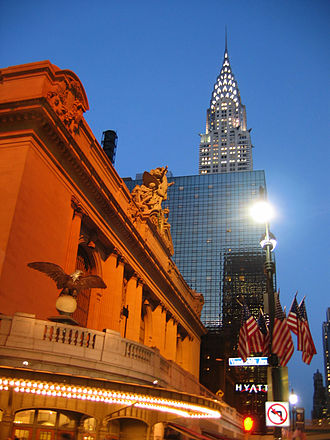
Grand Hyatt between terminal and Chrysler Building. (Wikipedia)
Grand Hyatt between terminal and Chrysler Building. (Wikipedia)

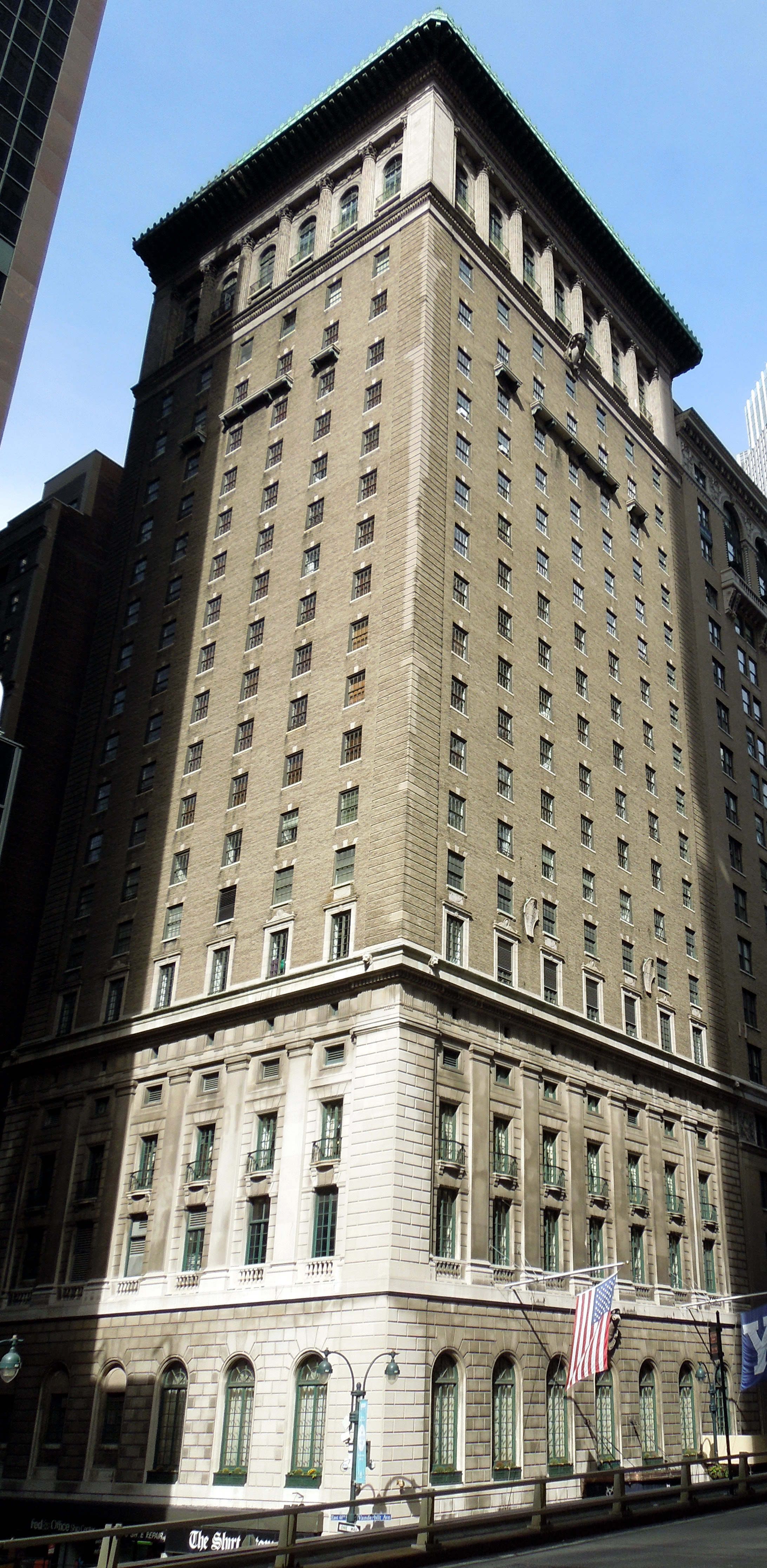
The Yale Club. (hdc.org)

The Yale Club. (hdc.org)

City Chips Away at Beaux Arts Heart of Manhattan,” by Cara Greenberg in the Architectural Record, states the facts of the case straightforwardly. I can state that the facts she reports are depressing in the extreme. It looks as if the correlation of forces arrays strongly against what was conceived in the early 20th century as Terminal City. Greenberg quotes architect Peter Pennoyer, author (with Anne Walker) of The Architecture of Warren & Wetmore, describing this section of Midtown around Grand Central as “an urban ensemble, a mythic place, arguably more important than Rockefeller Center.”

The Pan Am Building was the first major snub to Grand Central in the 1960s, courtesy of Walter Gropius, a founder of modernism and former director of the Bauhaus who helped with the design of the Pan Am (now the MetLife). The world’s largest office building was plopped between the terminal and the Beaux Arts New York Central tower, belittling the latter in the view down Park Avenue from the north, and the former in the view up it. In the late ’70s came the obscene transformation of the Commodore Hotel (“the most beautiful lobby in the world”) by Donald Trump into the Grand (sic) Hyatt, which Greenberg describes as “a black glass edifice wildly unsympathetic to the stately monument to the east on 42nd Street.” (In the photo at left, the Hyatt sits between Grand Central and the Chrysler Building.)

This year, if the city enacts a rezoning proposal in this area that would resuscitate part of a larger Midtown rezoning plan whose passage was thwarted a year or so ago, demolition will begin to make way for One Vanderbilt, a Kohn Pedersen Fox tower of 1,450 feet, tallest in Midtown. Razed will be not just 51 East 42nd St., by Warren & Wetmore, architects of Grand Central, but two other excellent buildings that arose in order to create an elegant setting for the terminal.

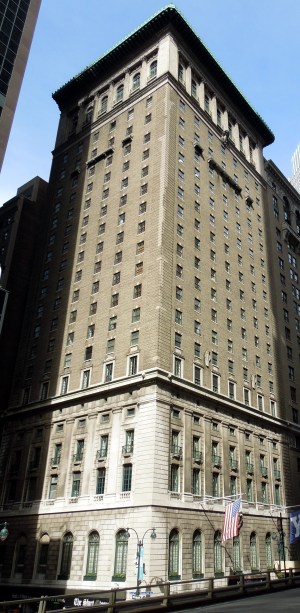
If this goes forward, the nearby Yale Club and Roosevelt Hotel had better begin getting their affairs in order. Pressure to redevelop the newly rezoned area will be intense. Unfortunately, none of these buildings are landmarked, and the preservation community is not going to the mat for 51 E. 42nd. Too bad nobody thought to rename it the Sex and Violence Building. (Homage to a famous Wall Street Journal headline intended to induce readers to begin reading an editorial about the federal deficit, or was it the trade imbalance?) Too bad, for that matter, that these buildings had not been redeveloped as residential by now, which, as Pennoyer points out in Greenberg’s piece, would have assured the area of a stronger constituency for its preservation.

And if One Vanderbilt goes up, then the Chrysler Building had better be prepared to hold its nose for an ugly new “dancing partner,” to quote one of the project’s supporters.

I think this is tragic, but some three quarters of the buildings of Terminal City disappeared long ago in the redevelopment spurt that followed World War II. Vanderbilt Avenue along the west edge of Grand Central is a narrow street that parallels one of the two elevated roads that flank the terminal. They make it not just a beautiful piece of architecture but a fascinating example of enlightened transportation infrastructure beyond its obvious role as a depot for rail. The supporters of One Vanderbilt can argue plausibly that their project, which plans to turn Vanderbilt Avenue into a pedestrian way, will bring light and needed transit improvements to the vicinity.

Maybe so, but at what cost? The buildings that face demolition are owned by a rapacious developer (SL Green), but there is no law against development or rapaciousness. New York has long been a petri dish for the most grisly aspects of capitalism’s “creative destruction.”

And yet zoning issues are where democracy’s rubber meets the road, and if nobody is really very upset by the coming loss of the Sex and Violence Building, then the Yale Club and the Roosevelt Hotel will just have to prepare to meet their maker. Those who understand the value of retaining not just beauty in the city but of treating architecture of this moderate size as the key to sustainability in the big city must prepare for defeat, and for the Dubaization of Midtown, which has already begun along 57th Street.

Without a miracle, those who want one last sight of a great beauty had better book a trip to Manhattan before the summer rolls around. And those who don’t want New York to become the set for Blade Runner East should get their act together now.

Posted in Architecture, Architecture History, Development, Preservation, Urbanism and planning | Tagged , , , , , | Leave a comment

PoMo in revival mod(e)?

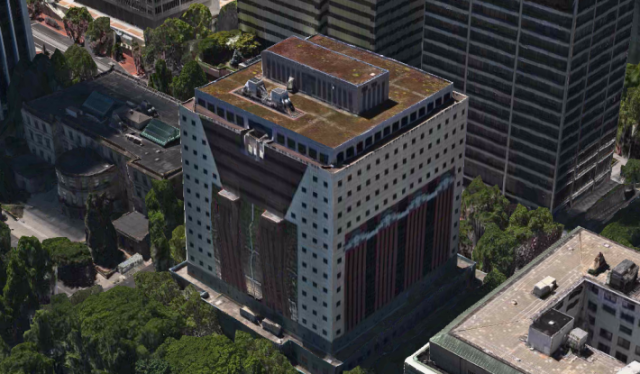
The Portland Building (1982) by Michael Graves. (source to come)

The Portland (Ore.) Building (1982) by Michael Graves. (source to come)

It was sort of a meh moment for me to learn a few moments ago that the Portland Building, the postmodernist icon by postmodernist starchitect Michael Graves, will be preserved. News a year or so ago of its proposed demolition gave me the opportunity to express my lack of fervor for the building. But my feelings for postmodernism as a style or philosophy of design are not meh. I dislike it, just not as much as I dislike modernism, for which PoMo was a stand-in during an awkward period.

These feelings are aroused by Karrie Jacobs’s piece “PoMo Redux” in Architecture, the mouthpiece of the American Institute of Architects. A very interesting piece, it reflects its author’s uneasy relationship with modernism and the spiritual boost she got from PoMo. She recalls her first encounter with the Portland Building.

I remember being thrilled by it. Having grown up with default modernism—my dispiriting high school, my poured-concrete college campus, every bank tower I’d ever seen—the Portland Building alerted me to the idea that architecture could be different, approachable, maybe even lovable.

Her positive description of postmodernist architecture reflects a more optimistic version of my own disdain for the same architecture. She writes of the uneasiness it caused:

… Postmodernism was troublesome from the start, when the reintroduction of architectural ornament riled the Modernists who still held sway. Jencks wrote that PoMo relied on “double coding,” which he defined as “the combination of Modern techniques with something else (usually traditional building) in order for architecture to communicate with the public and a concerned minority, usually other architects.” But the real motivation might have been the reintroduction of human qualities, like sensuality, warmth, and color, that had been long banished.

I don’t believe postmodernism truly reintroduced “human qualities.” My view is oddly akin to Jencks’s view. I like to picture it as modernists in a carriage fleeing angry mobs and throwing arches and columns out the rear (that is, using cartoon ornament in their designs) in order to propitiate the public dislike for modernism and slow down its pursuit.

For modernism was on the run, or at least chafing at trenchant critique from modernists disenchanted with establishment modernism. But when it came to turning their sharp critique into actual design, their structures were often just orthodox modernism with a few “ironic” or “witty” traditional features pasted on the exterior. In short, the Portland Building. To me, this was far from any reintroduction of human qualities in architecture.

Jacobs expresses dismay at how a symposium celebrating Michael Graves last November, sponsored by the Architectural League of New York, seemed oddly reluctant to embrace postmodernism. Her feelings remind me of my own feelings about the 2011 conference on postmodernism sponsored by the Institute of Classical Architecture & Art.

To me, the ICAA was a curious forum for a celebration of postmodernism. PoMo’s critique of modernism gave space to architects who wanted to go beyond ironic or witty ornament to revive genuine classical and traditional architecture. But the ICAA conference did not seem to revel in that history but rather seemed to equate postmodernism with the classical revival. The equation is unjustified, and too many panelists emphasized the importance of deviating aggressively from the canon that gives order to classicism and from which most traditional styles derive.

No classical architect today questions the need for experiment based on the orders, but many hope to avoid a confusion of classicism and modernism that too much experimentation might generate. And yet this vital matter did not come up at the conference, not that I recall.

Well, I should bring this discussion to a close. I don’t want to give heartburn to anyone. If Jacobs is correct in seeing a resurgence of PoMo style in the preservation of a lame version of it, then there will be heartburn enough to go around in every corner of architecture.

Posted in Architects, Architecture, Architecture Education, Architecture History, Preservation | Tagged , , , , | Leave a comment

Snow graces Providence

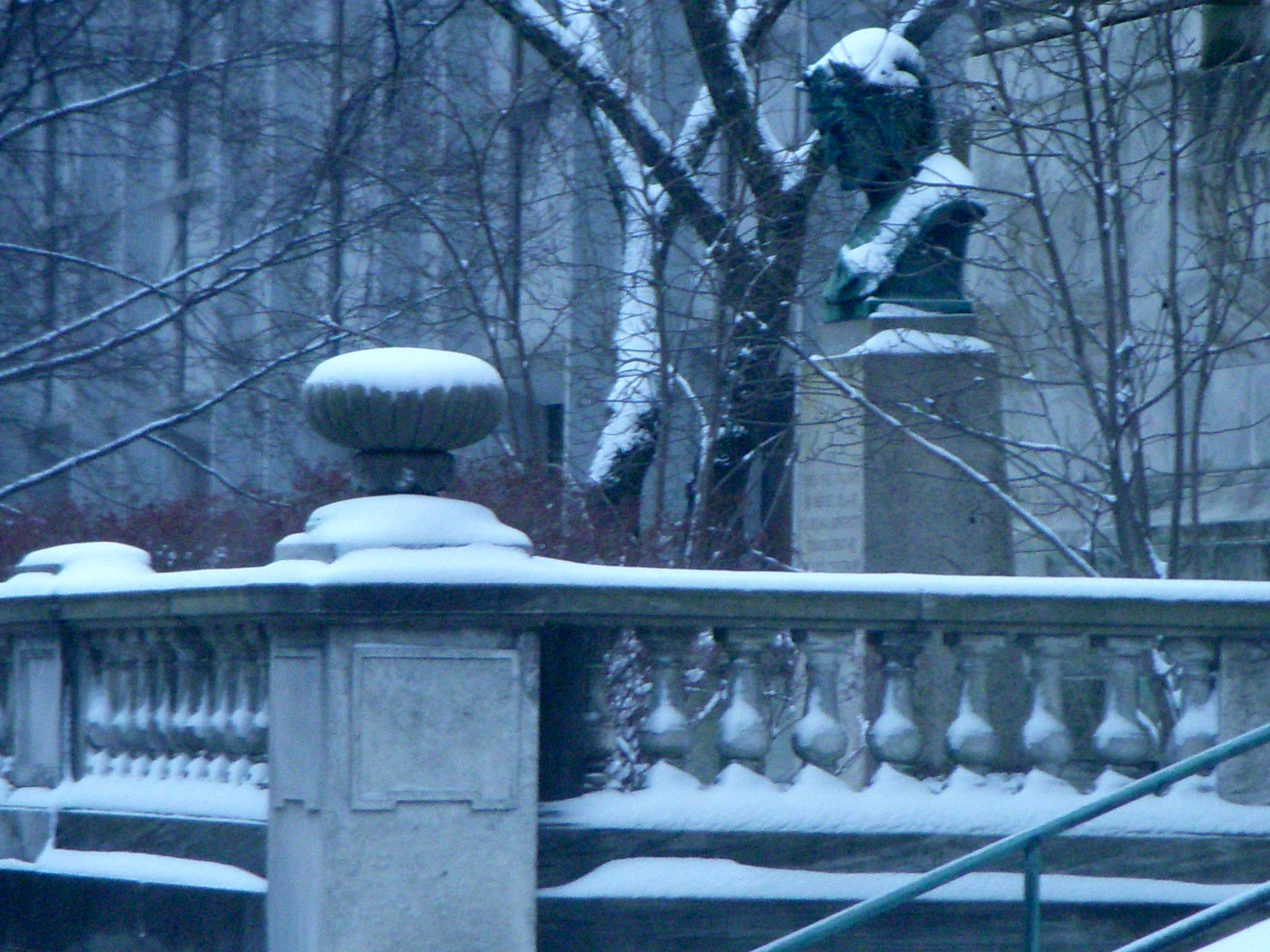
Dante examines balustrade of John Hay Library at Brown University.

Dante examines balustrade of John Hay Library at Brown University.

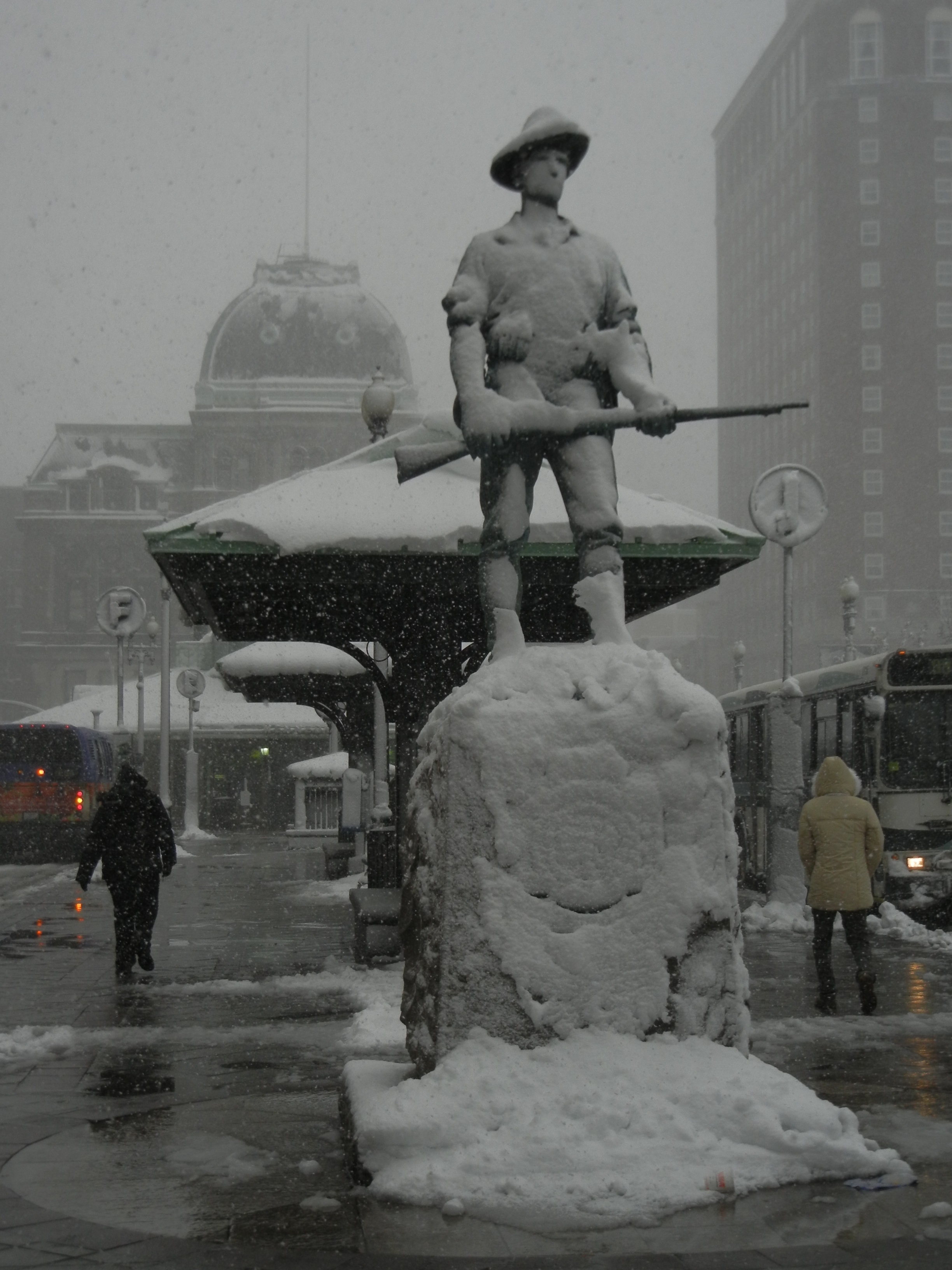
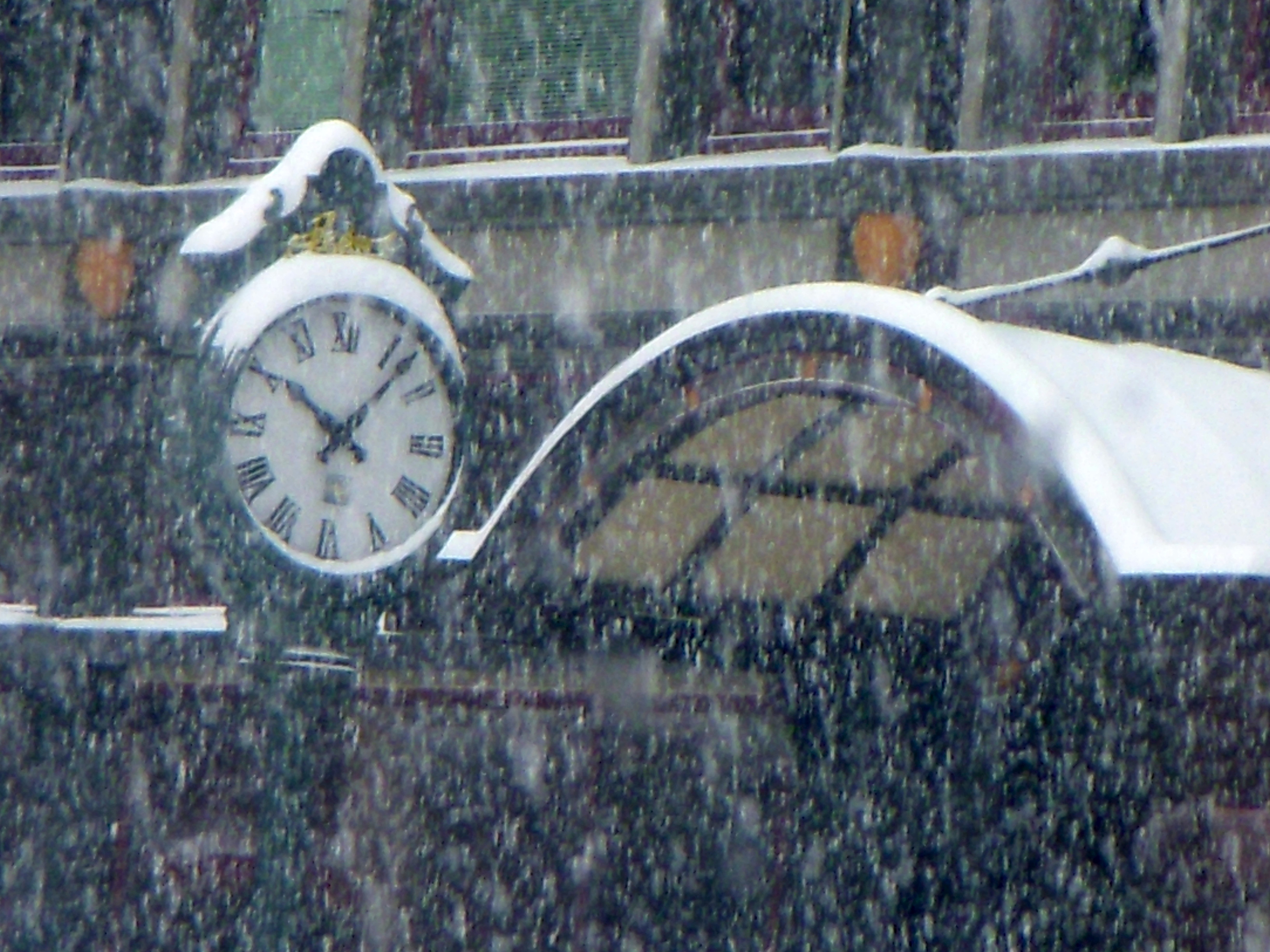
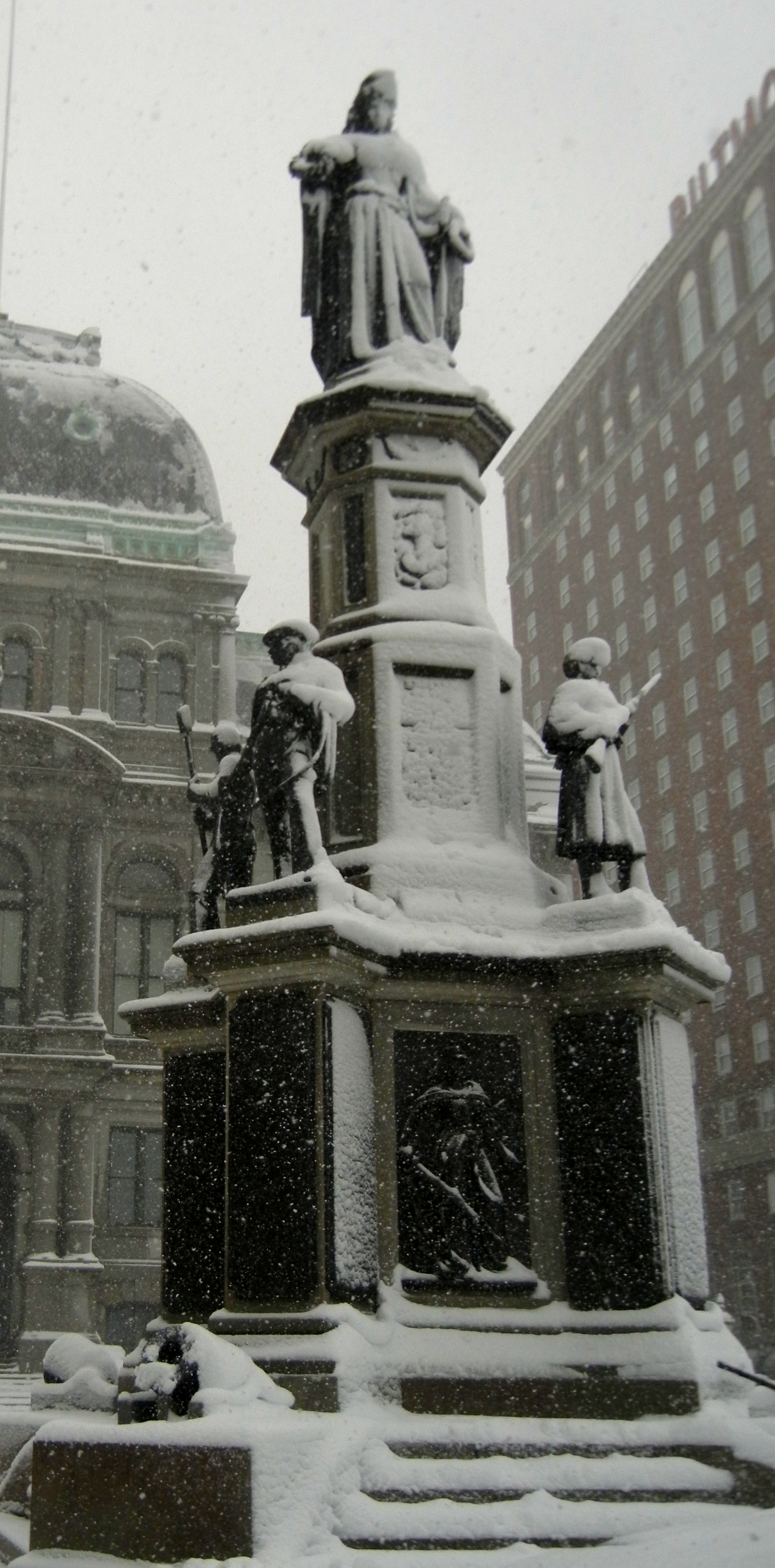
Here are a few shots I’ve taken over the years during and after snowstorms in downtown Providence. To read the text accompanying the photos, please visit my slide show at GoLocalProv.com, entitled “Dr. Downtown’s Snowy Providence.” I’m not sure I’m allowed to reproduce its text here, but I can reproduce my own photographs. (For those readers who don’t yet know, I write a weekly column for GoLocalProv.com, mostly about the intersection between architecture and economic development.)

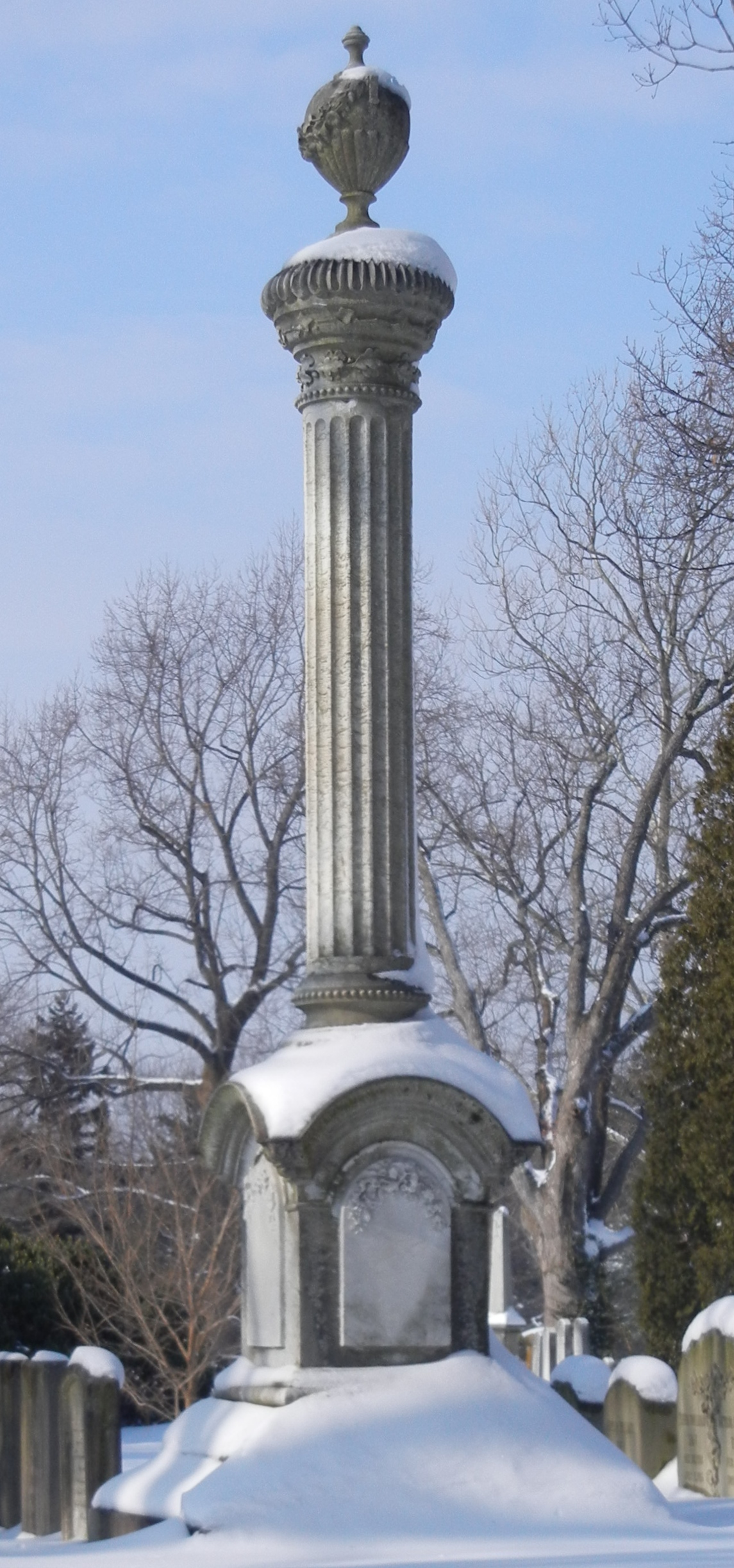
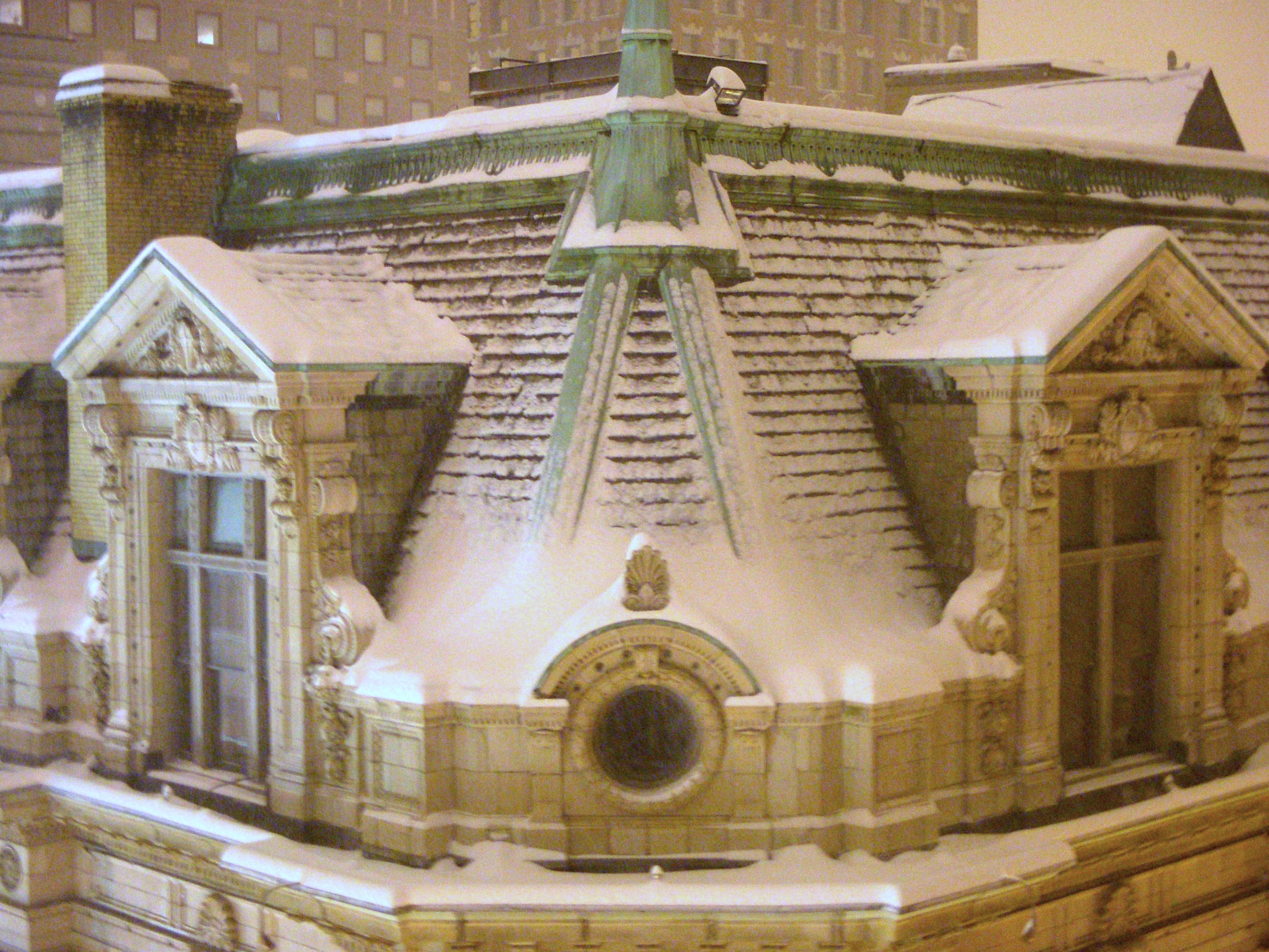
The point of my slide show for GoLocal is that classical architecture, and in particular the place of rest it offers to snow, takes what many people would consider a problem and turns it into a blessing: beauty. The photos make the case by themselves. The text is there mainly to have something to go with the photos in the slide format, though some might deem the text a blessing, too. (Dr. Downtown is an alter ego for your devoted correspondent’s lighter side that goes back to his years at the Journal.)

snowy10 snowy7 snowy2

snowy8 snowy1 snowy3 snowy4 snowy6 snowy5

Posted in Architecture, Art and design, Photography, Providence | Tagged , , , , | 5 Comments

Nuff said at Kennedy Plaza

New bicycle racks at Kennedy Plaza, in Providence. (Photo by David Brussat)

New bicycle stands at Kennedy Plaza, in Providence. (Photo by David Brussat)

Above are the bicycle stands chosen for and installed at the “new” Kennedy Plaza, in Providence. Below are the bicycle stands approved (but not yet funded) for the city of Charleston. Which design represents the more advanced aesthetic?

1422934020999

Bicycle stand chosen by Charleston; click to enlarge. (Bevan & Liberatos)

Posted in Architecture, Art and design, Providence, Urbanism and planning | Tagged , , , , | 7 Comments