Portland’s phoenix resurgent

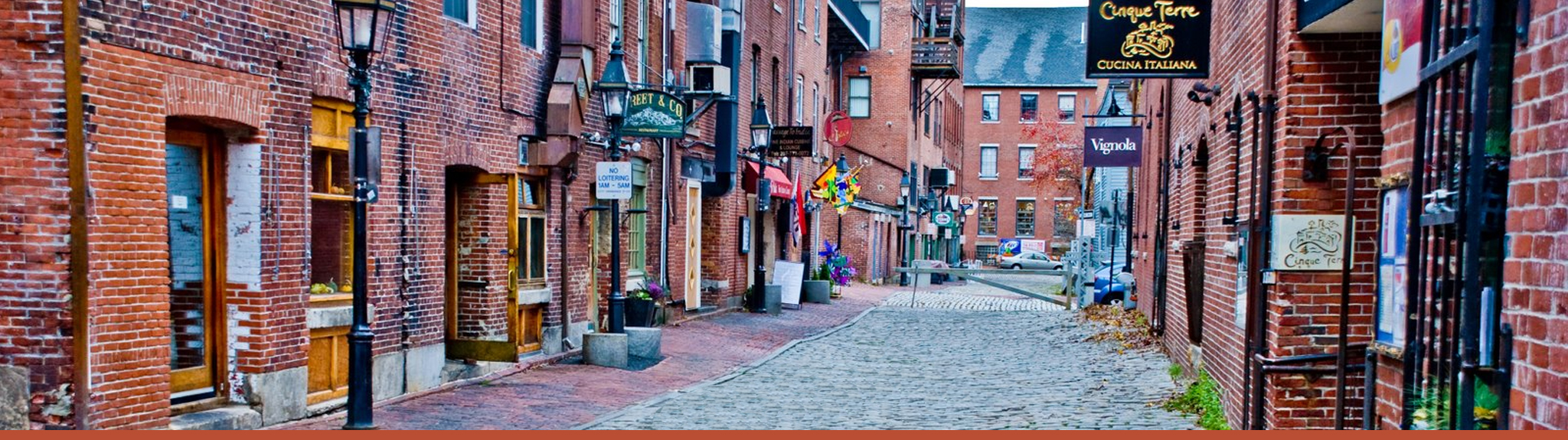
Portland's downtown Port Exchange historic district. (gotravelmaine.com)

Portland’s downtown Port Exchange historic district. (gotravelmaine.com)

Billy, Victoria and I are driving up to Augusta, Maine, for the long weekend to visit friends. We plan to visit Portland on the way or on the way back. The Journal column below reaches back two decades to compare efforts at civic revitalization in Portland and Providence. May take photos and post them upon my return. For now, though, I’ve “gone fishing.”

***

Portland’s phoenix resurgent
August 25, 1994

PORTLAND, Maine
FIVE YEARS AGO, we entered this city of 65,000 after dusk in search of a hotel room on Labor Day. When the lady at the Sonesta Hotel shook her head, we visited the 12th-floor bar to see the view while plotting our strategy. The skyline of squat office buildings in a sea of brick was not endearing. Night soon laid down its kindly blanket.

We left Portland, and after striking out at a dozen motels (including the tent showroom at L.L. Bean), we found a room long past midnight somewhere between Brunswick and Bath. Our return to Portland last weekend was, really, our first visit.

This time, reservations in hand, we stopped at The Danforth, a new bed & breakfast in an 1823 Federal-style mansion just west of downtown. We headed out on foot down Danforth Street, past the historic Victoria Mansion and toward the city center.

But Danforth Street degenerates. We passed several blocks of down-at-the-heels offices, warehouses and apartments. So when at last we reached the Old Port Exchange, we were astonished by its charms.

The Port Exchange represents the sort of commercial development – block after block of small shops, bars and eateries, teeming with shoppers and tourists – the hope for which Providence has abandoned, for now, in favor of a downtown mall (a sad but realistic decision, it seems to me). The Port Exchange’s elegant brick buildings were built after fire destroyed virtually the entire downtown in 1866.

Thirty years ago, says Barbara Hager, who directs Portland’s downtown management district, the area consisted of flophouses and old sailors’ haunts. She says that growth was gradual, starting with entrepreneurial “hippies” who opened lunch spots for the employees from banks and other large companies in buildings constructed just north of the Port Exchange during the 1960s, ’70s and ’80s.

These large, modern, unfriendly products of urban renewal are a blight on downtown, but they are also filled with workers. You cannot argue with a Class A occupancy rate of 94 percent. Ms. Hager sees a major office project in the offing, and hopes to encourage a location advantageous to sections of downtown that, unlike the Port Exchange, still need help.

Locations likely to serve such a purpose are Danforth and Pleasant streets – which between Victoria Mansion and the Port Exchange are so depressing – or Congress Street. Equivalent to our own Westminster Street, Congress Street is the most dilapidated section of downtown Portland. Likewise, its department stores have departed for malls in suburbia.

On Congress Street, Portland hopes to create an arts district similar to our Downcity arts and entertainment district. However, Congress Street suffers from a seepage of modern architecture from the business district. Such structures include the public library, designed by I.M. Pei, the Children’s Museum, the Portland Museum of Art and, of all things, the Maine Historical Society. Indeed, the city’s overall “sense of place” has been seriously eroded in recent decades by bad architecture. It does not take very much modernism to destroy the feeling of history.

Yet, not a few old buildings survive on Congress Street, including the boyhood home of Henry Wadsworth Longfellow (1785), and, not least, the Porteous Building (1904), a former department store that will next year house the currently scattered Maine College of Art. As with the relocation of the URI College of Continuing Education to the Shepard Building, the art school’s consolidation is expected to add momentum to revitalization on Congress Street.

Set against Providence, Portland has advantages, primarily its thriving retail district in the Old Port Exchange, and disadvantages, such as the uninviting sections of downtown beyond the Port Exchange.

Downtown Portland and Providence both benefit from compact size and waterfront locations. With the success of its business district and its retail district, Portland’s revival has progressed further than that of Providence. It has generated the downtown vitality that Providence awaits. However, Rhode Island sits between Boston and New York, and its ambitious projects of infrastructure and economic development – Waterplace, the riverfront, the Convention Center, Capital Center, Providence Place, the Downcity Plan, the relocation of Route 195 – seem to promise, in time, a far greater prosperity.

Portland’s motto, Resurgam, means “I will rise again,” and so it has. As for Providence, we must wait and see. The motto of Rhode Island is Hope.

* * *

Copyright © 1994. LMG Rhode Island Holdings, Inc. All Rights Reserved.
Record Number: MERLIN_1111466
Posted in Architecture, Architecture History, Art and design, Blast from past, Development, Preservation, Providence, Providence Journal, Urbanism and planning | Tagged , , , , , , | 4 Comments

Paying for Berliner Schloss

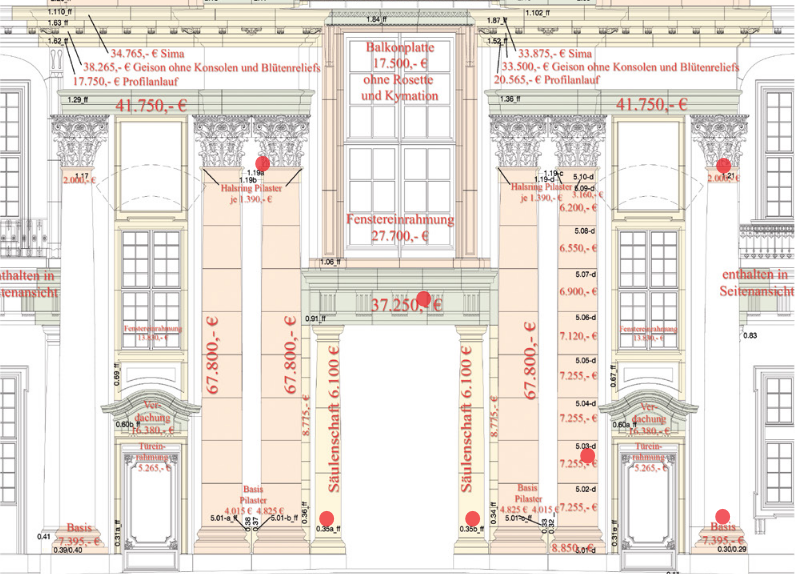
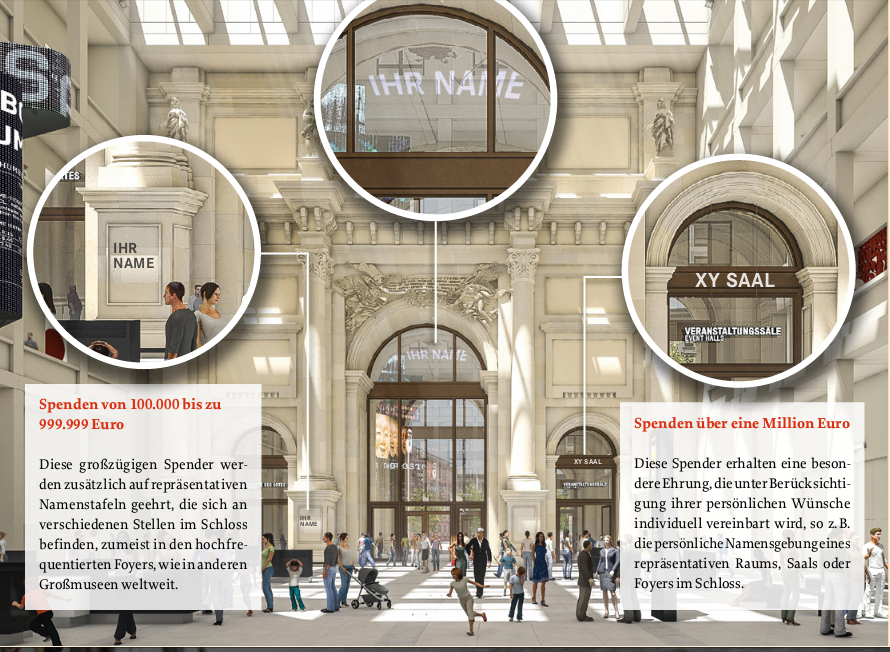
An illustration of opportunities to associate your name with specific architectural elements under construction at the Berliner Schloss. (Berliner ExtraBlatt)

An illustration of opportunities to associate your name with specific architectural elements under construction at the Berliner Schloss. (Berliner ExtraBlatt)

Audun Engh of INTBAU kindly noted, after reading my last post, that the figures next to architectural elements and statuary in drawings of a Berliner Schloss façade near the end of the Extrablatt PDF represented not the cost of those elements but the price for having one’s name associated with them, as a way to raise private funds to ornament the outside walls.

The Germans have raised private fundraising to an art form worthy of Schinkel. Reading Audun’s note, I drifted off into cloud-cookoo land, imagining that the Germans might be willing to sculpt a bust gracing a broken pediment in your own image (or that of your beloved wife) if you offered the right sum. Audun cautioned me otherwise.

David, I believe that by “an individual façade element tailored specifically to you” they just refer to having your name linked to a specific façade element, in a list of sponsors. Not  that you in any way can decide the design.

Well, maybe they should try that idea. (Or maybe not!) Meanwhile, Audun sent a host of links to naming opportunities (in English) at the Berlin project. Here is his email. The key advice, in my opinion, is right at the end.

http://berliner-schloss.de/en/news/berlin-palace-is-being-rebuilt-in-its-former-glory/

“You can also view the façade catalogue in this way – and secure with your donation an individual façade element tailored specifically to you.”

Click  “Donations” on the  menu: http://berliner-schloss.de/en

Here is one of the “price ” lists :

Facade bricks: Choose an amount in Euro, click “verify” (no obligations!)  and the program will identify the specific bricks you are paying for.

http://berliner-schloss.de/en/donations/donate-stone-selection/

Or you can pay for a specific decorative element. Parts of a portel (choose the one you want to contribute to):

http://berliner-schloss.de/en/donations/donation-portal-selection/

Or you can pay for an entire sculpture or ornament:

http://berliner-schloss.de/en/donate-decorative-element-selection/

For many people, it will of course be a lot more rewarding to donate money if you can, in 2019, visit the palace and  show your friends and family what parts of the facade you helped recontruct!

This model could be used for Penn Station too!

Further adventures in fundraising via architectural association. (Extraplatt)

Top half of image for fundraising via architectural association. (Extraplatt)

Bottom half of image for fundraising via association. (Extraplatt)

Bottom half of image for fundraising via association. (Extraplatt)

Posted in Architecture, Art and design, Development | Tagged , , , , , , , | 1 Comment

Berlin Palace, Penn Station

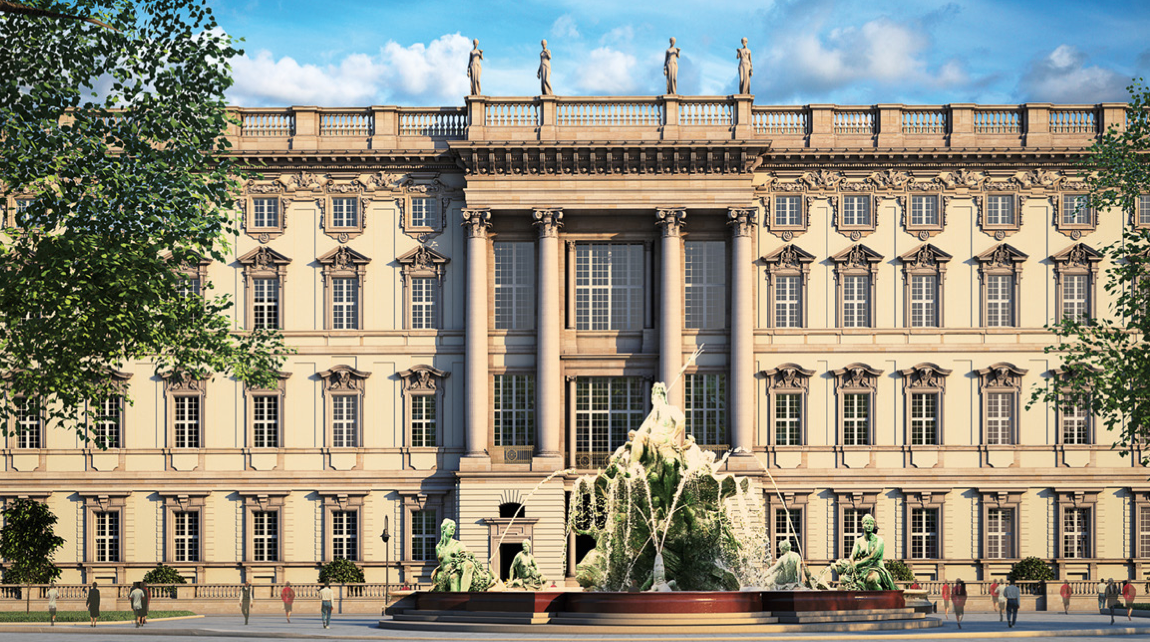
Berliner Schloss as expected to look on completion in 2019. (Berliner Extrablatt)

Berliner Schloss as expected to look on completion in 2019. (Berliner Extrablatt)

Germany is rebuilding the Berlin Palace, the Berliner Schloss, at an expected cost of €590 million or $665 million, a half or a third of the estimated price of rebuilding Penn Station in New York, which itself is considered understated and beyond contemplation, but in fact is not. Indeed, the two buildings are comparable in size, complexity and in the ambition of their reconstitution. If Germany can do it, so can America, with its greater wealth and economy.

Progress on Berliner Schloss. (Extrablatt)

Progress on Berliner Schloss. (Extrablatt)

Carving stone for Berliner Schloss sculpture. (Extrablatt)

Carving stone for Berliner Schloss sculpture. (Extrablatt)

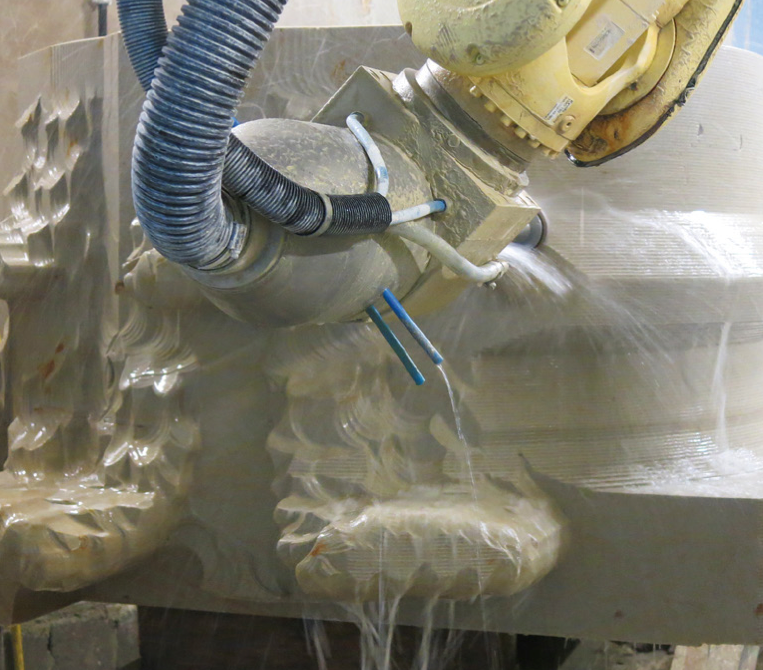
High-tech carving for Berliner Schloss. (Extrablatt)

High-tech carving for Berliner Schloss. (Extrablatt)

Audun Engh, of International Network for Traditional Building, Architecture & Urbanism (INTBAU), has sent a PDF of the latest issue of Berliner Extrablatt, the newsletter published by the association behind rebuilding Berliner Schloss, once the winter palace of the Prussian monarchy and united imperial Germany.

After reunification in 1990, Germans argued for years whether to tear down the hideously ugly Palace of the Republic, completed by 1976 under the boot of Moscow, and what to put in its place. Its demo was completed in 2003. In 2007 the Bundestag decided to rebuild three sides of the Berliner Schloss, with a fourth side, interior rooms and courtyards divided between traditional and modern styles (a mistake, but not one that cannot be aborted om construction or corrected later). Construction is very well along. Completion is expected in 2019.

The Extrablatt is in German but is profusely illustrated, showing that traditional materials are being used, fabricated by hand but also with advanced technology and techniques. After a recent visit, Patrick Webb, of the American College of the Building Arts, in Charleston, hopes to engage the project’s lead carver to establish internships and apprenticeships for American students of traditional craftsmenship.

Scroll through the PDF to see old photographs of the Stadtschloss, its ornamentation and statuary; detailed renderings of how those elements will look on completion, both in detail and in the context of existing Museum Island architecture in the former East Berlin; photographs the progress of construction thus far, and of the fabrication of detail, whether by chisel or by high-tech cutting instruments; and even drawings that show, if I am not mistaken, the cost of various facets of the project column by column, statue by statue. This is a lot of material, but especially if you can’t read German you can get through it in a reasonable amount of time. It is worth the trip.

The Association for the Berliner Schloss, a private group supporting the project – whose exterior is being paid for with private money and whose interior, the Humboldt Forum, is being paid for by the German government – has a website with more material, including stills and videos of the design.

Taken as a whole, the material strongly suggests that New York City can and should rid the nation of the desultory tragedy of the existing Penn Station and its ridiculous Madison Square Garden topper and replace them with something the entire nation – indeed, the world – can be proud of. The Germans have proved that it is not a matter of skill, technology or money but of will. Today, as Vincent Scully put it, we scuttle into New York City like rats. There is no reason we cannot someday enter, again, like gods.

Architect Richard Cameron of Atelier & Co., in Brooklyn, is leading an effort toward that end. It was highlighted in CityLab last May.

Posted in Architecture, Architecture Education, Architecture History, Art and design, Development, Urbanism and planning, Video | Tagged , , , , , , , , , | 9 Comments

Gaming the Renaissance

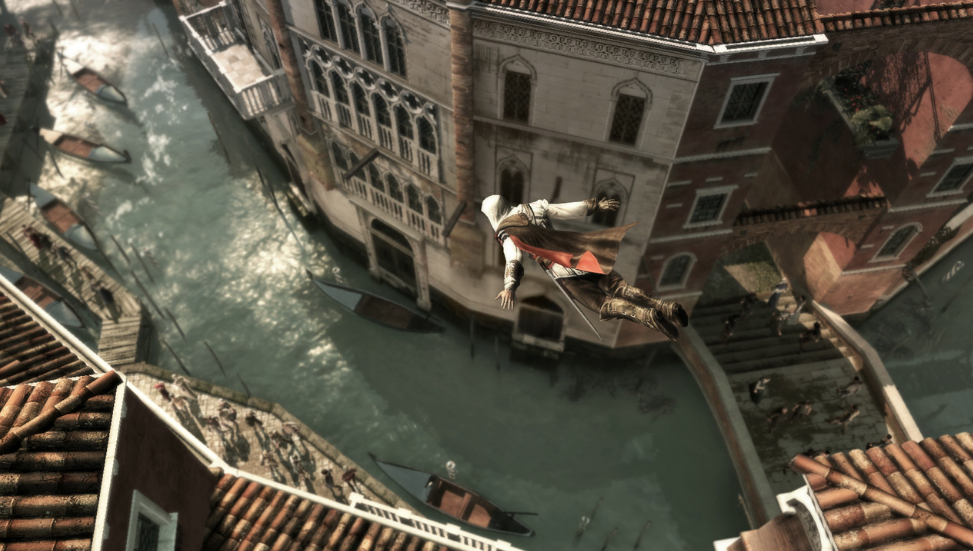
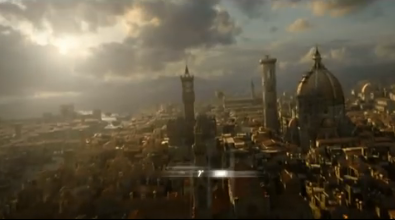
A canal in Venice as experienced in the video game “Assassin’s Creed II” (ArchDaily/Ubisoft)

A fascinating interview in ArchDaily of Colombian architectural historian Maria Elisa Navarro, of McGill University, who advised creators of the video game “Assassin’s Creed II,” opens up new vistas for the classical revival.

Florence in “Assassin’s Creed II” (ArchDaily/Ubisoft)

Millions of young people play these video games. The games’ allure relies at least in part on exciting scenery within which players confront enemies in situations programmed to reflect historical reality. Players see the beautiful historical architecture on display in 3D and may come, willy-nilly, to expect today’s reality to better reflect the beauty that they have “experienced,” and that classicists believe should inspire the built environment. This is popular culture, the masses putting their money where their mouth is and where their tastes are. Could it be that the beauty of architecture can also battle back into elite culture – and our cities and towns – as well?

Of course, the events that play out in historical re-enactment are not always as beautiful as the architecture itself – as true today as in every other period of history. Let’s not make the mistake of blaming the buildings for what goes on in and around them.

In “What It’s Like to Be an Architectural Consultant for Assassin’s Creed II,” Navarro described some of her duties as historical consultant to the creators of a game that unfolds in places like Florence, Venice and San Gimignano:

Another aspect we dealt with was the look of the buildings — they were modeling, and I would meet with them periodically to verify the accuracy of the historical reconstruction. Sometimes, for gameplay purposes, they needed to have walls with a lot of texture so that Ezio could climb them, but when the time came to lay those parts out, there were some inaccuracies. For example, I remember a balcony with a wrought iron railing that couldn’t have existed in that time period. I was responsible for detecting those issues. On the other hand, late 15th century buildings most likely had only one level, two maximum, but they decided to ignore that fact for the sake of gameplay.

The question of what historical accuracy is required and what can be dispensed with raises broad issues in a wide range of fields related to architecture, philosophy and indeed life. Navarro says her job placed her in the role of educator, on a number of levels:

For me the most interesting thing about the experience was the historical interest in the development of a video game. The genuine concern on their part was a pleasant surprise. What’s more, it seems like an excellent way to spread information that is normally quite hidden. In fact, compiling the information was half of my job for two years, so it seems to me an excellent way to make sure that knowledge doesn’t stay hidden. It represents another form of learning.

Navarro’s reflections on this method of spreading knowledge of historical architecture lies apart from the interest today’s classicists have in reviving beauty as a method of engaging the public’s civic spirit and individuals’ joy in life. But they are far from unrelated.

Her work environment in Montreal, where the game company Ubisoft was headquartered, expanded as the level of technical complexity in producing the video game expanded. She went from working with 20 people to working with 400 people, in a basement with strict security arrangements because the gaming industry is a secretive business.

Which may be of interest to Rhode Islanders struggling with a scandal involving public financial support for a video-game production company, 38 Studios, founded by Boston Red Sox star pitcher Curt Schilling. Many people have a difficult time imagining how the company could run through so much money so quickly, and why the production of video games required so much secrecy. Navarro’s description may shed some light on that.

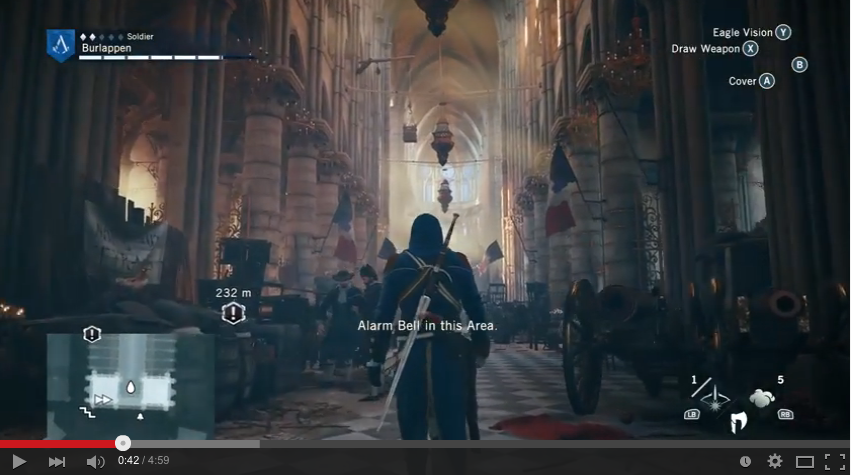
Ezio enters the Duomo. (ArchDaily/Ubisoft)

Ezio enters cathedral. (ArchDaily/Ubisoft)

Make sure you watch this five-minute video segment of our hero vaulting through and around a cathedral, up and down the streets around it, unsheathing his sword in earnest only at the end. More information can be had from a 35-minute video that sets the scene for the game’s historicity. It can be seen by clicking on a screen toward the end of the article.

You will be awed and astonished by the technical virtuosity that went into creating the 3D motion experienced by players of “Assassin’s Creed II.” And in fact, where else can you have a similar experience without trading an arm and a leg for a flight to Italy? And I should say that Ubisoft is only one of many game makers placing their characters in historical environments that are not only exciting but beautiful.

Frankly, its hard to imagine similar levels of excitement (let alone beauty) arising from most modern architecture. Even at levels for the youngest players, such as my 6-year-old son Billy, who is an expert at “Angry Birds,” backgrounds tend to be traditional city and townscapes, with vernacular architecture predominant. “Get ’em started early!”

Frank Gehry, Rem Koolhaas, Renzo Piano, Zaha Hadid, etc., call your office!

[Hats off to Samuel Lima for sending this ArchDaily interview to TradArch.]

[Saga, Manuel. “What It’s Like to Be an Architectural Consultant for Assassin’s Creed II” [María Elisa Navarro, la arquitecta que asesoró el desarrollo de Assassin’s Creed II ] 07 Oct 2015. ArchDaily. (Trans. Matthew Valletta) Accessed 8 Oct 2015. <http://www.archdaily.com/774210/maria-elisa-navarro-the-architectural-consultant-for-assassins-creed-ii/&gt; ]

Posted in Architecture, Architecture Education, Architecture History, Books and Culture, Development, Urbanism and planning, Video | Tagged , , , , , , , , , | 5 Comments

Authenticity in placemaking

AS220's

AS220’s “Unpacking Authentic Placemaking” at the Peerless Building. Left to right, standing and on panel: Marc Levitt, Lucie Searle, Rick Lowe, Myrna Breitbart, Umberto Crenca and Andres Duany. (This and first photo below by David Brussat)

As part of its 30th anniversary celebration, the Providence arts collaborative AS220 gathered several expert “placemakers” under the deep atrium sky of the Callendar, McAuslan & Troup Building (1873, 1892). Called the Peerless Building now after the last in a string of department-store occupants, its five-story atrium bears all the stigmata of a supposedly authentic place. Its lack of attention to finished detail leaves it with the look of still being under construction. So it is “authentic.” But is it authentic?

Atrium of Peerless Building.

Atrium of Peerless Building.

This sort of question (though not the one I’ve raised here) animated the four experts all evening. (In deference to their amour propre, I use the word expert loosely.) They were Rick Lowe, an artist/activist in Houston; Myrna Breitbart, who teaches urbanism at Amherst with a focus on race, gender and class; Umberto Crenca, an artist and founder of AS220; and Andrés Duany, a town planner and founder of the Congress for the New Urbanism. Marc Levitt, a local storyteller and polymath, ran the proceedings and was successful at fomenting discord, especially between Lowe and Duany. The panelists interrupted each other frequently, as planned.

The disagreements about placemaking were authentic. Still, Duany was obliged to hurl several grenades to thwart mutual admiration, which is the enemy of frank discussion. He irked Breitbart and Lowe by remarking that some housing types naturally dilapidate to the point of affordability. Lowe blamed lack of investment. Duany claimed that government red tape was the main obstacle to community self-regeneration. Breitbart countered that city services for neighborhoods that artists can afford to live in is vital.

Duany pointed out that Detroit is an art mecca today because bankrupt city government cannot afford to regulate (that is, suppress) its practitioners. He urged cities to create Pink Zones, geographically circumscribed places where government would butt out, at  least insofar as artists, the arts and arts-generated redevelopment are concerned.

Sidewalk at AS220. (tripadvisor.com)

Sidewalk at AS220. (tripadvisor.com)

Lowe suggested that authentic placemaking was difficult in American society because the sensibilities upon which it depends are subservient to the nation’s “grow, grow, grow” mentality. Duany countered that American society has developed an organic ability to self-correct, and warned against focusing exclusively on artists. Crenca argued that “we need to live the collective.” Duany was not so sure. Successful neighborhoods, he said, require people who can fix carburetors, too, and successful advocacy for vibrant communities needs “people who can dot i’s and cross t’s,” because artistic heads are often too far up in the clouds.

Duany mentioned developers and bankers as among these, bringing to mind my old theory that Bert Crenca’s fierce, jut-bearded visage had some role in generating financial support for AS220’s first facility on Empire Street.

Much discussion revolved around the concept of “tactical urbanism,” the impromptu grassroots capture of public space, an example of which was the “chair bombing” of Times Square – placing chairs in lanes for vehicular traffic – which people loved so much that the city government took it over, and which worked so well that the city government then tried to shut it down. (It had started to attract “nudes” angling to mug with tourists for cash. Mayor de Blasio has since backed down.)

Parklet near Peerless Building on Park(ing) Day. (downtownprovidence.com)

Parklet near Peerless Building on Park(ing) Day. (downtownprovidence.com)

Providence has gone all-in on “parklets” – parking spaces “captured” by folks who, while feeding the meter, artfully transform them into little parks, with couches, maybe palm trees. There’s an official day set aside for that now, though it may generate less love for goofy little parks than nasty looks from drivers. Have parklets and chair-bombs been co-opted? Perhaps. That does not mean that as gestures they are pointless or useless. How to scale up tactical urbanism and other local successes remains an unanswered question. It may be argued, however, that New Urbanist placemaking has already reached beyond the local to a national or even a global scale.

Lowe pointed out that if you give 30 3-year-olds a blank sheet of paper they will all draw, but not so by the time they are 30. What happened to them? Were they stunted by their education? by society? Duany rejoined that they became bankers, dentists or artists at fixing carburetors who eventually raise families and move out to the suburbs, succeeding at business and moving back into town only after artists had been deployed by developers to make a neighborhood cool. Or something like that. The group argued all evening over such urban theories – their implications, even their accuracy.

Breitbart referred to placemaker Jan Gehl, whose work reflects many placemakers’ habit of gazing off into the distance, suddenly deaf when the question of beauty in placemaking arises. Often, public space is difficult to animate because it is surrounded by sterile, even sinister architecture that suppresses the free and lively sensibility that must inhabit a place for it to be truly vibrant and hence genuinely authentic. The Congress for the New Urbanism may be officially neutral toward style, but reality is not.

The difficulty of reaching conclusions in debates like this does not mean they are useless. The packed room, after all, was composed mostly not of artists but of nonprofit and public arts facilitators. This is what they live for. The key is funding. Grants are mother’s milk. And they look down their noses at “Western, European art.” Duany urged the audience to view the Sept. 30 episode of South Park, the animated TV comedy, called “The City Part of Town,” spoofing the arts bureaucracy – “including myself,” Duany insisted.

At the end of the session, AS220 lauded Buff Chace, who redeveloped the Peerless and other downtown buildings as residential lofts. He was also my landlord for 11 years when I lived in the Smith Building, his first downtown rehab. He combines the traits of developer and artist with panache. What he has accomplished – that’s authentic.

Leaving aside people like Buff Chace, it turns out that authenticity is difficult to pin down. No surprise there. There was authentic agreement and disagreement over placemaking last night, and that will be so as long as artists, and the rest of us, seek to make place.

Happy birthday to AS220!

[Correction: Early versions of this post referred to the animated TV show Family Guy. It was the South Park episode of that name to which Andres Duany was referring. You may be required to register; it’s free. Warning: I have registered and have been unable to view the episode. It seems to queue up, then nothing. Maybe I lack some necessary computer thing to view Hulu vids.]

Posted in Architects, Architecture, Art and design, Books and Culture, Development, Preservation, Urbanism and planning, Video | Tagged , , , , , , , , , , | Leave a comment

Frank Gehry’s H.M.S. Foggy

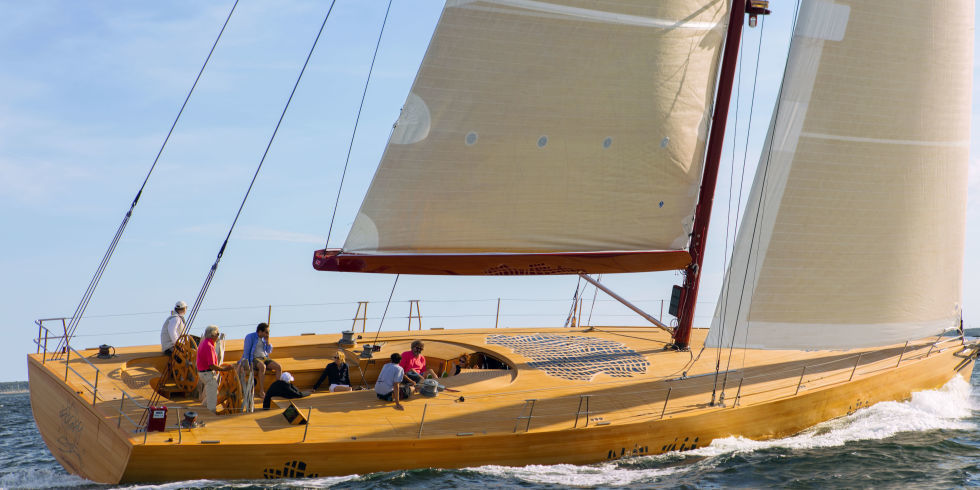
Sailboat designed by Frank O. Gehry, called Foggy. (Esquire)

Sailboat designed by Frank O. Gehry, called Foggy. (Esquire)

Not sure why I’ve decided to inflict on readers this old post from October 2015 on the day before the day before Christmas. It came to mind after a reader, intent on humoring me or torturing me, sent me a photograph of a yacht supposedly designed by the late Dame Zaha, forcing my native fairness to argue that just because a yacht is designed by a modernist architect doesn’t mean it must be ridiculous. The Foggy, designed by Frank Gehry, is a case in point. The article on it by Esquire is priceless. By the way, I guess Zaha’s boat is a yacht while Gehry’s is a sailboat. The same critical principles apply.

***

Esquire magazine reports that Frank Gehry has designed a sailboat: “Frank Gehry’s First-Ever Yacht Is His Latest Architectural Wonder.” The wonder is that it looks like a sailboat. Water enforces certain constraints on design that land seemingly does not. A secondary wonder, arising from those constraints, is that the boat is lovely. A tertiary wonder is that its Gehryesque facets and ornaments are also alluring, mostly, in their own funny way.

But the article – by Vicky Ward, who is the “significant other” of developer Richard Cohen, who commissioned the vessel – may be more revealing about the process of designing a boat with Gehry than was intended.

Gehry was assisted in the design by Germán Frers, a well-known nautical engineer from Argentina, who no doubt struggled to ensure that the boat would float. Architect Joel Pidel remarked on TradArch that “hopefully it leaks less than his buildings.” Ward quotes Gehry speaking sensibly of the project, and then quotes Frers on the difficulty of working with Gehry:

“Don’t let me go too crazy,” Gehry told Frers. “The boat has to work.” As instructed, Frers pushed back on Gehry’s plan for the vessel to have a flat, cabinless deck, which led to the choice of a curved “crown.”

However, when it came to choosing the material for the hull lining, Gehry and Frers drifted apart. Ever concerned with speed, Frers had proposed carbon fiber, the light, brittle material commonly used for racing boats. But Gehry wanted to line the boat with wood, partly because of “boat lore,” partly because he simply loves wood. Frers got a sinking feeling when he heard this, since wood adds weight without function. “I almost gave up hope the project would get done,” he says.

Yacht of Senator Chapman in “The Final Countdown.” (aircraftresourcecenter.com)

Leaving aside the constraints that context – water – imposes on boat design, Gehry’s desire to coat the boat in wood is responsible for its elegance. I have always been a sucker for wooden boats. I want not a sailboat but the senatorial yacht that the Japs blow out of the water at the beginning of the film The Final Countdown (1980), in which a U.S. aircraft carrier enters a time warp, emerging just before Pearl Harbor. Really, though, all I want is a wooden bateau small enough to cruise along the Providence rivers during WaterFire. But Generalissimo Barnaby Evans scotched that idea when he engineered a ban on most private boats during those marvelous events.

So, returning to Gehry’s boat, the touches that identify the boat as a product of the Gehry mind are quite enchanting, and are no problem on the scale of a boat. Let him design a car, too, if he has not already. (In fact, I wish he’d spend all his time designing boats and cars; the world would be the better for it.) But at the scale of a building Gehry’s tics are tedious in the extreme, and on a smaller scale possibly dangerous. Foggy – the boat’s name, from Gehry’s initials – has a ridiculous wheel that looks as if it might yank Capt. Cohen’s finger off if he sails it in rough seas. A scene with the captain struggling at the wheel in a storm is almost mandatory in films of a nautical theme.

Gehry already has a sailboat moored in California, which he plans to rename Foggy 1 – readers may feel free to chip in for the psychiatrist to plumb that one. I hope Cohen will invite Gehry out on Foggy (the new one, not the old one) a lot, so that FOG can spend a lot of time rubbing shoulders with the Kennedys of Hyannis Port on Cape Cod, where the Esquire article begins.

Gehry must think himself quite a guy. “On a boat like this, it’s about romance and romantic encounters,” the architect says. Here is Ward’s description of the boat’s interior space:

At the heart of that fantasy is the yacht’s saloon, whose soft furnishings include a psychedelically colorful carpet created by Joyce Shin, Gehry’s ­daughter-in-law. It also includes sheepskin coverings for the couches from New Zealand, which turned the space into something between an Austin Powers–style lair and a discotheque.

Go for it, Frank! Here’s where you can plan your next project – according to Esquire – a space ship. That’s rich! Get it out of here! That’s what it’s for! Too bad we can’t blast all of Gehry’s buildings off into outer space!

[Tip of the bicorne to Gary Brewer for sending the Esquire article to TradArch.]

***

Below is a yacht allegedly designed Zaha Hadid, or by her firm since her death.

Screen Shot 2017-12-23 at 1.59.06 PM.png

Posted in Architects, Architecture, Art and design, Providence | Tagged , , , , , , , , , | 5 Comments

Biggest little whaling ship

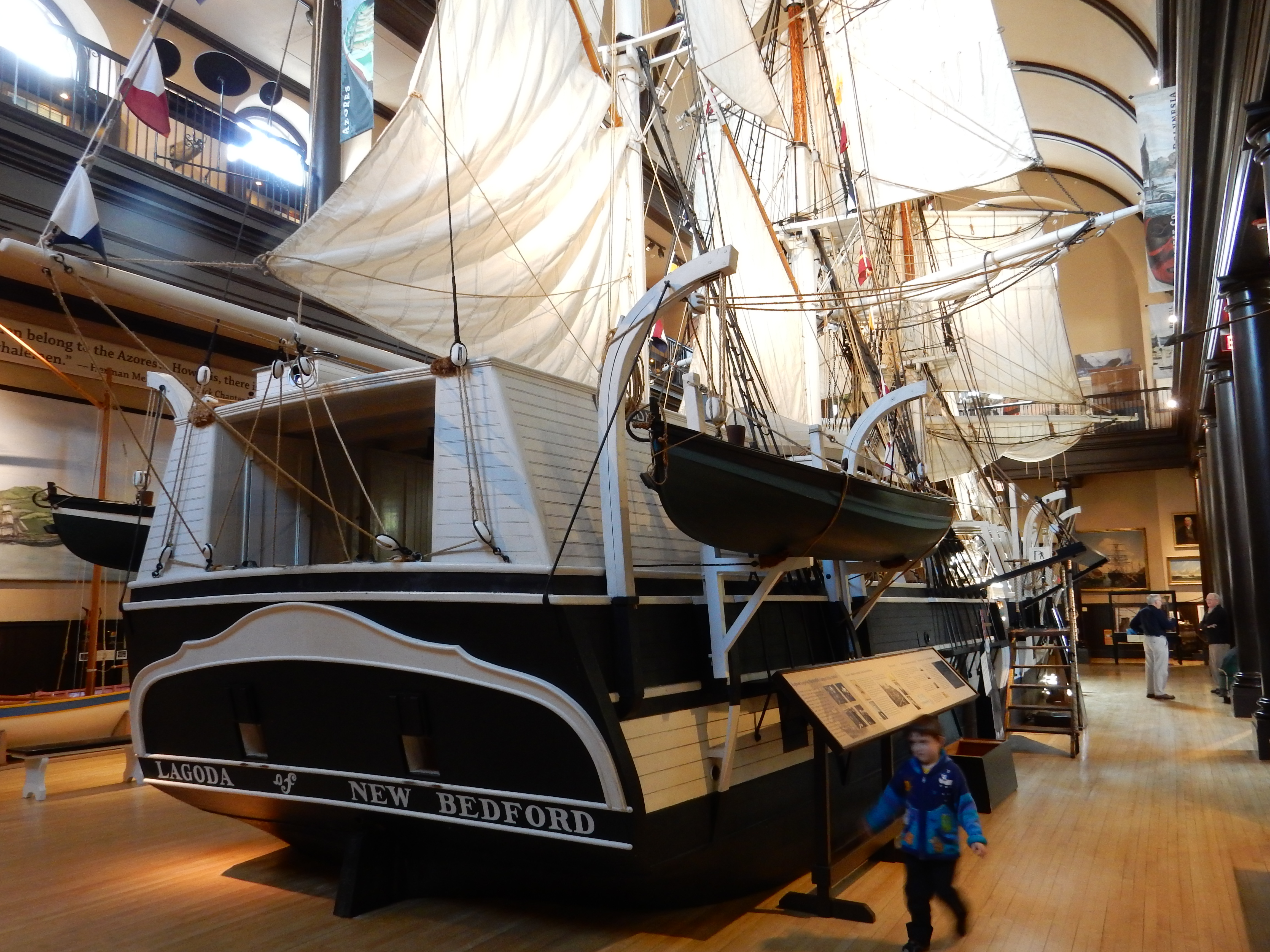
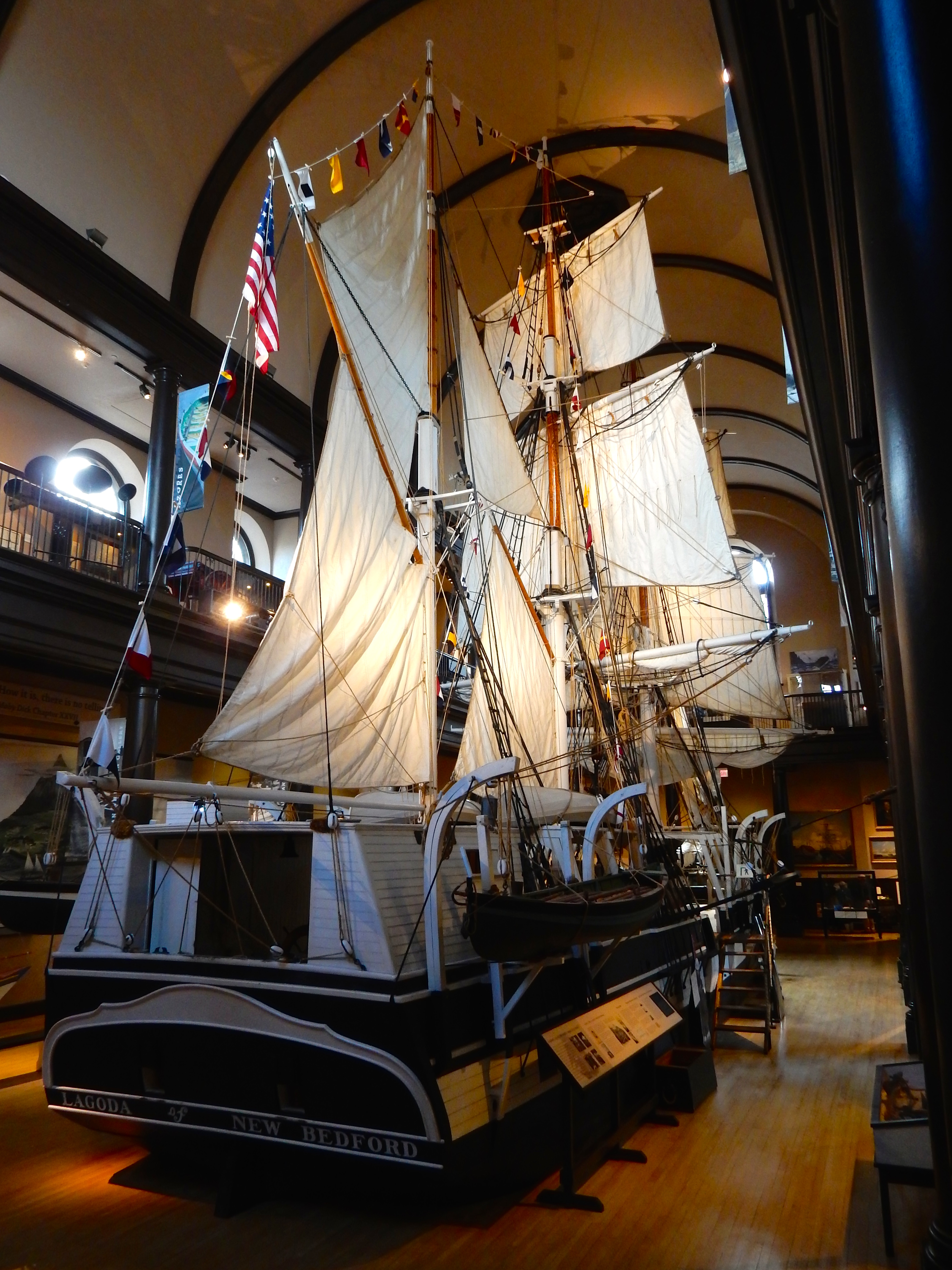
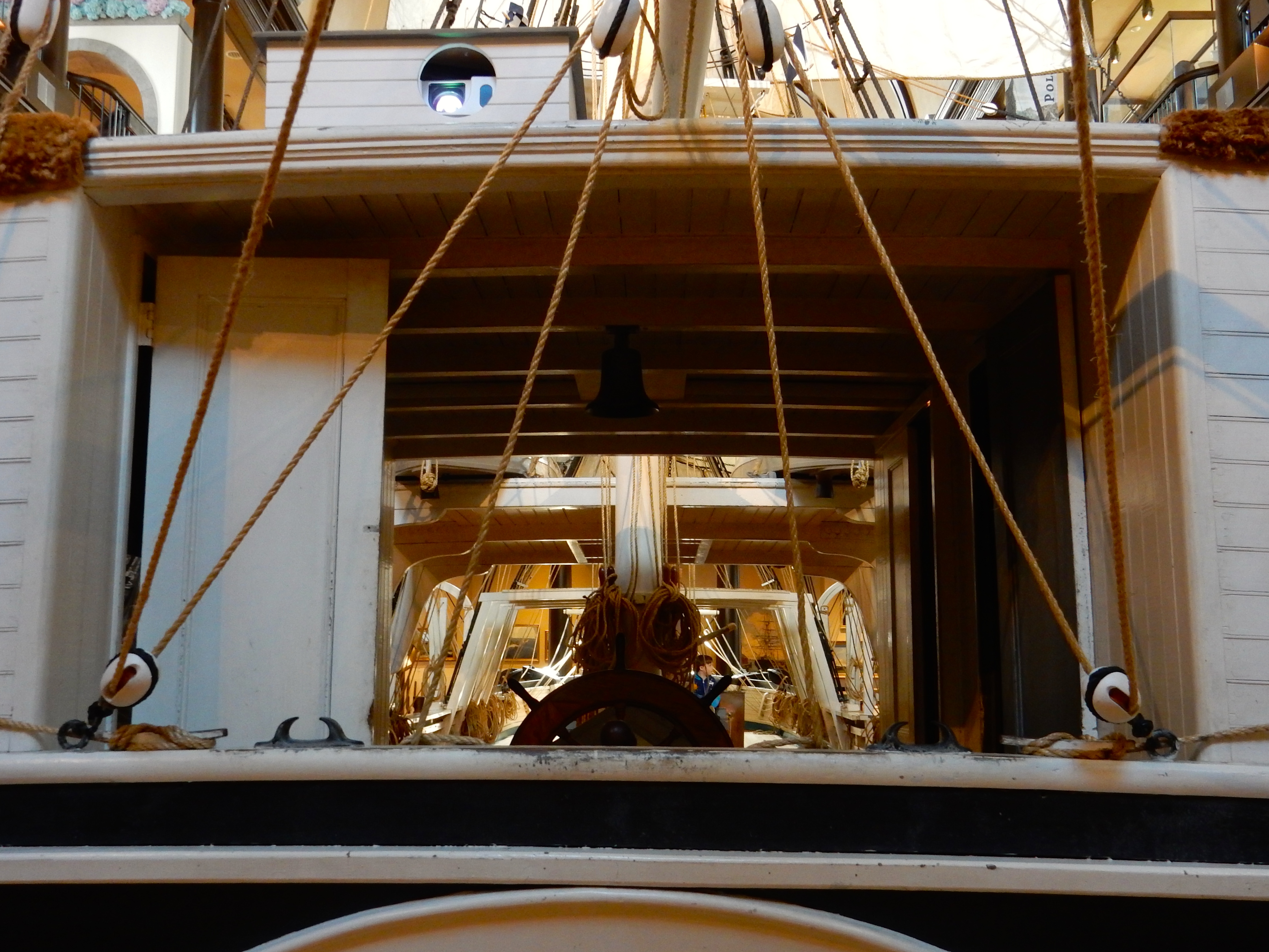
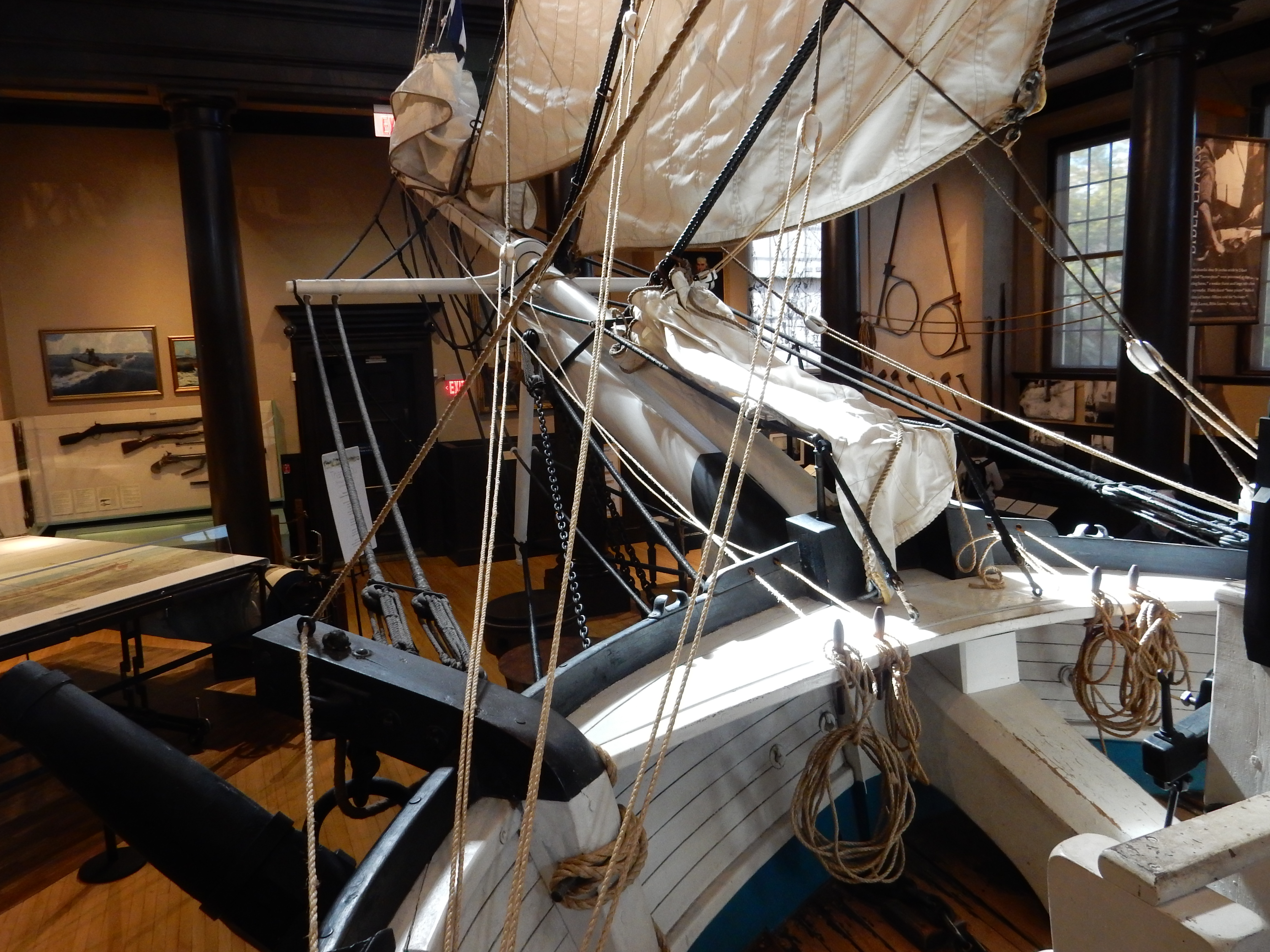
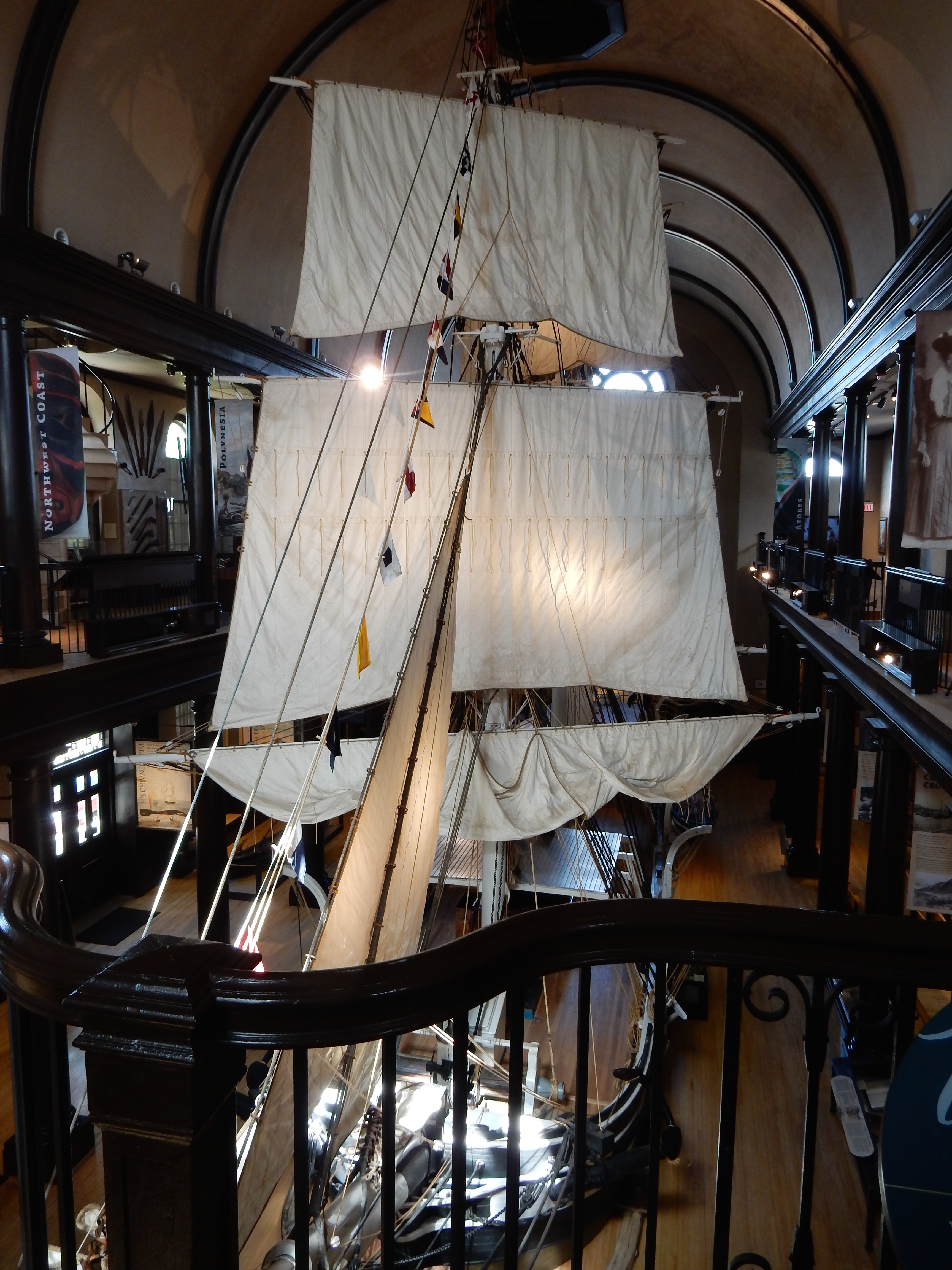
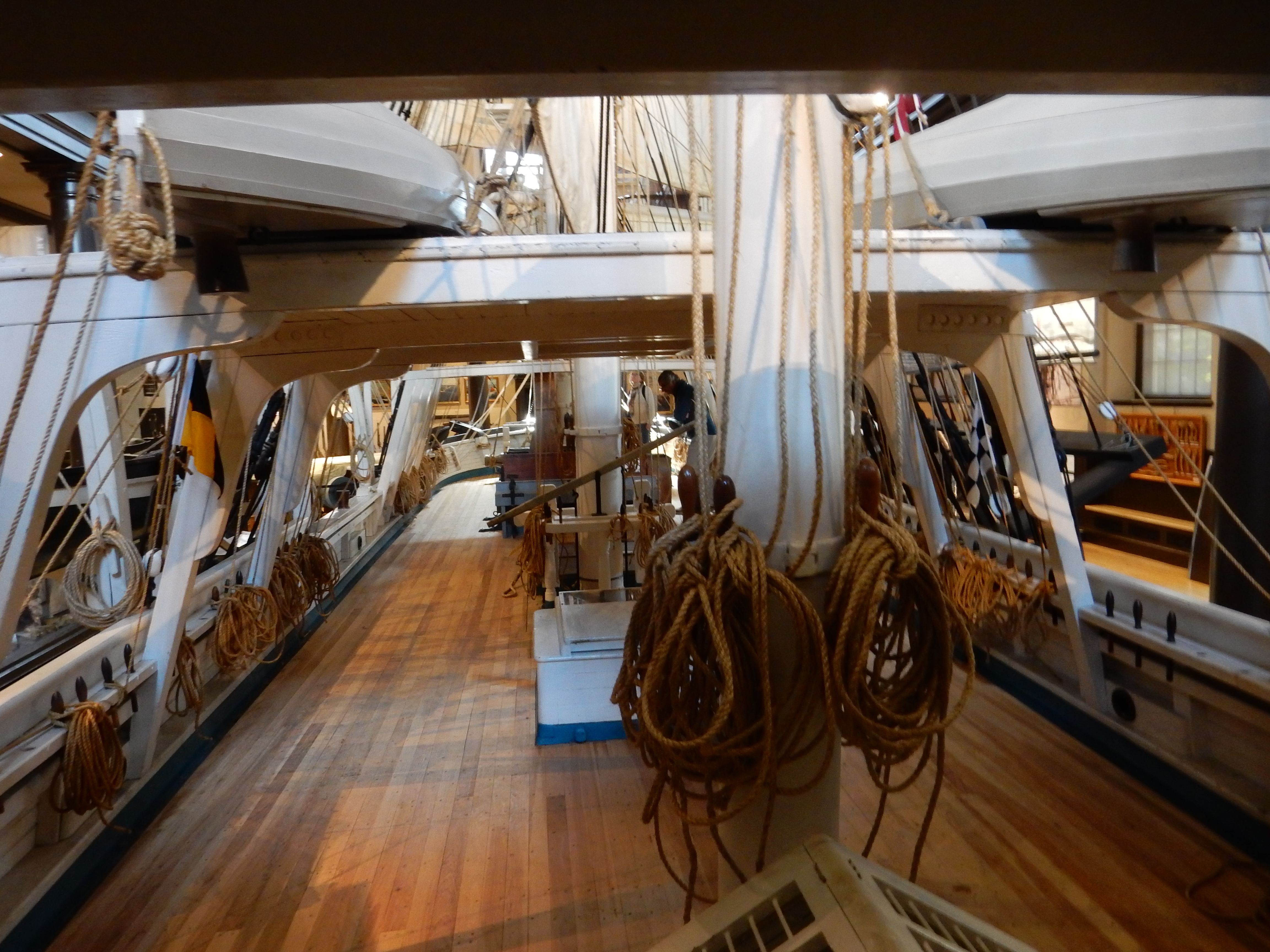
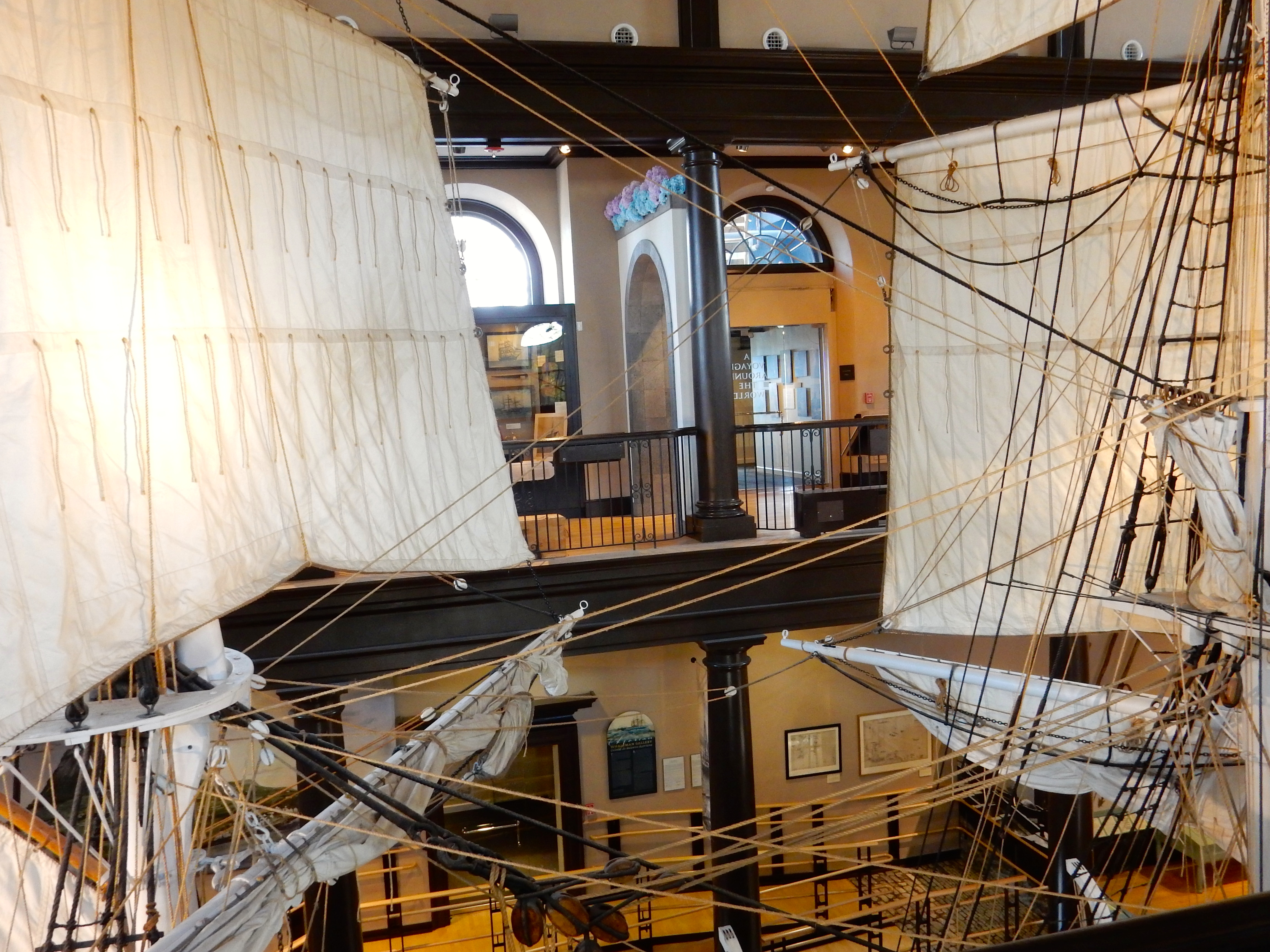
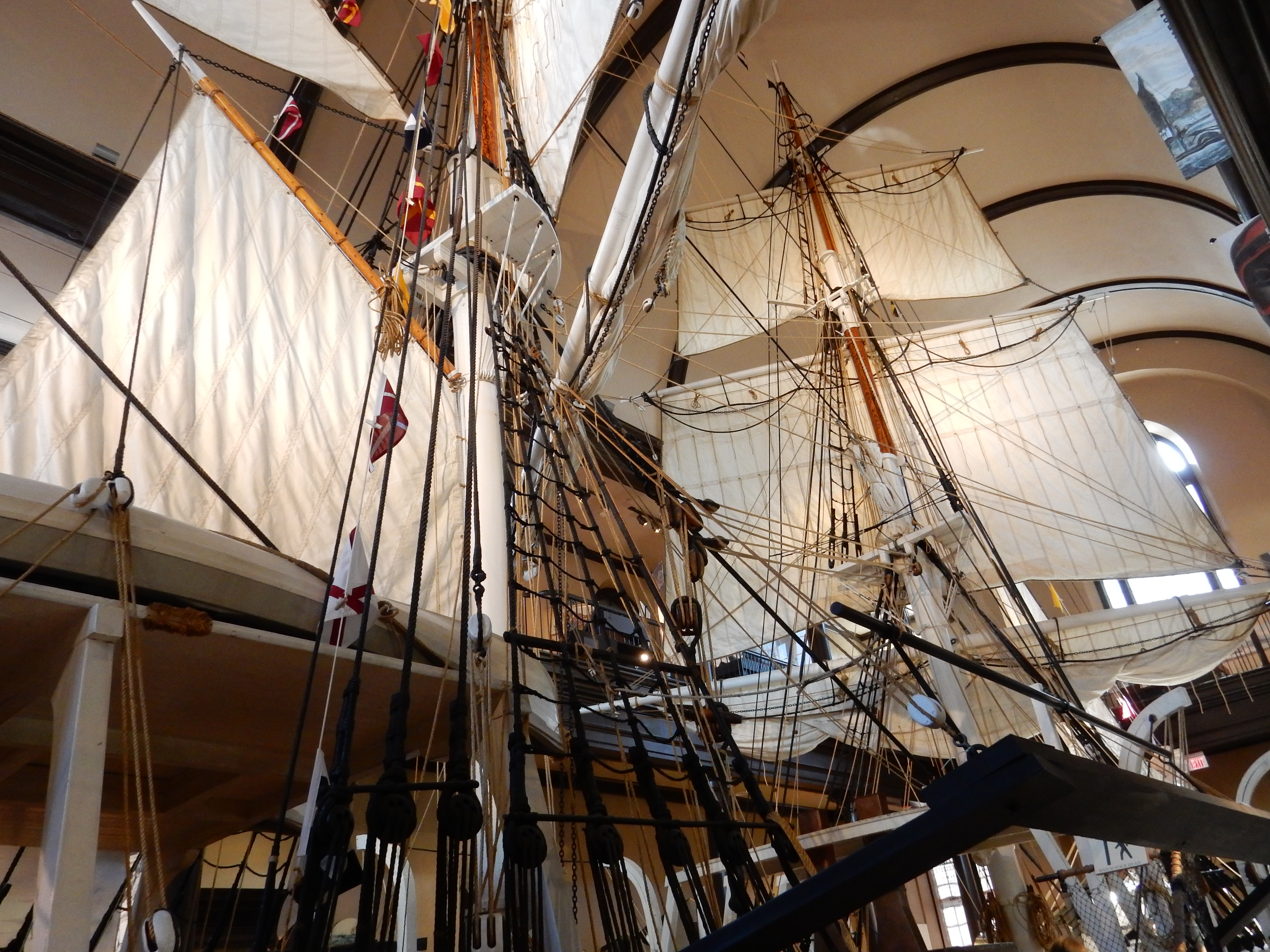
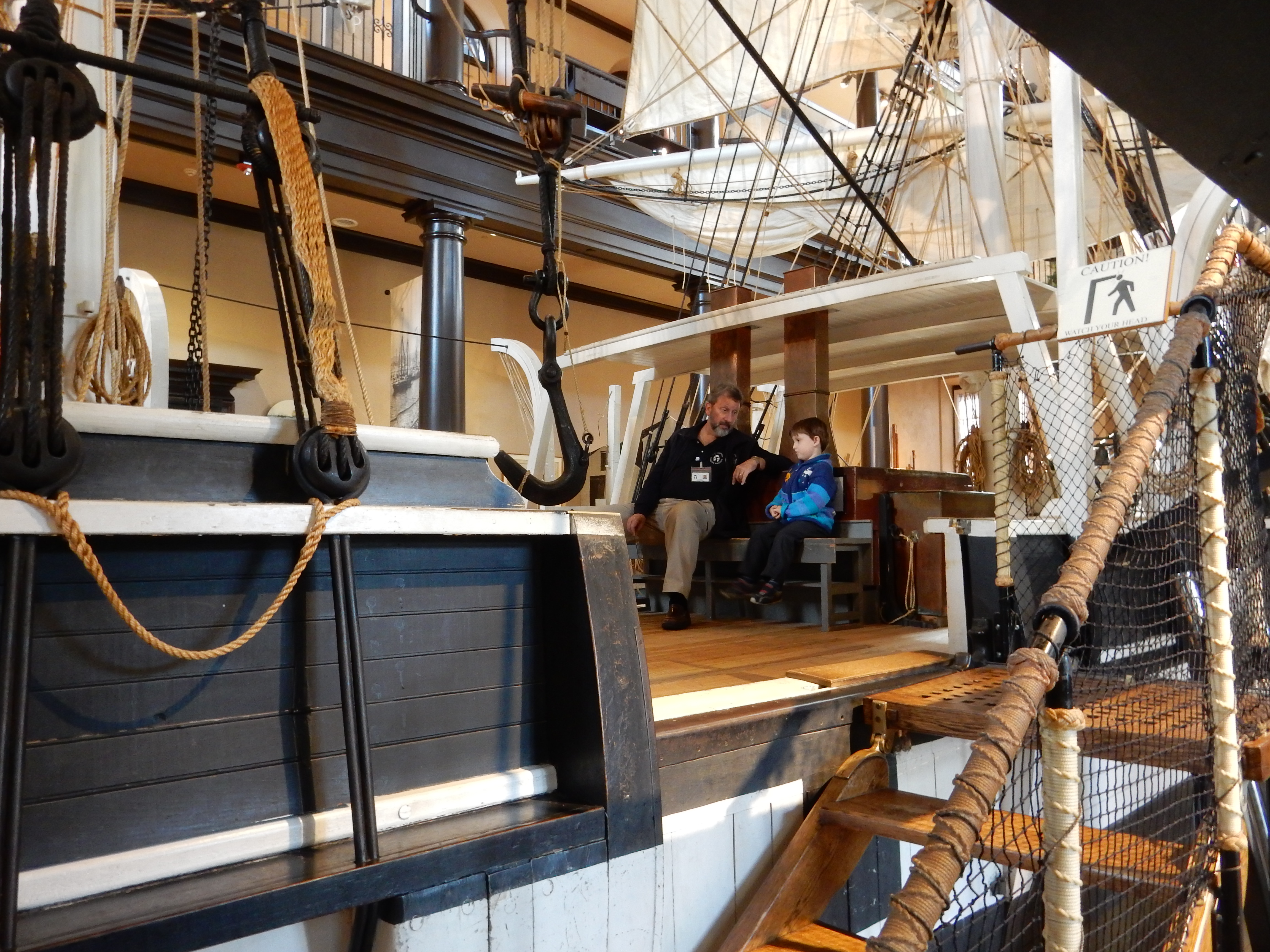
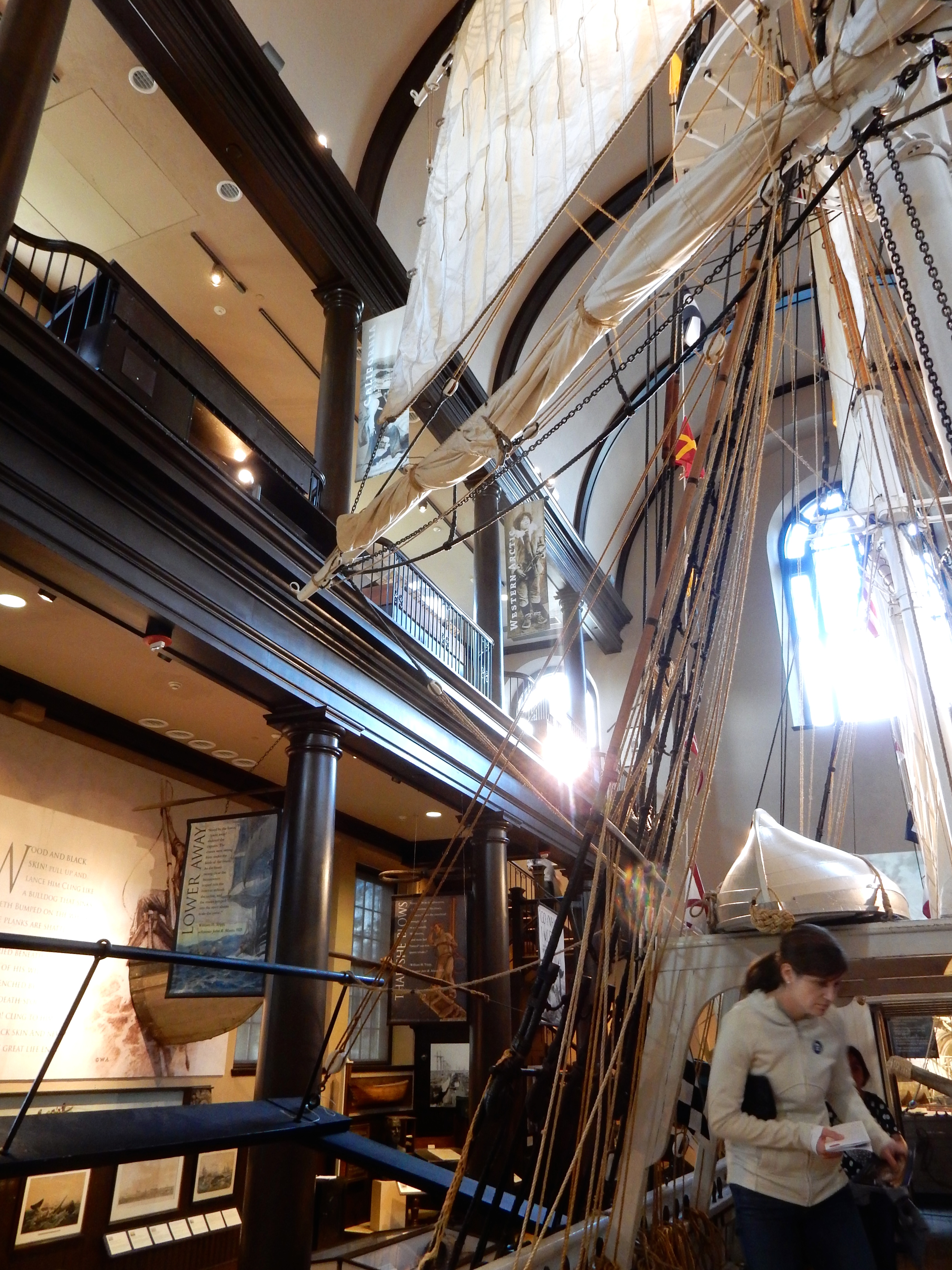
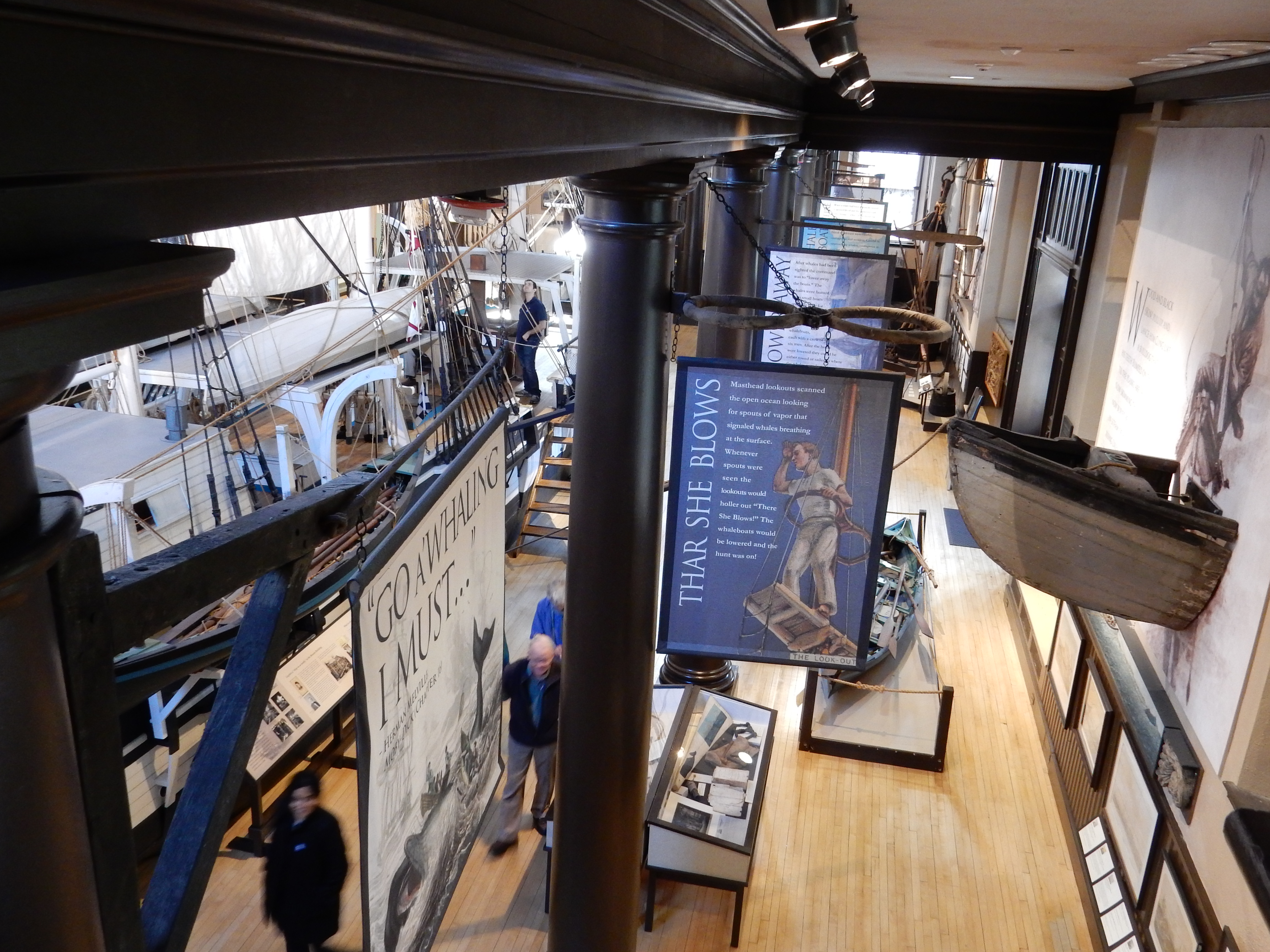
The Lagoda model is housed in the classical hall of the Whaling Museum's Bourne Building, in New Bedford. (Photos by David Brussat)

The Lagoda model (partial view at left) is housed in the classical hall of the Whaling Museum’s Bourne Building, in New Bedford. (Photos by David Brussat)

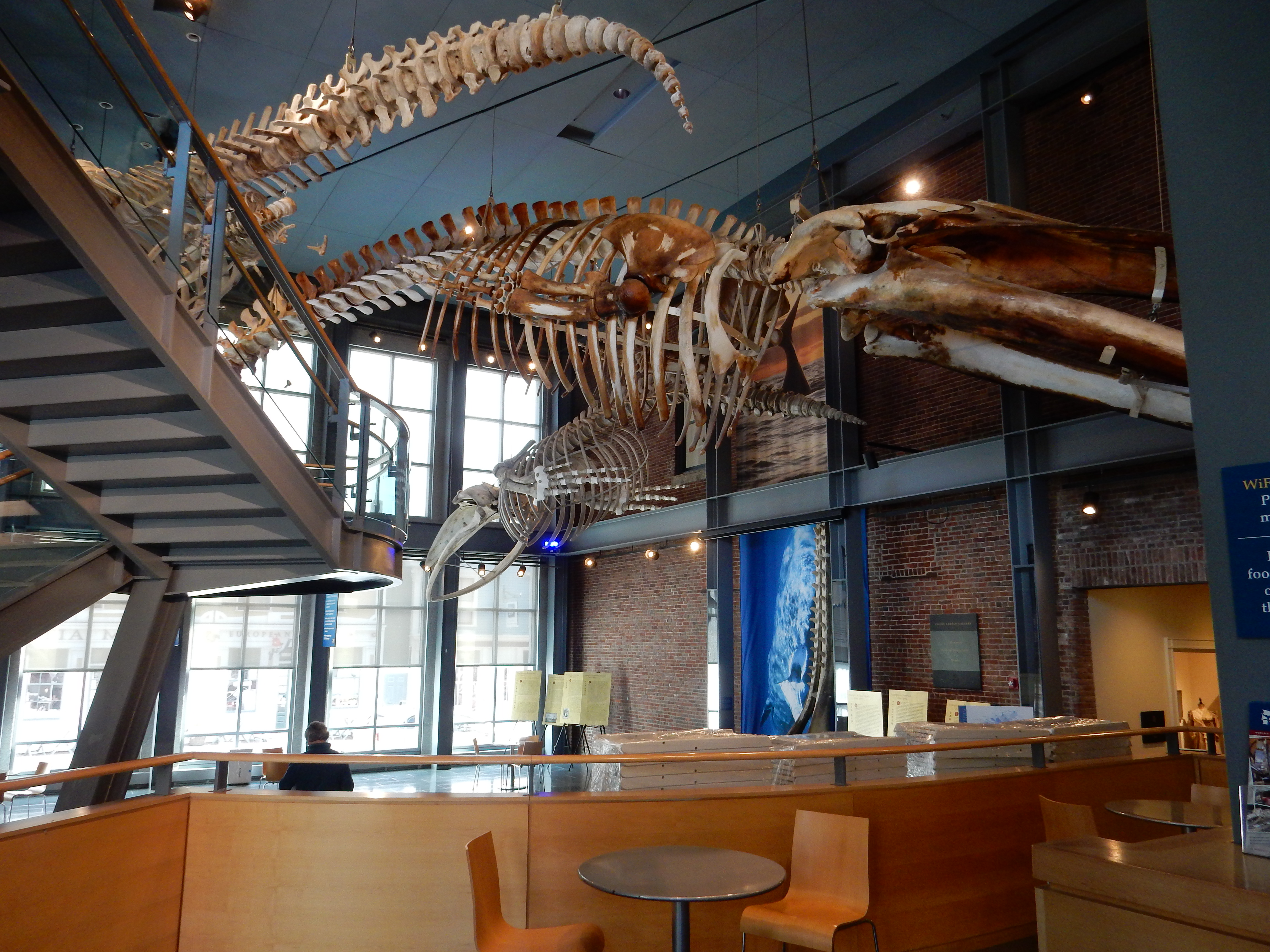
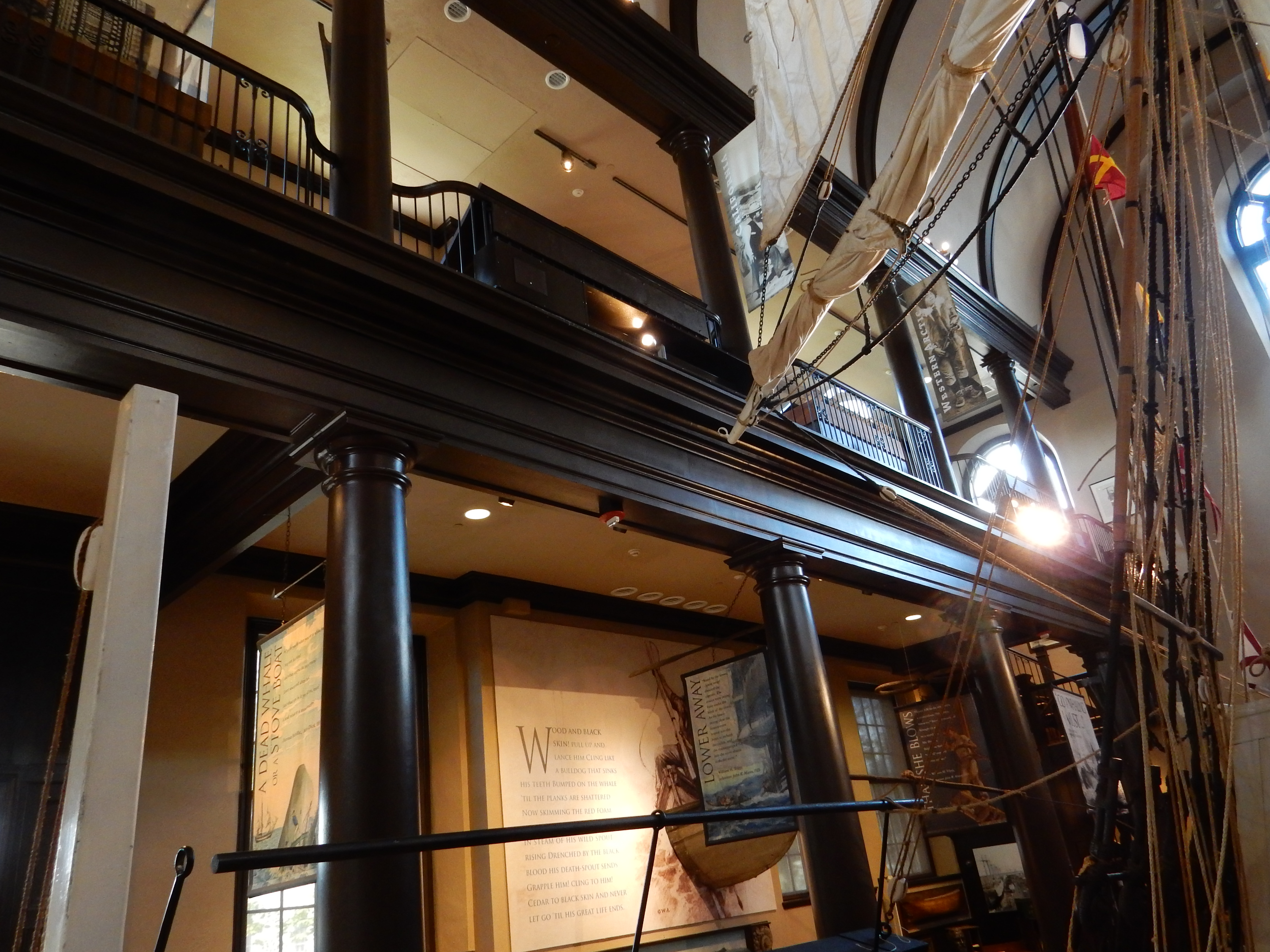
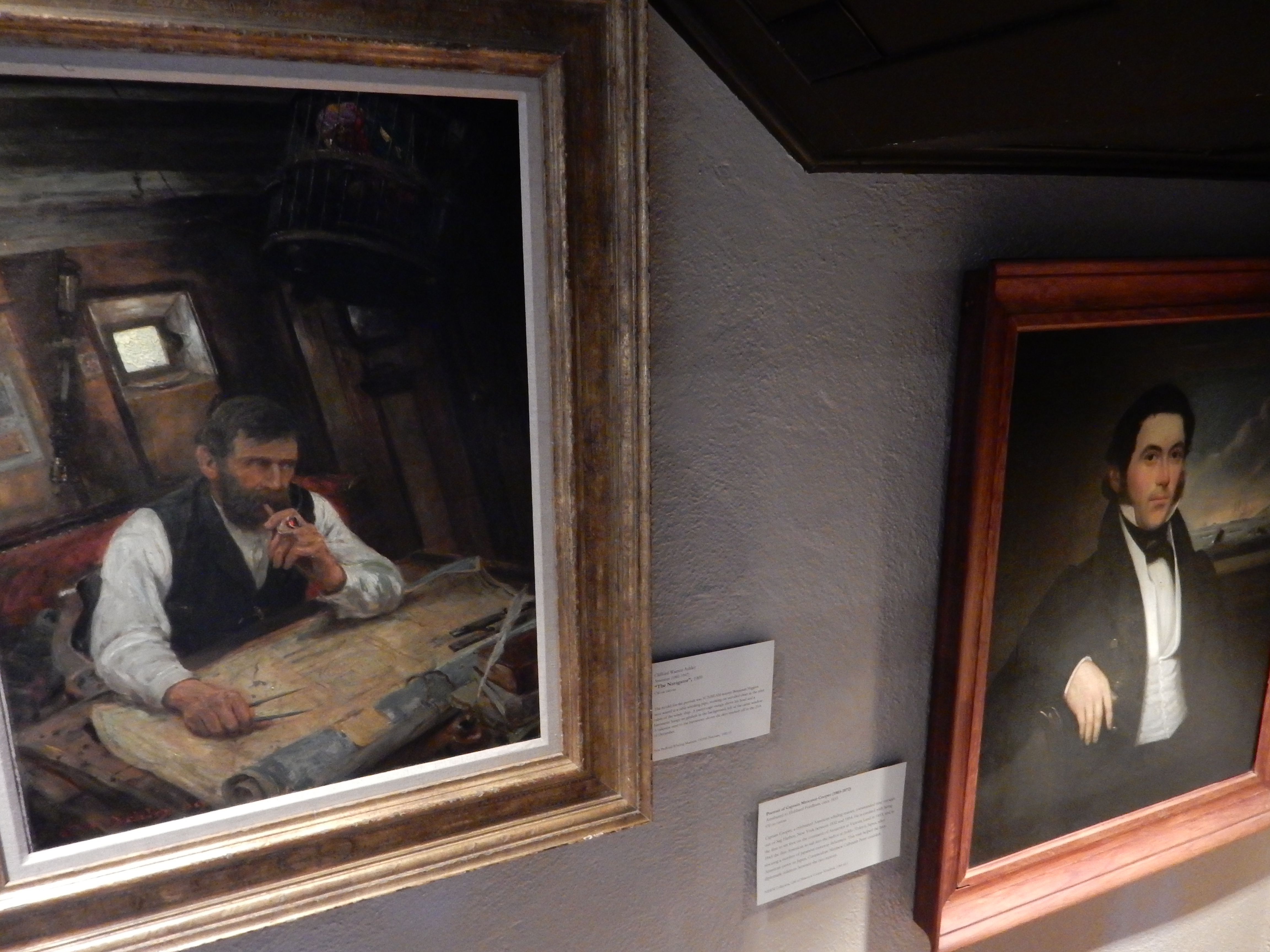
The Lagoda, at 89 feet in length and on display in the New Bedford Whaling Museum’s central Bourne Building, has been described variously as the largest model whaling ship and the largest model ship in the world. It was built in 1916 to 50 percent scale. In 1826, the original Lagoda was named for Russia’s Lake Ladoga, but workmen transposed the letters on the ship’s stern and seamen felt that recarving them would be bad luck. The ship and a host of whaling lore decorate Bourne Hall, whose classical mahogany trimmings, with columns and balustrades bedecking its full height and length, is as much worth viewing as the ship itself. The museum was founded in 1903.

Billy and I luxuriated in the Logada yesterday and left the museum with regret but a lot more to see someday – including the Harbor View Terrace, which overlooks the historic district from the fifth floor of the museum’s new addition, the Wattles Jacobs Education Center. The lovely addition is itself worth the trip. Designed by the Mount Vernon Group, it fits into the Whaling Historic District with grace, thus forcefully rebutting conventional methods of adding to (or subtracting from, really) historic districts.

DSCN9219

DSCN9223

DSCN9236

DSCN9240

DSCN9243

DSCN9242

DSCN9263

DSCN9290

DSCN9256

DSCN9276

DSCN9255DSCN9248

DSCN9286

DSCN9244

DSCN9293

DSCN9260

DSCN9261

DSCN9280

DSCN9288

DSCN9283

Posted in Architecture, Art and design, Books and Culture, Photography, Preservation | Tagged , , , , , , , , , | 2 Comments

Lovely N.B. whaling district

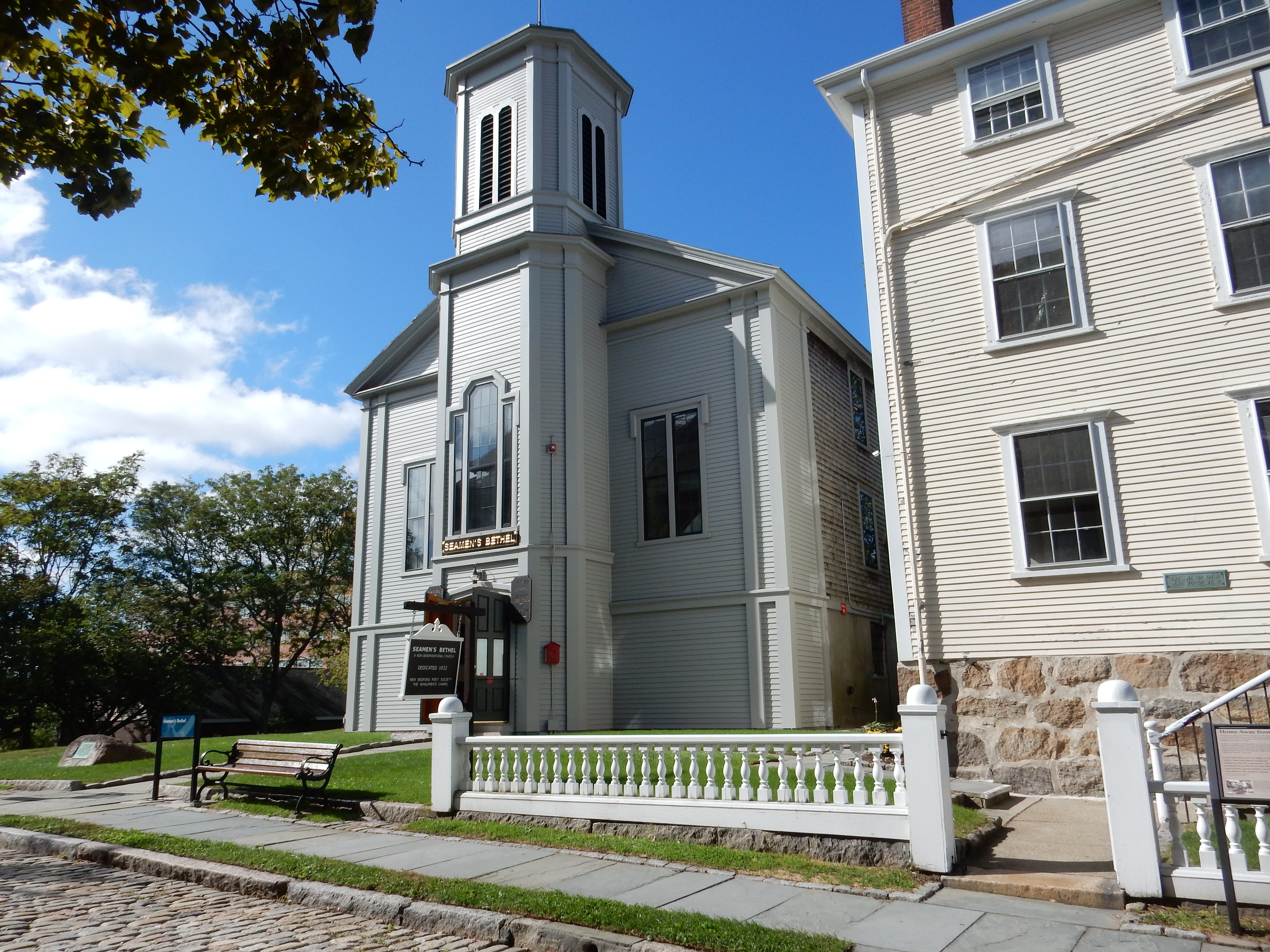
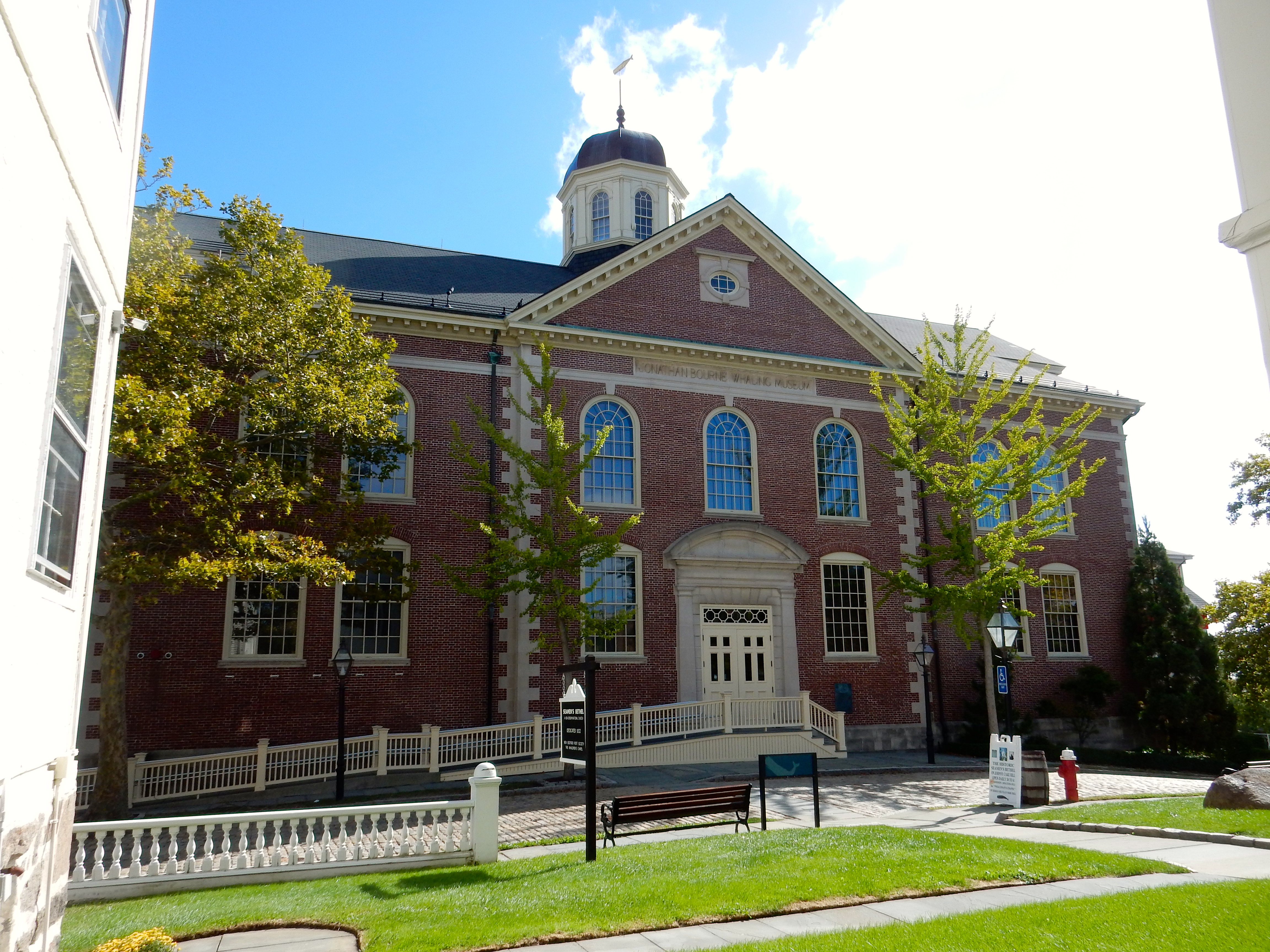
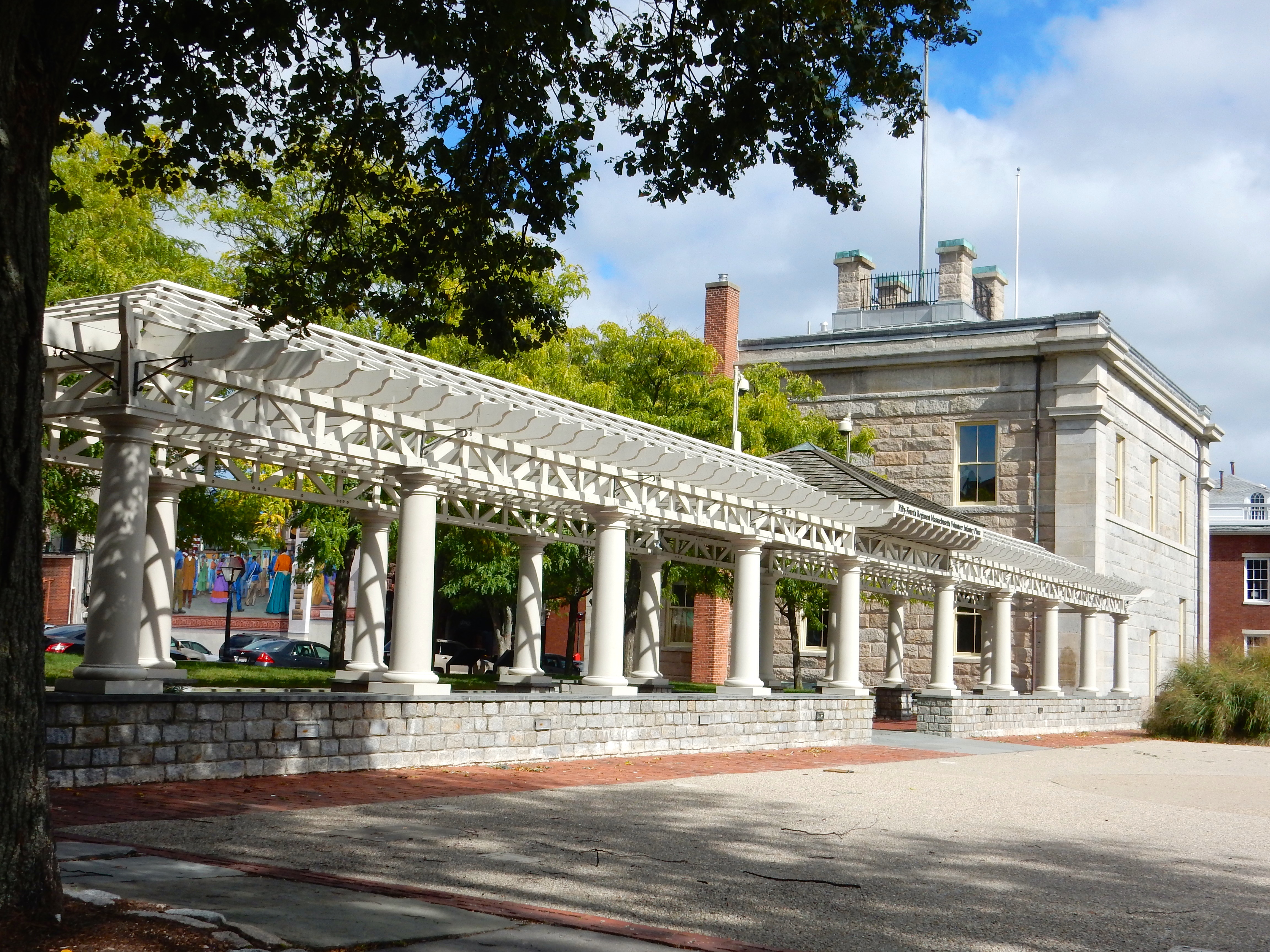
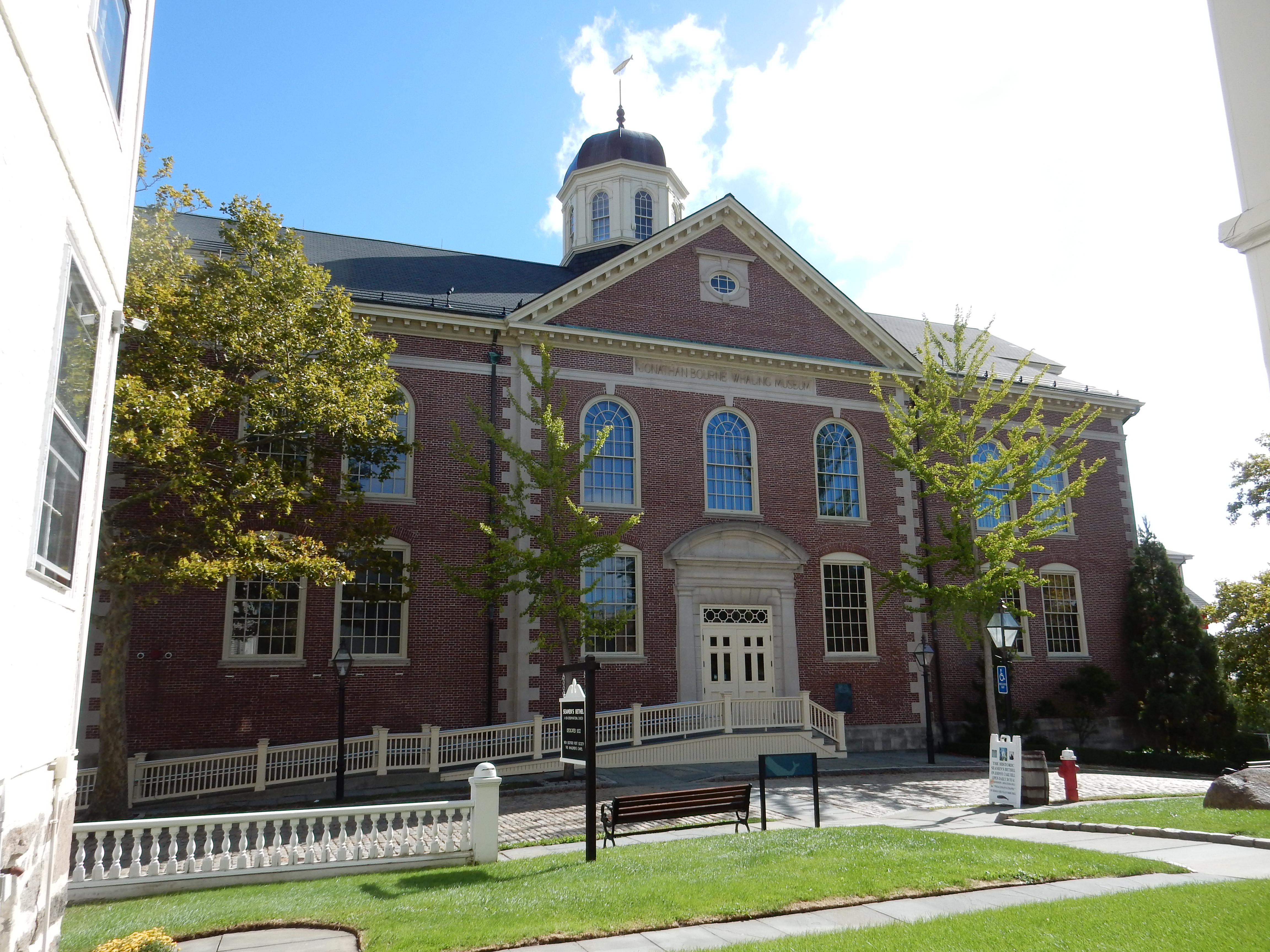
Seaman's Bethel Chapel, most famous building in New Bedford, harking to Moby-Dick. First picture below is view of Whaling Museum's Bourne Building from the chapel lawn. (Photos by David Brussat)

Seaman’s Bethel Chapel, most famous building in New Bedford, harking to Moby-Dick. First picture below is Whaling Museum’s Bourne Building from the chapel lawn. (Photos by David Brussat)

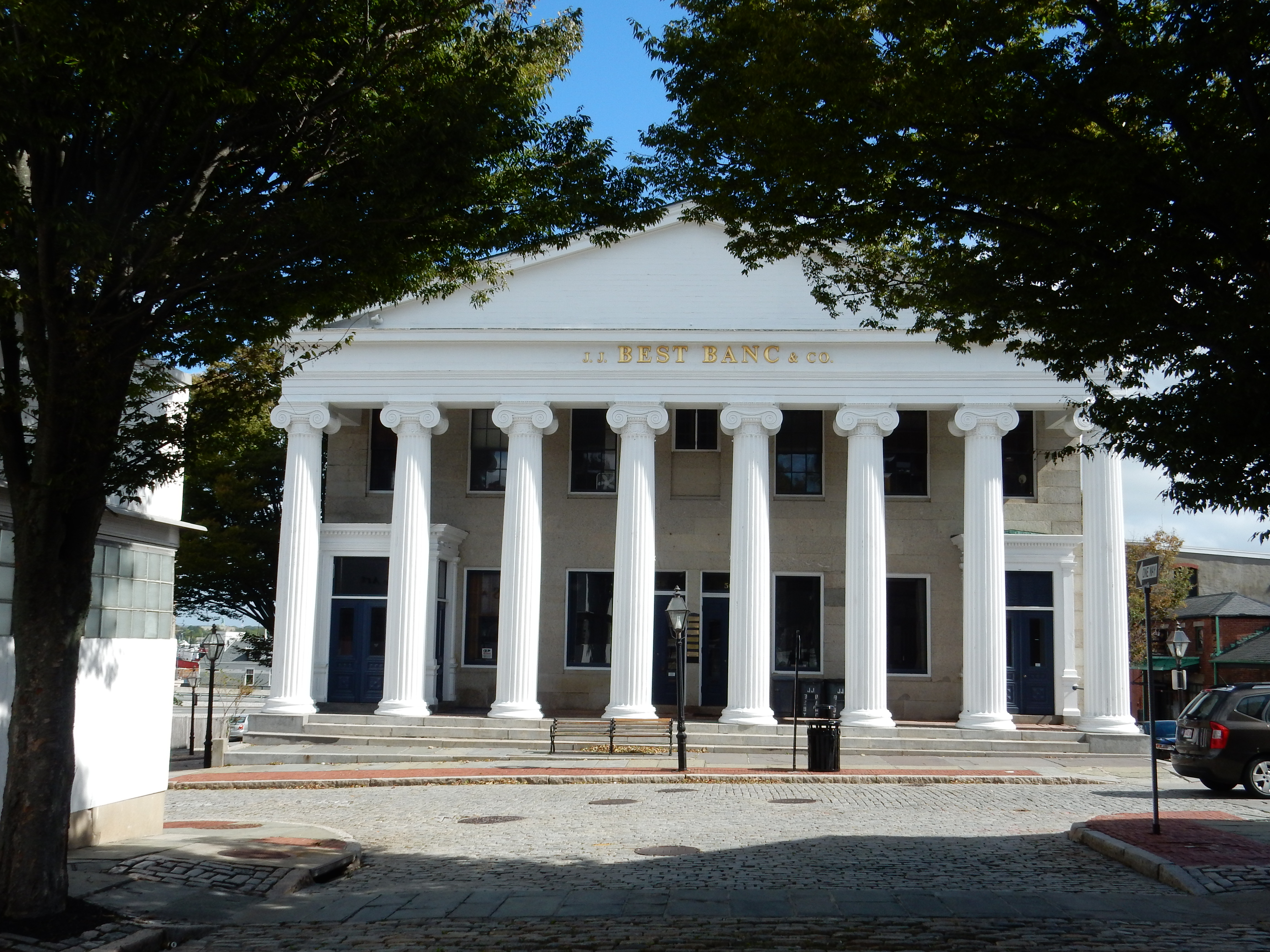
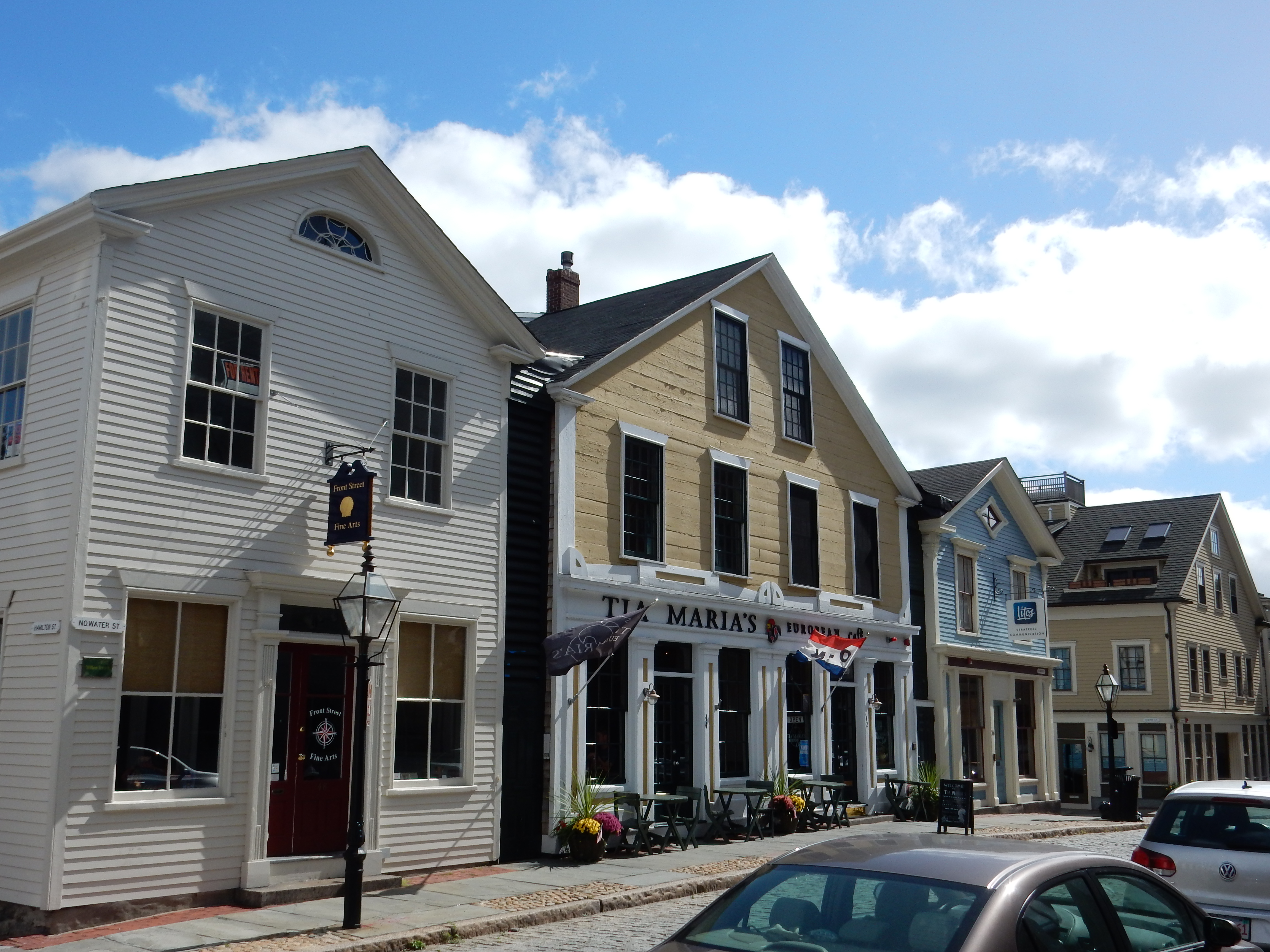
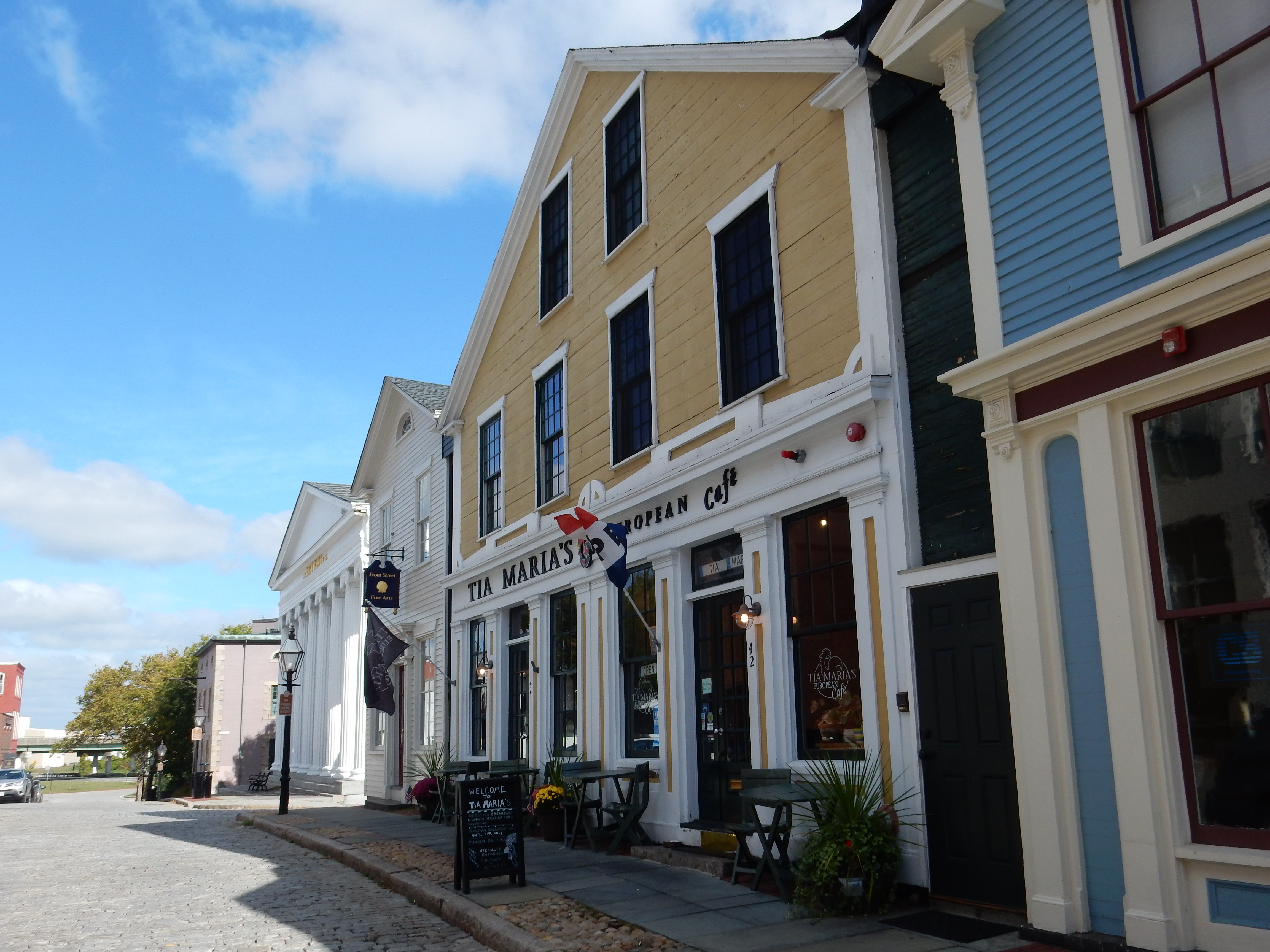
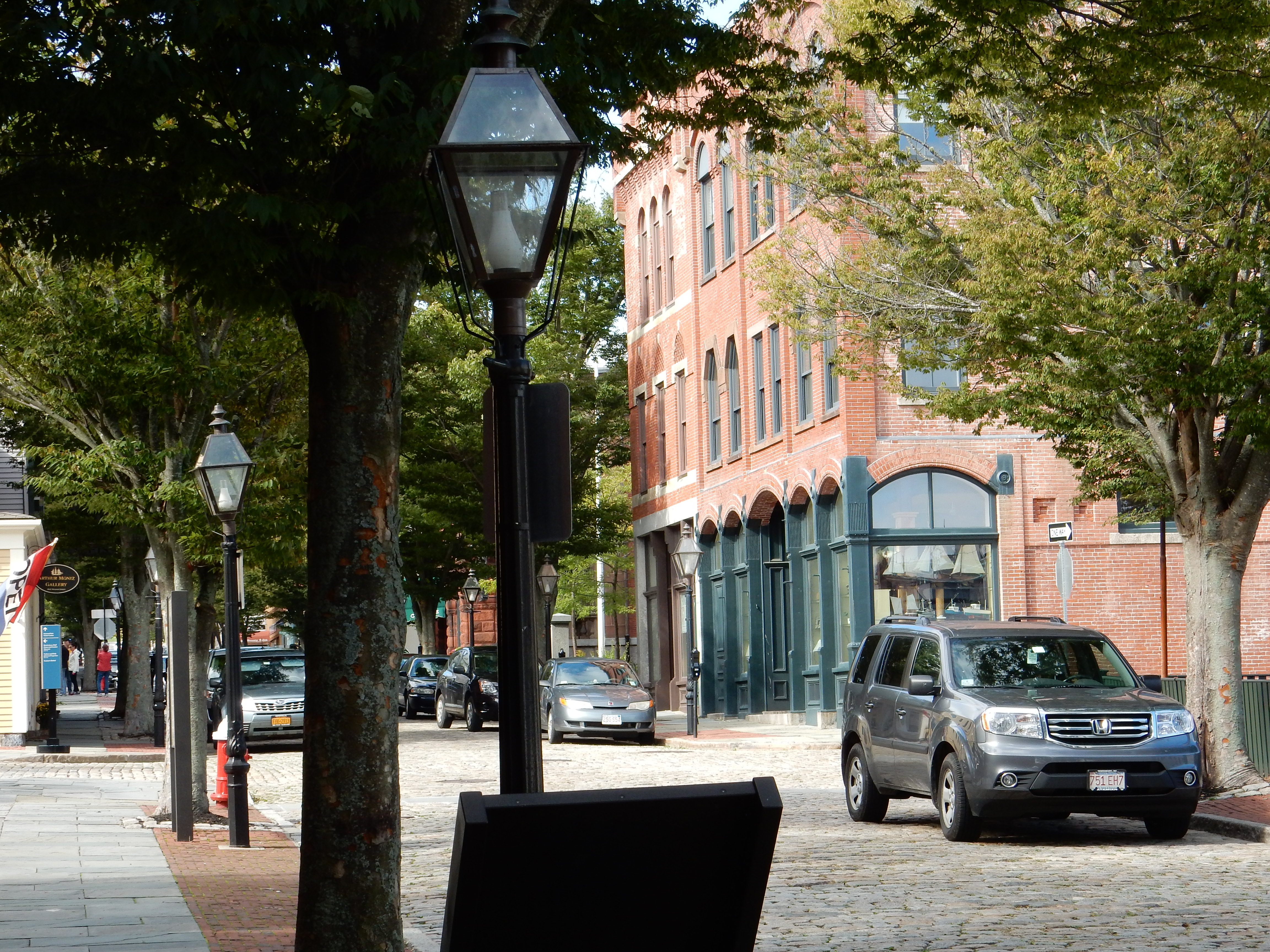
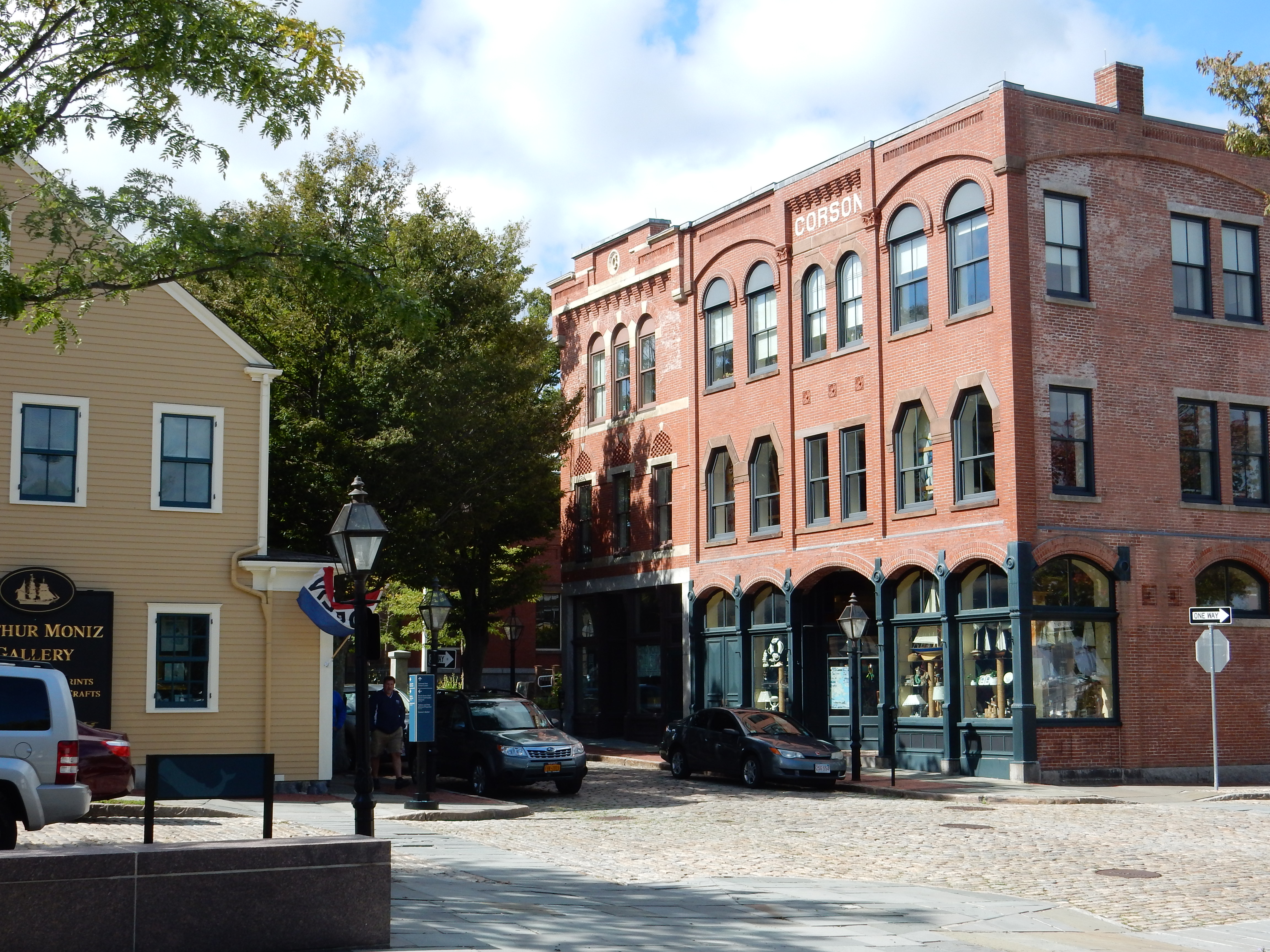
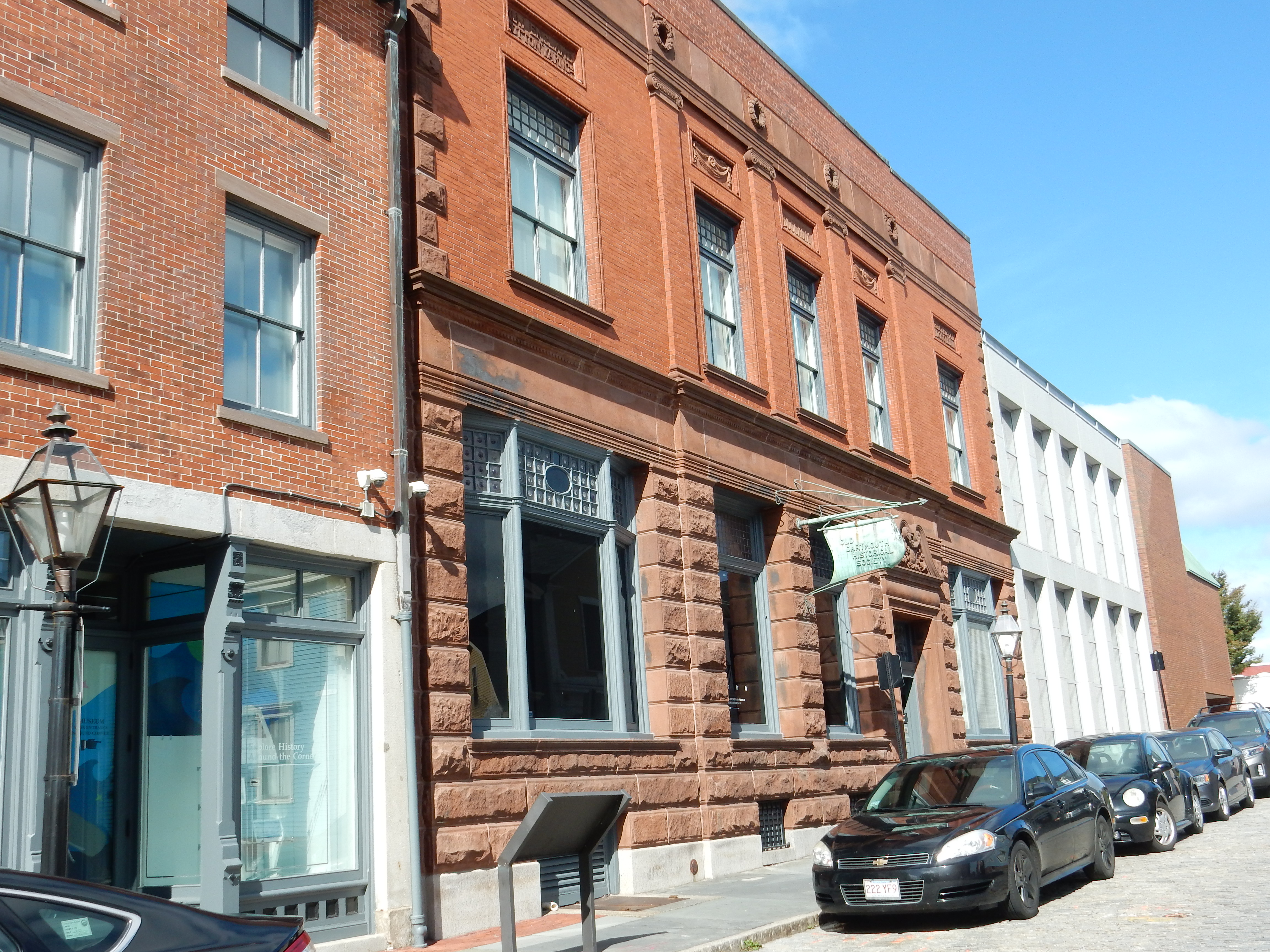
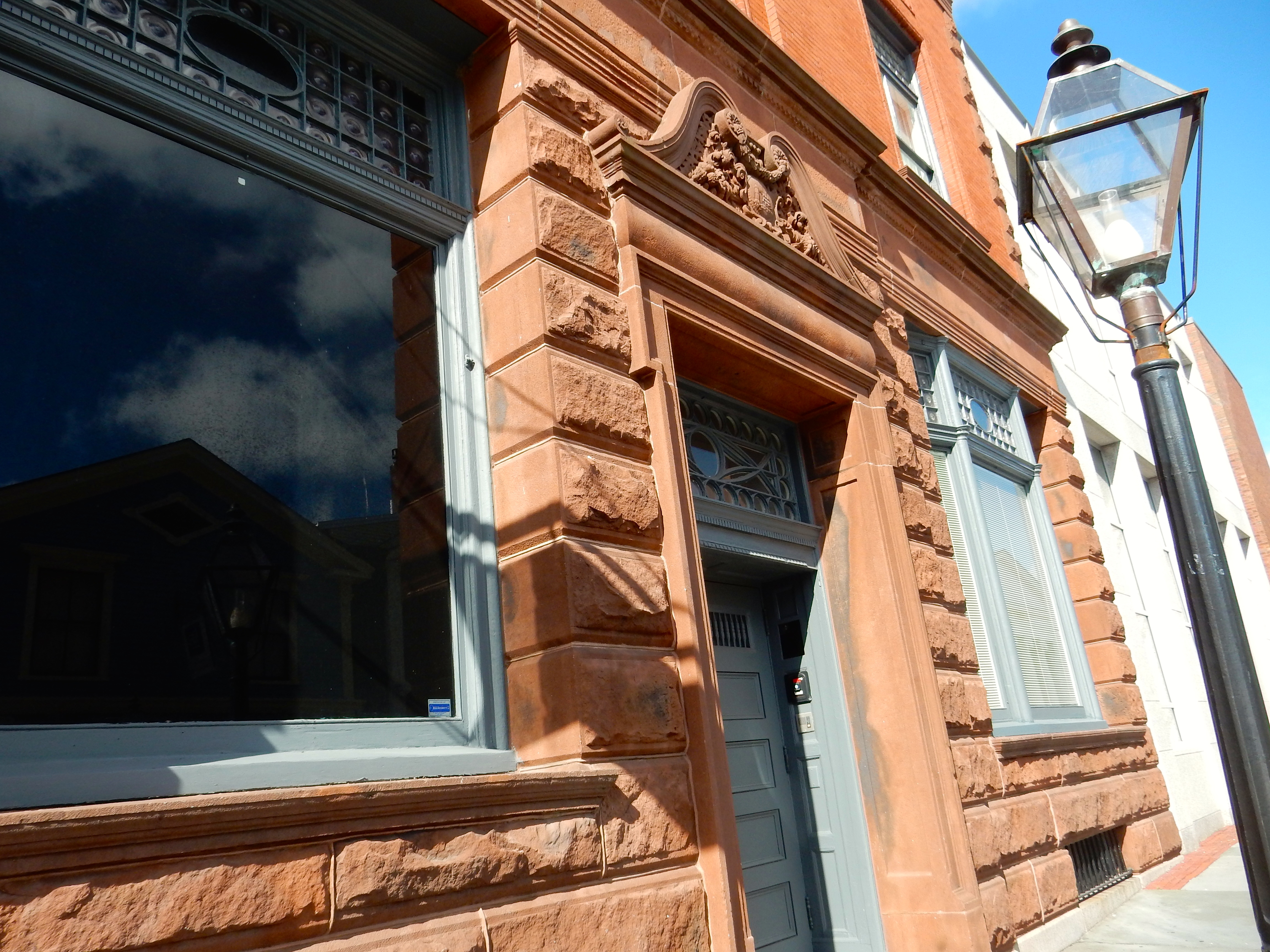
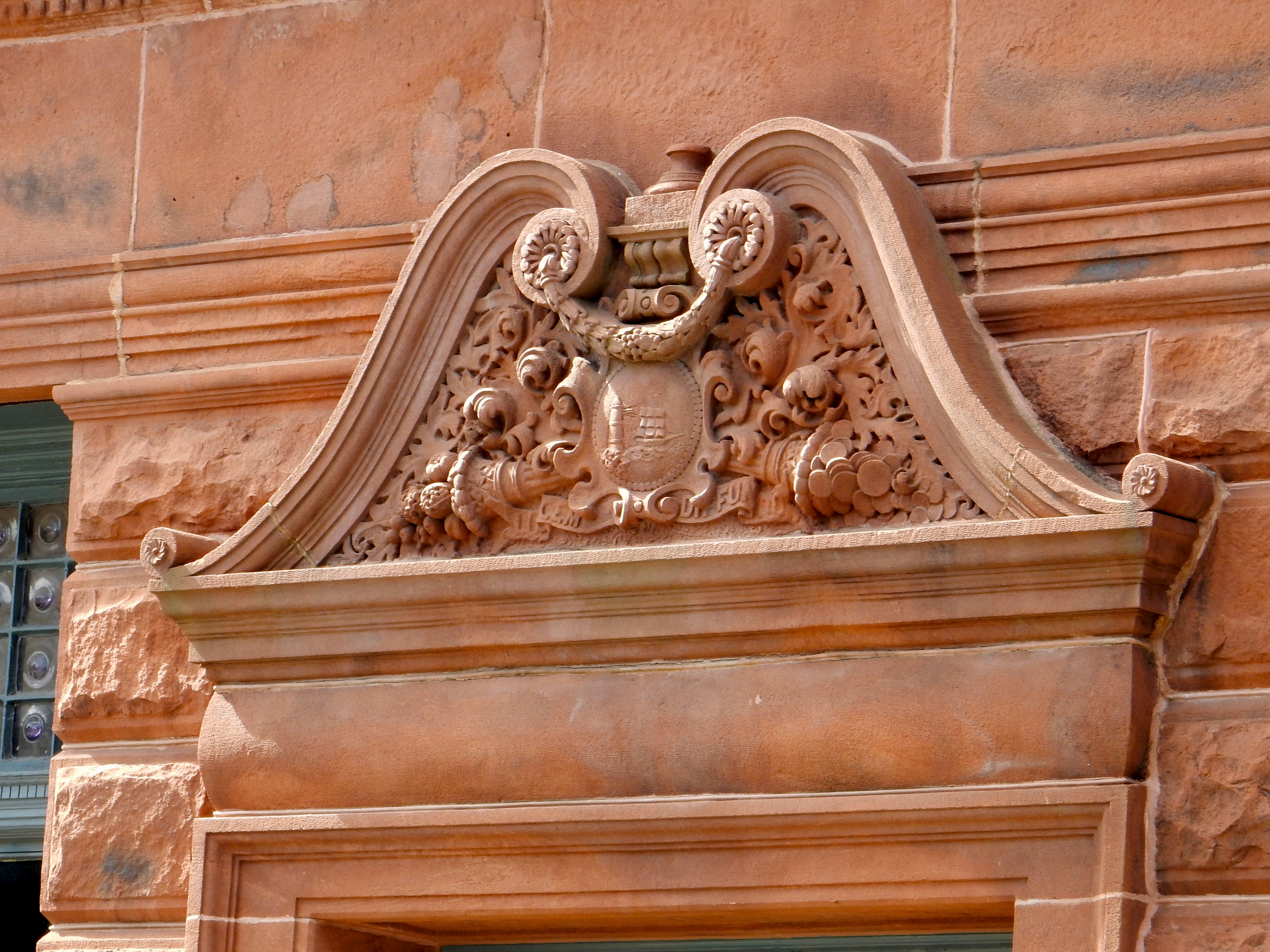
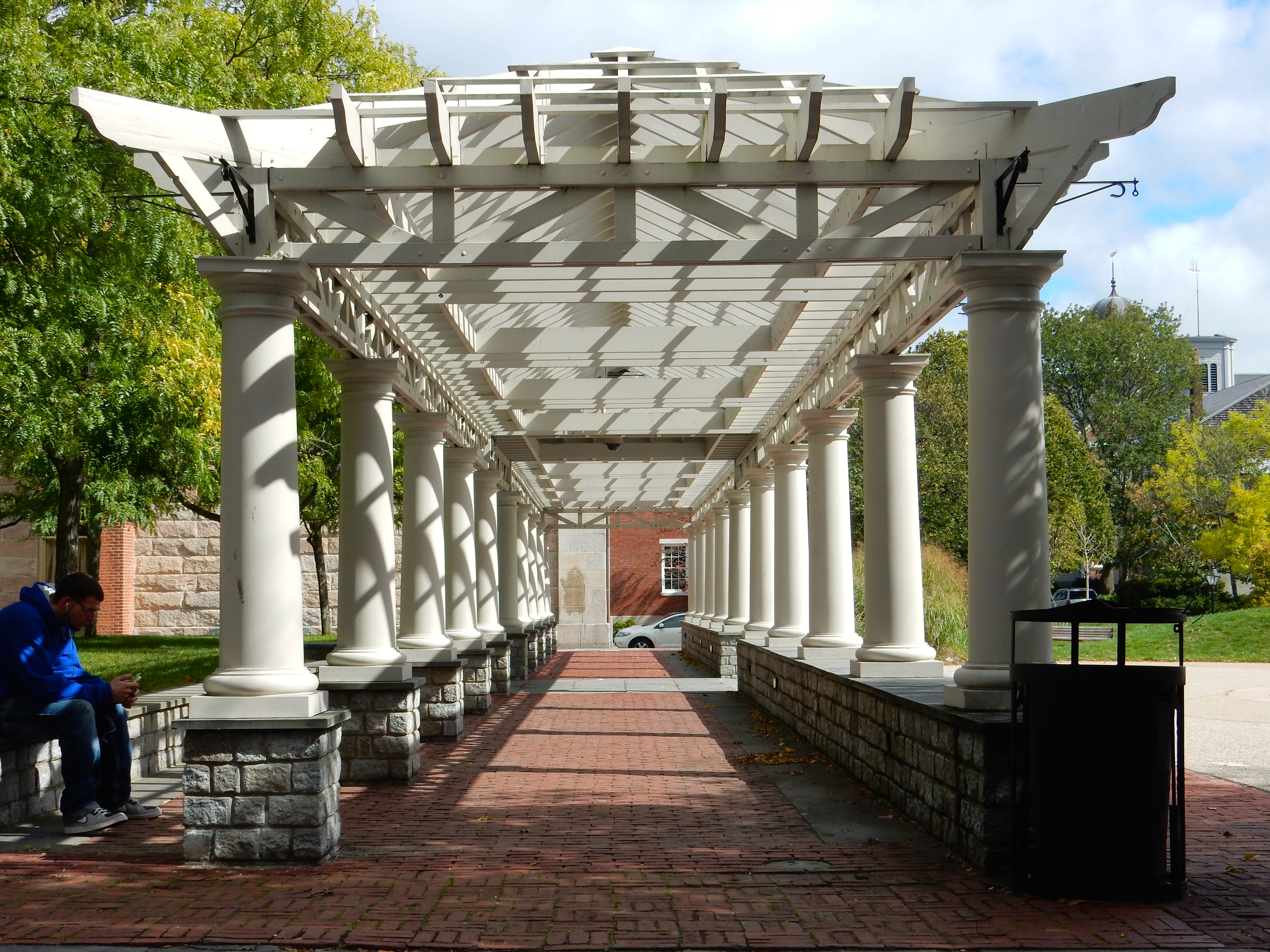
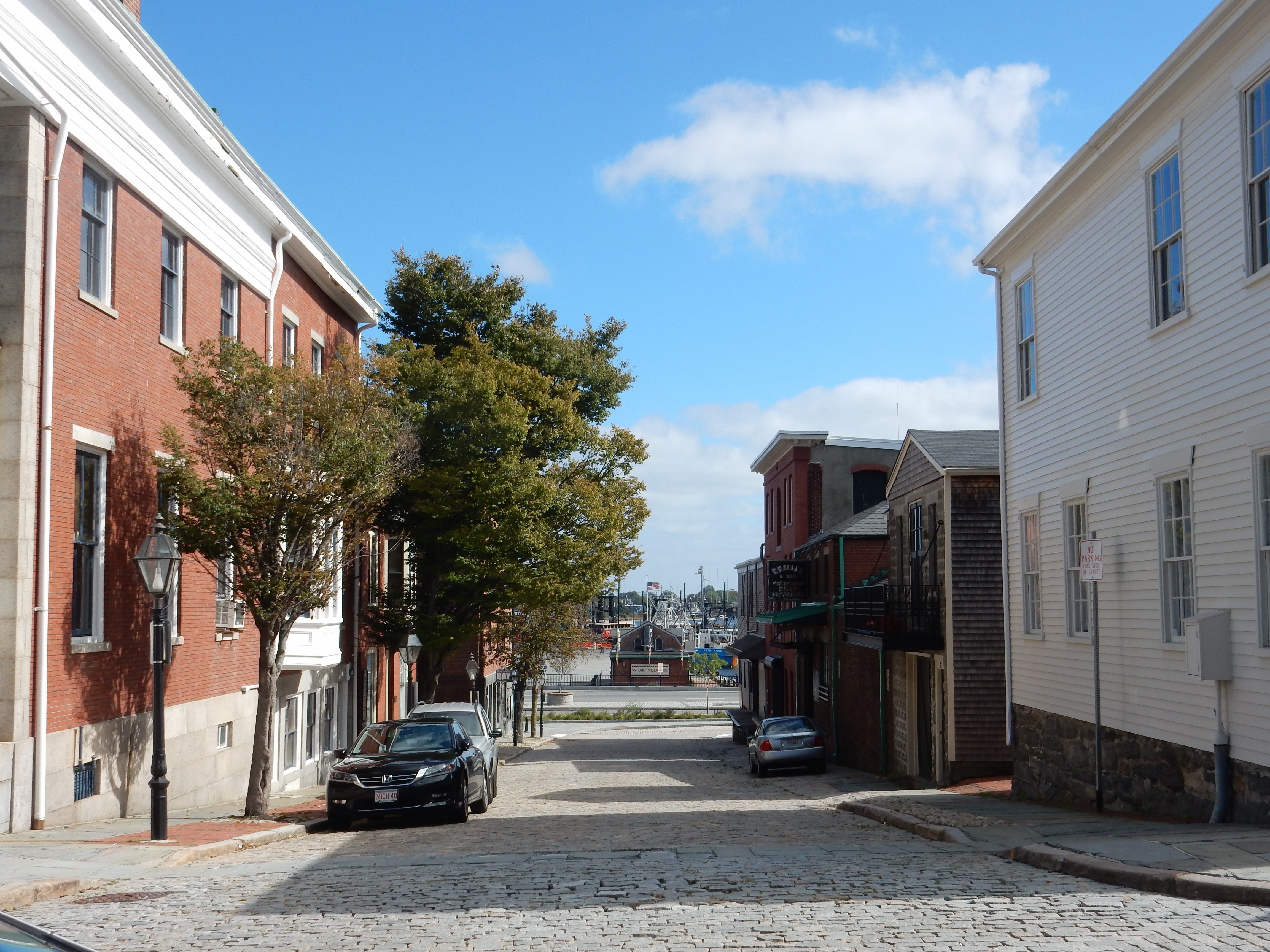
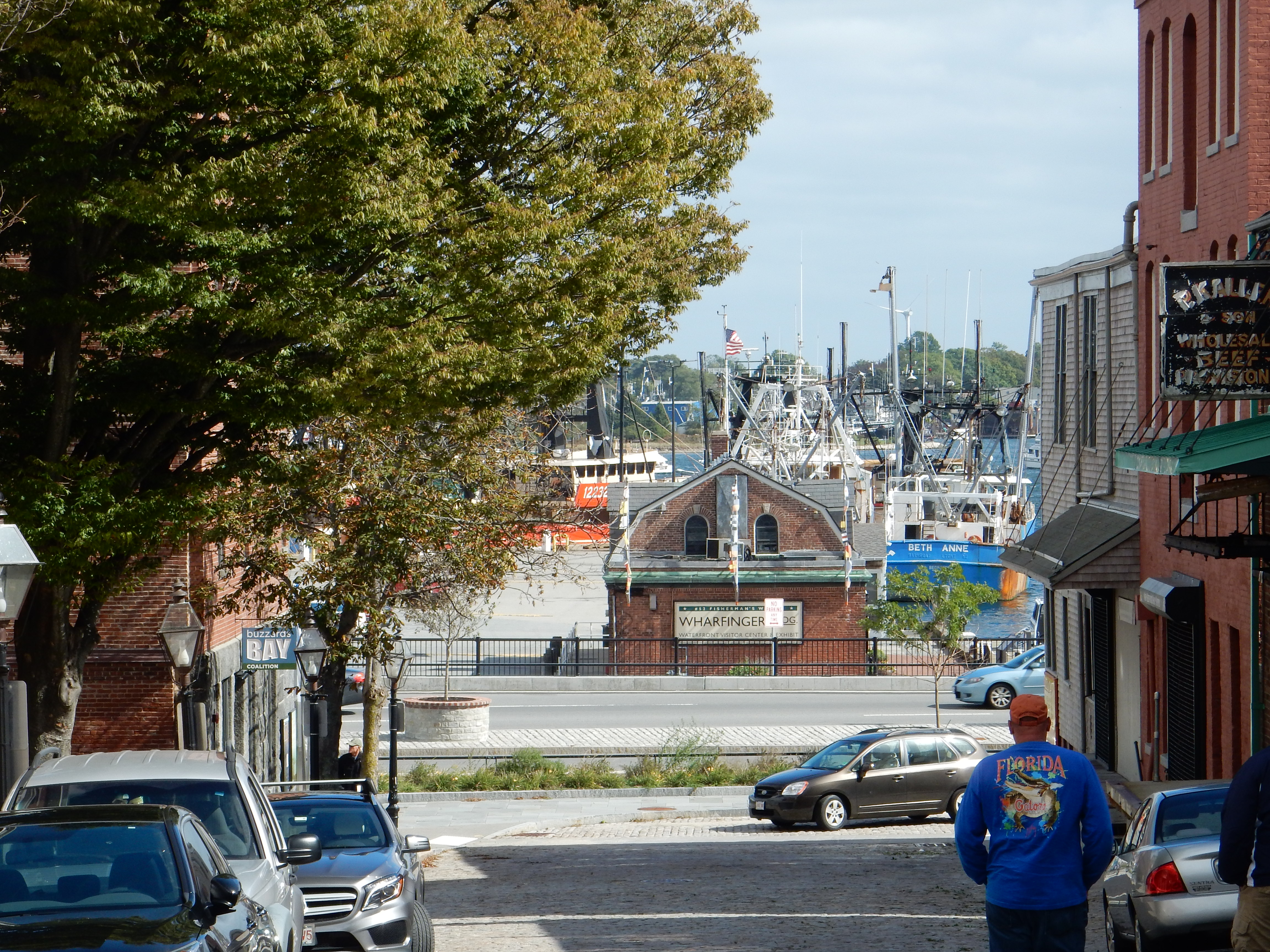
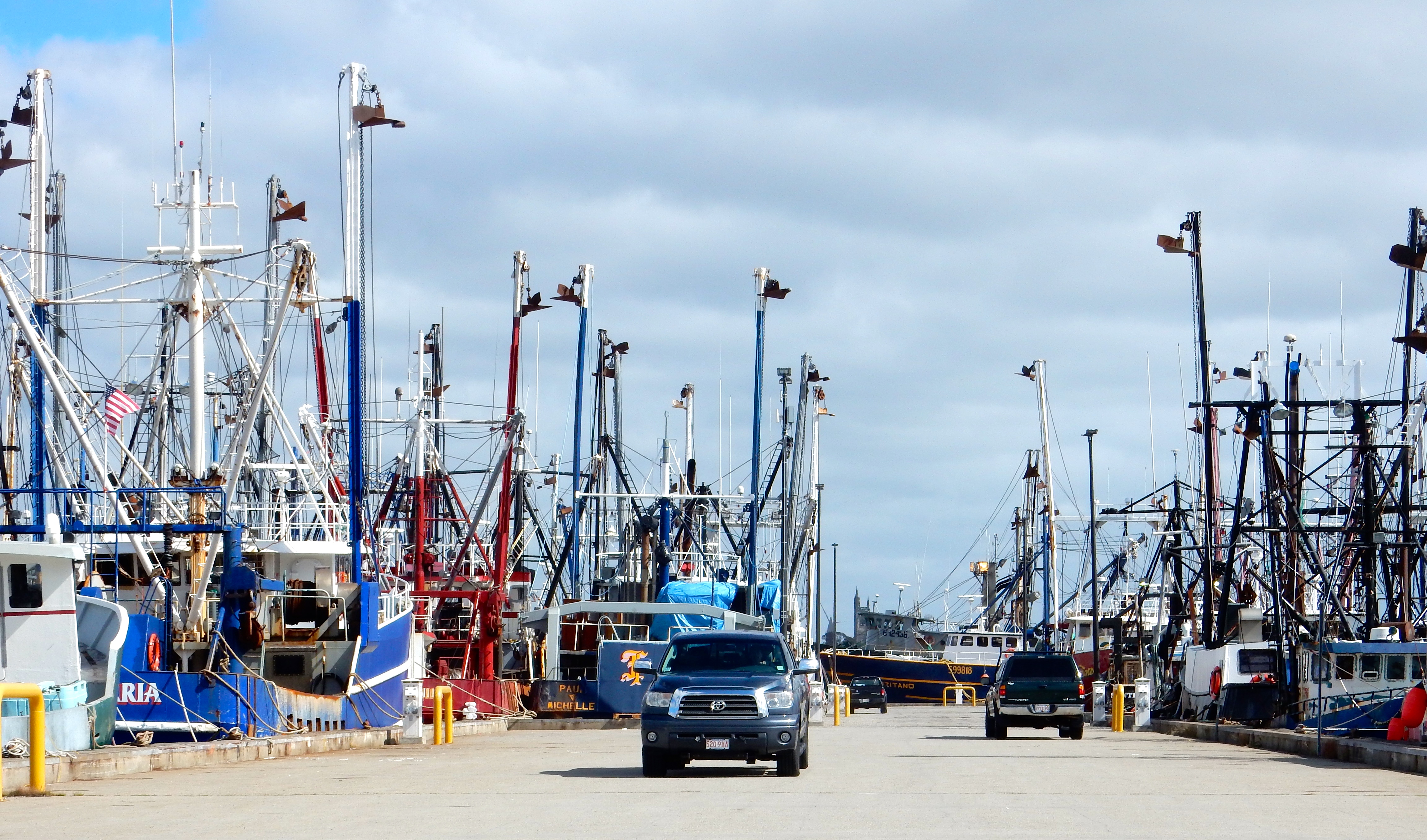
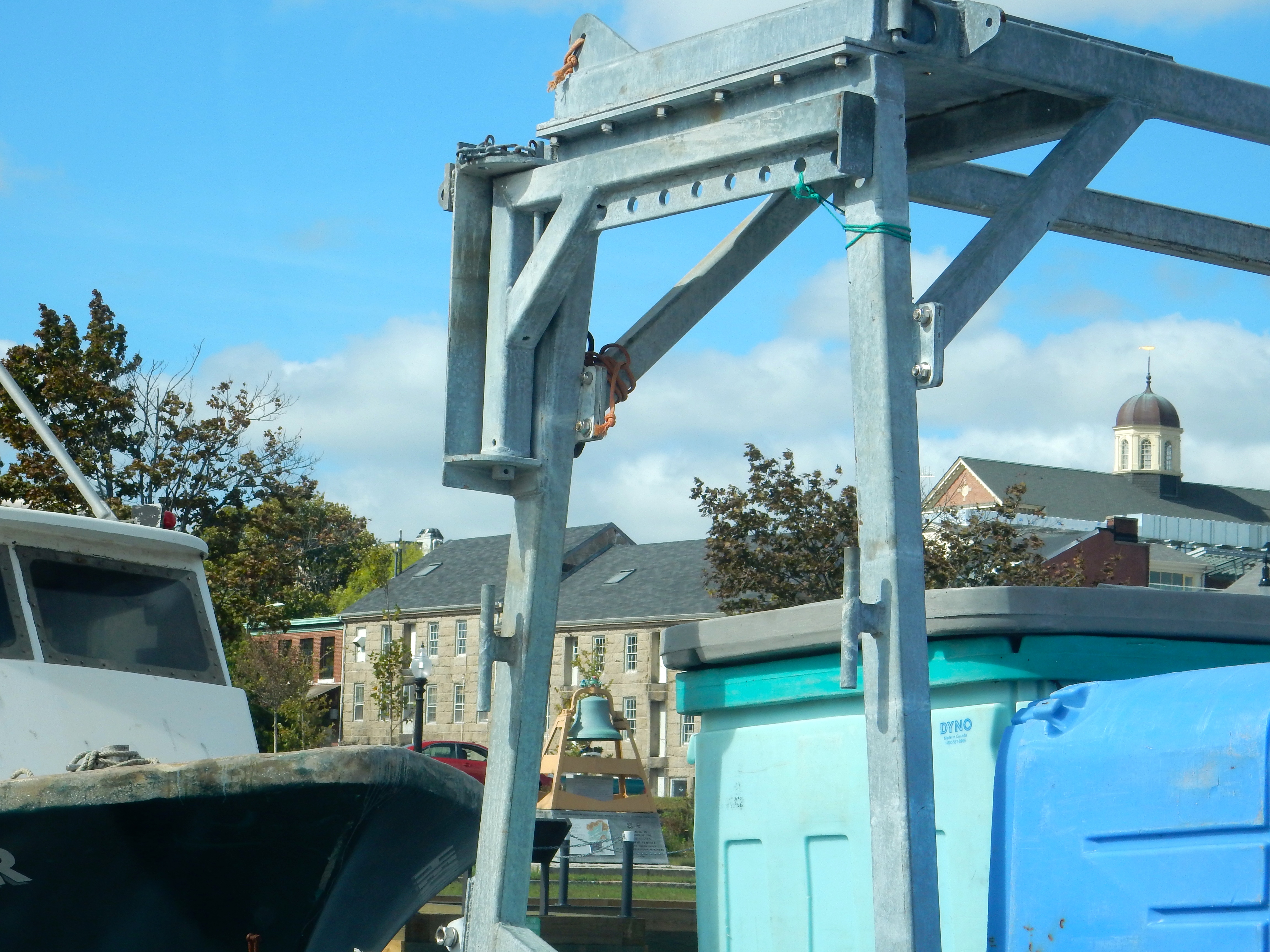
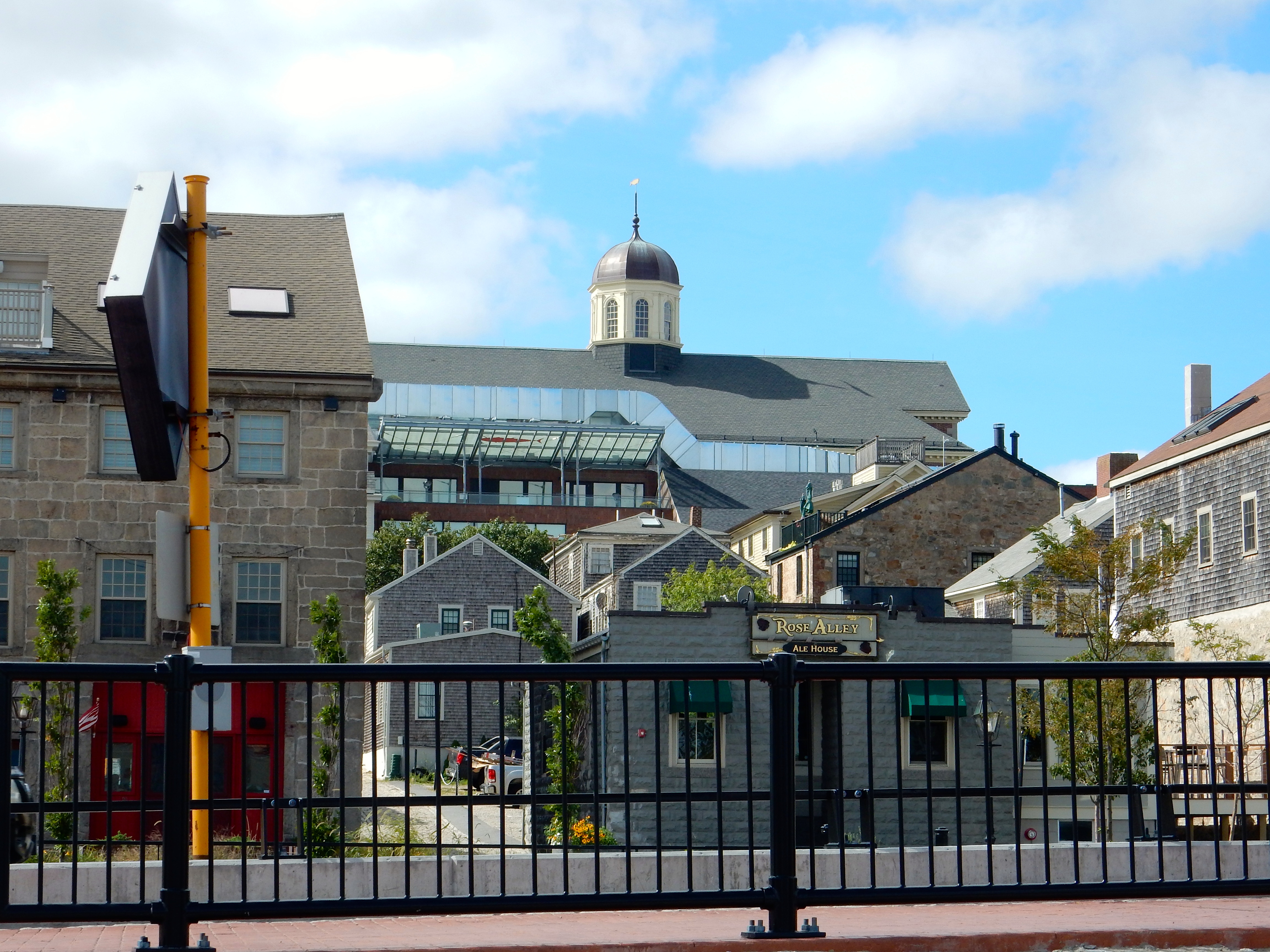
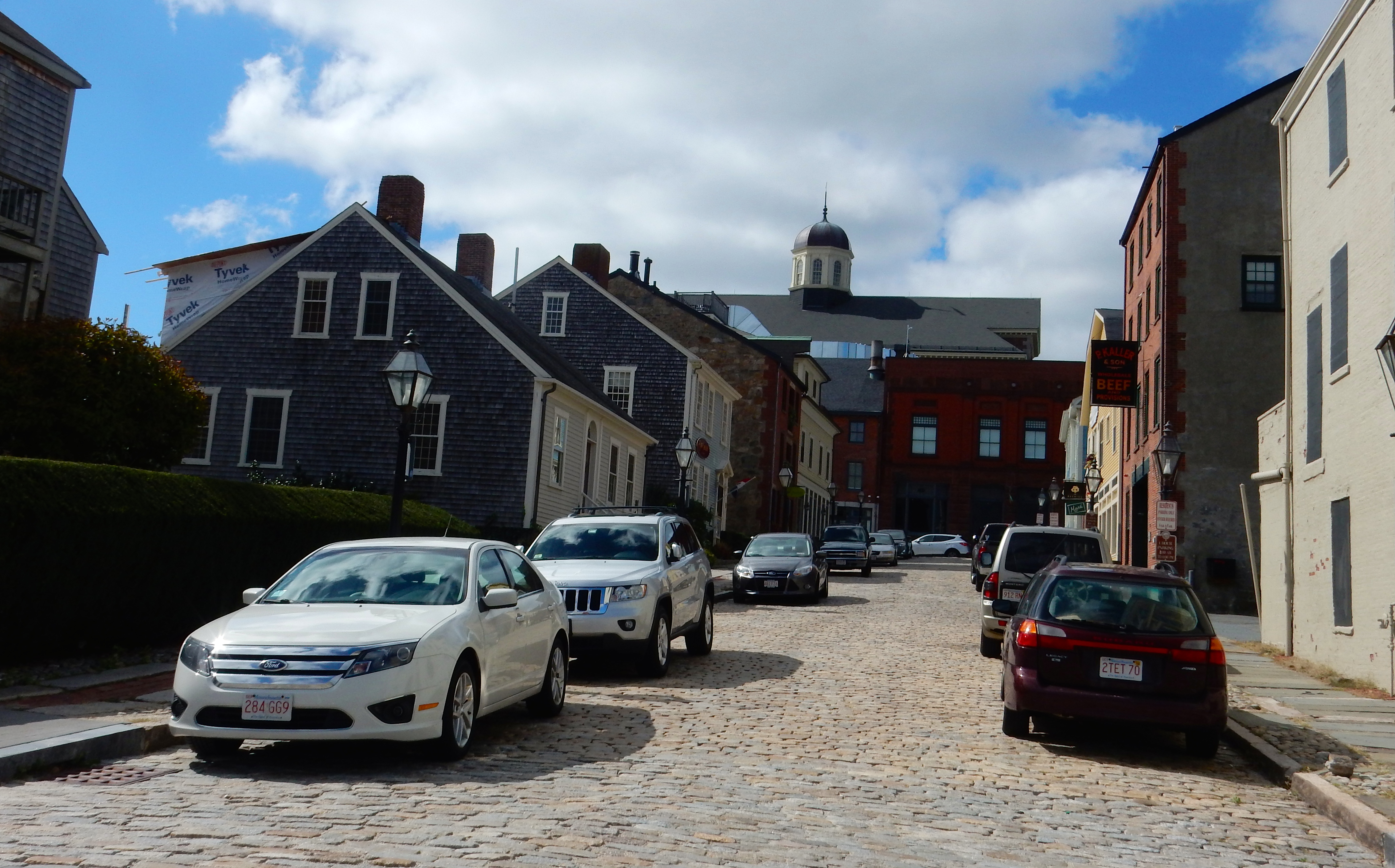
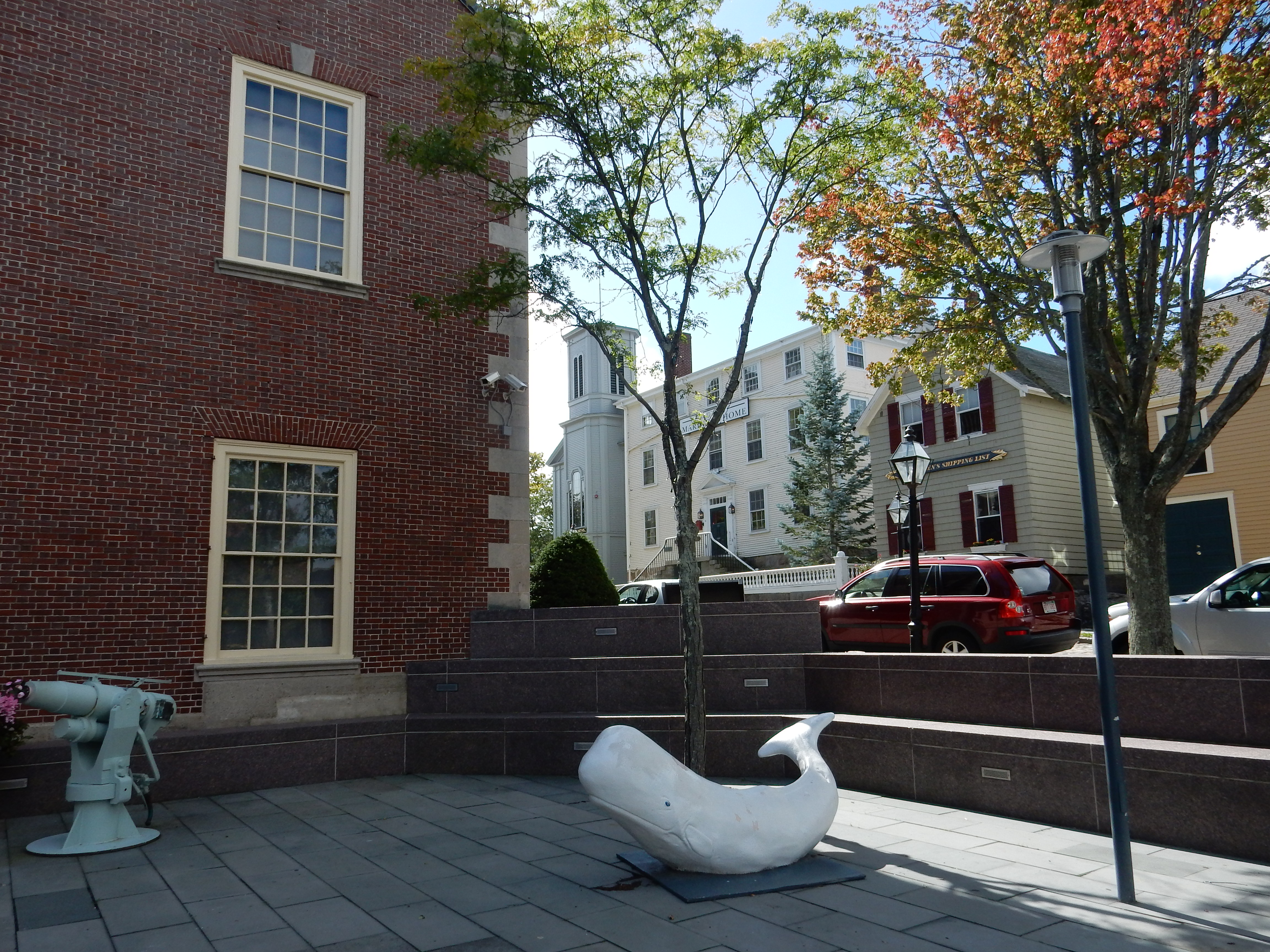
New Bedford’s Whaling National Historical Park, the preserved area of downtown that reflects the city’s famous industry, long gone and, some will say, thankfully so, is lovely nevertheless. Billy and I walked around a bit, visited the Whaling Museum (see next post), and the drove a winding route back to I-195. The following collection of shots is hardly an exhaustive portrait of the historic district but I hope you will enjoy the flavor.

DSCN9187

DSCN9300

DSCN9301

DSCN9214

DSCN9209

DSCN9218

DSCN9297

DSCN9208

DSCN9211

DSCN9230

DSCN9231

DSCN9336

DSCN9346

DSCN9347

DSCN9350

DSCN9349

DSCN9233

DSCN9302

DSCN9321

DSCN9323

DSCN9330

DSCN9313

DSCN9311

Posted in Architecture, Art and design, Development, Photography, Preservation, Urbanism and planning | Tagged , , , , | 4 Comments

Whale of a museum wing

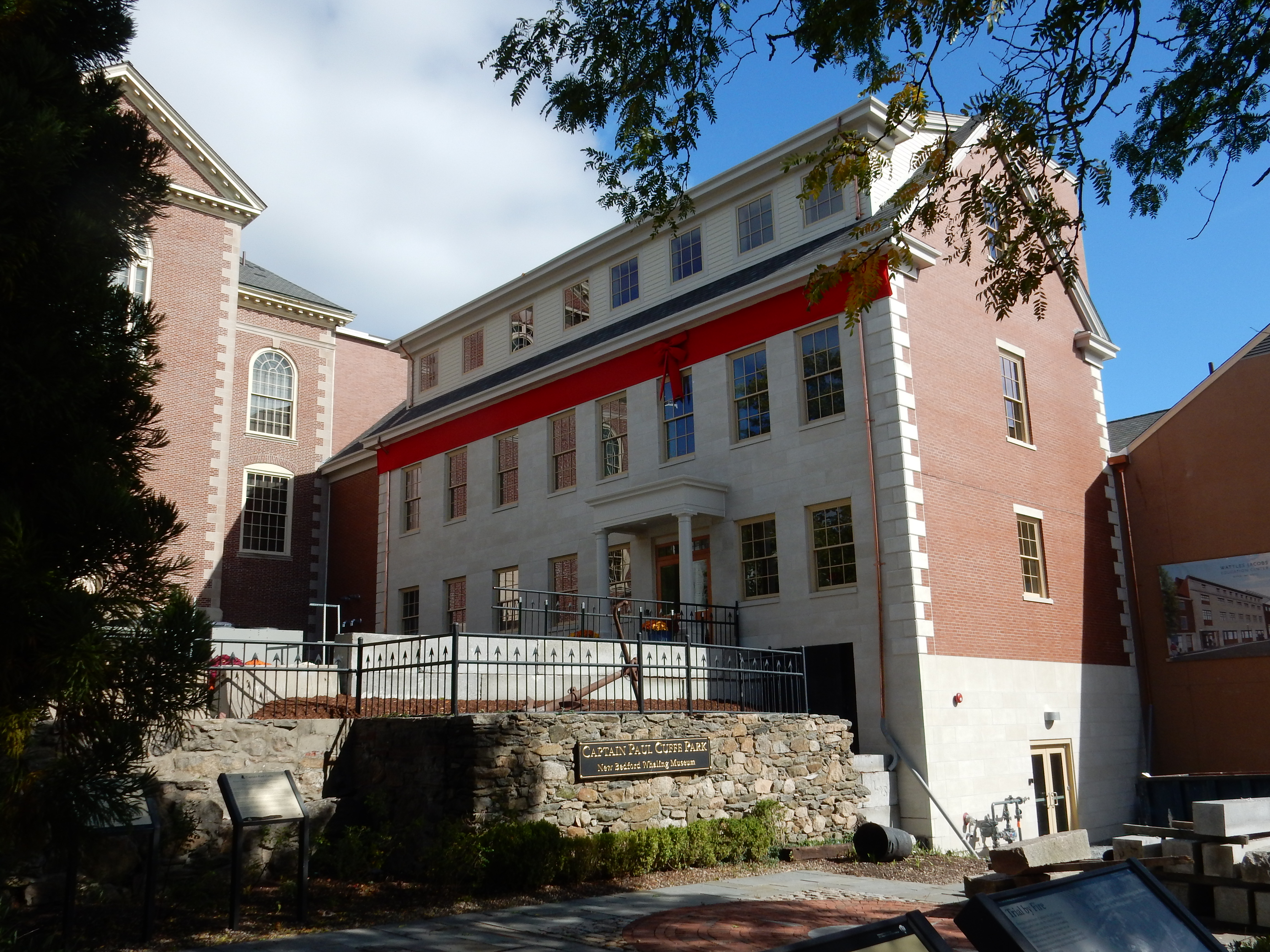
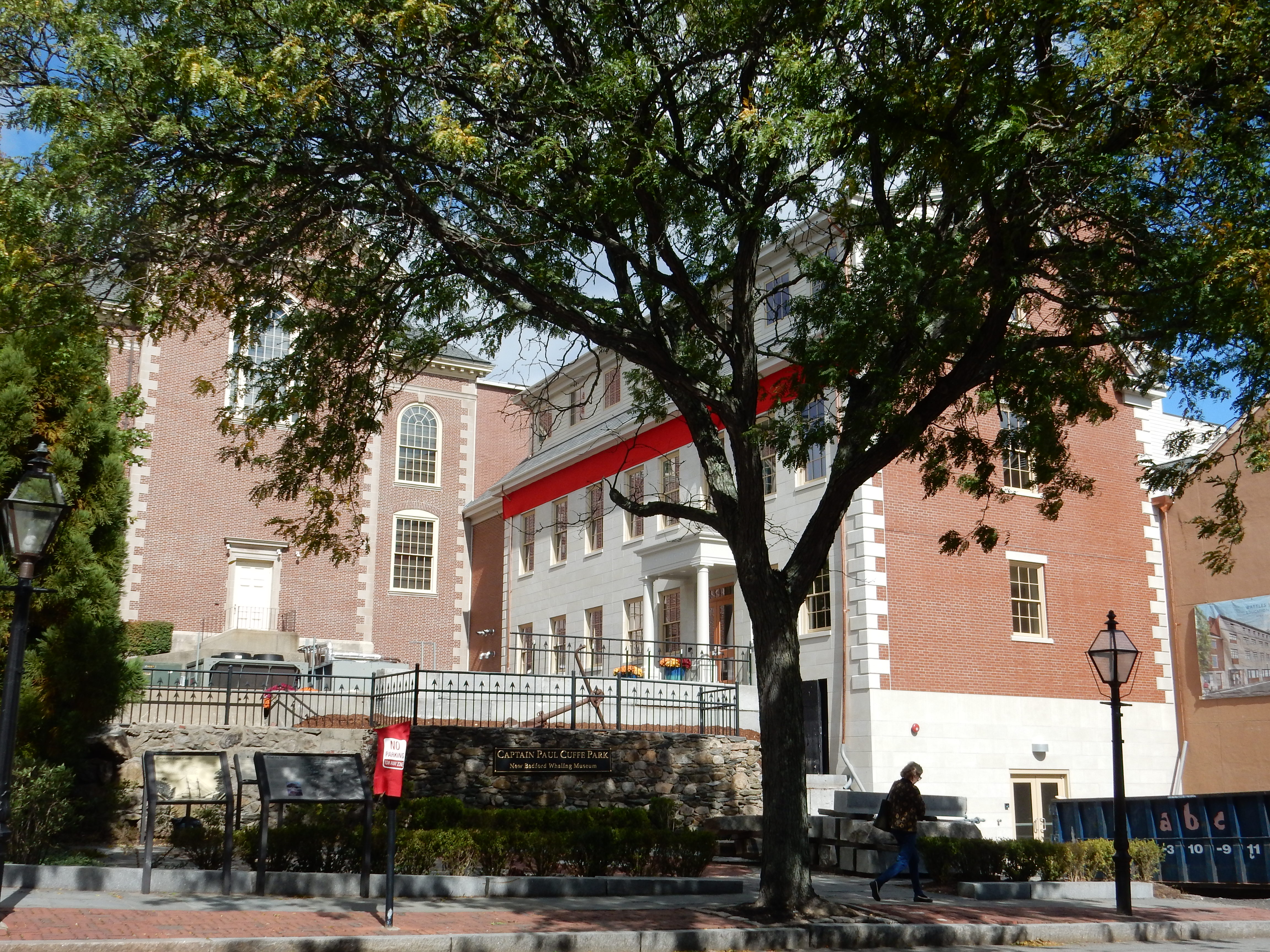
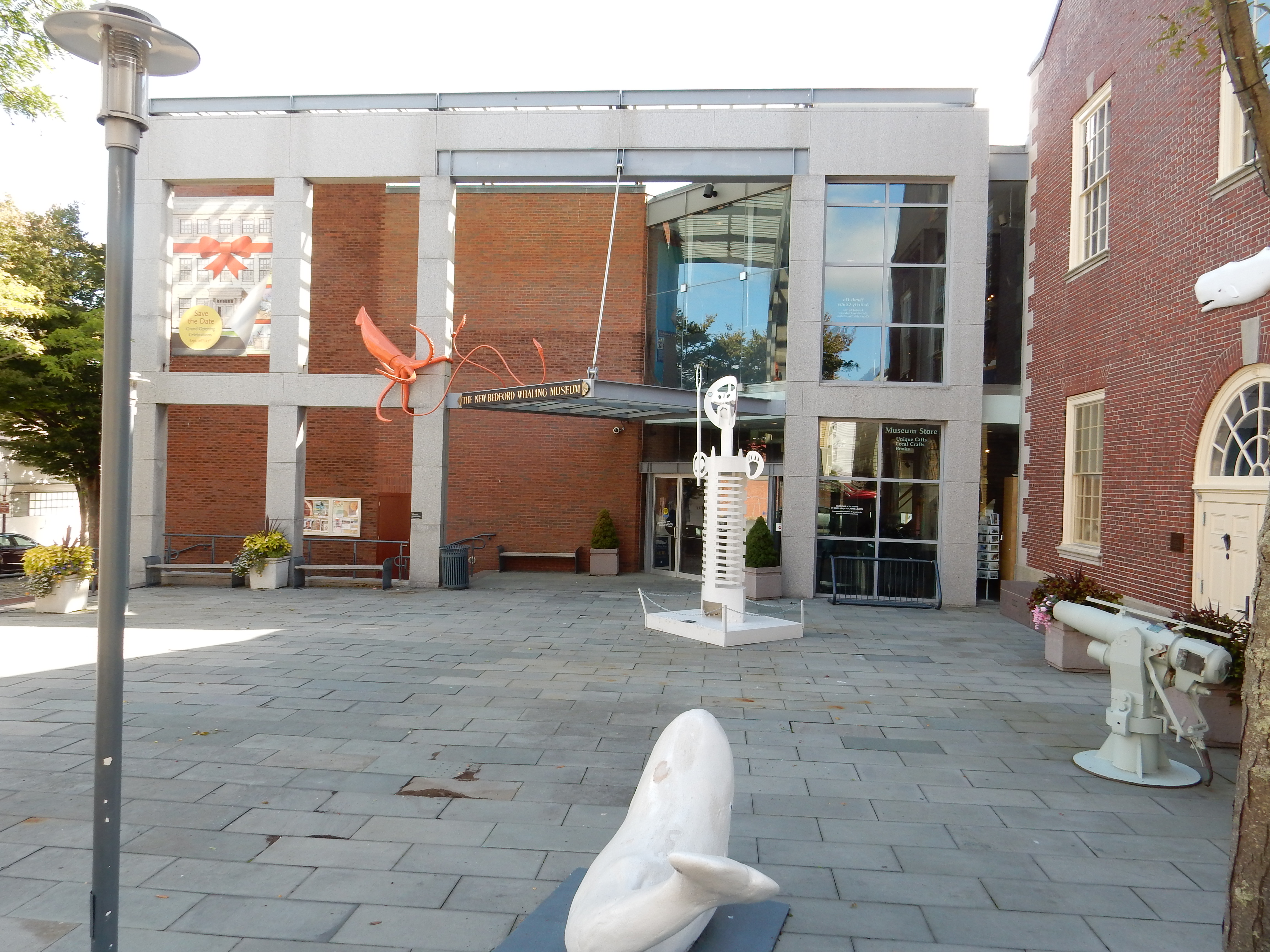
The new Wattles Jacobs Education Center at the Whaling Museum in New Bedford. (Photos by David Brussat)

The newly dedicated Wattles Jacobs Education Center at the Whaling Museum in New Bedford. (Photos by David Brussat)

A storm threatened to lash the Whaling Museum in New Bedford yesterday, violent enough in prospect to counsel against a trip there with family. But today we went, or at least Billy and I did. Last week, despite dulcet weather equal to that of today, I missed the dedication of the latest addition to the museum. I discussed the proposed design of the addition on my Journal blog almost exactly two years ago under the headline “Addition (Shudder!) to the New Bedford Whaling Museum.” I wrote:

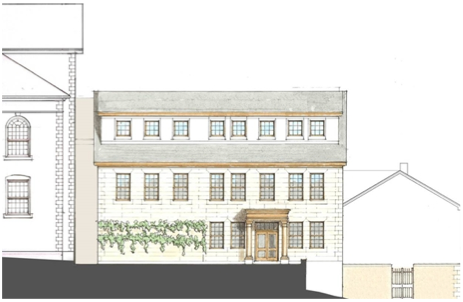
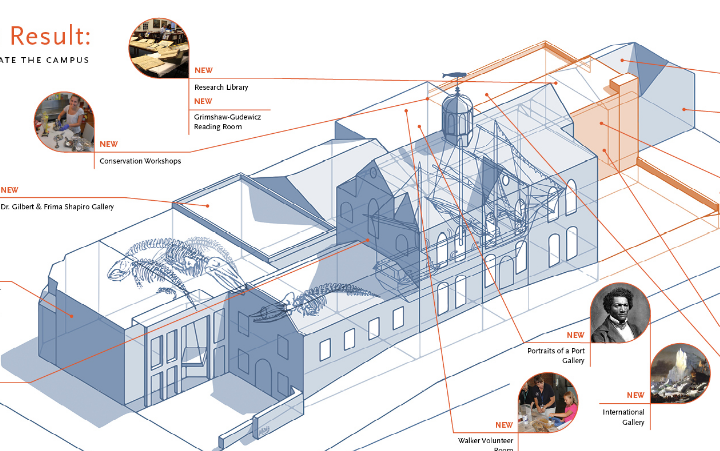
Rendering of proposed addition to Whaling Museum.

Rendering of proposed addition to Whaling Museum.

A colleague in the Journal’s newsroom has sent me word that the Whaling Museum, in New Bedford, Mass., would soon have a new wing added. This of course sent a shudder up my spine – a new wing! My worst fear is predictable to readers of this blog. So you can imagine how pleased, which is to say surprised, I was to click on the [museum] link and see this pleasantly modest addition in a traditional style that will fit right into the historic streetscapes of the Whaling City’s alluring downtown. The design is by the Mount Vernon Group, of Wakefield, Mass.

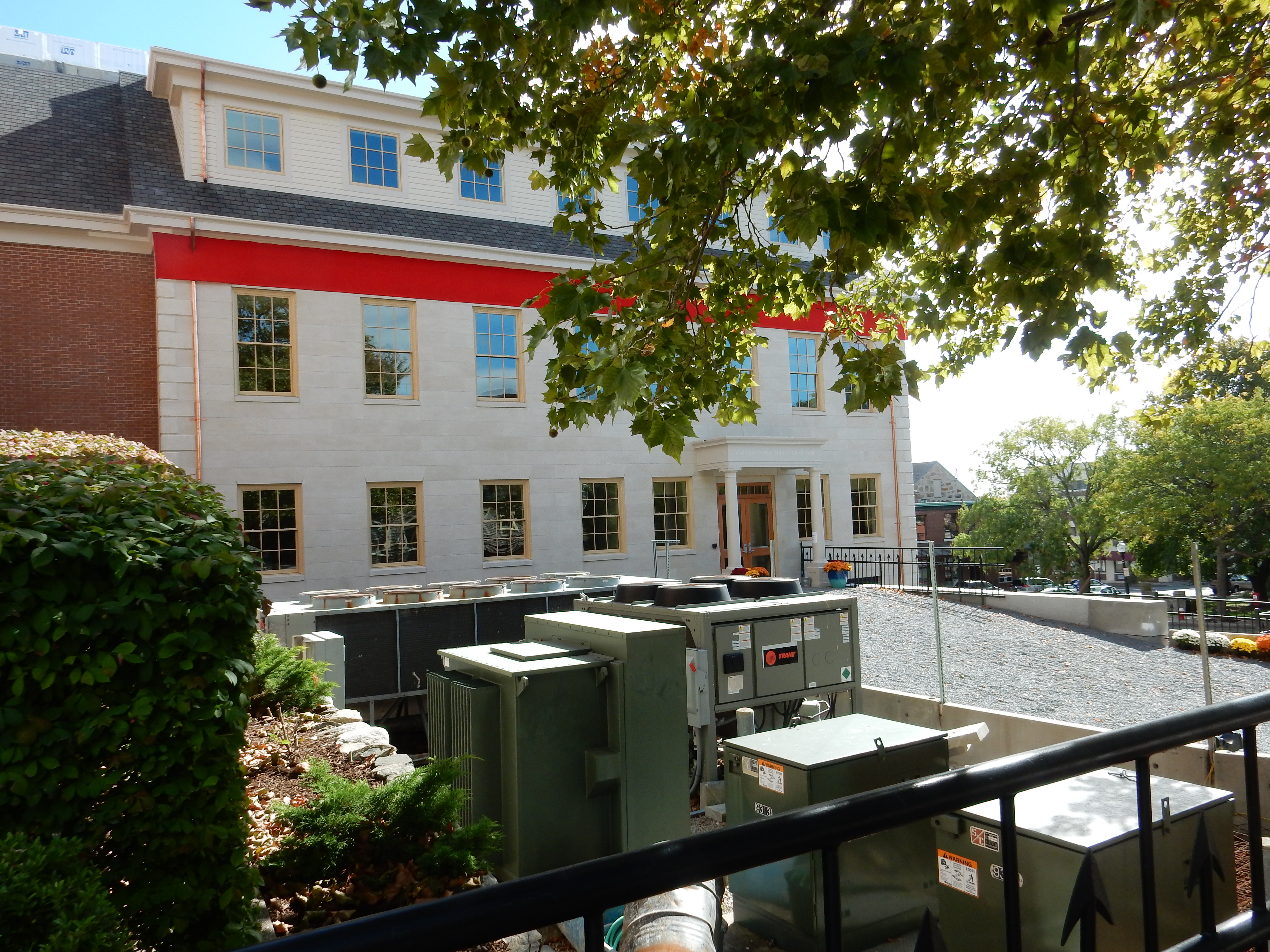
The Wattles Jacobs Education Center’s grounds are incomplete but the new building already looks at home amid the bustle of the Whaling Museum’s block. It fits into the Whaling City’s historic district not quite like a well-worn glove – though it will achieve that status in due course. Certainly the garden of HVAC equipment that occupies half of the new center’s front yard will be disguised, or moved, and surely neither the existing gravel pit nor a parking lot will be the fate of the other half.

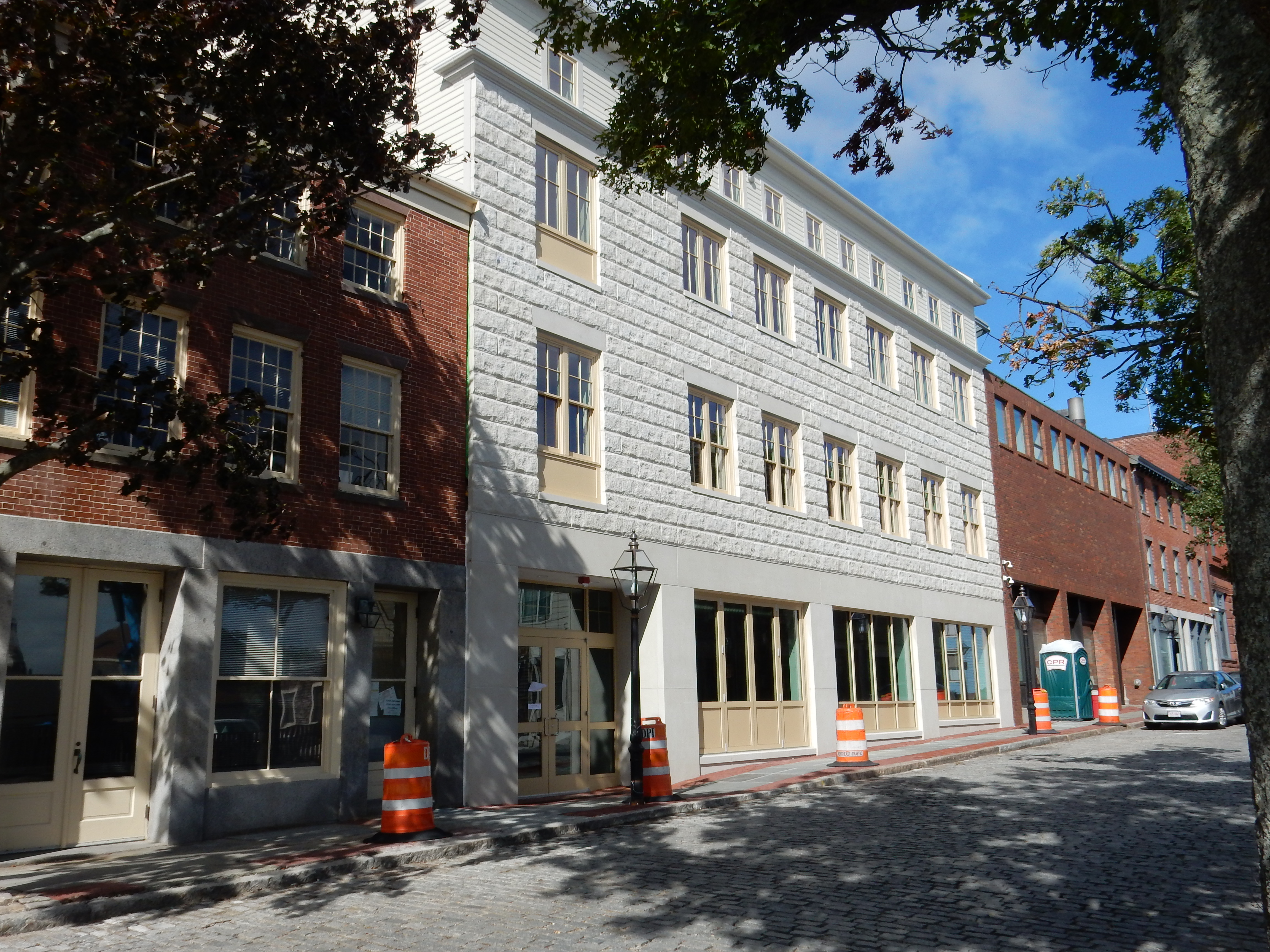
The two sides of the addition have different personalities.  The side facing but set back from Johnny Cake Hill Street has the entry, and the genteel manners of an early 19th Century Federal mansion, with a fancy Doric portico and the red bow of a dedicatory ribbon still affixed beneath its cornice. Above it rises an attic story, with another ornate cornice, set into the building’s steep gabled roof. The “rear,” facing North Water Street, dons an early 20th century neoclassical face – base, shaft and capital – spare, but with a twist. This is the rusticated stone, placed unconventionally in the middle (the second and third floors) rather than at the ground floor, which in this case is smooth white masonry. The small windows of a fourth story partly mask from below a fifth story, fronted by the balcony of the Harbor View Terrace, a gallery and event space for guests and visitors.

A casual observer might not notice that both façades sheath a single building. And a casual observer is also unlikely to cock a snook at the new addition’s styles being “older” than the modernist style of the main museum entrance and the modernist brick building to the right of the North Water Street façade. A more expert observer, perhaps an architectural historian, if he were to display attitude about that, would merely be exposing the lesser sophistication of his “of our time” bunkum.

Billy and I left the museum with much more still to see in the future. We saw the world’s largest whaling ship (in the museum’s cupola’d Bourne Building) and then left to view the Whaling National Historic Park. Both are worth and will get their own post here, upcoming shortly, mostly photographic. And we – or at least one of us – left with a great smile of admiration for and joy in the Whaling Museum’s recently exercised disdain for orthodoxy regarding new buildings in historic districts, and its embrace of historical revival as an equally valid but much more beautiful aesthetic strategy for moving the museum and New Bedford into the future.

DSCN9308

DSCN9193

DSCN9201

DSCN9203

DSCN9187

DSCN9298

DSCN9179

DSCN9223

DSCN9287

Screen Shot 2015-10-04 at 5.43.11 PM

Posted in Architects, Architecture, Architecture Education, Architecture History, Art and design, Development, Landscape Architecture, Photography, Urbanism and planning | Tagged , , , , , , | Leave a comment

Astonishing Ishmael in N.B.

The Whaling National Historical Park, in New Bedford. (nationalparks.org)

The Whaling National Historical Park, in New Bedford. (nationalparks.org)

Traveling with my son Billy to New Bedford today, eager to check out the new addition to its famous Whaling museum, here is my column from 1997 about the Whaling City. The aquarium proposed for N.B. has not yet been built, but Route 18 as it skirts downtown along the waterfront has been “boulevardized.” That’s another thing I want to check out on this trip. Meanwhile, here’s New Bedford from almost two decades ago:

***

Astonish Ishmael all over again
November 20, 1997

If I had been astonished at first catching a glimpse of so outlandish an individual as Queequeg circulating among the polite society of a civilized town, that astonishment soon departed upon taking my first daylight stroll through the streets of New Bedford.

– Moby-Dick, by Herman Melville (1851).

***

CALL ME MELODRAMATIC, but my own astonishment on my second visit to the streets of New Bedford was hardly less than Ishmael’s. He was amazed that Queequeg was not so out of place in a town where “actual cannibals stand chatting at streetcorners.” My own astonishment was of an altogether different order. Let me explain.

My first visit was confined to the main downtown thoroughfare, Purchase Street, a street of forlorn elegance similar to Westminster Street in Providence. I parked, made a purchase at a drugstore, and left the Whaling City without further exploration.

Last year, I returned with time on my hands. Little had changed on Purchase, but soon enough, and only two blocks to the east, I happened upon an historic district of surpassing loveliness. Its Federal and Greek Revival buildings were Melville’s streetscape. “Nowhere in all America,” he has Ishmael opine, “will you find more patrician-like houses, parks and gardens more opulent, than in New Bedford.”

Consider the streets themselves. They are cobbled, lined with trees and period lampposts, with sidewalks paved in a kaleidoscopic array of granite and brick. They are so lovingly infused with quality workmanship as to take your breath away. They are matched here only by the sidewalks and driveways of several old houses on or near Benefit Street.

At the time, I marveled at my ignorance of this treasure 28 miles from my address of 13 years (Benefit Street). In search of someone to bear witness to my astonishment, I marched into the visitors’ center in an old bank on Williams Street, where I found Antone Souza Jr., director of WHALE (the Waterfront Historic Area League). He listened patiently, and I promised to return soon with pen in hand.

I returned on Tuesday (which, I must admit, qualifies as “soon” only on Captain Ahab’s calendar). With Providence resident and New Bedford native Larry Novick as my guide, I saw much more of the city this time. And then we met Tony Souza for an eye-popping tour of its historic district.

Since my last visit, the National Parks Service has anointed the district as the New Bedford Whaling National Historical Park, a designation that should catalyze the continued preservation and restoration of its 14 delightful blocks of maritime heritage.

Frankly, however, if it were to remain completely unimproved, frozen in amber as it is now, it would still be worth visiting. It is that beautiful and – with its history, its famous Whaling Museum and its shops – that fascinating. In fact, it is so precisely because New Bedford refused to follow advice, offered in a 1966 column by New York Times architecture critic Ada Louise Huxtable, that it “undertake no artificial reconstruction of the past and . . . make no copies of buildings that no longer exist.”
Huxtable preferred the mishmash of old and new exemplified, then, by the pathbreaking 1959 plan for College Hill, here in Providence. That plan was the first to allow preservation’s nose under the tent of “urban removal.” Benefit Street’s fame was secured, however, only because the city had sense enough, finally, to boot the modern from the tent, preserving wholly what the 1959 plan would have ravaged.

New Bedford has tried, with much success, to do likewise, and even now erects buildings that Huxtable would decry as “copies” that create an “artificial” environment. In fact, New Bedford merely rediscovered traditional architectural principles suppressed throughout much of this century by the modernists.

The big exception to that in New Bedford is, of course, Route 18, which in the ’70s ripped a path between the historic district and the waterfront. Tony Souza described a plan to boulevardize the highway, as Newport plans to do with America’s Cup Avenue.

New Bedford has done a considerable, nay, an astonishing amount with minimal cash. Going big-time, however, it now has proposed to build an aquarium of astonishing proportions in an old power plant on its waterfront. But the $97 million investment, mostly private, will be worthwhile only if the lessons of quality workmanship and traditional design, which have succeeded so well in the historic district, are applied to both the Route 18 rehab and the aquarium complex.

In short, by making its historic district’s beauty the rule rather than the exception, the Whaling City should strive to astonish Ishmael all over again.

* * *

Copyright © 1997. LMG Rhode Island Holdings, Inc. All Rights Reserved.
Record Number: MERLIN_570051

Posted in Architecture, Architecture History, Art and design, Blast from past, Development, Preservation, Urbanism and planning | Tagged , , , , , , , , , , | Leave a comment