Providence lost, regained IV

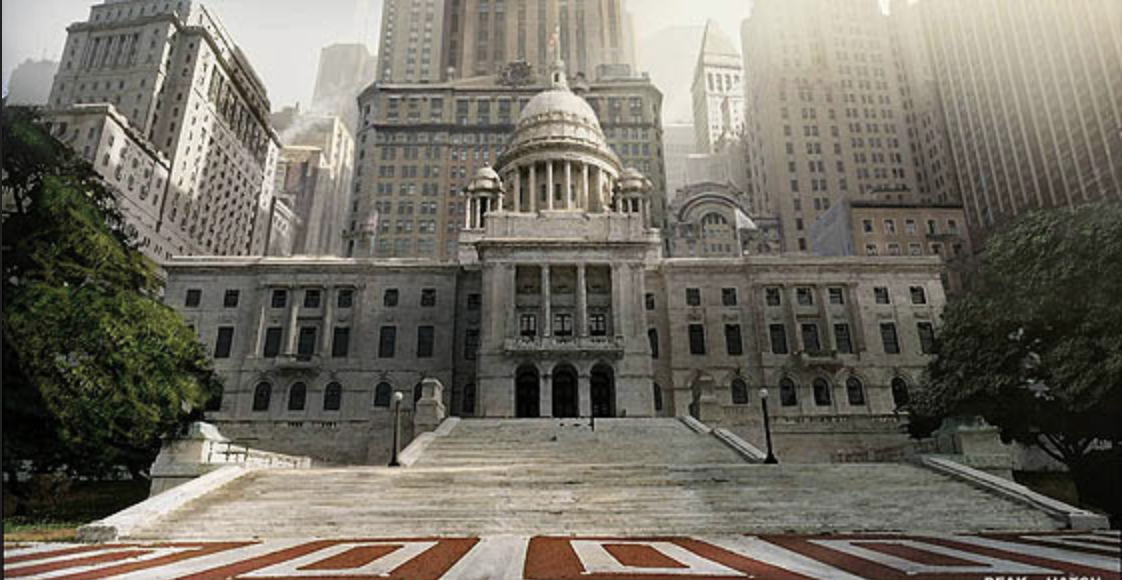
R.I. State House plays Providence City Hall in 2007 film “Underdog.”

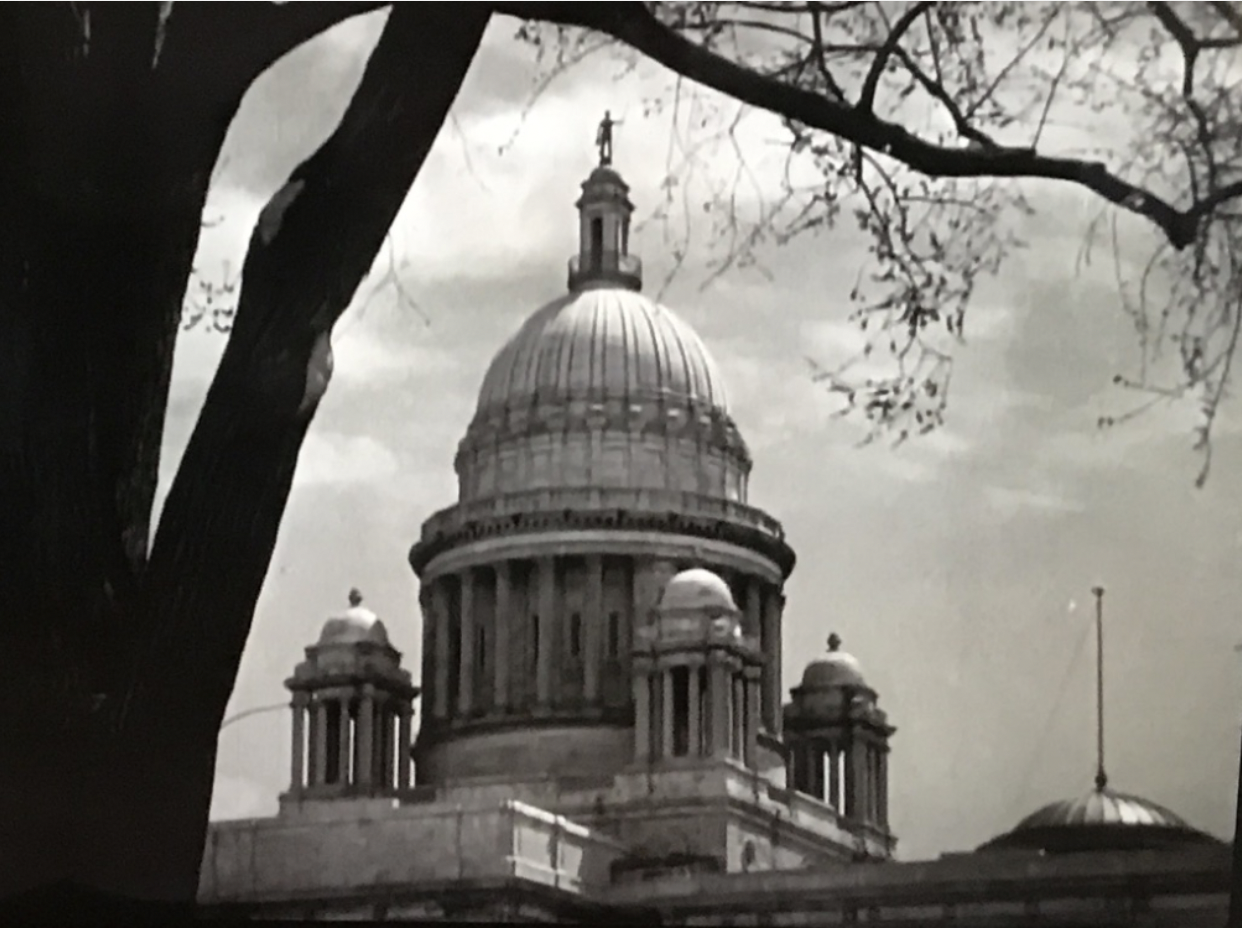
Editor’s note: This is the final segment of the epilogue of my book, Lost Providence, entitled “Providence Lost, Providence Regained.” Published in 2017, the book is a history of the design of the modern-day capital of Rhode Island, specifically of its downtown. So why is this reprinted segment illustrated by the Rhode Island State House rather than the City Hall of the state capital? Partly because I wanted to include a little “cherry on top” for readers who have made their way through this reprint of the second half of the book, called “Part II” and having to do with the major development projects that created the city’s downtown. The final photograph links to a segment of the film “High Sierra,” with Humphrey Bogart and Ida Lupino, which contains a surprise for Rhode Islanders.

***

This book addresses change as the only constant and tracks its progress in Providence. But it challenges ideas that privilege only big change, leaving small, manageable change in the lurch. This book challenges those failed ideas everywhere they prevail. Providence’s success in revitalizing itself proves that—not withstanding Daniel Burnham’s “Make no small plans!” – it is not the size of the plan but its beauty that counts. Beauty is a free gift to every level of society, a sort of art museum with no charge wherever a street of lovely buildings exists, and perhaps most sincerely appreciated by those least fortunate. The future is not about trying to copy the past or keep up with the Jetsons. Tradition is not just about the past but about the steps we take to progress into the future – the traditions of tomorrow. Moving society into the future isn’t about reconceptualizing everything we know until we overtake our capacity to understand it. That is where we stand today in many fields, but most visibly, most egregiously, in the field of architecture. The future is part of a millennial continuum held hostage by modern architecture in a mere sliver of time. That can change, too.

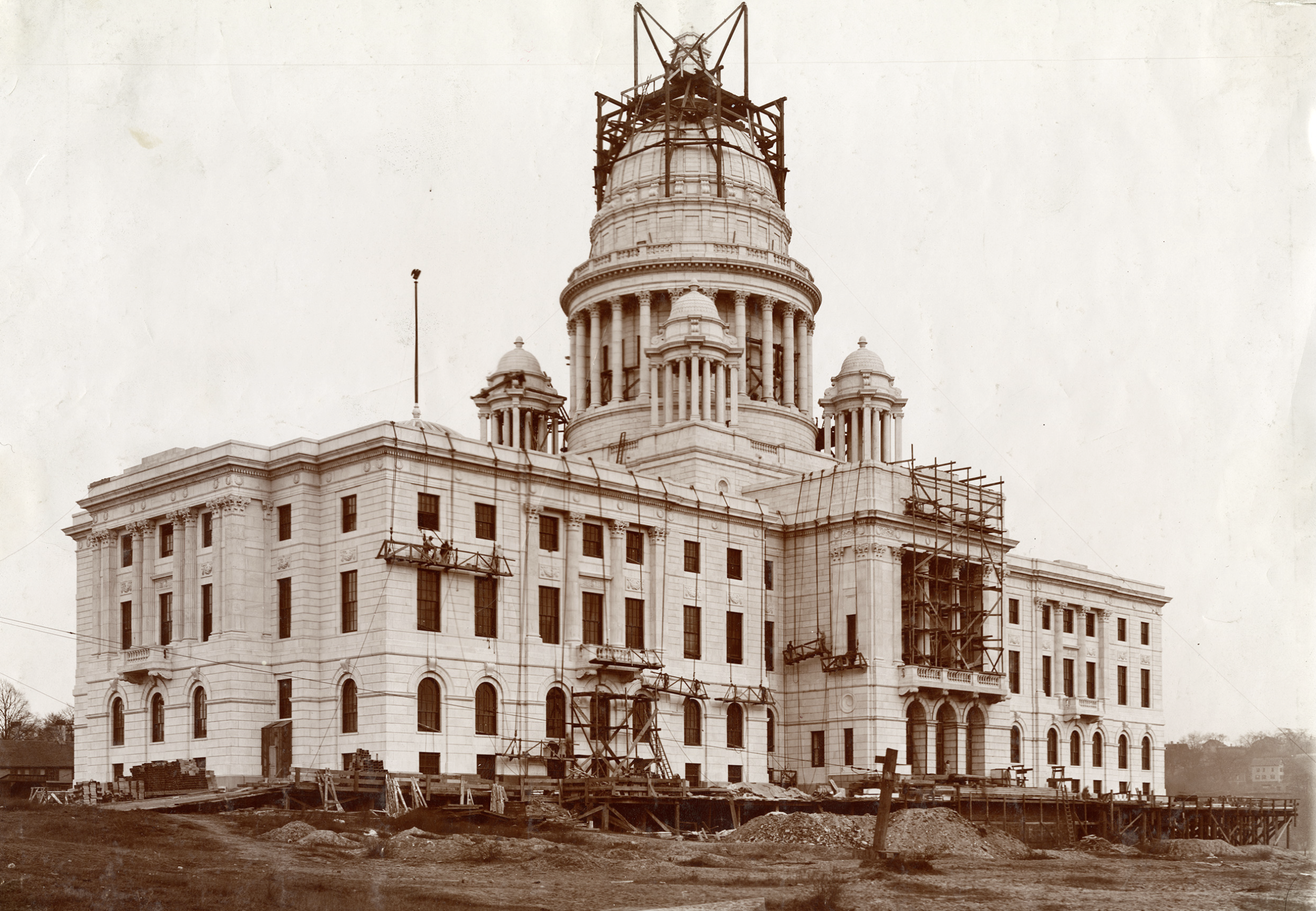
Rhode Island State House photographed before completion of its dome in 1899.

Providence and Rhode Island are uniquely positioned to raise the status of beauty and tradition in architecture, just as many people are striving to do in the field of cuisine. Architecture and food are flip sides of the same coin:

What would our dinner tables look like if culinary culture were half as hung up on the rigid rulebook of progressive aesthetics as architectural culture is? Would we be allowed to eat bread or rice, or would they be forbidden due to their unspeakable antiquity? Would regional fare using locally harvested ingredients be celebrated as part of a rich, diverse, interconnected world of unique traditions, or would it be condemned as provincial nostalgia?

The passage is from an essay by Nathaniel Robert Walker, a professor of architectural history at the College of Charleston. In “From the Ground Up: How Architects Can Learn from the Organic and Local Food Movements,” he notes that by the 1950s processed food had become America’s dominant cuisine, much as processed architecture is dominant in America (and elsewhere) today. Change for the better in food came because people at every point in the food chain got fed up, so to speak, with the status quo. From the bottom up, the slow-food movement has challenged the agricultural establishment and its downstream confederates, Big Food and Big Grocery, with some success. Big Architecture can be reformed, too. It may not be as delicious, but it can be more fun.

Reform of our built environment will also be a bottom-up process. It can be a movement. It can start with activists clamoring for change at design-review meetings. It can start with civil disobedience, with a sit-down protests in front of a bulldozer on the Brown campus. It can start with a rock propelled at night through the plate glass of a glass box. (Who inserted that line?!) It can start in a state with the DNA of revolt in its history. It can start with a governor who wants to carve out a place in that history. It can start in Rhode Island.

***

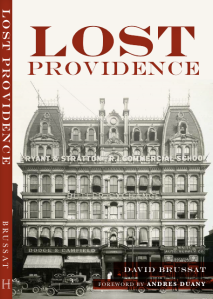
This is the final segment of the epilogue of the book Lost Providence, published in 2017.

This shot of the R.I. State House appears just after the opening credits of the film “High Sierra,” starring Humphrey Bogart and Ida Lupino. Click here for my post on that, which links to the opening of the film. First you see the credits, then you see this shot, after which Bogart is release from prison.

Posted in Architecture, Lost Providence | Tagged , , , , | 4 Comments

Providence lost, regained, III

Poundbury, a suburb of Dorchester, in southeast England, was built by King Charles (as prince).

Editor’s note: This is the third part of the epilogue of Lost Providence, titled “Providence Lost and Regained.”

***

5 a.m. I’m falling apart. My boyfriend is sleeping with a bronzed giantess. My mother is sleeping with a Portuguese. Jeremy is sleeping with a horrible trollop. Prince Charles is sleeping with Camilla Parker-Bowles. Do not know what to believe in or hold on to any more.

—Helen Fielding, Bridget Jones’s Diary (1996)

Architect Friedrich St. Florian has been mentioned often in these pages. As dean emeritus of architecture at RISD, designer of Providence Place and the National World War II Memorial, and signer of “The Napkin,” he was frequently a presence in my writing on architecture for the Providence Journal. We had lunch often, and once he told me that he believed traditional architecture’s revival would be fostered by the individual’s need for an anchor in an unstable world. Traditional buildings serve as a psychological handhold for people made anxious by the swift pace of change in every human endeavor and society at large. Modernist buildings, where it is sometimes difficult even to find the front door, do not promote stability in a turbulent world. That’s the last thing they want to do.

National World War II Memorial on the Mall in Washington, D.C. Designed by architect Friedrich St. Florian, it is one of the few memorials inspired by the classical language since that war. (history.com)

Architecture that has evolved over time as best practices improve the building process in ways handed down generation by generation trumps an experimental architecture based on a hybrid of ideologies that exalt innovation over experience. For more than half a century, architecture has become the only industry – nay, the only field of human endeavor, from art to engineering – that officially rejects precedent as the primary strategy for moving from past practice to future practice. It is not logical. It has not worked. And few modernist architects practice it, whatever they may say. Their ambivalence makes their architecture more complex, costlier and more difficult to enjoy.

A third grader need not be especially precocious to perceive the practical and aesthetic superiority of traditional architecture. All of us are immersed in architecture from early childhood, and our intuitive sense of what works in architecture rests on so much more experience than our judgment of other arts we experience only intermittently.

Plans for Chelsea Barracks redevelopment in London, 2009, by Richard Rogers (left) and Quinlan Terry (right). In survey of public opinion, Terry’s plan beat Rogers’s by three votes to one. (Evening Standard)

All research and almost all anecdotal evidence shows that a large majority of people prefer traditional to modern architecture. Architects’ intuitive sensibilities are purged in schools of architecture and replaced by supposedly more sophisticated attitudes. Modernist architects treat public disdain for their work as a feather in their cap. Proof of that disdain may be found in the purchase or rental of houses. The market for housing is overwhelmingly traditional because most people choose their houses themselves. modernist houses are built or bought mostly by wealthy professionals or trustafarians who seek to establish their “street cred” as “edgy” – artist wannabes. Almost all large commissions for new buildings are modernist because such decisions are made by committee, almost always led by the same people who commission modernist homes, and for the same reasons. Yet modernist architects themselves frequently live in traditional houses: they are unwilling to inflict on themselves what they inflict on others.

A mayor or governor who wants to reform this situation will get pushback from design professionals and academics but support from the public. That is even more true in Rhode Island, where citizens are accustomed to a level of beauty in their built environment that is rare in many other states. Providence and Newport are only two of many among Rhode Island’s thirty-nine cities and towns whose historic centers and neighborhoods retain a large portion of traditional fabric. Cultural tourists visit Newport, Westerly and Providence more than Johnson, Warwick and North Providence for the same reasons global tourists visit not Houston, Vrasilia and La Defense (outside Paris) but old Paris, old Rome and old London – what’s left of it. It should be noted that much remains of London’s vast expanse of historic fabric. Like Paris, Rome and Providence, the extent of beauty remaining in London can survive decades of assault by architectural ideologues who, in their arrogance, believe that only their sterile, production-for-use tastes are appropriate or valid for the twenty-first century.

The civic leaders of Providence and Rhode Island are at a crossroads – they can choose to foster such arrogance, at continued great cost to the character of their city and state, or turn the practice of design here in a more salutary, salubrious and sustainable direction. In Providence, they can simply choose to obey the law and encourage developers to do likewise. The relatively minor cost of this shift will be incurred by architecture firms hired for projects now on the boards. They would have to redo their designs. Some may need to diversify their practices by hiring architects who know how to provide what the public likes rather than what the design establishment demands. Developers may regret the upfront cost of such a shift, but they will save money over the long run as design review and permitting is simplified, and as the public learns to understand that new buildings need no longer be a cause for anxiety. People will welcome new projects as offering positive change, as was the norm just half a century ago.

Carpionato plan for I-195 development in Fox Point on east bank of Providence River. Plan became less elegent as resubmitted again and again over five years and then disappeared. (Capionato Properties)

A shift toward traditional architecture in Rhode Island would be not only cheap but easy. The widely recognized ills of the built environment may be healed without having to address complexities that challenge reformers hoping to solve the problems of poverty, crime, injustice, family breakdown, disease, economic stagnation, ignorance and the rest, not to mention war and peace. People in authority, such as the governor, would need to do little beyond deciding that such a change should take place. Returning beauty to the forefront of design would place Rhode Island at the head of a bottom-up movement already afoot in America, leading in a direction huge majorities would like to go. And the emergence of beauty and civility in public buildings and spaces might even create a social atmosphere conducive to greater participation and cooperation in the public policy debates that set our course as a democracy.

***

The fourth and final part of the epilogue of Lost Providence will appear on the next post of this blog.

Posted in Uncategorized | 1 Comment

Providence lost, regained II

Postcard of Waterman Building (1893), RISD’s first permanent edifice. (RISD VR blog)

Editor’s note: This is the second of several sections of the epilogue to Lost Providence, first published in 2017. Further sections are upcoming soon.

***

The Rhode Island School of Design offered its services [a decade ago] to assist the I-195 commissioners in producing a successful design template for the 195 land. To shape its guidance, RISD should touch base with its origins. The school was formed in 1877 to soften and sweeten the local manufacturing process. As set forth in its original bylaws, its first goal was to foster “[t]he instruction of artisans in drawing, painting, modeling, and designing, that they may successfully apply the principles of Art to the requirements of trade and manufacture.”

At a time when Rhode island was competing with the world in a range of light and heavy industries, RISD may have been more instrumental in the state’s prosperity than it realizes today. For a century, the state’s private sector accomplished manufacturing miracles in mills of brick that housed the latest technological advances. it was only toward the middle of the twentieth century, as the high cost of doing business in Rhode Island sent more and more plants south, that Rhode island industrial leaders – and RISD – embraced a very bad idea.

The bad idea was that the machine age requires a machine architecture. Reformers of architecture a century ago had toyed with basing building design on the principles of the Arts and Crafts movement. They did an about-face and embraced the “form follows function” credo. The meaning of the term was vague to begin with, and it was botched in practice. The world got architecture conceived as a metaphor for the machine but without the efficiency promised by machinery, let alone in a form that might have made the absence of efficiency more bearable.

I am going out on a limb here, but I think this image is of an old machine shop just off Wickenden Street and recently demolished in Providence. It was described to me as the first mechanical building in the U.S. True? Does anybody recognize it? The old building at the left of the image still exists.

This train of thought originally came to me from Nikos Salingaros, a mathematician and architectural theorist based at the University of Texas and the author of Anti-Architecture and Deconstruction: The Triumph of Nihilism and other books. working with the architect and design theorist Christopher Alexander and others, Salingaros has also done research linking most people’s preference for traditional architecture to neurological patterns in the human brain. The thinking, briefly, is that the widespread allure of ornament and detail in architecture comes from the prehistoric defense mechanisms of humans. For primitive man, the more information, the better. To see, and to recognize in a split second, the shadow of the head of a lion against a rock near a tree was a matter of life or death. Today, survival mechanisms have evolved considerably, but the love of ornament stands in for cues of visual perception on the full range of scales that long ago served to sustain the individual and, ultimately, the species.

Many others are researching the relationship between the human brain and the widespread skepticism toward experimental architecture and the preference for traditional buildings and public spaces.

Semes’s essay begins: Sitting in his studio at the French Academy in Rome, the painter Jean-Auguste-Dominique Ingres picks up his violin and begins to play. His interest in the violin is both musical and visual. The instrument he plays is a composition of molding profiles drawn from classical architecture – torus, scotia, bead and cyma recta – culminating in a spiral resembling the volute of an Ionic capital.

In a 2006 essay on the relationship between music and architecture, “La Violon d’Ingres” (The Violin of Ingres), Steven Semes, a professor of architecture at Notre Dame and author of The Future of the Past (2009), writes:

Scientists are interested in pattern and proportion once again. Neuroscience is beginning to reveal ways in which pattern recognition is built into the complex and subtle mechanisms of the brain. From this viewpoint, classical architecture and music are analogous, not just because they reflect one another but because they reflect us and the way our minds work. It should come as no surprise, then, that both music and architecture today are engaged in retrieving their respective traditional languages: melody, tonality, proportion, ornament, the classical orders – the whole lot.

Governors and mayors may well be disinclined to muck around in neurophysiology, and who can blame them? But there are other reasons why developers should prefer traditional to modern architecture.

On the agenda of most architects, and governors, today is climate change, with developers and architects seeking to reduce their projects’ carbon footprints. Buildings account for 39 percent of annual carbon dioxide emissions in the United States. Weaned on cheap oil before its risky environmental impact became evident and its low cost evaporated, the architecture of the Thermostat Age cannot do much to soften its negative impact on climate. Replacing an old building with a new one piles up an insurmountable carbon deficit even before adding in the high cost of operating complex systems in new buildings, the inefficiency of driving ever farther to work in petroleum-based vehicles or the new buildings’ short shelf life – planned obsolescence, the half-sister of demolition by neglect – often less than a half or a third the life of a traditional building, requiring multiple replacements over time.

George Corliss House (1872), in Providence, is no longer covered with ivy, was first with radiant heat and cooling controlled by a thermostat. Corliss was an inventor of steam engines. (Brown University)

Buildings erected before the Thermostat Age are intrinsically more sustainable than are modernist buildings. Before oil and electricity, buildings used many natural strategies to address the challenges of climate. Depending on region, they had thick walls or thin walls to retain or disperse heat or cold; high ceilings or low ones for the same purpose; roofs designed to shed rain and snow; porches, courtyards, awnings, shades, shutters and windows that open and close to regulate light and shade; ceiling fans for cooling in summer; fireplaces for heat in winter; site placement to harness the seasonal angle of the sun or the breeze; landscaping to enable trees to provide shade and oxygen as well as beauty; and so many more features, including natural materials locally sourced. Builders enlisted the help of Mother Nature to regulate the environment within houses and other buildings.

All of those climate-friendly features are still in use today wherever older houses and buildings survive, and are available for use wherever new traditional buildings are sold. These natural efficiencies do not require us to go “back to the future.” They can make our comforts better, more durable and more affordable.

The Bessie and Harry Marshak House (1931), on Wayland Avenue in Providence, may or may not be naturally resiliant to climate, but it sure is lovely. Note the odd brickwork. See more!

The manufacture of architecture will change as beauty resumes its role as a factor of production. Man-made materials can often bridge the gap between current design practices and the design practices of the future, which will see natural materials become more affordable. Advances in fabrication will be especially useful to marketing as high technology continues to reduce the cost and increase the capacity of machines and computers to create ornament and other architectural detail from matter such as wood, stone, precast concrete or plastic.

So, governors are free to ask developers to pitch in against climate change by proposing projects that feature natural strategies to reduce carbon emissions. Most of those strategies will cause buildings to look more traditional – more natural – and this will make even large development projects easier for the public to swallow.

***

The next section of the epilogue from Lost Providence will appear in the next post on this blog.

Posted in Architecture, Lost Providence | Tagged , , , , , | 6 Comments

Providence lost and regained

Rhode Island State Capitol (1901), designed by McKim, Mead & White. (Photo by author)

Editor’s note: This is the first section of the epilogue of Lost Providence, entitled “Providence Lost, Providence Regained.”

***

The purpose of the D-1 District is to encourage and direct development in the downtown to ensure that: new development is compatible with the existing historic building fabric and the historic character of downtown; historic structures are preserved and design alterations to existing buildings are in keeping with historic character.

This passage from Chapter 513, Article 6, section 600 of the Providence Zoning Code, passed in 2014, is the law that protects historic character in downtown. It carries forward language similar to that of local zoning codes reaching back many years. Of course, wording such as “compatible,” “in keeping with” and even “historic character” is subject to interpretation. The existence of an unsympathetic building or two in a historic district can, in theory, be used to justify another unsympathetic building. Still, in the district encompassed by the Downcity Plan, almost no new construction, additions or alterations out of character with downtown’s historic appearance – as the average person would interpret the words – have occurred since the 1980s. That is in step with the unofficial moratorium on building demolitions that prevailed, with few exceptions, between 1979 and 2005, a period that encompassed at least three bona fide building booms.

Providence City Hall (1878), by Samuel F.J. Thayer. The author’s loft in the Smith Building, on the fifth floor just obscured by a tree, is behind and to the left of Ciy Hall. Art Nouveau bus kiosks at right were replaced with ugly kiosks in 2015 by blockheads in public transit planning office. (upriseri.com)

Thus it might seem that Winston Churchill’s “We shape our buildings; thenceforth they shape us” – the quotation at the beginning of this book – has in some inchoate manner guided development in Providence. An enactment of law speaks with force, the more so when it has been honored not in the breach, as have so many, but by intelligent observance over decades.

The city carried out very little of the Downtown Providence 1970 Plan. In 1960, when that plan was announced, laws defending downtown’s historic character had not been enacted. And yet it was observed by the city as a sort of intuitive municipal credo. Only thereafter did modern architecture’s rise call for a defense of historic character in the language of the law.

Although welcome signs such as “Beautiful Rhode island” and “Historic Providence” still stand alongside the major highways into the city and state, the Ocean State has recently struggled to update its “brand” to replace earlier logos and mottos emphasizing the state’s beauty. The need for such campaigns is debatable. Visitors travel to Rhode Island on vacation, and organizations schedule meetings in Providence and Newport because the state’s beauty and historical character are widely known commodities. That fact has little to do with branding campaigns. Still, the campaigns do suggest that officials have long understood that beauty is vital to the state’s health and well-being.

View to west from Van Leesten Pedestrian Bridge of I-195 “Innovation District.” (Steve Kroo video)

Now, in its effort to develop land near downtown Providence vacated by the relocation of Route 195, the state seems to have suffered a massive brain fart, causing it to overlook the importance of beauty. Already, although progress in redeveloping the I-195 land has been slow, Johnson & Wales has just opened the district’s first building, a new modernist facility to house its engineering and design department. Other plans for new “high- tech” buildings in this corridor are in early stages of design development, with three newly proposed towers of high-tech design in prospect [just recently ditched]. An “innovative” engineering school facility at Brown University is also under construction on College Hill. All of this promises to undermine Rhode Island’s brand – if not the official brand, whatever that is at this stage, then certainly its longstanding natural brand promoting the state’s beauty and historic character.

Downtown viewed from College Hill. I sought a view online of downtown from this angle, of not this height, months ago and could find none. They all tended to block the Industrial Trust. (Photo by author)

The current governor, Gina Raimondo [now Daniel McKee], should phone all the developers involved to urge them to revise their plans in ways that will strengthen rather than weaken the state’s brand, its beauty – a major competitive advantage it has over other states. Under Section 603 of the zoning code, the I-195 Redevelopment District Commission can offer development incentives. “The purpose of these incentives,” the code states, “is to encourage development that will be compatible with the character of downtown and carry out the goals of the comprehensive plan.” The governor can advise developers of the existence of such incentives. [He] can also remind them of the protections for historical character in section 513.6.600 of the zoning code and note that the state prefers initiatives that strengthen rather than undermine the competitive advantage embodied in such laws.

View  in early evening of buildings along an alleyway in downtown Providence, leading to Weybosset Street, with tip of Industrial Trust Building visible in background. (Photo by author)

In the lax design environment that has shaped development in Providence in recent years, officials may be understandably reluctant to even appear to “mandate” design. The bill that in 2011 created the I-195 Redevelopment District, and the commission managing its build-out, took as their model the Capital Center Commission, which was “reticent about mandates to architectural expression.” With the conflicting results of that reticence in mind, the I-195 commission should not hesitate to express a preference for buildings that strengthen rather than weaken the state’s brand.

After he took office in 2014, Boston’s new mayor at the time, Marty Walsh, gathered that city’s developers together to urge them to propose “bolder” new buildings. His advice may have been dodgy, too inclined to abet the further erosion of historic character in the Hub, but he was not “mandating” style. He was using his bully pulpit to encourage his idea of better development in Boston.

Rhode Island leaders such as Gina Raimondo, Governor McKee, and Providence Mayor Jorge Elorza [and recently elected Mayor  Brett Smiley] should do likewise. That’s their job. They may find that developers are more eager to have state and local government on their side than they are to stamp their proposed developments with this or that statement of aesthetic design.

***

The next blog post will reprint the next section of the epilogue to Lost Providence.

View upriver toward downtown over pedestrian bridge. (Twitter photo by Mike Cohea)

Posted in Architecture, Lost Providence | Tagged , , , , , , , , | 5 Comments

The Downcity Plan, II

This view is similar to the one that impressed me from the Arcade (left) on my first visit to Providence.

***

Editor’s note: This is the bottom half of the 22nd and final chapter, “The Downcity Plan,” from Lost Providence. Chapter 22 concludes Part II of the book, whose final two chapters record the two major projects that sparked the Providence renaissance, which followed a series of major hiccups in the city’s development, which have been described in the other chapters of Part II, reprinted here over the past several months. The epilogue, which I’ve not yet decided to reprint, sums up the lessons Providence and other cities should learn from our city’s recent decades of history.

***

Months prior to my interlude at the window of the Turk’s Head Club with Journal publisher Metcalf [see Chapter 19, “We Hate That”], while in town for my first interview with the paper, I went to fetch a shirt at a laundry in the Arcade near my hotel, the Biltmore. I entered from Westminster Street. Afterward, I exited the Arcade at the other end, onto Weybosset Street, and happened to turn my head left. I saw the curved row of old commercial buildings bending toward Weybosset’s meeting with Westminster at the Providence River. I was struck by its beauty. I said to myself, “I have got to live in Providence.” This was half a decade before I began to conceive of myself as an architecture critic.

[Less than five years later, after I became that critic, I began to write about downtown’s renaissance, including the Downcity Plan.]

Sketch of the quadrangle proposed for Johnson & Wales’ campus on Weybosset Street. (Randall Imai)

Later wrinkles in the Downcity Plan included a historic district overlay for the downtown master plan, then the plan for a downtown academic quadrangle for Johnson & Wales University and finally an even more ambitious downtown plan in 2004, an effort to connect the city center to neighborhoods beyond Route 95.

Gaebe Common, the quadrangle realized. At right is the Triangulo Gate, on Weybosset Street. (J&W)

The first residential rehabilitation, the Smith Building (1912), was completed in 1999, the same year Providence Place mall opened. Before the next decade was out, five other downtown building rehabs housed two hundred new units and shops on the ground floors. Other building owners followed suit. Eventually, although little of the more ambitious 2004 plan has been accomplished, many earlier proposals have been, and they bore considerable fruit. Downtown’s popularity had become the economic basis for several proposals to build new residential towers in Capital Center, two of which were built, including the Westin addition, with hotel rooms and condominiums, and the Waterplace Luxury Condo twins. A proposal in late 2016 to build three residential towers of thirty-four, forty-four and fifty-five floors on the vacant Route 195 land raised hopes that there might indeed be a big market for living in or near downtown – predictably, however, they were way out of scale, way out of place and way out of character for Providence. [In 2023, just a few weeks ago, its developer, Jason Fane, who had ridiculed the historical character of Providence, pulled the plug on his ridiculous project, which by then had shrunk to one building.]

Promotional image posted inside window of building to be renovated, including, at left, the addition (a building in its own right). Restoration of Wit Building, far left, was disappointing. (Photo by author)

Buff Chace has continued rehabbing buildings, mainly for lofts, and recently proposed yet another set of downtown rehabs on Clemence street, an alley running from Westminster to Weybosset. This project includes the construction of a new residential building. [In 2022, he completed a lovely addition to his row of buildings along Westminster, and the Nightingale Building on the Journal parking lot between Fountain and Washington streets, with 143 apartments above a grocery store.] The number of shops, restaurants and arts venues has continued to grow. Schools keep moving facilities into downtown, stuffing Joe Paolino’s “jelly doughnut” to the max [That what he called his theory that downtown would attract adjunct university facilities in abundance, as described to me as early as 1992.] To compare today’s downtown with that of 1984, when I arrived, is to define success in the art and science of urban revitalization.

The “addition” as completed in 1922. Trayne Building, right, was used as a screen for outdoor films shown for free once evening a week, hosted by Cornish. (Photo by author)

Between 1984 and 1999, I lived in three consecutive apartments on Benefit Street, 283, 395 and 372. Early on, just for kicks, I used to drive downtown at night, crossing the river, creeping down Westminster Mall, whose pedestrian sidewalks had been rolled up for the night. I would drive slowly, looking for “action” – something to gawk at, really, for I was a dweeb. Block after block, nothing but dreary men lurking in dreary doorways. Then, pay dirt: I would reach Lupo’s Heartbreak Hotel, a live-music club in the old Conrad Building (1885) just before Westminster T’s at Empire. I would slow down (never any cars behind to rush me) and peer through Lupo’s open doors at the writhing, pulsating scene within. I’d never go in myself, at least not until the club moved next door to me after I moved into the Smith Building.

The Conrad Building as it is today, filled with condominiums. Lupo’s Heartbreak Hotel, a very popular nightclub and live-music venue, used to tempt the author. (realtor.com)

Lupo’s had been forced to relocate from the Conrad by the gentrification forces unleashed by Buff Chace. Rich Lupo moved his establishment, which included a smaller nightclub, just as noisy, called the Met Café, into the Peerless Building next to the Smith Building, where I was among the first tenants. I was writing about development issues for the Journal. Chace was my landlord; his projects were often the subject of my weekly architecture column. Chace had bought the Peerless to rehab as lofts, and a legal battle erupted between him and Lupo. Young metal-heads supporting Lupo’s and the Met accused loft dwellers like me of wanting downtown to resemble Barrington (a quiet, wealthy, dry town southeast of Providence known as Borington). Not so! Bad, bad, bad, bad vibrations! eventually, Chace helped Lupo move his club yet again, into the Strand Theater a block away on Washington Street. (The Strand eventually went condo, too, in parts of the building not used by Lupo’s; I trust the condo buyers enjoyed the free live music.) The Peerless, which had been a department store back in the day, opened in 2004 with ninety-seven units around a seven-story atrium, a sort of urban Peyton Place with a roof garden, where tenants, peering out into the atrium, could keep an eye on who was being entertained in who’s loft. Ah! City life!

This sort of churning captures the heart of a living city, indeed of life itself, the life well lived, you might say. Stasis is the status of a city in decline. Like every other active city, citizens confront what they perceive as parking and traffic problems. In fact, those who live or work (or both) in downtown Providence have relatively little to complain about in terms of where to park or how many red lights they must wait on before penetrating an intersection. Providence is at equilibrium, developmentally, which means that its comforts and discomforts are in relative balance. Unlike stasis, equilibrium implies pressure from both the forces that propel development and those that retard it. That is, in stasis there is nothing going on. In equilibrium it may still be very difficult to line up the permits and secure the finances necessary to move a project forward in Providence, but the conditions that provide incentives to do so push developers and entrepreneurs to persevere.

The four buildings demolished to make way for Freeman Park, at Westminster and Mathewson streets, the first project in the Downcity Plan. (Providence Journal)

The first project under the Downcity Plan required, of all things, demolition. Four buildings were torn down at the intersection of Westminster and Mathewson streets, kitty-corner from the Tilden-Thurber Building (1895). Stanley Weiss’s office on its second floor today overlooks the project, now known as Grace Square. Its full name, Grace Square at Robert E. Freeman Memorial Park, [serves as the courtyard of Hotel Providence, also developed by Weiss] and honors the late Rob Freeman, a former director of the Providence Foundation. This group, an offshoot of the chamber of commerce, was the major instigator of the Capital Center and river relocation projects. Its board and its succession of directors, Romolo (“Ron”) Marsella, Kenneth Orenstein, Rob Freeman, Daniel Baudouin and Cliff Wood have been there for downtown, first and last, throughout its revitalization.

Freeman Park, courtyard for Hotel Providence and a string of restaurants. (visitrhodeisland.com)

Overlooking Grace Park, Weiss had one of the best views in town once the four buildings were gone. The buildings were dilapidated. The only attractive one of the four had sustained heavy damage by fire but remained unrepaired. The corner looked like Beirut, the Aleppo of its day. No doubt the rents paid by its two tenants, a pizza joint and a private mailbox emporium, reflected its “sense of place.” The tenants were understandably reluctant to seek new digs, even with city assistance. Around the same time, Weiss evicted the Safari Lounge, a resolutely downscale bar, from another of his buildings nearby. The club sued, but lost. I thought the eviction showed poor judgment. In a January 30, 2003, column, “In defense of gentrification,” with the pre–revitalized downtown in mind, I wrote:

One can no more expect landlords to neglect buildings in perpetuity as welfare programs for struggling artists or buck-a-beer joints than one can expect those same tenants to embrace building improvements that will raise their rents. They whistle past the graveyard as the gathering clouds of renaissance darken, praying that their landlord fixes up all his other buildings before getting around to theirs.

There is a certain vitality to dark streets empty most nights until drunks stumble in a rowdy mass from clubs at 1 a.m. But it will be a sad day if City Hall ever determines that the preservation of this vitality should be the urban policy of Providence.

Thankfully, Providence has not sought to preserve its decline. it has even followed the New Urbanists’ advice, replacing a series of suburbanized one-way streets with two-way streets. Andrés Duany still reminds audiences that a historic district is nothing but a neighborhood built before urban renewal and modern zoning. The Downcity Plan has preserved the beautiful buildings of downtown but not the seedy lifestyle that prevailed after the dark clouds of urban renewal sent urbanity fleeing from downtown. Still, an old friend of mine visiting from our native Washington, D.C., deplored the disappearance from Providence’s downtown of its ubiquitous dives where you could get a drink for breakfast, and I could see his point. His father and mine were both city planners. They would have realized how difficult it is to find and then sustain a balance among the many competing aspects of urban life. This Providence has done.

The downtown of 2016 [or of 2023, for that matter] is not much different in appearance than the downtown of 1984, when I arrived. What is different is the little things. It is cleaner. There are more people. The faux façades are gone. There are more trees. Many streets are lined with period lampposts. It is amazing how much of a difference such lampposts, purposely designed to be beautiful, can make, and for a relative pittance of city funds. Hanging from the lampposts are flower baskets, installed in warmer months by the Providence Downtown Improvement District’s “clean-and-safe” teams, who also plant flower beds at strategic intersections and are, in general, specialists in “City beautiful.” They are also ambassadors on the street for visitors. The sum of all these little things is one big thing: there is more vitality.

The only constant is change – and it is vital that change be for the good, as judged by the people, not the experts.

[Yes, there are more ugly buildings that create a deplorable undertow in the flow of Providence development, but at least they have been kept out of “Downcity” – so far.]

***

Wit Building’s (1925), its lost Art Deco cornice acroteria were found and reinstalled. (Photo by author)


Posted in Architecture, Lost Providence | Tagged , , , , , , , , , , , , | 1 Comment

The Downcity Plan

Westminster Street in 1978, pedestrianized and known as the Westminster Mall, from the almost entirely unrealized and totally discredited Downtown 1970 Plan. Except for the noon hour, it was usually empty. Note the faux modernist siding on ground floors, including, at far right, the sheathing on the Old Providence Journal Building, applied in the 1950s prior to the 1970 Plan.

Editor’s note: This is the first half of Chapter 22, “The Downcity Plan,” from the book Lost Providence, published in 2017. (I accidentally referred to this post initially as the “bottom half” of Chapter 22. I regret the confusion that must have caused some readers.)

***

Economist Richard Florida’s 2002 book The Rise of the Creative Class revealed, as if it required exposure (which in fact it actually did), that people want to live and work in places with character. Of Providence, he wrote:

Many members of the Creative Class also want to have a hand in actively shaping the quality of place of their communities. When I addressed a high-level downtown revitalization group in Providence, Rhode Island, in the fall of 2001, a thirty-something professional captured the essence of this when he said: “My friends and I came to Providence because it already has the authenticity that we like – its established neighborhoods, historic architecture and ethnic mix.” He then implored the city leaders to make these qualities the basis of their revitalization efforts and to do so in ways that actively harness the energy of him and his peers.

Florida may well have been referring to Andrés Duany and Elizabeth Plater-Zyberk, whose firm, DPZ, worked with Providence native Arnold “Buff” Chace and his firm Cornish Associates to revitalize downtown. By the early 2000s, they had hosted brainstorming sessions in Providence called “charrettes” for a decade. Duany had helped to found the Congress for the New Urbanism in 1993. The CNU organizes a movement that has updated concepts that had lain fallow in America since before World War II, concepts that might as well be called “the old urbanism.” The new communities built under the banner of the New Urbanism often require long negotiation with local authorities, because suburban zoning laws across the nation typically bar new enclaves with narrow streets on short blocks with a variety of housing types within walking distance of shopping, such as corner groceries and small stores on the ground floors of residential structures or granny flats above garages in the rear.

Unrealized proposal from the Downcity Plan for park across Westminster Street from the Shepard Building, once a department store, now the downtown branch of URI. (Drawing by Randall Imai)

Duany first worked with Buff Chace and his Cornish development team on Mashpee Commons, in the town of Mashpee on Cape Cod. Beginning in 1986, Chace sought to turn a typical suburban shopping plaza into a traditional town center. By the early 1990s, DPZ had joined the project, inviting Chace onto the board of the CNU. In 1991, Chace purchased several underused buildings in downtown Providence – he recalls first checking them out with his seven-year-old twins, his daughter saying, “Daddy, why don’t you do something about it?” He then sought DPZ’s assistance in their redevelopment – a boon, as DPZ and the CNU had sought to broaden their base of mostly suburban greenfield development to include urban infill projects designed to revitalize city centers. After a series of charrettes beginning in 1992, DPZ and Cornish produced The Downcity Plan, followed in 1994 by the Downcity Project Implementation Plan.

Postcard view of Westminster Street, circa 1890. (postcard art.com)

“Downcity?” Glad you asked. Duany says he heard the term from Antoinette Downing, the preservationist leader who was still going strong when a real plan to save downtown was finally afoot. Back in the day, families often used the term to refer to an activity rather than to a place. To “go down city” was akin to “let’s go shopping.” Some troublemakers sandbagged the term as a working-class signifier, asserting that no one on fashionable College Hill ever used it. Duany nonetheless picked it up, supplied it with an initial cap, turned it into a proper noun and applied it to the city’s old retail quarter between Dorrance, Weybosset, Empire and Fountain, which was the focus of his plan. The name was an effective rebranding of the shopping district, but eventually mayor Cianci started misusing it as a synonym for downtown, a solecism that spread like kudzu. By 2004, following yet another charrette, even the final downcity report itself uses downcity and downtown interchangeably, often omitting the latter entirely. When others started to upper-case the c in the middle without even adding a space – DownCity – it was the last straw for many who had long defended the word’s use.

Nomenclatural niceties notwithstanding, Duany summarized his plan in a 1992 report called “Downcity Providence: Master Plan for a Special Time,” which he recapitulated live for an audience at the Lederer Theater, home of Trinity Rep. In his patented speaking style of sarcastic good humor, he deplored the big projects such as the Rhode Island Convention Center as “dinosaurs” that must be countered with many “chipmunks” – small projects scattered around downtown. And he pointed out that while “no single building downtown is of the highest quality,” there are streets worthy of London and Boston. There is wonderful detail and innovative, vigorous architecture. … The only thing you could have done better would have been to do nothing at all. A 1939 aerial photograph of Providence is heart-breaking. The urban fabric it shows is exceptionally continuous. Its geometries are elegant. The streets get narrower and wider in subtle, picturesque ways.

Top: Drawing by Randall Imai of the Wilkinson Building (1900), O’Gorman Building (1925, Burgess Building (1870) and Alice Building (1898), on Westminster Street, all redeveloped by DPZ and Cornish. (Author’s archives). Below: Those same buildings today. (Photo by author)

He notes that Westminster Street especially boasts a perfect ratio of building height to street width: its low- and mid-rise commercial buildings along its narrow pavement provide excellent “enclosure,” creating, with its delicate canopy of trees, a human-scaled corridor of the highest order. This was plain to see even before the removal of faux façades kicked into high gear on Westminster. Downtown’s quirky street pattern raised the syncopation of its grid to an art form. Streets getting “narrower and wider in subtle, picturesque ways” clearly refers to Weybosset Street. Its curvature recalls the sensuality of a woman of pulchritude lying on her side – even after Weybosset’s well-turned feet were sliced off at the ankles by the Downtown Providence 1970 plan.

***

The next installment of this series will reprint the bottom half of Chapter 22 from Lost Providence. What follows below are a series of photos of the Downcity district in downtown Providence, starting with Weybosset Street and concluding with several photos of Westminster Street. The second to the last picture shows the beginning of Weybosset Street at the head of Westminster Street, where the two streets meet near the Providence River. The Turk’s Head Building can be seen at this junction. The final photograph includes my wife Victoria and son Billy in the courtyard of the Hotel Providence.

Posted in Architecture, Lost Providence | Tagged , , , , , | 13 Comments

Fane tower bites the dust!

The latest design revision of the Fane tower, now canceled. (GoLocalProv.com)

The Fane tower is dead. This news came to me just a minute ago, and I have interrupted my attention to a Zoom forum of the Classical Planning Institute in order to bring the news to you. In fact, there is not much detail to the report from GoLocalProv.com, written by its Business Team, but here it is:

Developer Jason Fane announced Friday that he will no longer be proceeding with the development of the Fane Tower — which would have been the tallest structure in the city’s history.  He first proposed this project six years ago.

“I came to Providence with a vision for a great and iconic project that would provide much-needed housing, quality jobs, and revenue for local government and have worked long and hard to make it a reality,” said Fane Organization President Jason Fane.

He continued:

“However, due to recent risk factors outside of my control, it is no longer feasible to move forward with this project.  I wish the I-195 Redevelopment District Commission, the City of Providence, and the State of Rhode Island success with their plans for further development in the I-195 District.”

As the team says, this is a developing story. Most of Providence will be rejoicing with this news. I certainly am. Advice to the I-195 District Redevelopment Commission: Listen to the people. Period.
.
(Providence Business News has a more comprehensive story, but the link cannot be made with WordPress’s new Jetpack program, which its bloggers have been forced to adopt.)
Posted in Architecture | Tagged , , , | 23 Comments

Waterplace and WaterFire, II

This tiny park sits at the relocated confluence of the Woonasquatucket and Moshassuck rivers forms the Providence River. The old confluence was under the old post office, some 200 yards west (left) of the new confluence. (Photo by author)

This post reprints the second half of Chapter 21, “Waterplace and WaterFire,” from Lost Providence. The Waterplace design by Bill Warner was so good that many experts were confused. It reminded me of the what several recent tour guides of London had to say about Richmond Riverside, designed by Quinlan Terry (King Charles’s favorite architect) in the middle 1980s. They said it looked as if it had been around for hundreds of years. Waterplace has caused similar confusion. Here is the rest of Chapter 21:

***

In fact, one very savvy urban theorist, James Howard Kunstler, seems to have been hoodwinked by Warner’s design into committing an error in his book Home from Nowhere, published in 1996 to follow up on his bestselling The Geography of Nowhere. Of the new waterfront, he writes:

Finally, in 1993, the state of Rhode Island liberated the little Woonasquatucket River, which had been decked over by a six-lane highway in the 1950s. Its fine granite embankments with pedestrian paths, dating from the nineteenth century, remained intact.

Leaving aside the minor mistake of inflating the river decking into a “six-lane highway,” Kunstler’s description of embankments less than a decade old as “dating from the nineteenth century” demonstrates the beauty of the River Relocation Project far beyond the abundant praise of mere awards and prizes, even from the White House, which has honored the waterfront. The possibility exists that Kunstler, who coined the brilliant word crudscape to describe suburban strip development, was pulling his readers’ legs by purposely misconstruing the age of the embankments.

Perhaps, to be generous, a similar excuse may be made for River Relocation winning the silver medal in the 2003 Bruner Awards, which recognize civic cooperation in the creation and use of urban space. River Relocation involved the full range of public, private and institutional organizations working together over the span of a quarter century to relocate, revitalize and reuse an abandoned trio of downtown rivers. To piggyback a beautification project on top of a transportation-infrastructure project was an achievement of Promethean creativity that continues to revitalize the city and the state. This project got the Silver medal. The Gold medal went to a Los Angeles charter school in a vacant, inner-city mini-mall. Did its students invent a new form of penicillin? Who won the Bronze? God?

River walks along the Woonasquatucket River, supposedly a century old and discovered when an old highway was removed, were actually completed in 1996. (Robert Magina)

During the final year of building the park, on my way to work from my apartment in Benefit Street or on postprandial excursions by foot with dinner guests – a sort of forced march of the captive audience led by Dr. Downtown (my journalistic nickname) – I would visit Waterplace to view the latest wrinkles in its construction. When it was completed I would venture down on a weekend evening and sequester myself just beyond the passageway under the pedestrian bridge east of the basin and listen to strollers emerging from under the span, all of whom would express astonishment. “This is not Providence, this is Paris,” they’d say, or, “This is Venice.” I heard it again and again.

To the magnificence of the waterfront may be attributed much of the popularity of WaterFire Providence. WaterFire is an art installation by Providence artist Barnaby Evans, the first of which was lit on New Year’s Eve in 1994, the year that Waterplace Park was completed. Two years after its first lighting, WaterFire was relit for an international conference of sculptors. Since then, it has grown to a dozen or more events annually, spaced every two weeks or so from May through October, with an average attendance of over forty thousand per lighting.

The events consist of up to one hundred braziers lined up mid-channel, their cedar and pine logs stoked by volunteers, dressed in black, plying black boats up and down the channels all evening long, from Waterplace Park to the (new) Crawford Street Bridge. Amplifiers hidden along the embankments play classical, operatic and traditional music from a range of cultures around the world. Food, art, music and ballroom dancing are featured nearby. WaterFire has raised the global visibility of Providence beyond that of the waterfront itself, but its setting along such a beautiful, intimate waterfront is the key ingredient of WaterFire’s success.

For years, I have told anyone who would listen that “I cover the waterfront.” Few have attended as many WaterFires as this correspondent. The mixture of water and fire, music and serenity, people and buildings has no parallel. I often see Barnaby Evans there, walking up and down the embankments, putting out the “fires,” so to speak, that inevitably arise in conducting a complicated event. I call him “Generalissimo.” I would estimate that my own attendance at WaterFire averages upward of ten a year, or maybe two hundred since 1994. When I first met my wife, she googled me, and found an essay I wrote in the late 1990s called “Sex and WaterFire.” It read in part:

Many have noticed that WaterFire turns the Providence waterfront into an Italian piazza, where people sit and walk and talk and watch others sitting, walking, talking, and watching. Romance suffuses the evening along with the aromatic smoke. After most of the crowds have gone home, after the crush on the river walks subsides at midnight, there still remains a devoted throng of quiet lovers enthralled by each other and the fires – lost in each other’s eyes or gazing together over the city skyline. These souls, for whom WaterFire is the cheapest date in the state, the stage for grand passion, or some delicious thing in between, reflect the work of art at its most profound intensity, not to mention its most intense profundity.

Visitors to a WaterFire event couple up along the Woonasquatuckert River (richardbenjamin.com)

So, yes, WaterFire may be an interesting metaphor for the various mixtures that stoke human combustion. but none of it would be imaginable without its sensual setting.

Few cities have the cozy rivers that WaterFire requires to achieve its greatest subtleties of aesthetic and symbolic resonance. Many cities have a wealth of carnivals, recurring festivals and other “programmed” events that bring hundreds and even thousands to their downtowns. New York, Boston, Chicago and San Francisco mix sizable populations and an abundance of tourist attractions to create a tourist mecca. Providence, whose population has stabilized after decades of decline, relies on its beauty to hook tourists and on WaterFire to reel them in. The event arose in the nick of time, because WaterFire counteracts the waterfront’s modern architecture. It enforces congeniality on what might otherwise be the waterfront that shot itself in the foot.

***

The first segment of Chapter  22, “The Downcity Plan,” will appear in the next blog post. The three following photos are from WaterFire, James Turner, and anonymous.)

Posted in Architecture, Lost Providence | Tagged , , , , , | 4 Comments

Waterplace and WaterFire

Downtown Providence as seen from northeast, from a spot on College Hill. For some reason, its skyline, which is best seen from the east, is nowhere pictured as viewed from the top of College Street on College Hill. Perhaps because the view of the Industrial Trust is obscured. (photo by N. Millard)

***

Editor’s note: Here this blog resumes republication of chapters from Lost Providence, published in  in 2017. I took a break from that series in order to write about pressing new matters. At that point I had published chapters 15-20, from Part II. I had decided not to republish Part I of the book. I may change my mind at a later date, but I should leave new readers with some reason to buy the book, right!  I resume today with the first half of Chapter 21, “Waterplace and WaterFire.” Please excuse the absence of this editor’s note in last night’s post. WordPress forced me to switch from the effective WordPress app to something called Jetpack, which was a train wreck in progress. I am still working with their chat people to get it fixed. Wish me luck! Here is the first half of that chapter:

***

The encirclement of Waterplace Park by sterile modernism terribly degrades the experience of visiting the park, but objectivity requires admitting that in one sense even these buildings serve a useful purpose (aside from housing people and their activities). In surrounding the park with their bulk and height, they provide it with “walls” that transform the park into the sort of outdoor living room that best defines public space in a city. This creates the sense of enclosure that people crave in a civic square.

But even this service might have been inadequate to the needs of the park as a public space were it not for the extraordinarily attractive infrastructure designed by [the late] Bill Warner [The Rhode Island architect and planner hired by the state DOT to design the city’s new waterfront]. The soft edges of the pond; the many ledges to sit on; the rusticated granite abutments salvaged from the old embankments; the cobblestone pavements; the old and new stone of the walls between the multiple levels of walkways; the gentle arcs of the classically inspired bridges flanked by arched openings to passageways carrying river walks beneath twin pedestrian spans; the stylish and often witty embellishment of bollards, lampposts, tree grates and railings lining the rivers, walkways and parks – all of these humanist features forge both a conscious and an unconscious simpatico among the project, its buildings and the people who stroll amid its precincts.

Steeple Street Bridge with its array of curves. (Photo by author)

These features serve as a saving grace at Waterplace Park, since they form an aesthetic bulwark against the glass-and-steel chill of the buildings that make up its outdoor room. The charm of the beauty that we walk by and see close up overwhelms the sterility of the buildings that occupy that western section of the waterfront. The “deep structure” of infrastructure softens the superstructure of Waterplace’s architectural build-out. It ties the two sections of the riverfront together, to the advantage of both. All these elements that save the bacon of the modernist western riverfront serve to lift its more traditional southern stretches to a degree of beauty unknown in contemporary waterfront redevelopment around the world.

Unlike the waterfront’s stretch along the Woonasquatucket, its stretch along the Providence sits between parts of the city fully built up for many years. Heading south from the confluence, a row of historic institutional and academic buildings along the east embankment, including Market House, heads into Memorial Park, whose central feature is the World War I monument by Paul Cret, relocated from Suicide Circle. The buildings that create the “room” of architecture around Memorial Park are Market House (1773); RISD’s College Edifice (1936); Providence County Superior Court (1933), with its cupola and its gabled wings climbing up College Hill; and the commercial buildings down South Main Street, starting with the counting house with the baroque ogee gable that was originally designed as his own residence by Joseph Brown in 1774, and concluding with the domed Old Stone Bank (1898) and its neighbor, the Benoni-Cooke House (1828).

Old Stone Bank building on South Main Street, seen from Memorial Park. (Carol M. Highsmith)

The panorama of these buildings amply displays the symphonic aspirations of classical brick. As an accomplishment of two centuries of creative architectural craft, the cityscape of College Hill is downright inspirational. The clunker at its southernmost terminus, Old Stone Square, is insufficiently obnoxious to destroy the view. The building is tremendously obnoxious, but not enough so to ruin the masterpiece of its setting.

It is a setting that looks across the river to downtown’s Financial District, a crescendo of new and old towers that epitomizes what a city skyline should look like. This skyline has been remarkably stable, its last tower arising three decades ago, the Fleet Center – a postmodern building whose stepped gable is said to pay tribute to the Industrial Trust “Superman” Building (1928). Joined by the city’s first high-rise, the Banigan Building (ten stories, completed in 1896), the Turk’s Head Building (seventeen stories, 1913) and the Old Hospital Trust Building (eleven stories, 1919), the skyline’s modernist contributions are conservative, upstanding fellows that do their duty, contributing to the civic crescendo to the best of their ability, which reflects modern architecture at the utmost of its potential for achievement. They are the Textron Building (twenty-three stories, 1969) and the Hospital Trust Tower (thirty stories, 1974). The Textron’s windows are deeply recessed into a concrete-aggregate grid that rises with more solidity than the seemingly insubstantial glass and travertine of the Hospital Trust, which looks as if a stiff breeze could push it over. Yet both contribute admirably to the skyline – far more so, however, as seen from College Hill or downriver than from Kennedy Plaza or Waterplace Park. From the latter angles, the skyline seems less to lift the heart than to toe the line of march. (Oddly enough, it is this less-appealing angle that seems to enchant most of the city’s iconographers.)

Providence skyline as viewed from the east, at Memorial Park. (Photographer unknown)

Although the Providence River stretch of the waterfront runs through a mixed architectural environment of traditional and contemporary buildings, both the immediate vicinity and wider context are dominated by historical buildings. Thus the generally traditional elements of Warner’s waterfront design reinforce rather than undermine the dominant theme of the city, of diversity amid unity. It is very important to keep in mind that innovation, whether old or new, is baked into an environment in which those artists called architects paint beauty onto a canvas that evolves over generations of work, often with one building replaced by an even more attractive building. In turn, that context strengthens the allure of the waterfront infrastructure and all of its ornamental paraphernalia. Turning the pages of the several compilations of new waterfronts around the world, published over several decades by the Waterfront Center in Washington, D.C., one learns to appreciate the unique beauty of Providence’s new waterfront.

***

Editor’s note: That concludes the first half of Chapter 21, “Waterplace and WaterFire.” The next post will conclude the chapter.

Providence skyline as viewed from top of College Street.
Same view, circa 1940. Superior Court on left, RISD College Edifice on right. (Photographer unknown)
Posted in Architecture | Tagged , , , , , , , , | 7 Comments

Going for the ugly at RIPTA

Proposed new transit center at Doorance and Dyer streets. (RIPTA)

The Rhode Island Public Transit Authority has finally got with the program, or so it seems. It has apparently ditched its relatively attractive new transit hub on Dorrance Street for a plug-ugly center that checks all the boxes for what passes for the latest in contemporary architecture. Cheesy materials and even cheesier factory generated design. Look at how thin the exterior walls are. Got it.

Good work, guys! This may only be a computer generated prototype put out by RIPTA to illustrate its latest request for proposal (RFP), but the mere fact that the agency has decided to replace its more or less traditional building proposal with something like the above shows that it has bought fully into the ugly club.

My skepticism of RIPTA’s reasons for relocating its bus hub out of Kennedy Plaza remains. My doubts have been moderated until now by the enticement of a relatively attractive proposal. I still do not believe that the buses need more room to expand, because, first, there is less room to expand at the proposed center on Dorrance Street than on Kennedy Plaza. KP already has a building (and quite attractive) where the public can wait for buses or buy bus tickets. And there is no compelling reason for moving out of Kennedy Plaza in the first place. Moreover, Rhode Island is not exempt from the national trend, post-covid, of working from home rather than the office. RIPTA may need to contract rather than to expand.

RIPTA’s decision to embrace a modernist design should encourage bus riders to double down on their opposition to the proposed new hub on Dorrance. It is nothing but a way to spread around the buckets of federal covid relief funds – essentially, a scam to rob the public of needed post-pandemic services in order to give more money to designers, developers, city and state officials, public art commisars and private-sector busybodies who don’t need it.

RIPTA’s announcement of the RFP last week states that it “invites qualified and experienced entities from the private sector to submit proposals to design, build, finance, operate and maintain the Transit Center through a progressive joint development project delivery model.”

What in blazes is a “progressive joint development project delivery model”? It probably means that the agency will place such dubious goals as equity and inclusion ahead of quality and utility (not to mention beauty). Whatever it is, it sounds like a waste of public funds and a further dilution of quality in public service – in short, same old same old.

Below is the original drawing of the proposed Dorrance Street hub. It is not perfect but is much better than the newly released design and, for that matter, the usual designs for buildings that have been proposed to serve the public in recent decades, in Providence and most other places. No architect has been identified for either design, though the original design has all the earmarks of illustrations by the firm Union Studio, which is located downtown.

Illustration of the original proposal for a new transit hub on Dorrance Street. (RIPTA)
Posted in Architecture | Tagged , , , , | 11 Comments