The Times eyes Charleston

Queen Street in Charleston. (charlestondailyphoto.blogspot.com)

Queen Street in Charleston. (charlestondailyphoto.blogspot.com)

The ship of state is famously hard to turn. One oped criticizing modern architecture does not a candidate for membership in the Institute of Classical Architecture & Art make. The New York Times remains a stalwart of the establishment on matters architectural. Evidence for this fact was abundant in its story last week by Richard Fausset, “In Stately Charleston, the New Buildings on the Block Are Struggling to Fit In.”

Bias in favor of modern architecture is baked into the story so deeply that the writer is probably unaware of it. Fact is, the new buildings proposed for Charleston are not struggling to fit in. They are trying not to fit in. The original headline was “As Its Economy Grows, Charleston Is Torn Over Its Architectural Future.” Charleston is not torn over its architectural future. Its law requires a preference for architecture that fits in, and its population, almost as one, opposes architecture that does not fit in.
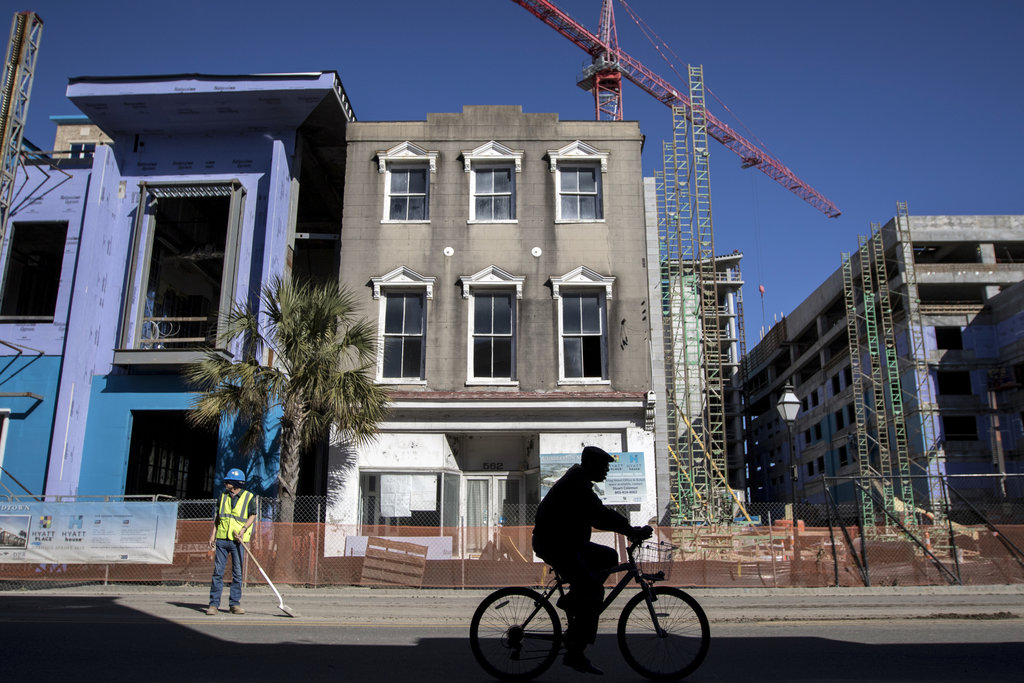
Old Charleston under attack by the new. (nytimes.com)

Old Charleston under attack. (nytimes.com)

Unfortunately, some experts there think new buildings should contrast with old ones. They are playing skunk at the Charleston garden party, trying to stink up the place. Because a few inhabit the city’s Board of Architectural Review, it is not surprising that outsiders, such as Fausset, have been fooled into thinking that the city is “torn.”

It is not torn. It is under attack. The chief element of bias arises from the picture Fausset paints of a “debate” evenly pitched. He gives each side its say. In fact, the modernist side is a small claque of modernist architects seeking to inflict modernist buildings on a city whose population rejects them. The looking-backward/looking-forward false dichotomy gets a vigorous workout in Fausset’s story. He also buys into the idea that economic progress and civic beauty are necessarily opposed, that you can’t have one without limiting the other.

In the face of heated opposition, Clemson University recently withdrew an effort to get the BAR to ram a proposed “ultramodern” design for its architecture school into the historic district. Fausset quotes a Clemson official, Ray Huff: “But with the new growth pressure, Mr. Huff said, ‘We can’t be the slow-paced, sleepy town that I grew up in anymore.’ ”

No, Ray. It’s not about a slow, sleepy pace long gone anyway. It’s about the beauty for which Charleston is famous. Beauty and progress can go hand in hand, as proved by the two millennia leading up to what Fausset refers to as the “advances in architecture from about 1919 on.”

Whether they truly are “advances” is a question bothering architecture today, but almost nobody in Charleston is bothered. Nor ought they to be. That the New York Times reporter does not understand precisely what the fuss is all about is hardly surprising. It amounts to a prejudice that goes so deep that its perpetrators are unaware of it. If the New York Times were aware of it, it would be the first in line to attack it.

Posted in Architecture, Architecture Education, Architecture History, Development, Preservation, Urbanism and planning | Tagged , , , | 4 Comments

Parsing fraud and timidity

Deputy Dawg. (imgarcade.com)

Deputy Dawg. (imgarcade.com)

Two examples of modern architecture in deep perspiration came across my desk today. First came Robert Ivy‘s tremulous three minutes of AIA video advice – “Hello, everyone. This is Robert” – to rattled architects, and second came Norman Weinstein‘s fraudulent attempt to stake out a middle ground in the style wars, which he considers a “fake controversy.”

As one whose blog is subtitled “Style Wars: classicism vs. modernism,” I am gratified that the modernists are running scared. Whether they need to be, I tend to doubt. Nothing has really happened that diminishes their power to ignore the longstanding and continuing unpopularity of what they do. Yes, having the New York Times put a shot over their bow is unsettling. In most fields, however, the establishment accepts dissent as par for the course.

Only in architecture does dissent result in the fear-soaked defensiveness seen in these two bits of propaganda. They are very different on the surface but deep down they are the same. They realize that their brand is in trouble but they’ve long ago lost the ability to defend it – not because they’ve hired sloppy PR men but because it is, in the deepest sense, indefensible. This is a fact that most people whose minds have not been purged by graduate-level art and design education recognized a very long time ago.

Click on Ivy’s video and its pathetic quality leaps right out. The Weinstein piece is just as risible but its elucidation strikes me as more fun.

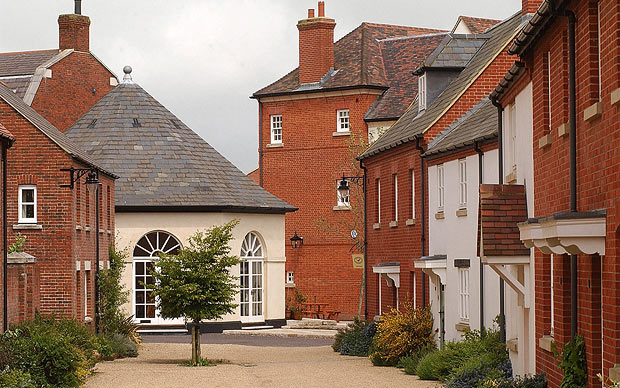
Poundbury. (telegraph.co.uk)

Poundbury. (telegraph.co.uk)

A more transparent attempt to dodge the style wars by engaging in them I’ve never before read. Weinstein pretends that all classicists are alike in their nostalgic sensibility. But that much debate rends the traditional side of architecture today he must surely be aware. Or maybe not. Why should a modernist stoop to research?

For Weinstein to recast classicism by using the word nostalgic, which every modernist considers a pejorative (and is recognized as an intended insult by every classicist) is hardly an example of objectivity in rhetoric. This is no way to develop a less polarizing language of style.

The fraudulence of Weinstein’s pose as some sort of moderate in the style wars was most evident in his open expression of hatred for Poundbury, the village project of Prince Charles. Weinstein has every right to his own opinion but he has no right to his own facts. Poundbury does reflect how parts of Britain once appeared, over a long stretch of time – cleaner perhaps, and newer, less organic, but pretty much the same look. And, oh yes, Britain is still a monarchy, so, contra Weinstein, Charles is living in the present.

Not once in his entire piece does Weinstein use the word beauty or any of its synonyms. This is telling. The fact is that what he calls a “fake controversy” is a very real, very deep disagreement in the profession, and the side that is rooted in tradition has every reason to demand to be heard in the open field of the battle of ideas in America.

I think there probably is a moderate position in the style wars, a cogent and honorable one, but Weinstein fails to represent it at all. This is no surprise. He is not even genuinely trying to represent it, except to an audience of his own side’s true believers, who will not apply any intellectual rigor to its assessment but just circle the wagons – and that is precisely what Weinstein, at least, is counting on.

Posted in Architects, Architecture, Architecture Education, Architecture History | Tagged , , , , , | Leave a comment

The Mehaffy/Salingaros way

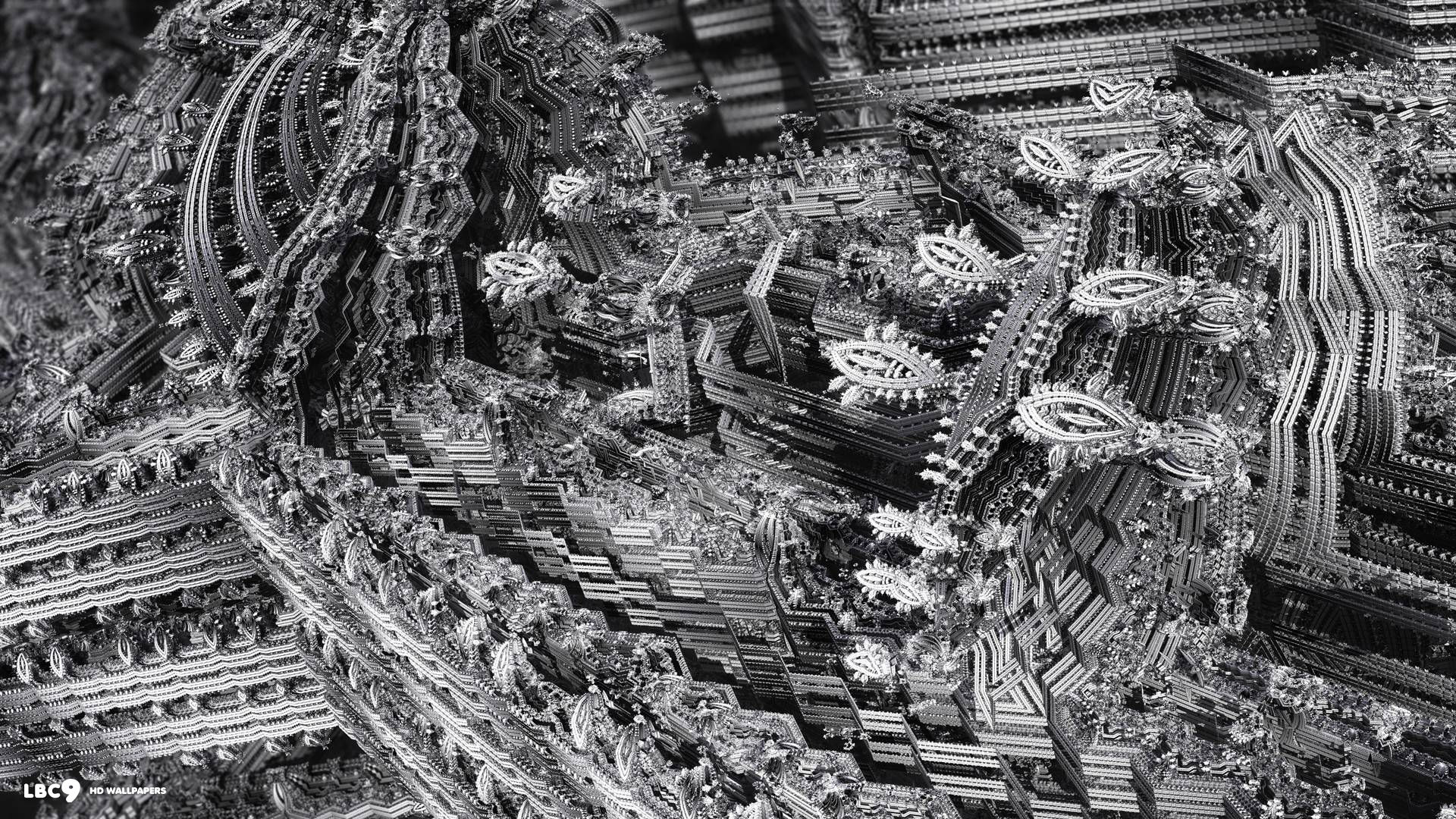
Fractal image. (lbc9.com)

Fractal image. (lbc9.com)

Here is a set of related passages from my early reading in Design for a Living Planet: Settlement, Science and the Human Future, by Michael Mehaffy and Nikos Salingaros. I will offer a more comprehensive review when I’m done reading it, but for now this can stand as the essence of their new book. Of course I cannot yet say how they proposed to move forward. I can guess, but that would not be appropriate (at least not here).

Art’s profoundly important role in design has become corrupted, and turned into novelty packaging, which has created a dangerous form of cultural clutter. The essential contribution of art to communication, to legibility, to elucidating meanings, is now exploited as a kind of “Trojan Horse” for those who would profitably industrialize the built environment, without regard to the long-term consequences. …

It is understandably fun to engage in the edgy, attention-getting art-novelties of our consumer-based design culture. But it is silly to suppose that this approach is an any genuine sense progressive, sustainable, or “modern.” In fact, it is only reactionary orthodoxy clinging to a nearly century-old, outmoded conception of industrial modernity. True modernity lies in the embrace of new models of global growth, embodying evolutionary pattern, organized complexity, and adaptive morphogenesis. It lies in a different way of thing about what it is to design for the full participation of all human beings, for living systems, and for a living planet. …

And yet, we designers have been exceedingly stubborn in taking on this lesson. Under a misguided theory of environmental structure that confuses simplicity with order, we have been stripping away the critical connected scales and fractal relationships within our environment. We have replaced a world of richly connected urbanism with a disordered geography of artfully packaged, catastrophically failing art-products.

Perhaps this query should be directed at their publishers, who may not have read the book, but why, on the cover, are the initials of the authors’ middle names rendered without periods? Who do they (the pubishers) think they (the authors) are, Harry S Truman? The book is about how modernism has stripped much of the information out of our built environment. This stripping out of periods – treating the two names as an “art-product” – is an example of that.

Posted in Architecture, Art and design, Books and Culture, Urbanism and planning | Tagged , , , , | Leave a comment

‘Legendary’ Moshe Safdie

Actual caption in BDB: "Skypark Marina Bay Sands, Singapore, Photo from nocamels.com"

Actual caption in BDGB: “Skypark Marina Bay Sands, Singapore, Photo from nocamels.com”

Actual text from the Boston Design Guide Blog:

Legendary architect Moshe Safdie recently won the 2015 Gold Medal from the American Institute of Architects for his 85 amazing, awe-inspiring futuristic designs.

If Moshe Safdie is a legend, then what does that make Gehry – a god? And if Gehry’s a god then what the blazes is left for Corbu?

Adjectival inflation is a terrible thing to waste. And, oh yes, is the above image actually a photograph? If so, then maybe Safdie is a legend. But I suspect that the above image is actually a rendering. Be that as it may, the world would be better off if the building and its kindred spirits were legendary in the original sense of the word.

Posted in Architects, Architecture, Humor, Photography | Tagged , , , , , | 3 Comments

Stan Aronson, RIP

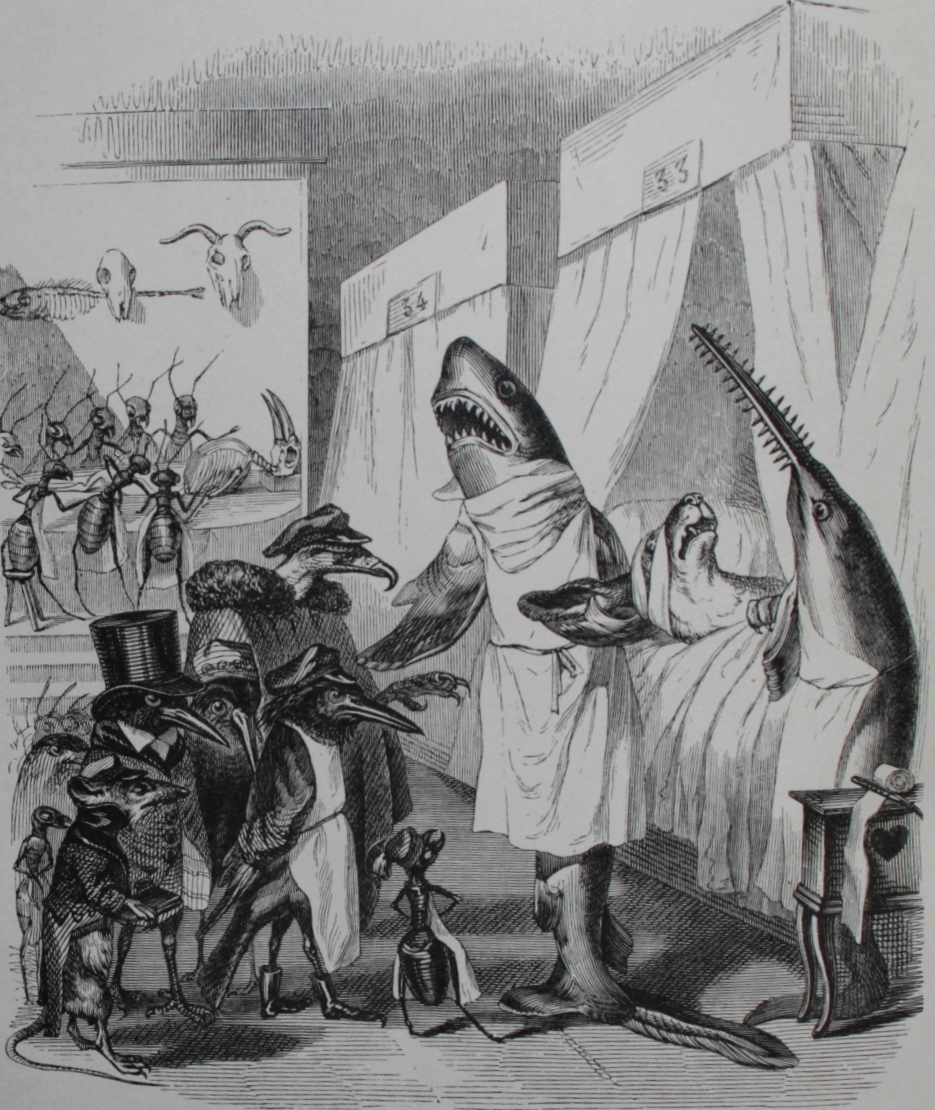
I often illustrated Stan's columns with sketches by Grandville such as this one, from "Les Animaux" (1842), as it mocked the sort of medical conditions Stan fought against during a long life in medicine.

I often illustrated Stan’s columns with sketches by Grandville such as this one, from “Les Animaux” (1842), which mocks the sort of doctoring Stan often wrote about and fought to remedy during his long life in medicine.

Rhode Island has lost one of its longtime leading lights. Stanley M. Aronson, M.D., a giant of medicine in the Ocean State, a founder of the Brown University medical school, and a contributor of commentaries to the Providence Journal’s oped page as long as I can remember, died today at age 93. Other than to shake his hand at various social events, I did not know Stan, but I feel intimately acquainted with him since I spent almost a quarter of a century proofreading his Monday column.

For decades at the Journal I was responsible for designing the Monday oped page on which Stan’s column ran. So I became familiar with his cadences, his tendency to draw out his sentences, always with an eye toward structuring them so that readers could easily follow their curlicues. He always found le mot just, often one of the multisyllabic variety, but always deployed so that the reader, applying context, could deduce its meaning if not already known. Stan’s copy rarely needed editing for style or punctuation. Unlike many other writers, we always gave him the space he needed. He was invariably correct as to grammar, and yet sometimes he’d inject a punchiness of phraseology that broke up the winding quality of his prose style. His sense of humor was so dry as to be virtually indetectible, like the greatness of a very fine bottle of wine.

I also enjoyed finding art for Stan’s essays, which always tested my knowledge of our extensive copyright-free library. Frequently it was the works of Doré or Grandville that seemed most appropriate to illustrate Stan, since their drawings, from the 19th century, were elegant and erudite – with a range that made it relatively easy to find a sketch to serve as a metaphor for Stan’s subject of the week. I would guess that I went through this process with Stan’s column at least a thousand times.

I knew very little of Stan’s medical accomplishments, except that they were beyond exemplary. Rhode Island readers will miss Stan’s writing, but we all have, as well, a reason to be glad of his influence on the quality of medical care in Rhode Island today. A good man, he will be greatly missed.

Posted in Books and Culture, Providence, Rhode Island | Tagged , , , , , , , | Leave a comment

The landscapers’ gentility

New digs for ASLA. (Gensler)

New digs for ASLA. (Gensler)

The American Society of Landscape Architects plans to turn its headquarters, on Eye Street in Washington, into a “world-class” Center for Landscape Architecture. Shudders ran up my spine as I saw the article that said so, by an anonymous contributor to Dirt, the ASLA newsletter. Visions danced in my mind of a nice building demolished and replaced by – what? – a torqued nightmare of a landscape curling up at its edges as if to entrap the people trying to enjoy it. Or maybe I was just channeling the Bjarke Ingels Group’s plan for the front yard of the Smithsonian Institution, not far away on the Mall.

But no. The landscapers have come up with something entirely reasonable. It threatens nobody. Designed by the international architecture firm Gensler, the new center would be inserted behind the existing façade of the old, three-story building the society has occupied on Eye for 17 years. Minor tweaks would allow a swath of verdure to decorate the stringcourse above the first floor. Enchanting! Inside, walls setting off an old staircase would be removed to open a new atrium three floors in height.

Although undescribed in the Dirt article, the design of the new interior may well be modern, and who cares? It will be inside. Its context, the District’s vibrant Chinatown, will feel as if it has dodged a bullet. Landscape design is an exercise, it seems to me, in the gentle manipulation of nature in the vicinity of architecture. Landscape architects lack the arrogance of architects, and the cityscape is the better for their modesty.

Mark A. Focht, FASLA, immediate past president of the ASLA, was quoted by Dirt:

This is an opportunity to create a facility to reflect the image and ethic of our profession — a world-class Center for Landscape Architecture that will inspire and engage our staff, our membership, allied professionals, public officials and the general public.

If this new headquarters reflects the continuation of the landscapers’ gentility against all odds, then the society deserves the applause not just of Mother Nature but of mankind and its built environment.

Posted in Architecture, Landscape Architecture, Urbanism and planning | Tagged , , , , , , | 3 Comments

Ode to snow in Providence

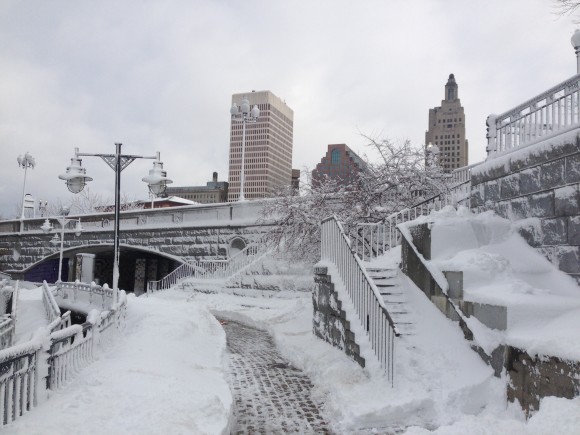
Snowy Waterplace in downtown Providence, 2013. (Steven Wright/WPRI)

Snowy Waterplace in downtown Providence, 2013. (Steven Wright/WPRI)

Here is a column written in anticipation of what the weatherman assured us would be on the ground in time for its publication in the Journal a week and 15 years ago today:

Ode to winter in Providence

A FRESH BED OF SNOW will have been laid gently down on the city of Providence by the time you read this, and a good thing, too. Gone are the mean streaks of gritty black ice on the dirty sidewalks. Gone, too, is what remains of last week’s first thin blanket of snow, growing darker and uglier with each passing hour. Icy temperatures deny new snow a swift death. Each day without a decent burial for old snow makes it harder for me to summon up a Currier & Ives image of the city. Well, we shall see.

But if no soft white cloak greets us this morning, don’t blame me. Blame the weatherman, who assured me I would have Mother Nature’s cooperation so that readers will not look out their windows and judge me insane. [Editor’s note: As this goes to press, the weatherman is backing off a Thursday morning snowfall.]

Providence in winter. New England is not just a matter of “over the river and through the woods.” There are the cities and towns, with lots of “over the river and down the street.” And surely someone must have set their charms to verse in the 19th Century, before automobile exhaust and modern architecture made short work of the beauty of snow.

No lines from John Greenleaf Whittier leap to mind. But there’s this, from John Whittaker Watson:

O the snow, the beautiful snow,
Filling the sky and the earth below.
Over the house-tops, over the street,
Over the heads of the people you meet.
Dancing,
Flirting,
Skimming along.
Beautiful snow, it can do nothing wrong.

Clearly, this is urban snow. And it had better be snowing now; otherwise, I’ll be forced to exalt the virtues of Providence in the cold, a much harder task indeed. Snow and cold, what else is winter? [It is, this time – the same editor, 15 years later.]

Readers with very long memories will have detected that their desperate correspondent has lifted material from a column he wrote exactly six years ago last week, entitled “In defense of snow” (Jan. 13, 1994). That winter saw 59.9 inches of snow, 23 inches above average. By mid-January, just one third of the way through the season, so much snow had fallen that reference was made to its being “guilty of piling on.” Not so, this year. At least not yet.

But let’s try again. Providence in winter. A cold wind slices down Dorrance past the Biltmore. Round each corner a new blast is launched in our face. But frigid temperatures build community. Fellowship is an elusive blessing, to be welcomed from wherever it hails. “Cold enough for you?” We roll our eyes in unison at that question. This is community.

Enjoy it.

I am trying to be upbeat. In January 1994, I lived on Benefit Street, and a trip downtown in newfallen snow took me through an urban wonderland. Now I pass my first winter as a resident of downtown. My walk to work is two blocks to be sure, that’s two blocks too far in 6-degree weather but the snow sits just as pretty on ornate old buildings, or at least it will when it finally does snow seriously. Outside my bank of windows in the Smith Building are City Hall (1878) and the Old Journal Building (1906). I look forward to seeing them draped in snow. Perhaps, meteorologist Gary Ley notwithstanding, I am enjoying it this very moment, as you read this, before I bundle off to work.

Another line from my 1994 column: “Among the cities of the wintry latitudes, Providence suffers snow gladly because its buildings are older, more receptive to snow. Modern architecture spurns the snow: Lacking decorative touches, the glass, steel and concrete boxes of recent vintage offer no elegant seat to the snow. And where architecture is bereft of ornament, citizens have no aesthetic reprieve from the inconvenience of snow.”

But back to the blessings of a Providence winter. One that did not exist in 1994 is the Fleet Skating Center. I cannot see the rink from my loft, but I can see people walking to and fro, skates slung over their shoulders. Happy, smiling faces! And the view from the Wintergarden of Providence Place after a snowstorm. And so many cozy places to eat Downcity as one’s ears defrost. . . . Ah, Providence in winter.

Snow or no snow, Providence in winter is a hard sell in January. I had wanted to write this column between Christmas and New Year’s. It would’ve been different. But the flu stopped me cold, holiday cheer has faded, and we are faced with the hard reality of the months that squat between today and spring.

“If Winter comes, can Spring be far behind?” So Percy Bysshe Shelley reminds us. Original research, that line. Not from my helpful 1994 column but from H.L. Mencken’s indispensible New Dictionary of Quotations. (Arranged by subject. What a trove!)

Well, there is no denying it. Snow or no snow, winter has come. We must grin and bear it together.

Posted in Architecture, Art and design, Blast from past, Providence | Tagged , , , , , , | 1 Comment

Betsky at Taliesin . . . Duck!

Frank Lloyd Wright's home and studio in Chicago. (flwright.org)

Frank Lloyd Wright’s home and studio in Chicago. (flwright.org)

Amusing to hear that modern architecture’s ranter-in-chief, Aaron Betsky, has been hired as dean of the School of Architecture at Taliesin West – in Scottsdale, Ariz – where Frank Lloyd Wright spent his final years as an architectural provocateur. How fitting.

Aaron Betsky. (mikkischaffer.com)

Aaron Betsky. (mikkischaffer.com)

Frank Lloyd Wright, in cape. (pressvision.wordpress.com)

Frank Lloyd Wright, in cape. (pressvision.wordpress.com)

FLW in class, 1957. (flwfoundation.tumblr.com)

FLW in class, 1957. (flwfoundation.tumblr.com)

As a notorious ranter in my own right, I bow down to the decision by FLW’s heirs and assigns to put the school into the hands of an expert arm-flapper. His recent expression of anger in Architecture, mouthpiece of the AIA, at the New York Times for allowing criticism of modernism to appear on its oped pages must have been noticed at Taliesin. And certainly they were impressed by the Betsky scandal at the Cincinnati Art Museum, which led to his resignation one year ago. Betsky permitted an art installation in which a marksman shot a bullet down a hallway at the museum in order to navel-gaze at the bullet’s passing propinquity to actual works of art.

So, yes! Duck, indeed!

Wright’s career had its famous highs and lows. After decades designing signature houses that emphasized horizontality and ornament that embraced its terrain – the Prairie School – he suffered a brain fart that led to work that won him affection from modernists after decades of arms-length frigidity. Many modernists have tried to closet the traditional work of their early careers. Wright never did, and few recall the ambivalence among modernists that attended his inclusion at the 1932 MoMA exhibition that launched the International Style in America. His reputation has survived apostasy, tragedy and episodes of marital infidelity that would tarnish that of a lesser light.

Wright imbibed of the modernist Kool Aid relatively late in his career. That was before it became the new orthdoxy. He would be appalled today at what modernism has become. He would refuse to join the lickspittle brigades that carry on the cult. Betsky, no less than the faculty and staff he will oversee in Taliesin, does not realize that they are as far in spirit from Wright as it is possible to be. In short, he is the perfect choice to carry on its mission of helping young architects stick their heads in the sand as they continue modernism’s mission of aiming its calculated arrogance at the public.

Posted in Architects, Architecture, Architecture Education | Tagged , , , | Leave a comment

Klaustoon klaustrophobia

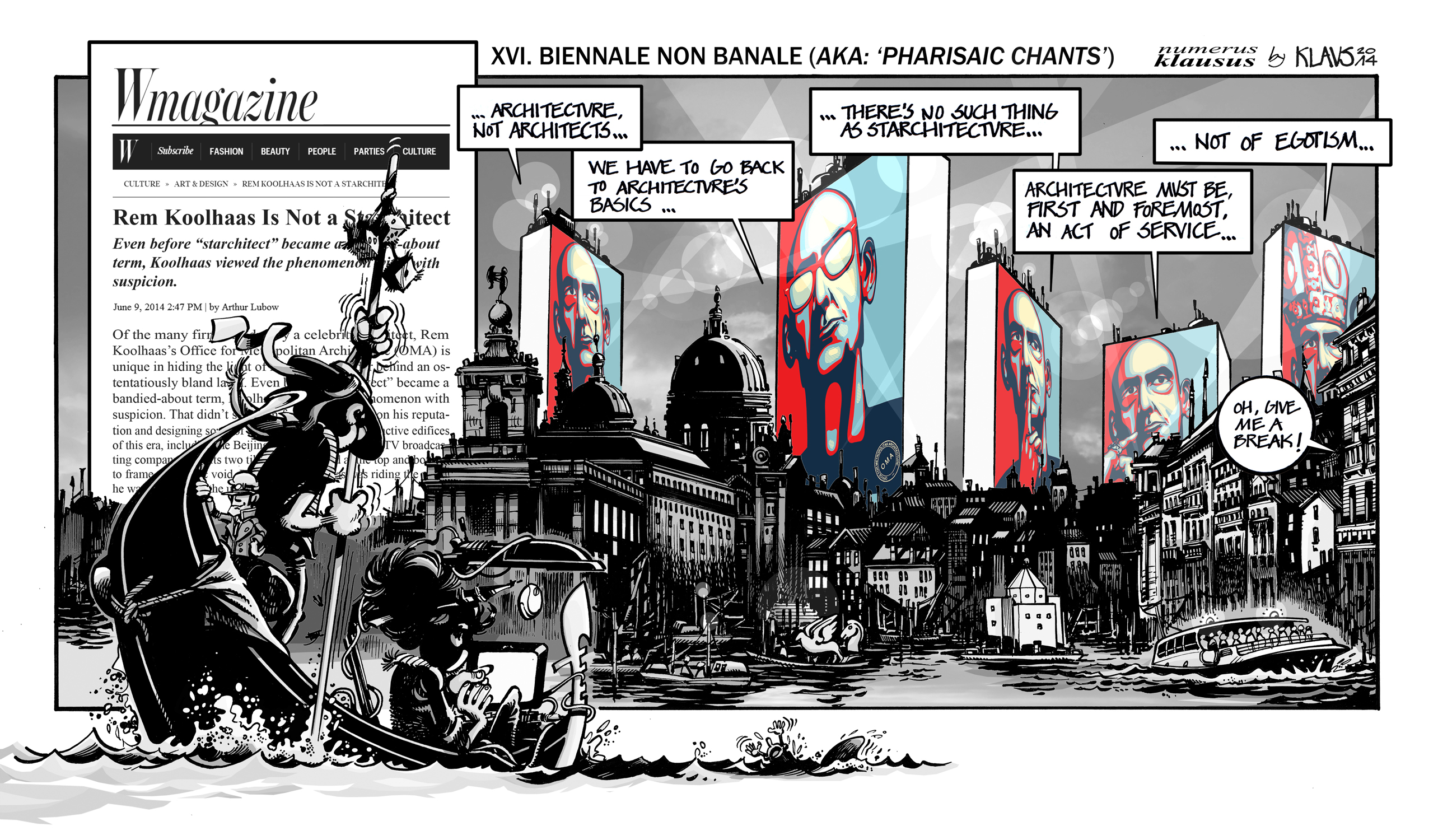
nk09-vic3b1oly-attacks-uncube-03I’ve just put Klaustoons on my “Blogs I Follow” list. Here are two, one about the Walkie-Scorchie by Rafael Viñoly, who did the Birdshitcatcher Building (the Watson Center) on Thayer Street in Providence, and the other about Rem Koolhaas. The art is superb and the zingers aimed (at least in these two cases) at modernist zingables are sharp. Click on one, then click on it again to make it even larger. The artist calls himself Klaus, and that alone, and it may indeed be his name. I did this post upon my first encounter.

nk16_biennale-non-banale_sm

Posted in Architects, Architecture, Art and design, Humor | Tagged , , , , , | Leave a comment

A few words about breasts

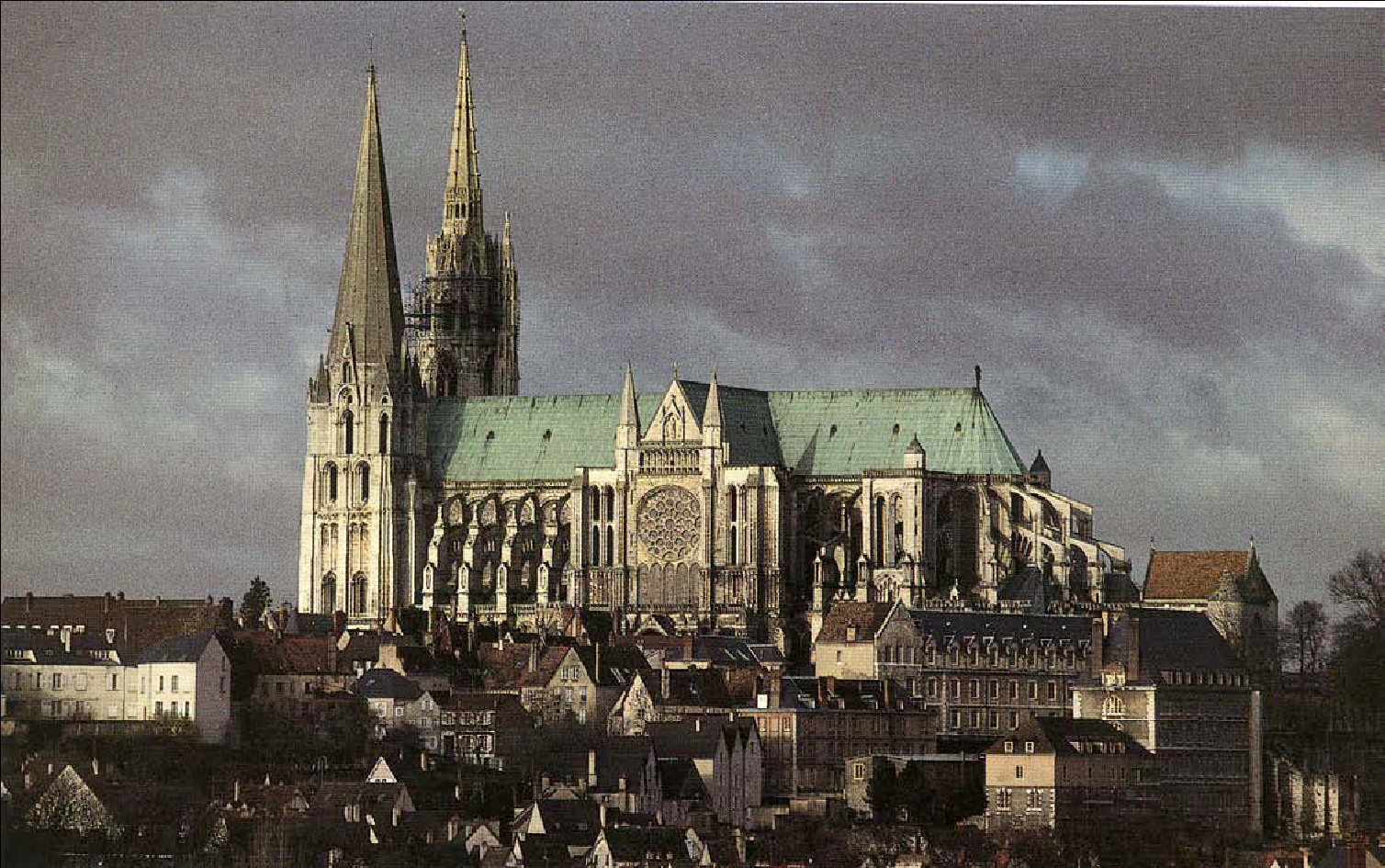
Chartes Cathedral, in Chartres, France. (boncia.co)

Chartes Cathedral, in Chartres, France. (boncia.co)

It would be shameful if Blaine Brownell’s essay “The Disruptive Nature of Architectural Innovation” in Architect, the voice of the AIA, were the last word on disruption as a strategy of innovation in architecture. He complains that “experimentation in architecture has again come under attack.” Not so. Disruption has come under attack, not experimentation. They are different.

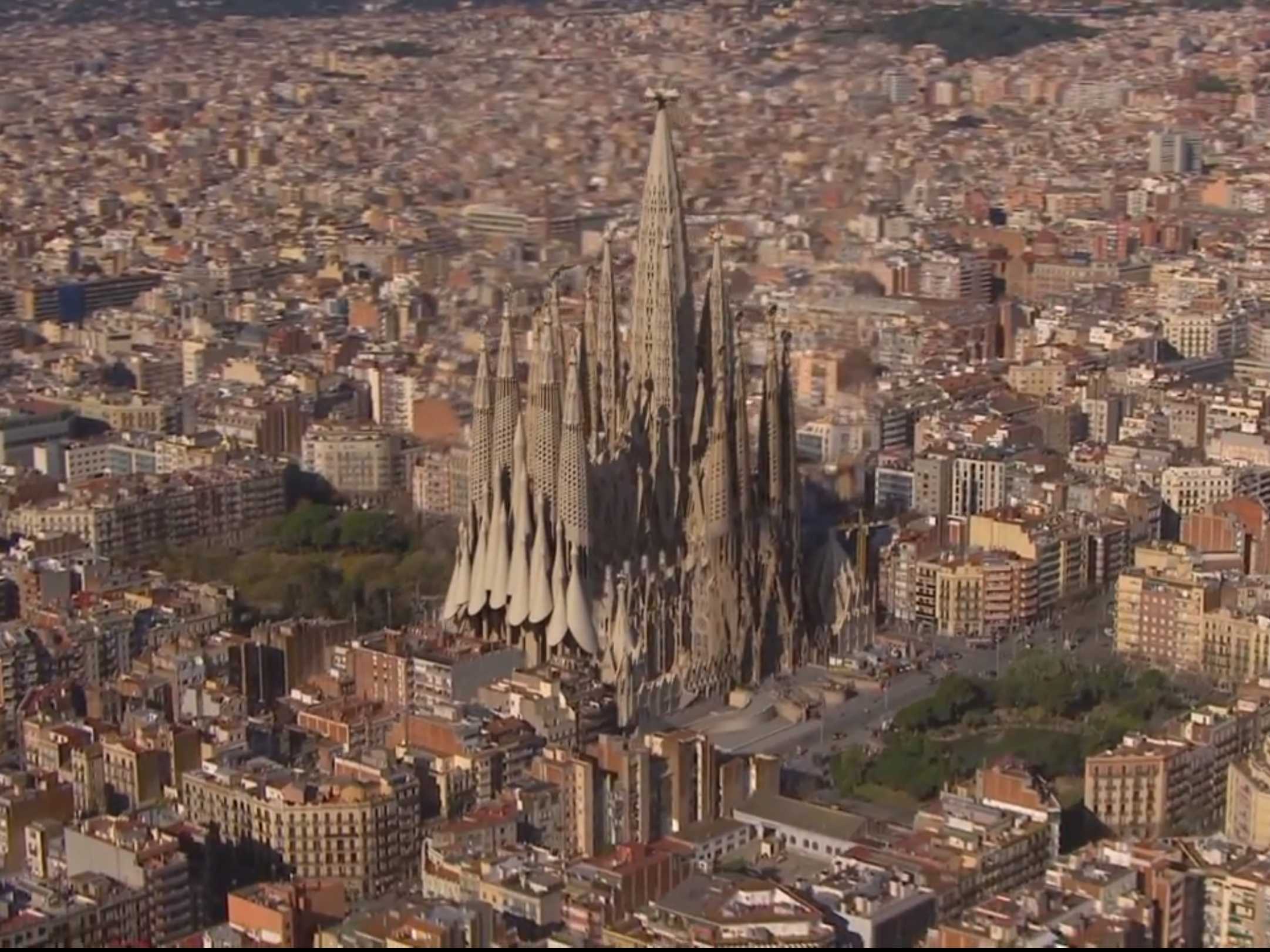
La Sagrada Familia, in Barcelona. (businessinsider.com)

La Sagrada Familia, in Barcelona. (businessinsider.com)

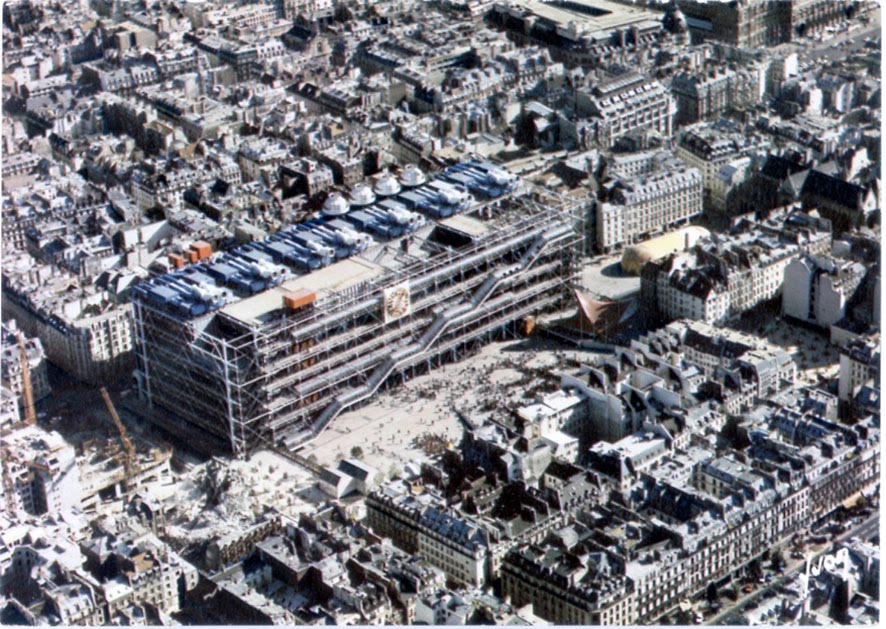
Centre Pompidou, in Paris. (musicainformatica.org)

Centre Pompidou, in Paris. (musicainformatica.org)

Architecture is a practical art. Experimentation has characterized architectural development for centuries even if it is not always noticed. Different materials and techniques, even different aesthetic forms, details and approaches, are tried and tried to determine their usefulness or their influence on appearance. Disruption is certainly not required by innovation, and to the extent that disruption impedes either the practical or aesthetic progress of architecture, it is inimical to its development. That includes disruption of affection for architecture, for it is love that pays for such utilitarian necessities as continued maintenance over time.

So what is disruption? Almost no experimental deviation from common practice is considered disruptive – at least not by most modern architects, insofar as they consider it to be their purpose to challenge convention in design. But what is conventional in design today is the use of the unconventional to stir emotion – often negative emotion, and purposely so.

Experimentation to bring new material and technology to bear in the construction of increasingly esoteric building forms with efficiency and safety is hardly objectionable. But most building users – residents, workers, passersby – sure do object to how modern architecture has applied a bogus innovation to change how cities work. For centuries, architects sought to design buildings to fit into their contexts – not hard, given that classical and traditional forms share a common aesthetic DNA. Architects sought to improve streets and squares as civilized places that ennobled life by infusing the built environment with charm, humor, elegance, grace, sentiment and beauty. Whether most people realize it or not, the change in the goals of architecure in the second half of the 20th century, de-emphasizing its focus on collections of buildings in favor of a focus on single (and regrettably singular) buildings, brought disruption to our experience of city life. That is not innovation.

Brownell uses several predictable formulations to bamboozle readers into buying his argument. He purposely misconstrues decades of criticism from Prince Charles’s carbuncle to Stewart Brand’s How Buildings Learn to the recent New York Times oped “How to Rebuild Architecture” by Steven Bingler and Martin Pedersen as objections to innovation.

“[I]f the restless search for innovation is widely accepted in other fields, why should architecture stand still? The reality is that architecture refuses to stagnate, despite the heated appeals for it to do so, and its history reveals an unceasing trajectory of transformation.”

There are no such appeals coming from anywhere, and none of the experimentations that Brownell lists is required to advance the utility of buildings, only to make it possible to use ever more wacky, unconventional forms. None of the critiques that dismay Brownell object to the use of innovation to make architecture more useful to its users.

Brownell even distorts or misconstrues the controversies involving his pre-21st century examples of innovative buildings. Gothic architecture was controversial, both in the 17th century and the revivalist 19th century, only because it reflected the ongoing battle between Protestantism and Roman Catholicism. I don’t accept the proposition that Gaudi’s cathedral was controversial outside the cognoscenti. And the Centre Pompidou was controversial not because it was innovative but because it screwed the City of Light and was ugly, with its innards outside. That was disruption without the blessing of purposeful innovation. Brownell quotes Rogers as saying that the building was “very shocking, but I don’t think we meant to shock.”

Yeah? Sure.

“[T]o pan buildings simply for being different is (at best) naïve or (at worst) downright discriminatory,” writes Brownell. “Architecture … should be granted the same potential for meaningful experimentation as other fields.” But nobody objects to their being different, just to their being different for no interesting or useful purpose. Modern architecture today engages in very little experimentation worthy of the term meaningful. Brownell’s critique is, at base, identical to the more heated arm-flapping of Aaron Betsky. Except nowadays a wider audience examines these abusive effusions of modernist defensiveness with more skeptical eyes. They are nothing but the tribe crouching down low in defense of the tribe.

In 1972, Nora Ephron wrote a brilliant essay called “A Few Words about Breasts.” Faced with absurdities as mountainous as those debunked by Ephron, I quote her conclusion in its entirety: “I have thought about their remarks, tried to put myself in their place, considered their point of view. I think they are full of shit.”


Posted in Architecture, Architecture History, Art and design, Urbanism and planning | Tagged , , , , , | 1 Comment