Lord Jim’s “Skeffonomics”

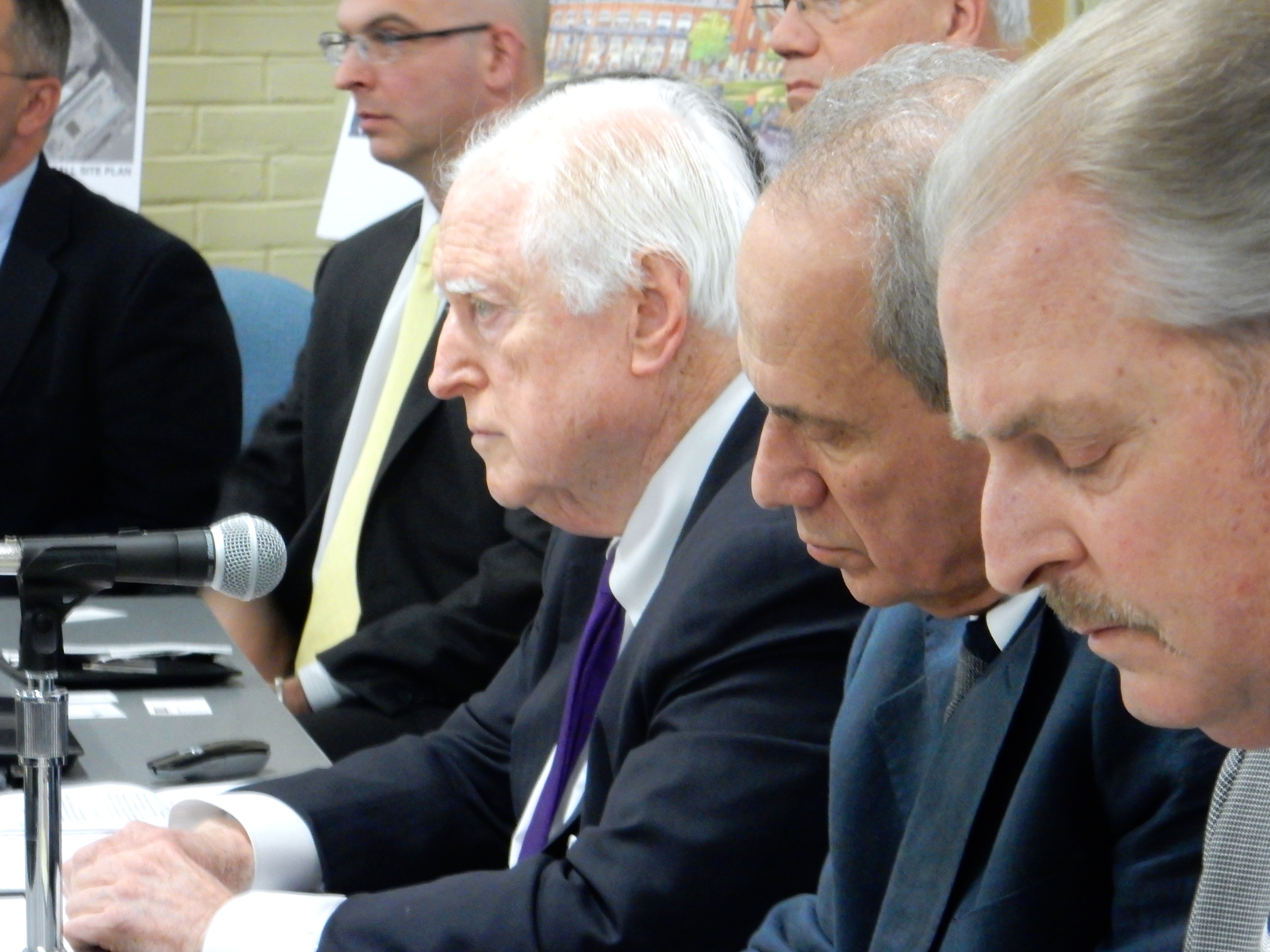
James Skeffington, Larry Lucchino and one of their economic advisers at Monday's meeting. (Photos by David Brussat)

James Skeffington, Larry Lucchino and one of their economic advisers at Monday’s meeting. (Photos by David Brussat)

Last Friday, when the I-195 Redevelopment District Commission bowed to pressure and let new PawSox owners James Skeffington and Larry Lucchino address the commissioners in public, the wheels of cynicism started spinning furiously. On Monday, when I arrived at the commission’s headquarters on Iron Horse Way near the IHOP, there was already a crowd of protesters. It was generally quiet through most of the presentation. Signs don’t make much noise, especially ones that say “No Welfare for Lord Skeffington” – even if the sentiment is entirely sensible.
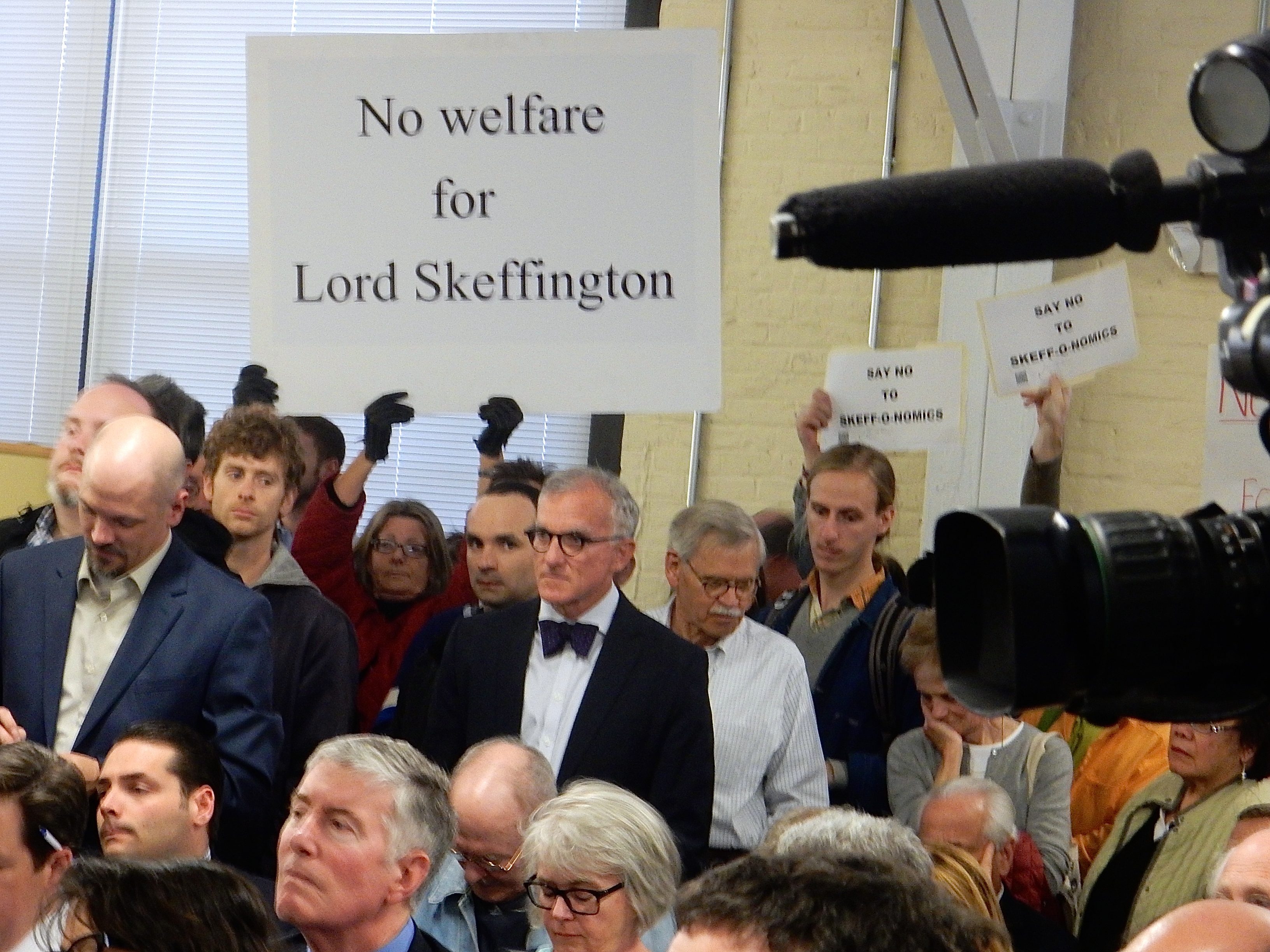
Protesters listen to plans for stadium.
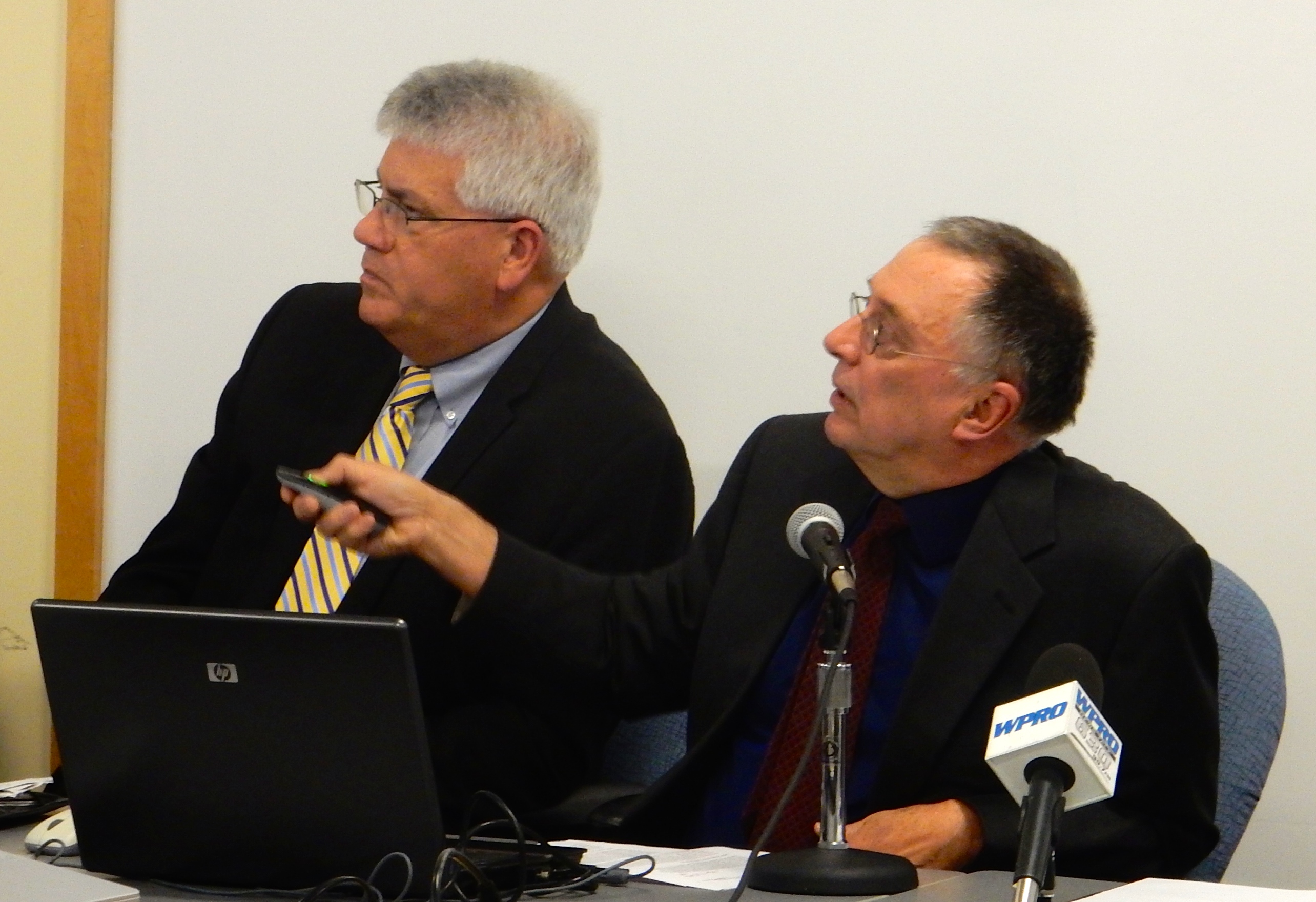
Protesters listen to plans for stadium.

The architects explain their design.

The architects explain their design.

The design in its early stages.

The design in its early stages.

I am still on the fence, but the protest’s several uncivil outbursts of ill-timed laughter and groans of feigned disbelief pushed me just a bit toward Skeffington’s side.

The project keeps sounding nicer and nicer. The architects made their presentation but did little to address my main concern about the design. The ballpark looks quite pretty, but renderings lack the detail to close the deal. I want to hear more about the quality of the materials, the depth of the key setbacks, the way sun and shadow will play on detail, and the further levels of embellishment that will determine whether the ballpark can avoid a plasticky faux-historical cheesiness. But the architects themselves probably don’t know all that yet.

The real boost to the stadium proposal came from the passion of Skeffington and Lucchino in arguing that a downtown stadium would really help Rhode Island do a better job of attracting high-tech development to the rest of the 195 land.

For a couple of weeks the idea had been percolating of putting the stadium on the Victory Plating property a few blocks farther south. Skeffington alluded to it after a commissioner asked about alternative locations. Arguably, the land he has his eyes on now would hit a home run – not for his team or for his own bottom line necessarily but for the economic development of the city and state. Only a downtown location can spark a rally of synergies. The Victory Plating site has its merits, but it would hardly do more than Pawtucket to attract the attention of entrepreneurs with brainy young employees.

There is a widespread stereotype of science, computer and research nerds that they look down their noses at the very idea of going to a ballgame, and that sports are stupid. That is a deeply ingrained social prejudice, and I suspect that it drives part of the opposition to this project. Clearly the possibility of walking a block to see a ball game after work can only make nearby land more attractive to business – certainly more so than yet another park along a city waterfront already quite famously lined with parks, bless their hearts.

Skeffington made all the right noises about keeping the games affordable, but may have undercut his own point with a reference to young engineers with families. He also seemed genuinely eager to negotiate terms with the city and state.

Let’s hope so. A deal in which a debt-ridden public is soaked $120 million to repay Lord Skeffington for $85 million worth of noblesse oblige is not exactly the sort of public/private partnership that is likely to fly in post-38 Studios Rhode Island. Talk by the PawSox owners of buying the stadium land was a step, but only a step, in the right direction.
Posted in Architecture, Art and design, Development, Providence, Urbanism and planning | Tagged , , , , , , , , , | 2 Comments

Bless the landscape architect

Miller House, in Columbus, Ind. (Indianapolis Museum of Art)

Miller House, in Columbus, Ind. (Indianapolis Museum of Art)

Julie Iovine, the Wall Street Journal’s post-Huxtable architecture critic, has written “The Landscape Architecture Legacy of Dan Kiley.” Her piece on an exhibition of the work of the late Kiley, who died in 2004, earns a place in my collection of pieces whose authors, though sympathetic to modern architecture, feel they must criticize it in order to establish their credibility. Iovine begins her essay this way:

The movement to preserve modern architecture can be a hard sell, especially when the structures are geometric abstractions and the materials colorless concrete.

Forget about the movement to preserve modern architecture. It’s the movement to build modern architecture that’s a hard sell, or should be. Aren’t the structures always “geometric abstractions and the materials colorless concrete,” or some such iteration of the ugly, the stupid and the useless?

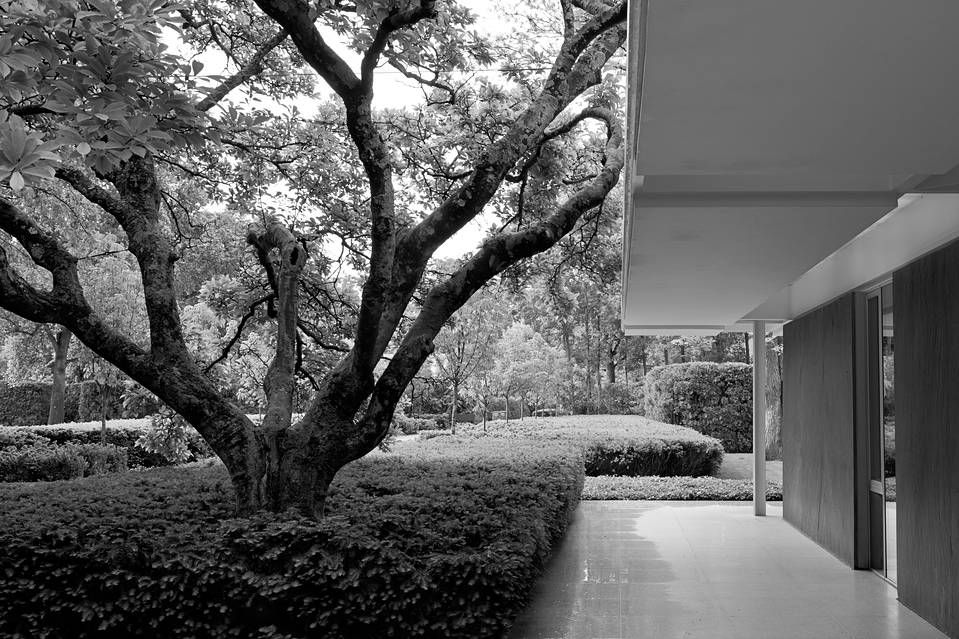
Thankfully, landscape architecture covers a multitude of sins. In the case of the Miller House and Garden in Columbus, Ind. (photographed in black and white, of course), a superior landscape design might have been an elegantly woven network of trees, shrubbery and vines rising up in organized chaos to create a dark cave within which the house can persist without frightening the horses. (Lighting optional.)

Of course, Columbus and its community leaders – mainly one rich guy – have made a fetish of hiring famous modernists, in this case Eero Saarinen, to design buildings for their fair city. Maybe nowadays the citizenry has fought back and that’s not Columbus’s schtick anymore. I doubt it. But Dan Kiley certainly did yoeman’s work in toning down and, to a degree, covering up for the essential tedium of the Miller House.

The problem he had to address, and has addressed not just at private homes but in a multitude of city centers botched by urban renewal, is that modern architecture denies itself the tools of its own profession. It has no aesthetic strategy by which to tone down the brutality of hardscape. Stone and even concrete graced by traditional ornament and sculpture can survive without the intervention of nature’s embellishment, but modern architecture must have it. And landscape architects such as Kiley have stepped forward to do the job. No doubt he was a talented artist, but it doesn’t take much artistic virtuosity to improve upon architecture that refuses to improve upon itself.

Here is another passage in which Iovine makes that point in a manner that I must assume forced her to suppress a cringe:

Time works for and against landscapes. And landscape architects can only forecast what a full-grown garden is supposed to look like, sometimes never living to see the day. Maintenance is an even greater challenge. Modern urban landscapes have taken the hardest hit in part because they favor man-made structure over organic form. Concrete sunken plazas and basins are marvels to behold when pumping with jets of water, frothing cascades and dimpled pools. But they become dank and depressing symbols of blight in winter, with the water turned off and rotting leaves and trash clogging them.

Kiley can hardly take much credit for the Miller House tree that plays such a major role in the success of the landscape surrounding the boorish Saarinenian concoction. Kiley planted it but cannot claim responsibility for its pleasing outreach of branches.
And yet landscape architects may be thankful for working largely in a medium that puts man’s poor hand to shame. The more regrettable the architecture, the more beautiful is the part played by nature, orchestrated in some degree by a designer. The landscape architect mutes pain inflicted upon the eye. Bless them all, for wherever they work they make things better. Often, as is no doubt the case in Columbus, Ind., that is saying an awful lot.

An exhibition of 29 other examples of Dan Kiley’s work is at the Center for Architecture, in New York City, runs until June 20. It is sponsored by AIANY.

A doff of the ol’ topper to Lee Juskalian, former Providencian, now Californian, who sent me the Iovine review. (I wonder how she pronounces her lovely last name. I prefer to hear it in my heart’s ear as ee-O-vih-nee. Not exactly Ionic, but nice.)

Posted in Architects, Architecture History, Art and design, Books and Culture, Landscape Architecture | Tagged , , , , , , , | 3 Comments

In the Union Trust we trust

View of the coffered ceiling and upper windows of restaurant/banking hall at Union Trust. (thedorrance.com)

View from the mezzanine, installed for The Federal Reserve restaurant, of the coffered ceiling and upper windows of restaurant/banking hall at Union Trust. (thedorrance.com)

The Union Trust. (weismanroofing.com)

The Union Trust. (weismanroofing.com)

To celebrate the newly announced plan by Vince Geoffroy, the developer of the ProvidenceG project, to install 60 luxury apartments in the Union Trust Bank Building, here is a column I wrote about it back in 1996.  Restaurant owner Bob Burke had just opened up in its banking hall a new restaurant just a couple blocks from his ancient establishment, Pot au Feu, a (still) excellent French restaurant. Burke had big hopes and plans to use his new establishment as a catalyst for life downtown – outdoor seating that never showed up, block parties that never happened, and other grand ideas of the sort he is known for.

The new restaurant, called The Federal Reserve (which caused several oopses by travel writers over the years), closed after a few years. The fare had been Rhode Island vernacular, as it were. Those who enjoyed the fare may have found the ostentatious banking hall too imposing and those who enjoyed the setting found the food too, um, local. At least that’s my critic’s recipe for its failure. After ending the sit-down dining, Bob kept the place going as a party room. Eventually, it was taken over by someone who has opened the Dorrance, a fancy restaurant whose fare supposedly lives up to its setting.

So here is that column:

Banking on the Federal Reserve
May 9, 1996

THE UNION TRUST BUILDING at Westminster and Dorrance streets in downtown Providence dominates the crucial intersection between the Financial District and the old commercial district. Built in 1901, the Union Trust looks down with benevolent majesty on a group of blocks being revitalized as Downcity, a name that originated years before it became the part of town that time forgot.

“Going downcity” was part of the local lexicon not too long ago – no less so, for many, than “going downstreet” or “going downcellar.” Back in those days, to go downcity meant to go shopping. The two most fondly recalled of the many destinations were the Outlet Co. and the Shepard Co. And, of course, Shepard’s had its Tea Room, which played as much a social as a gustatory role in life downcity.

It will be interesting to see whether, over the next few months and years, the new Federal Reserve restaurant becomes the Tea Room of the future.

Opened in January by nearby Pot au Feu owners Bob and Ann Burke, the Reserve fills the grand first-floor lobby of the Union Trust. Before it opened, I’d described it prospectively as “the most sumptuous moderately priced restaurant in the nation” (“The good Shepard returns,” Oct. 19, 1995). That assessment, it seems to me, holds true. Notwithstanding its entrance portico featuring Puritan and Indian figures sculpted by Daniel Chester French, notwithstanding its tall medallion windows with coats of arms representing history’s greatest banking empires, it’s not just for suits. All are invited, and should be able to handle the bill of fare, if not its financial puns.

For example, try a “J.P. Morgan.” I have, twice. I am told that I ate the first made for a customer. It’s a sandwich. Three dollars. What kind of sandwich? It’s the (hint) J.P. Morgan. . . . J and P . . . P and J . . . yes, a peanut-butter-and-jelly sandwich. Believe it. And it is not listed in “Small Change” for children. Much of the rest is Rhode Island and regional cuisine.

Last Friday, I sat down with the great restaurateur himself. As Bob Burke and I waited for lunch to arrive, we did not talk about Waterplace or the public investment in Providence Place, on which we’ve disagreed, but about the fabulous space in which we sat. He handed me a list of facts, including:

  • The Union Trust Building was the tallest in New England when it was first erected.
  • The 12-story building’s original lack of elevators necessitated an addition in 1920.
  • The cooling system consisted of awnings.
  • Marsden Perry, bank president, ordered that the vein of Siena marble used for the bank’s floors, walls and teller stations (the main one is now the 60-foot bar) be extracted entirely, to thwart any rival bank from using the same marble in its own lobby.
  • The bar’s black slab contains enough onyx for 100,000 class rings. (The bar is inconveniently high, but will be lowered when a raw bar is installed.)
  • Quote: “Where’s Waldo? – 13 naked bosoms are depicted very discreetly in the architecture.”

I asked: “Are there 13 separate bosoms or 13 sets with 26 bosoms in all?” We disputed whether a “bosom” meant a set of breasts or a single thoracic orb. I searched the elaborate mouldings above to locate a bosom. I found none, neither singly nor in pairs.

“For all I know,” I told Burke, “you have mentioned bosoms that don’t exist so that I’d write about them and generate business.” He said I should ask my colleague, Anestis Diakopoulos, “who has located all of them.” I did. He confirms their buxom actuality.

Gazing at the coffered ceiling, which has more than 10,000 molded plaster flowers, it is difficult to believe that in 1964, acoustical tiles and fluorescent lights were hung and the marble floor was covered with carpeting. Or that the lobby was empty for five years after the Greater Providence Deposit & Trust collapsed in the state credit union crisis of 1991.

But that was then, this is now. The vast lobby now has a mezzanine, with a Union Trust Club to take up where the Turk’s Head Club left off. The coffers are just as elegant close up as when viewed from the floor 20 feet below. By June, there will be outdoor seating along both sidewalks. Burke plans street parties on Dorrance, and hopes to turn the Reserve into a popular venue for public and private events.

Bob Burke puts his money where his mouth is: He and his wife are competing with themselves. Are they crazy? I think not. Their success will be Downcity’s success, and vice versa. So again: Bravo!

Posted in Uncategorized | Leave a comment

Long city planning grind

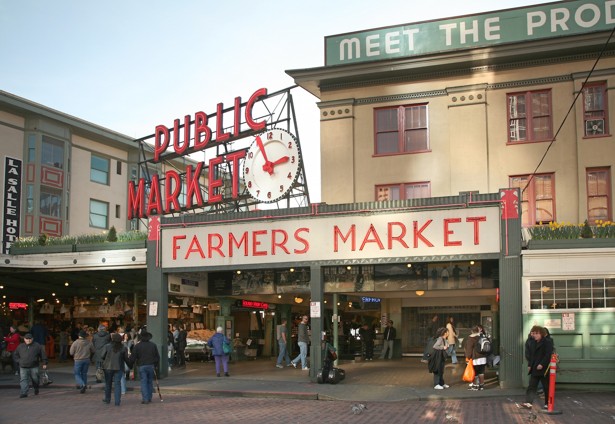
Public market in Seattle. (theatlantic.com)

Public market in Seattle. (theatlantic.com)

James Fallows has written “Nice Downtowns: How Did They Get that Way?” for the Atlantic, about how active city downtowns arise not naturally or organically but are planned. He takes the example of Seattle, which was a hollowed-out reject 50 years ago, and when the movie houses became the last major downtown institutions to evacuate to the suburbs, there was truly no reason to be there, especially in the evening.

He quotes this letter from a Seattle reader:

It took a long time, but for nearly 50 years this effort has carried on, successfully I think, but hardly anyone recalls that the origins of the effort were very deliberate and came about when the nighttime downtown was the precise opposite of what it is today, and few people probably think of it as involving a conscious goal then or now. They just think “that’s the way Seattle is.” But Seattle wasn’t.

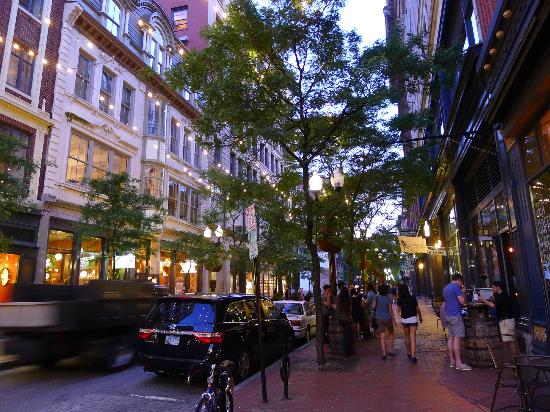
Seattle’s leaders saw the decline and reacted, much as the leaders of Providence did in the late ’70s when they confronted the same “you could roll a bowling ball” effect of suburban flight here. In Seattle and in Providence the winning strategy was to turn downtown into a residential neighborhood, with benefits. In Providence, the planning process for that took several wrong turns, but the result is that today the urge to live downtown continues to generate new residential projects.

flan-y-ajoProvidence’s old commercial district at first sought to bring back retail, but Providence Place mall stole that plan’s thunder (which may not have worked anyway), and the city shifted its plan to residential, with Arnold “Buff” Chace doing most of the heavy lifting, with help from the New Urbanist firm of DPZ, led by his friend Andrés Duany, who did a historic overlay plan for the old downtown that emphasized preservation, ground-floor retail, art, entertainment (not excluding nightclubs, which needed to be – and eventually were – civilized) and, of course, residential. The result is for all to see – an animated downtown, attracting more and more new shops and restaurants, but with more work to be done.

Here is a list of the latest apartment projects, with possible number of units:

  • Union Trust Bank, 60 units.
  • Lapham Building, 50 units.
  • Kinsley Building, 44 units.
  • 32 Custom House St., 10 units.
  • Merchants Bank, 8 units.
  • George C. Arnold Building, 3 units.

That’s 175 units in all. Vince Geoffroy, developer of the 56 Providence G apartments completed in 2014, just purchased the Union Trust. The G opened at about the same time as the 48 micro-lofts of the Providence Arcade renovation.

They join Chace’s pathbreaking 200 units in six downtown rehabs (I lived in the first, the Smith, in 1999-2010, the first five years blissfully carless). Since their completion, they have spawned many others – the 12-unit Cosmopolitan, the 20-unit Strand Lofts, the two artist cooperatives developed by AS220, the Dreyfuss and the Mercantile on Washington Street from its headquarters on Empire Street, with 14, 22 and 12 artist live/work units respectively. These all have joined two Capital Center residential towers, the Westin (“The Residences”) and the Waterplace Luxury Condos, with 100 and 193 units respectively, and the earlier Avalon at Center Place with 225 units. That’s 902 units since work began on Capital Center in the late ’80s, housing some 1,500 people at an average of 1.5 per unit.

And of all these joined the longstanding Beneficent House, with 180 affordable units for the elderly, and the Regency Plaza complexes, with 444 units in three towers. And let’s not forget the charming Conrad, on Westminster, rehabbed in the 1980s with 16 units. That was all that was available prior to the mid-1980s – 640 units with, let’s say, 1,200 people.

I’m sure I’ve left something out. Please let me know of you think of someplace that has eluded me. I am not counting anything on the other side of Route 95 or the Providence River, or in the Jewelry District, although folks living there are close enough to behave as if they lived downtown.

I leave out the vacant Industrial Trust (“Superman”) Bank and two prospective apartment complexes mentioned as possible by Chace in the parking lots across Fountain Street from the Journal Building, which he recently purchased. The Superman Building’s owner has displayed an attitude that is unlikely to help persuade the public to the provide subsidies he seeks if he is to develop some 248 units in that civic treasure of a building. Chace’s two prospective buildings are just that – still in the dream stage.

The focus here is on adding residential to downtown, as Seattle has, but it would be folly to neglect the influence, since the 1990, of six new hotels and the addition of retail (including Providence Place and along Westminster), the extraordinary expansion of the restaurant scene, which has proved remarkably sturdy through the economic cycles, the bar scene and night life, and the renovation of the already robust set of entertainment venues – plus new programming in public spaces such as WaterFire along the new waterfront.

Unlike Seattle, with its giant high-tech avionic, computer and coffee industries, Providence has managed to expand even as its major commercial and industrial base has continued to contract or to leave the city (and state) victimized by a business climate that has been for decades and remains among the worst in the nation. With its beautiful setting, historic character, fine colleges and location between Boston and New York, the quality of life in Providence is high. Turn around its business climate and the possibilities are endless.

What we do not need is yet another expensive quest for the perfect tourism slogan!

Posted in Architecture, Architecture History, Development, Preservation, Providence, Urbanism and planning | Tagged , , , , , , , | Leave a comment

Join my Jane’s Walk again!

I lead from above on my tour of the waterfront last year. Expect more this year. (Jane's Walk)

I lead from above on my tour of the waterfront last year. Expect more this year. (Jane’s Walk)

I will be giving my second annual Jane’s Walk waterfront tour of downtown Providence on Saturday, May 2, at 1:00 p.m. We will meet at the Crawford Street Bridge – the new and beautiful bridge, not the late, unlamented Guinness world’s-widest-bridge one. Last year’s walk was fun. There were maybe 30 of us, including Barnaby Evans and, for a while at least, Nate Storring, who runs the Jane’s Walk shindig here in Providence. This will be the third year, I think, for the tours here in the capital of the Ocean State.

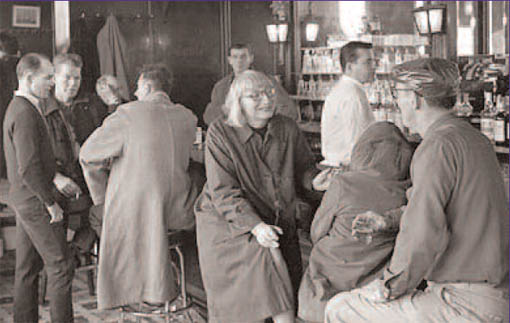
Jane Jacobs at a bar in New York City, circa 1960. (streetsblog.org)

Jane Jacobs at a bar in New York City, circa 1960. (streetsblog.org)

The worldwide free-tour phenomenon, born in 2007, is named for Jane Jacobs, who stood before the bulldozers of New York “urban removal” czar Robert Moses, the power broker of Robert Caro’s famous biography, and then wrote The Death and Life of Great American Cities (1961), about how modernist planning has sapped energy from so many robust urban places. Providence is a great place worth touring because it has avoided so much of that, so much of what Jacobs opposed and what Moses, at his worst, represented – not just ugly but aggressively so, and ugly in the “Ugly American” sense of wanting to push obviously bad theory on places that generally worked just fine and had for decades, even centuries.

Even though we will not head south along the Providence River, we will probably discuss the proposed PawSox stadium. (I am still on the fence.) And those who want may continue past the end point of this tour on Nate’s map, which is Waterplace Park. Last year we extended the tour into downtown proper, where recently several new rehabs of office buildings into apartment complexes have been proposed. Very exciting!

My back and forth last year with Barnaby, for whom modern architecture is not the bête noir it is for me, pulled everyone into a general conversation about architecture and urban design. Whenever I give a “lecture” I always insist that the host treat it as a Q & A from the get-go. I cannot talk long on my own if I am not prodded by listeners with questions, even those which try to slap down my calcified outlook on architecture. What a boring tour it would be – especially for me – if everyone tagging along agreed with me!

This sort of unconventional, anti-establishment activist’s tour might help slow down all the spinning that Jane Jacobs must be doing in her grave as she watches what’s happening to so many of our cities.

Please join us!

Posted in Architecture, Architecture Education, Art and design, Development, Landscape Architecture, Preservation, Providence, Urbanism and planning | Tagged , , , , , | Leave a comment

Kimmelman swoops Whitney

View of new Whitney Museum on Manhattan's West Side. (whitney.org)

View of new Whitney Museum on Manhattan’s West Side. (whitney.org)

It took Theodore Dalrymple, an essayist for the Manhattan Institute’s splendid quarterly, City Journal, to pull back the curtain on the operatic vapidity of New York Times architecture critic Michael Kimmelman. The latter has written his architectural review of the new Whitney Museum, designed by Renzo Piano, on Manhattan’s West Side, in Chelsea. In “A New Whitney,” Kimmelman shies away from pure architecture criticism. His architectural pieces often opt to opine on infrastructure, sustainability and other nonstylistic nuts-and-bolts matters affecting the built environment. And he is good at that. He has fetched me in on occasion. The Times now lacks a real architecture critic, even a bad one, of which it has had all too many in the past. And yet Kimmelman could not dodge the Whitney.

Old Whitney on Park Ave. (archinect.com)

Old Whitney on Park Ave. (archinect.com)

What Dalrymple did in “A Monument to Tastelessness” was to distill Kimmelman’s maundering into its essential dodging of the point of an architectural review. The Timesman even concludes by twisting the truism (quoting former Times(wo)man Ada Louise Huxtable) that “beauty, as here at the [old] Whitney, is not always in the eye of the beholder.” Beauty certainly is not in the eye of the beholder of the new Whitney.

Here is Dalrymple’s summary judgment in the case of Kimmelman v. Beauty:

At no point did Kimmelman offer a clear indication of whether he considered the building good or bad, beautiful or ugly. Instead, he used locutions such as the following, compatible with any value judgment whatever: “It ratifies Chelsea”; “The museum becomes . . . an outdoor perch to see and be seen”; “Mr. Piano’s galleries borrow from the old downtown loft aesthetic”; “They’re nonprescriptive places . . . that may prove to be the ticket.”

Or, of course, “they may end up a headache.” “But it is a deft, serious achievement, a signal contribution to downtown and the city’s changing cultural landscape”; though, on the other hand, “The new museum isn’t a masterpiece.” But it’s an “eager neighbor”; and “it also exudes a genteel eccentricity that plays off the rationalism of Mr. Piano, and of Manhattan’s street grid.”

Like much architectural rendering today, architectural criticism is designed not to tease out the character of architecture but to cover it up. But in case anyone has trouble decoding Kimmelman’s description of the Whitney, the Times offers a tour-de-force of video swooping. The reader scrolls down through Kimmelman’s piece and comes across an illustration that suddenly starts to move, to shift, and then loop-the-loop, via what I imagine to be CAD renderings. I assume these are from the office of the architect, Piano, not the “image desk” of the Times. Renderings today seek to turn ugliness into a sort of artful fartful beauty, and these succeed. They too must be decoded, but don’t worry. Anybody with eyes open can read easily between the lines, both those of text and those of CAD.

Dalrymple closes his own masterful defenestration of Kimmelman not with a twisted truism but with a straightforward truth: “With architectural critics like this, no wonder celebrity architects get away with it.”

Posted in Architects, Architecture History, Art and design, Development, Urbanism and planning | Tagged , , , , , , , , , | Leave a comment

‘So let’s build 500 Shards’

Proposed Blackfriars tower along Thames in London. (Create Streets)

Proposed Blackfriars tower along Thames in London. (Create Streets)

I’ve posted about Create Streets before. The London urbanist organization’s Paul Murrain, who once worked with Andrés Duany on downtown Providence, has written a thoughtful and passionate “J’Accuse!” – called “London Deserves Better Than This” on PDF at the website linked above – against skyscrapers in the ancient modern global city.

Here he raises his voice against the ignominious idea that skyscrapers solve population problems in growing cities:

And finally of course we hear the facile argument that tall buildings solve a housing crisis. If that were so, presumably every high-rise city in the world is free from housing need. Rubbish.

But if I’m wrong and height in and of itself guarantees housing supply of the right kind in the right place, then let’s build 500 Shards and put them at every cross road, roundabout and Tube station in London. That should do it and think how happy I’ve just made some members of the RIBA. But I’m not sure the consumers who genuinely need housing will thank me for being up in the clouds particularly if there are three more Shards on the other three corners.

Screen Shot 2015-04-23 at 8.34.01 AMImagine God taking his seat of authority on such a skyline. Not a pretty picture. But then imagine building 500 of the Cathedral at Salisbury. Not a pretty picture, right? And yet a pretty picture all the same. Not that 500 Salisbury Cathedrals are wanted, but you get the point. Nor are 500 Shards wanted – and yet that, or something all too near, is being proposed in London over the next decade or so – over 200 towers of 20 floors or more have been proposed or received planning permission to rise.

It is Murrain’s point that the density benefits of skyscrapers can be had at far lower ranges of height without scraping the eye of man or the arse of God. He (Murrain) points out that London remains largely a city of two and a half to four story buildings. Raise that to six, he says, and … Shazam! You have density equivalent to so many Shards!

Create Streets has a website filled with grist for the mills (speaking of great places with high density potential) of urbanists and classicists – by which I mean people who are as tired of the way buildings rise as how high they rise.

Tip of the hat to Catherine Johnson for passing this along to TradArch.

The Shard. (ideasgn.com)

The Shard. (ideasgn.com)

Posted in Architecture, Architecture History, Art and design, Development, Other countries, Urbanism and planning | Tagged , , , , | 1 Comment

More new crap at Brown

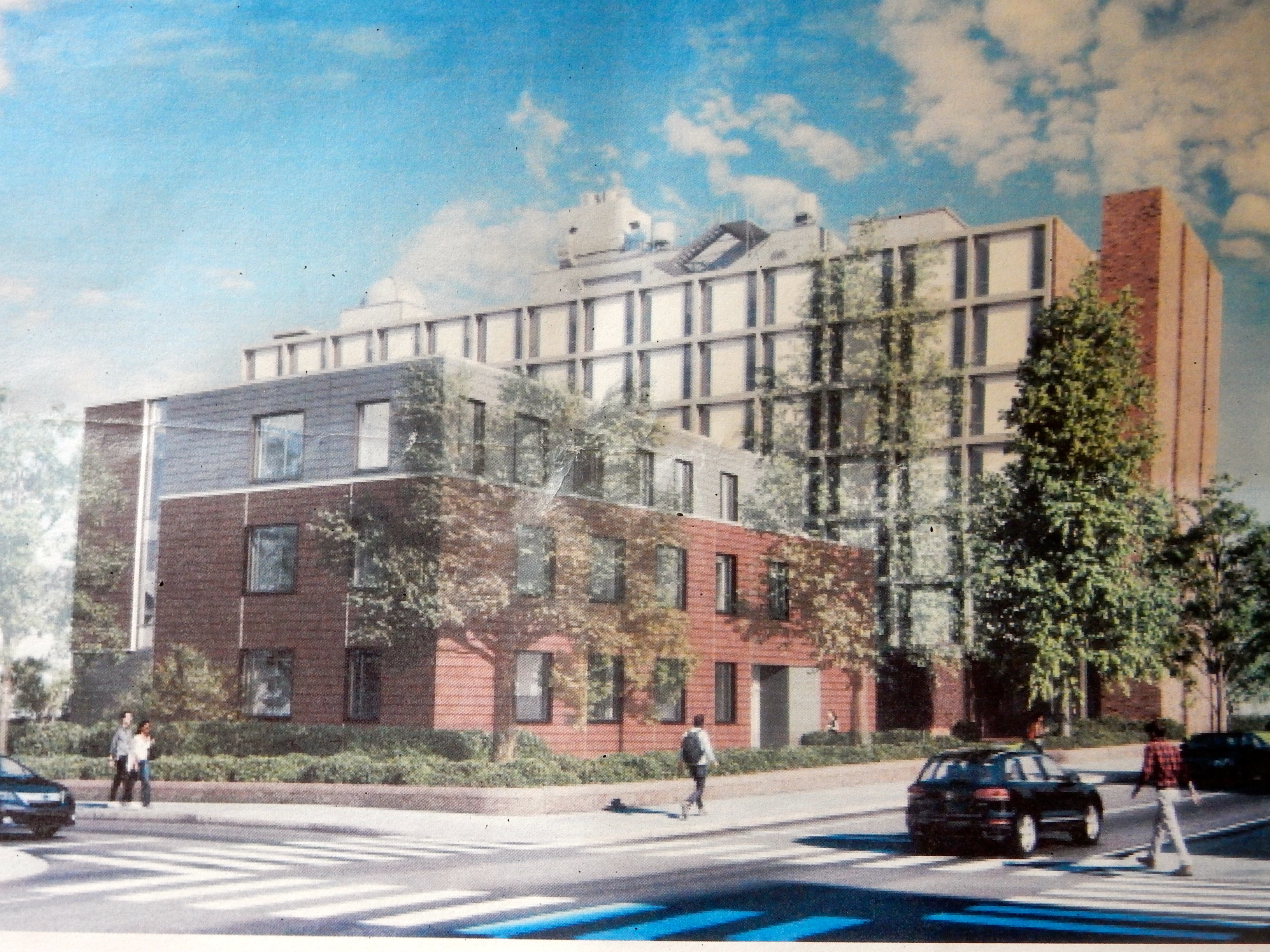
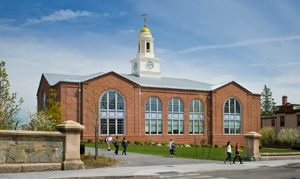
Brown's proposed Applied Math Building at Hope and George streets. (Brown)

Brown’s proposed Applied Math Building at Hope and George streets. (Brown)

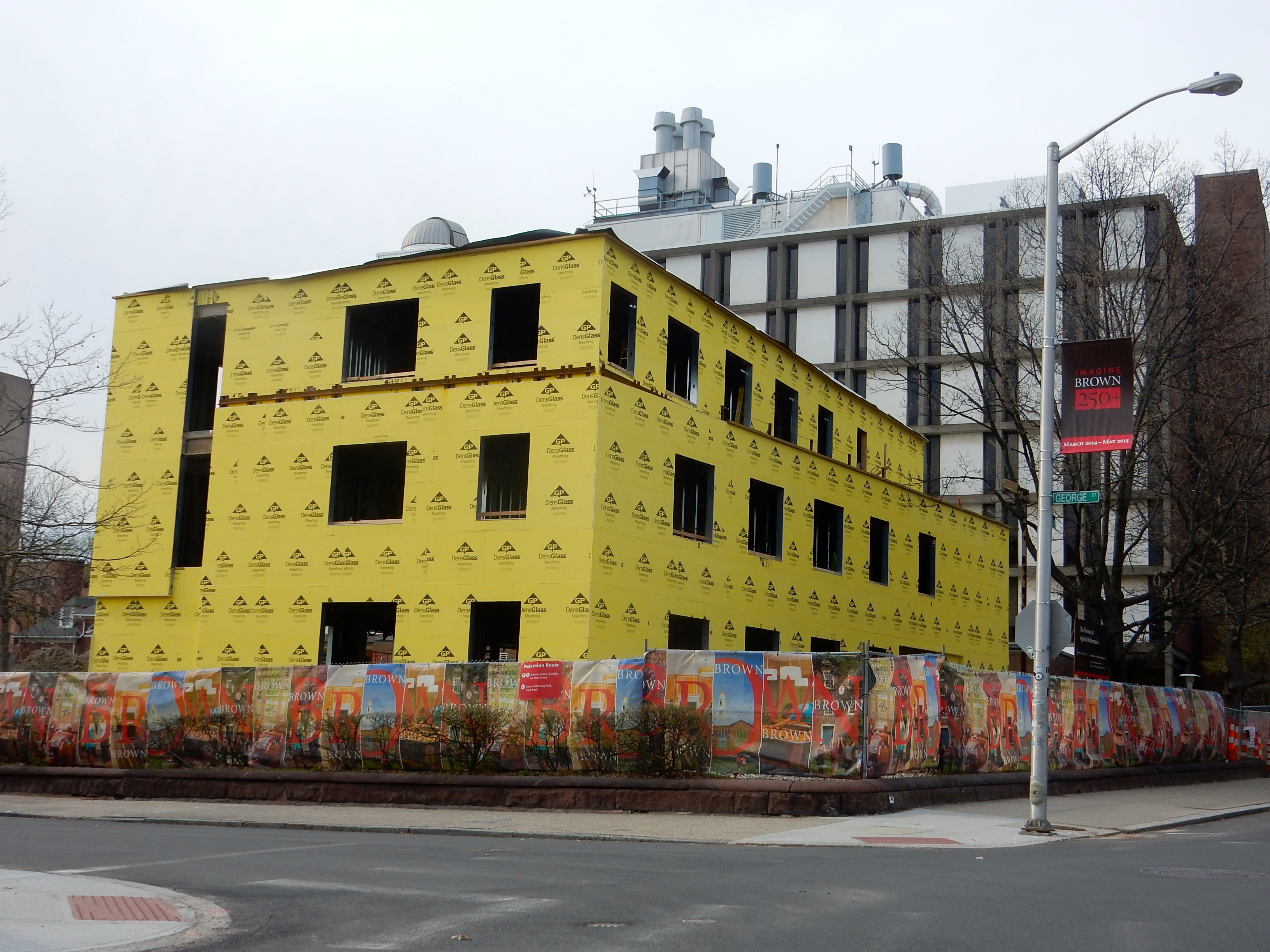
Brown apparently regrets its beauty and wants to be among the ugliest schools in the Ivy League. This is the only conclusion that comports with the fact of what it builds on campus. The latest is the Applied Math Building at the corner of Hope and George. For months it had no publicity regarding what the building would look like. Now it is actually being built, well along, and a source outside the institution has provided me a rendering. It is on top. I drove by and shot the image at the bottom this afternoon.

The designer is Gustafson Guthrie Nichol, of New York City, along with the Architecture Research Office (it may be part of the same firm; it doesn’t say). Can it possibly be proud of this building? I suspect not. Pride no longer is a prominent feature of architecture.

Apparently this is what Brown thinks the neighborhood will put up with. Pathetic. What is it they say about dropping the big smelly in one’s own nest? This is what Brown has got used to doing. There is a sort of embrace-your-inner-shithouse thing going on. It is not unique to Brown. Maybe the Semiotics Department should take a look.

Four beautiful old houses will be torn down to make way for Brown’s new engineering building. Their demolition forces Brown to build a new math building for refugees from the razed houses. Brown’s president apparently cares not a farthing about the university’s budget, or about helping the city, or about whether future alumni will become donors based on their fond memories of these formative years in their lives. She doesn’t care about forming their lives in the tradition of great schools. Oh well.

exterior1The only building Brown has built lately that fits into its historic setting is the Nelson Fitness Center, in the Athletic Quadrangle farther north on Hope. The center’s primary donor, entrepreneur Jonathan Nelson, of Providence, told Brown’s former president Ruth Simmons that he would not pay for the design initially proposed – a typical modernist blotch. Simmons dug in her heels, claiming she had no influence over the facilities apparat. Nelson dug in his own heels, called her bluff (I hope it was a bluff!) and won out. Brown switched from the New York firm of SHoP (its name says it all) to the New York firm of RAMSA, founded by Robert A.M. Stern, whose talented partner Gary Brewer designed the building.

Does Brown have a death wish? Why aren’t buildings like the applied math plug-ugly illegal? Actually, in Providence they are, but, first, in the school’s institutional zone Brown is allowed to shoot itself in the foot, and, second, the law that protects historical character here is mainly honored in the breach. Time to bring back the dunking stool!

Brown's Applied Math Building under consttruciton this afternoon. (Photo by David Brussat)

Brown’s Applied Math Building under consttruciton this afternoon. (Photo by David Brussat)

Posted in Architects, Architecture, Architecture Education, Architecture History, Development, Providence | Tagged , , , , , , , | 4 Comments

In Boston on Boylston

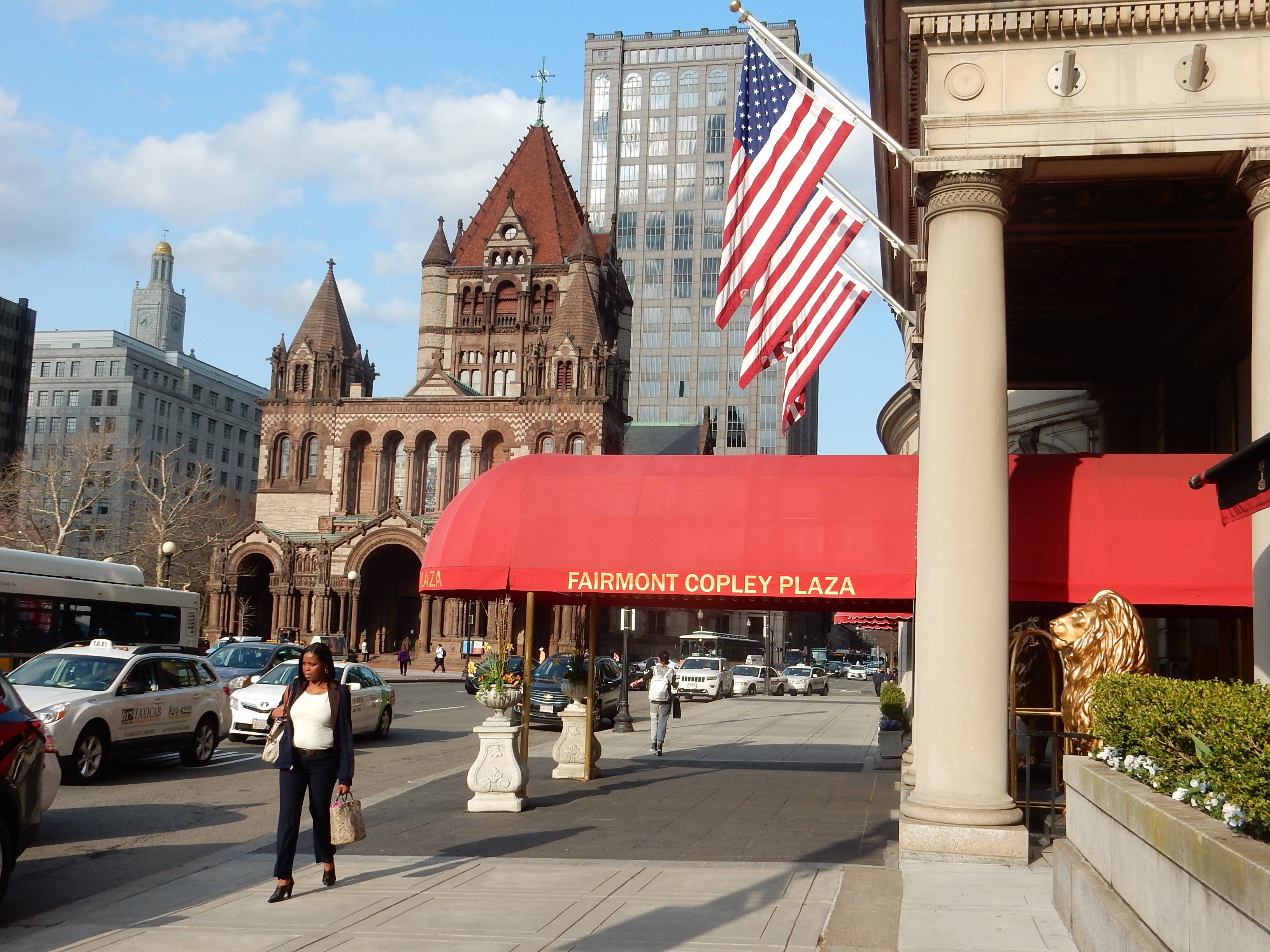
The scene near the Copley Plaza as you turn the corner of Dartmouth, wandering toward Trinity and onto Boyleston.

The scene near the Copley Plaza as you turn the corner of Dartmouth, wandering toward Trinity and onto Boylston.

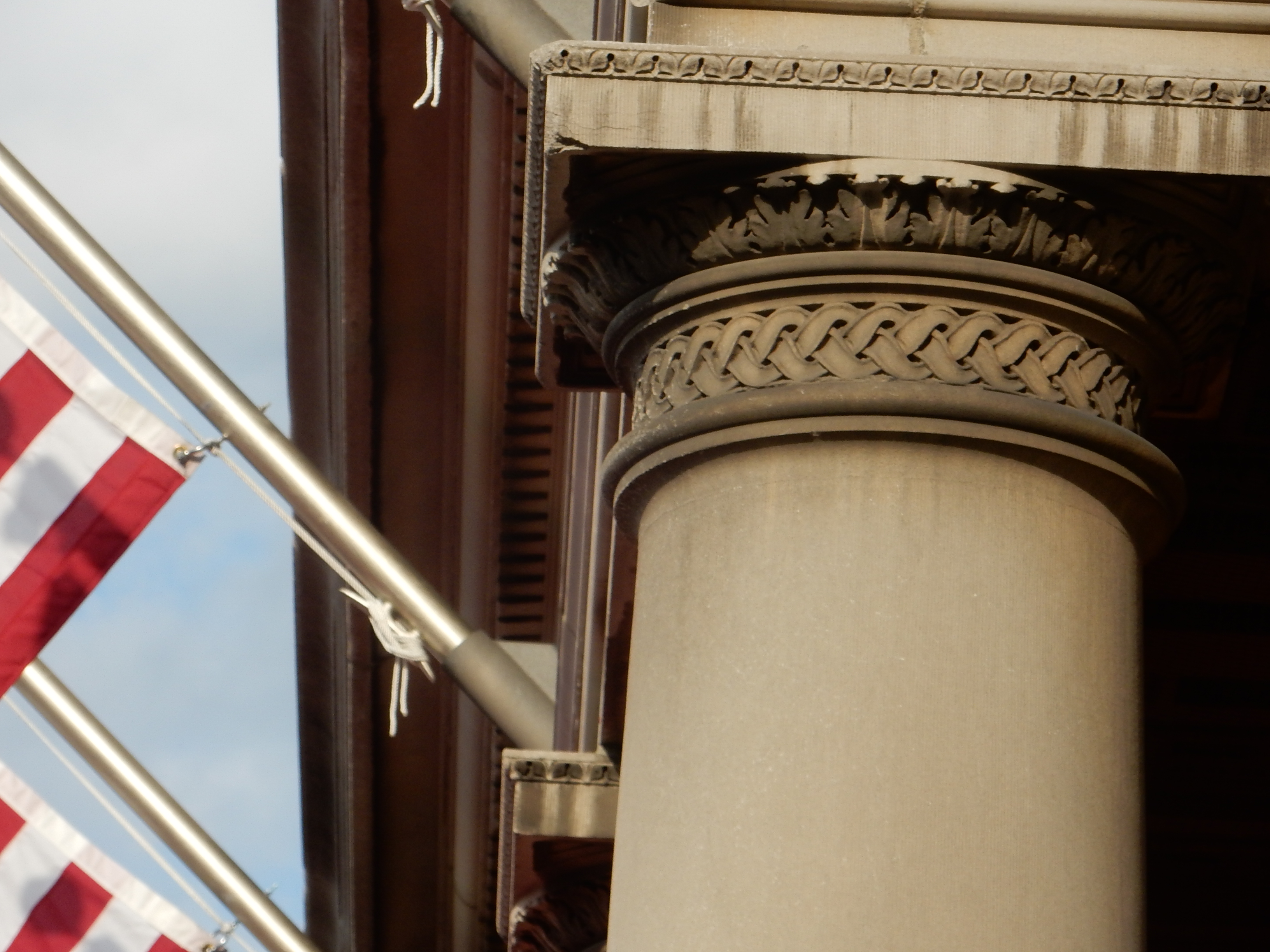
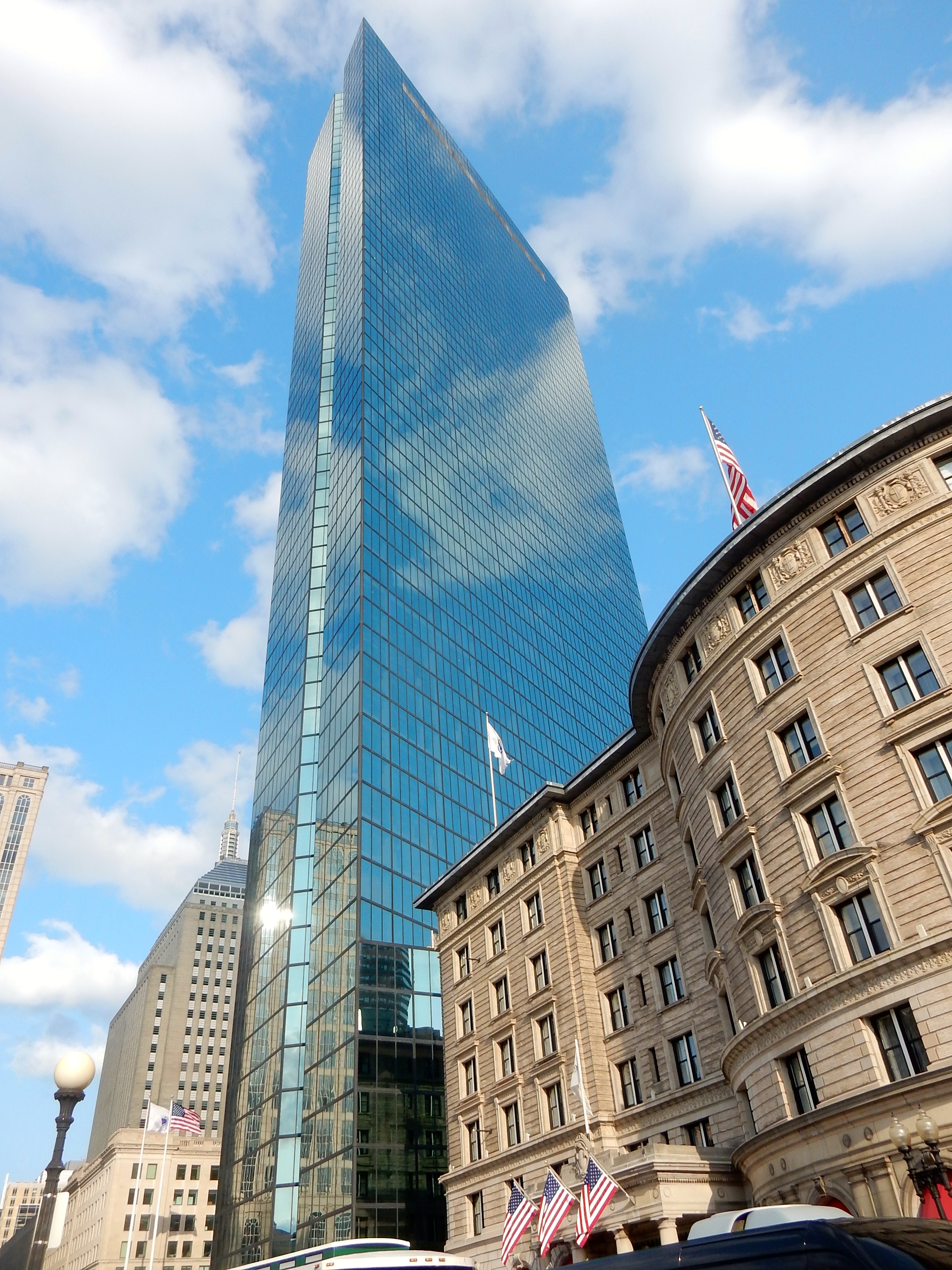
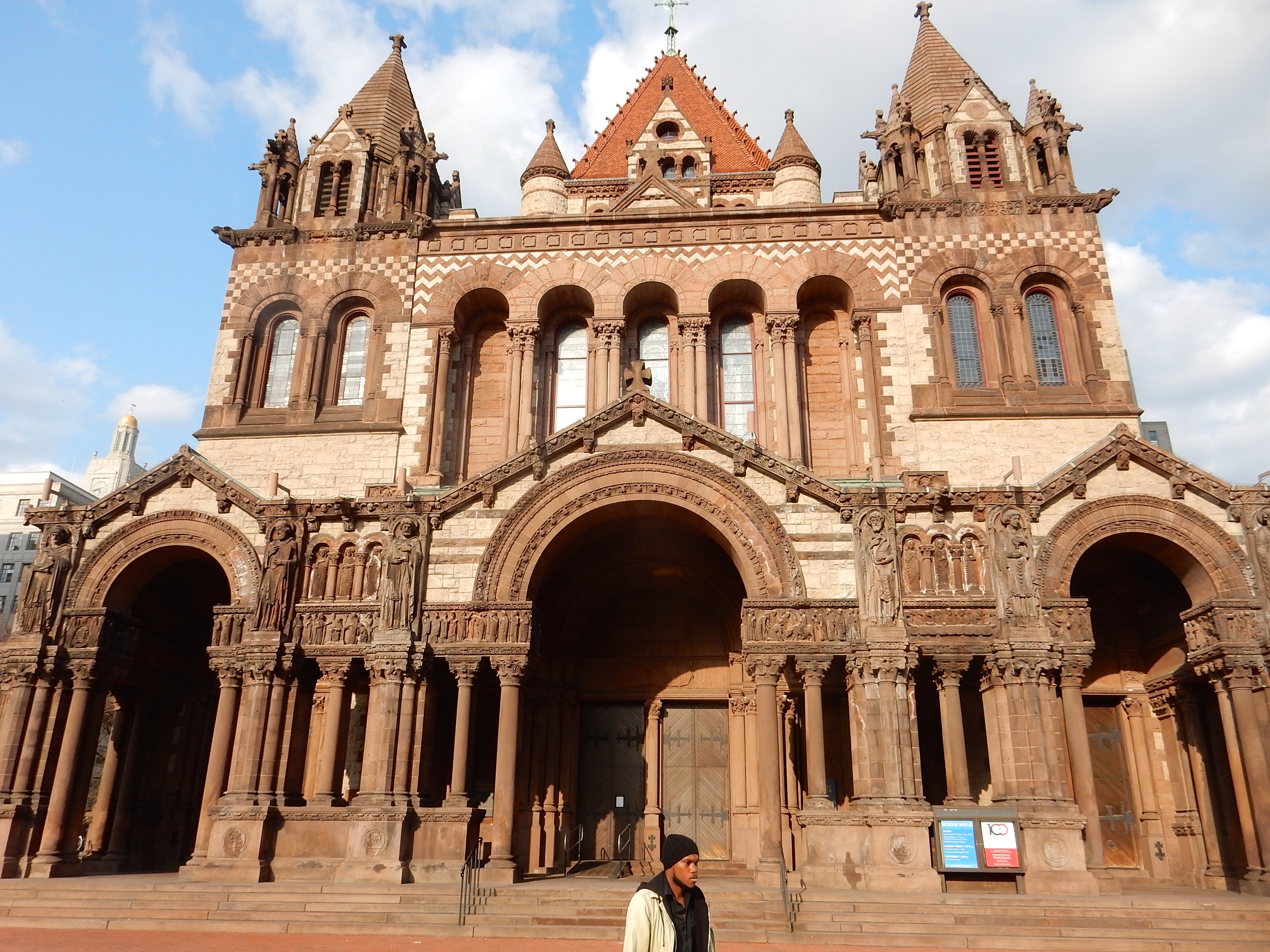
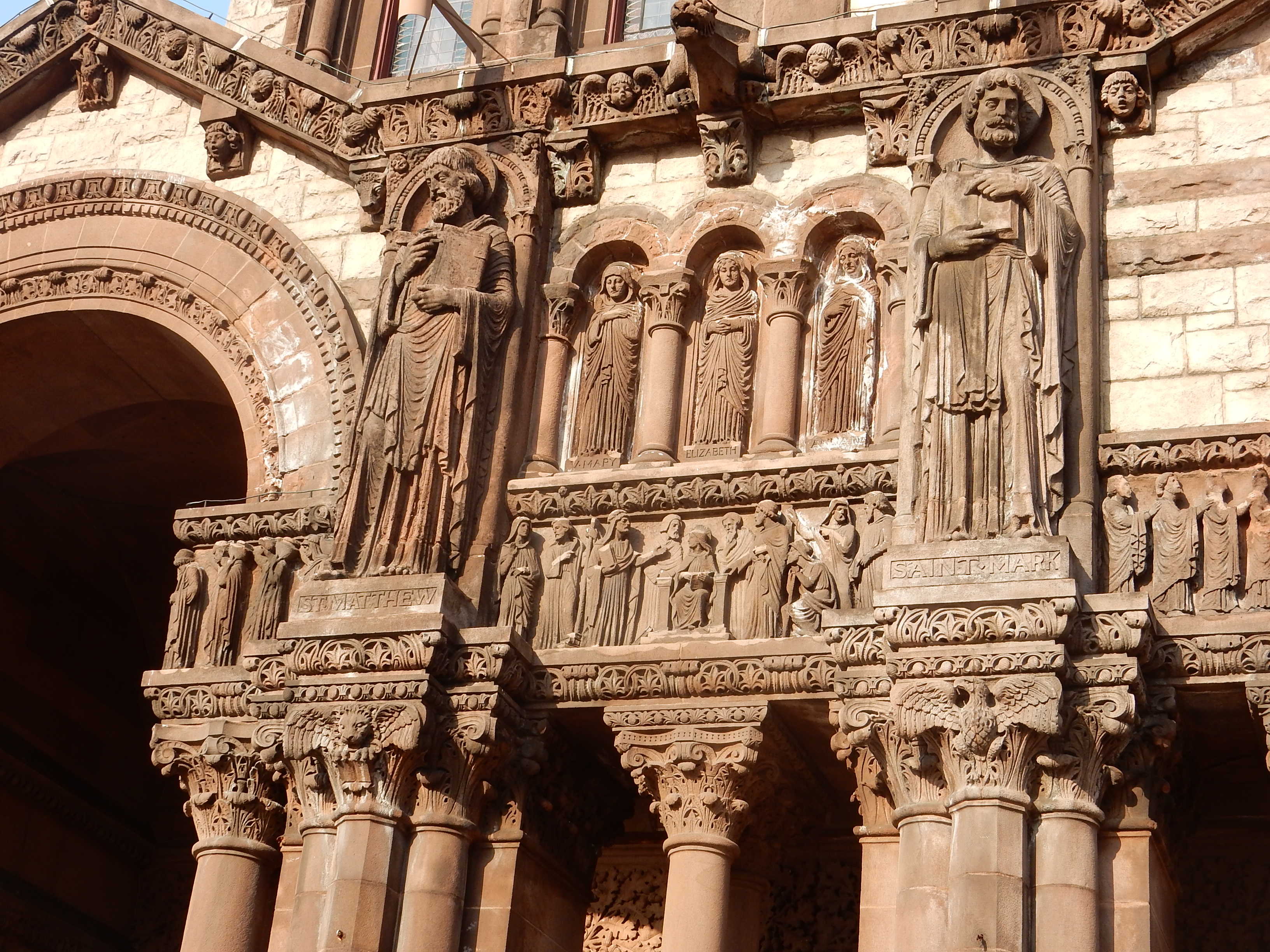
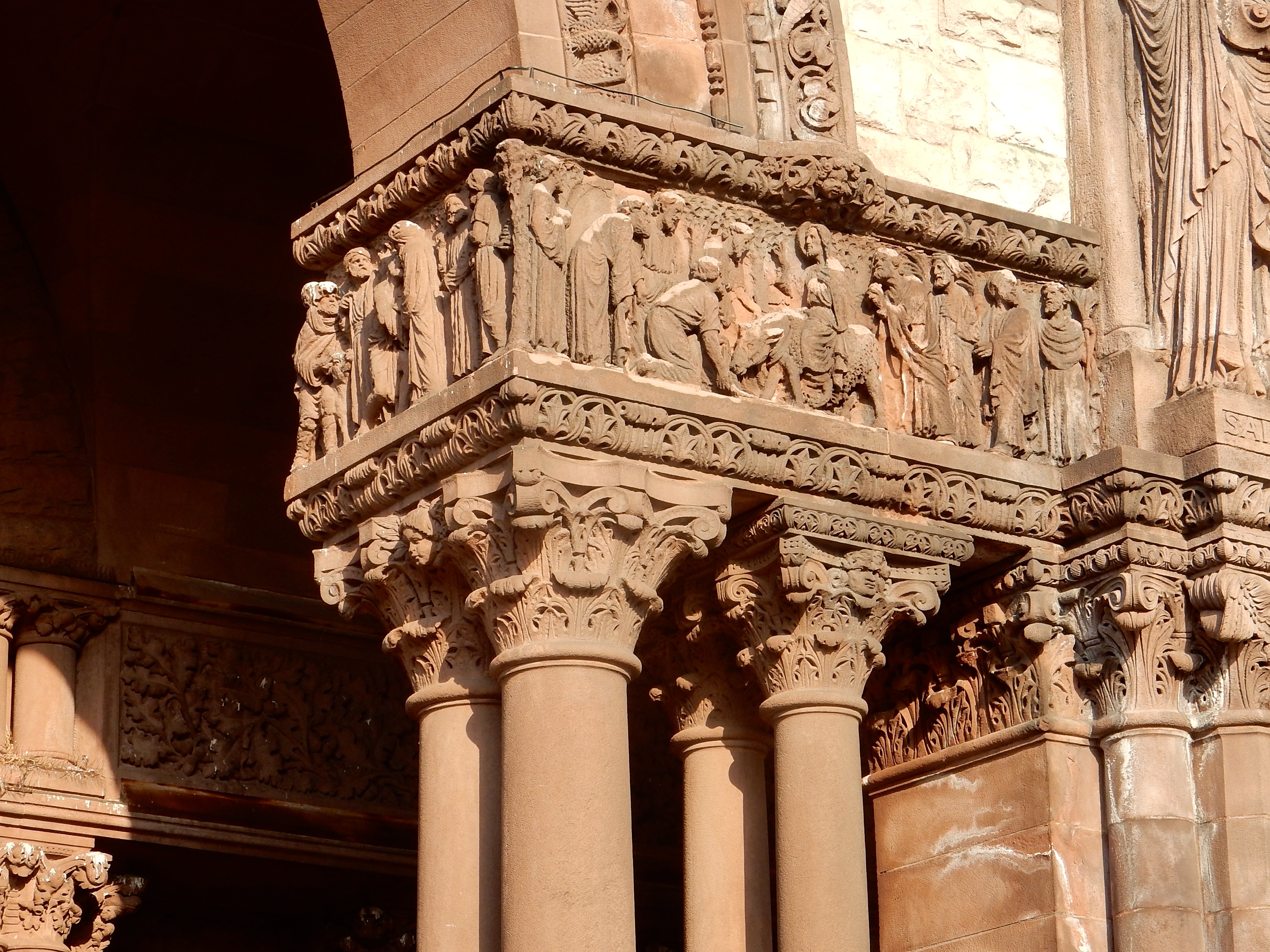
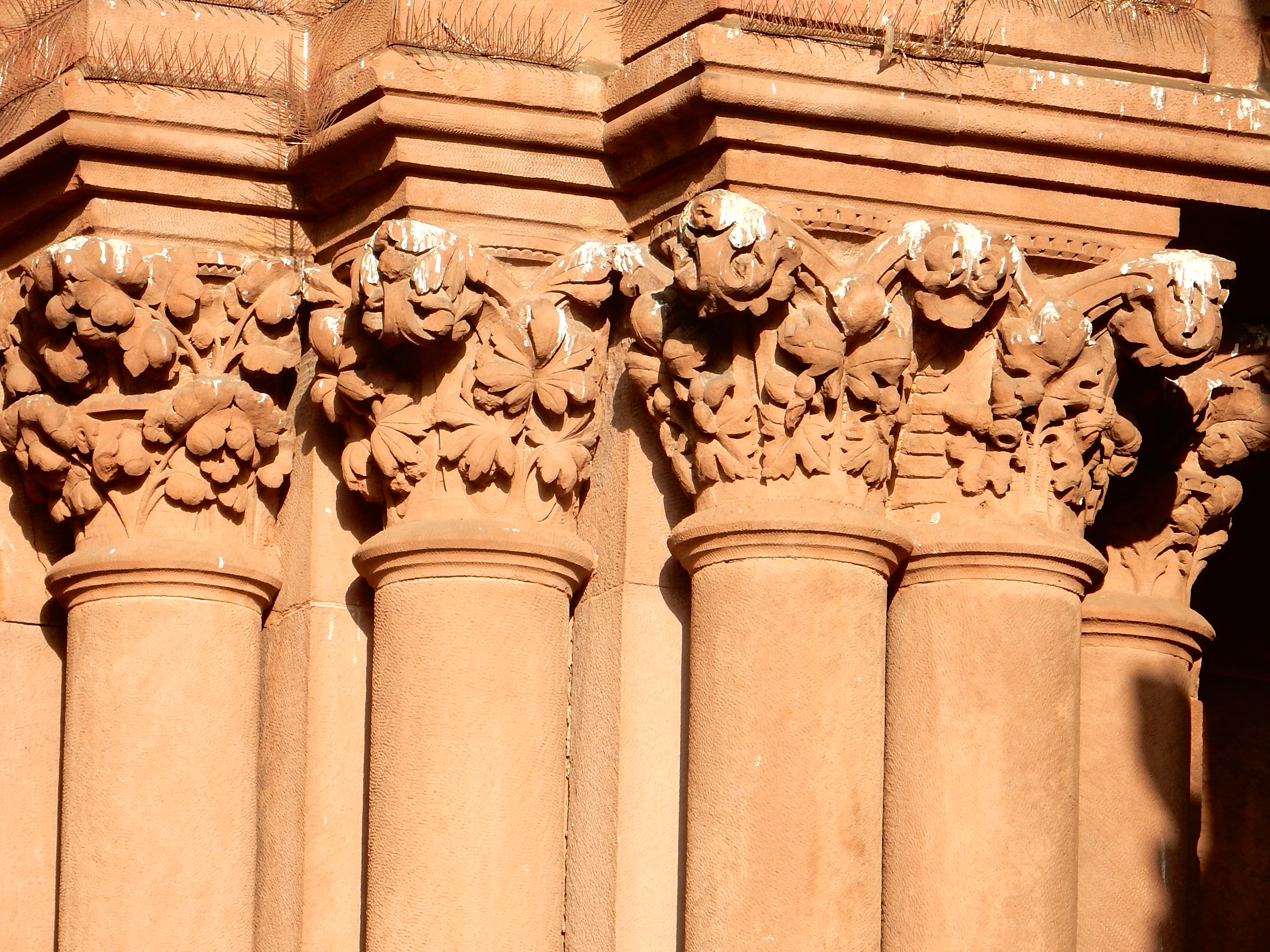
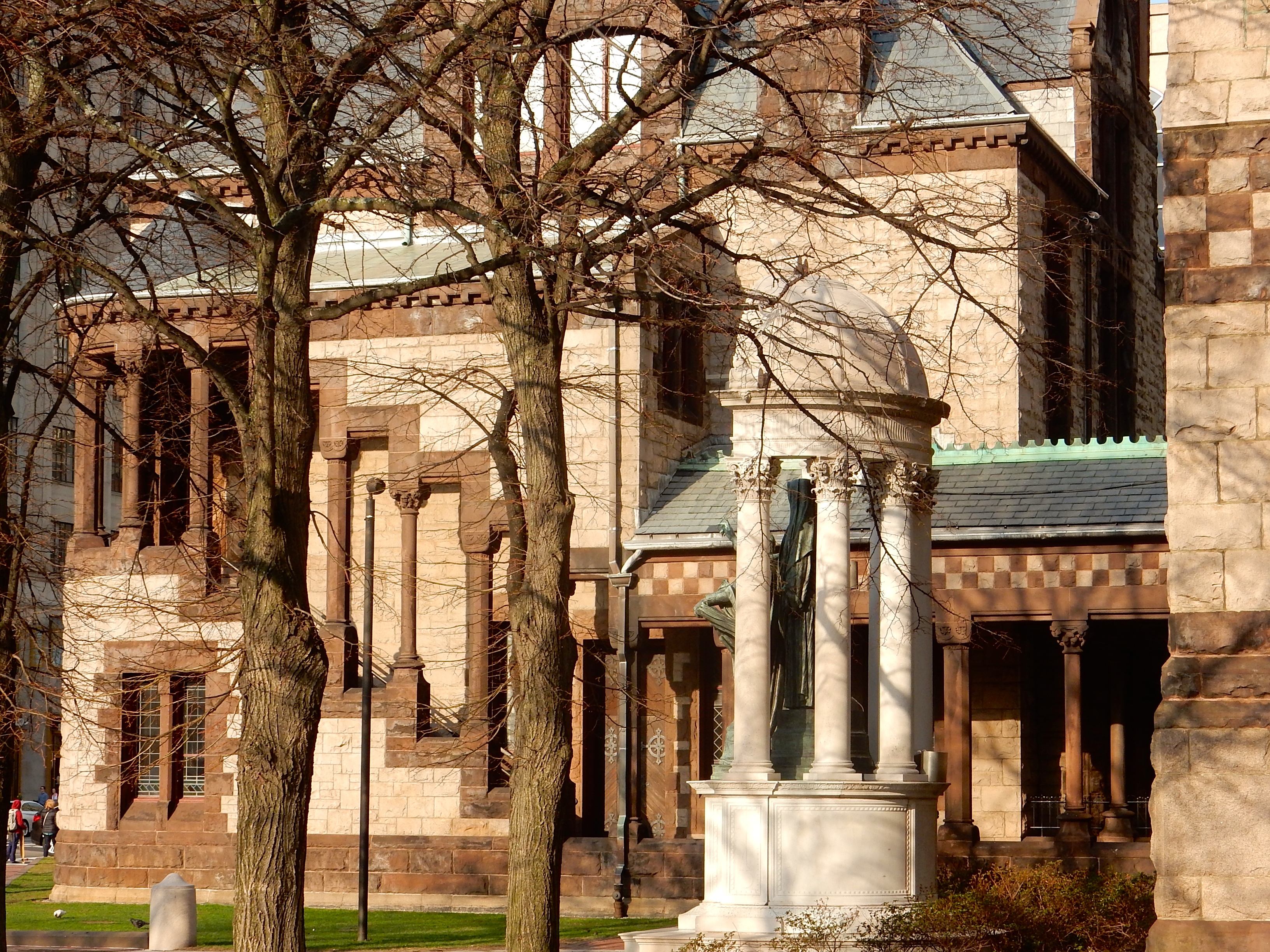
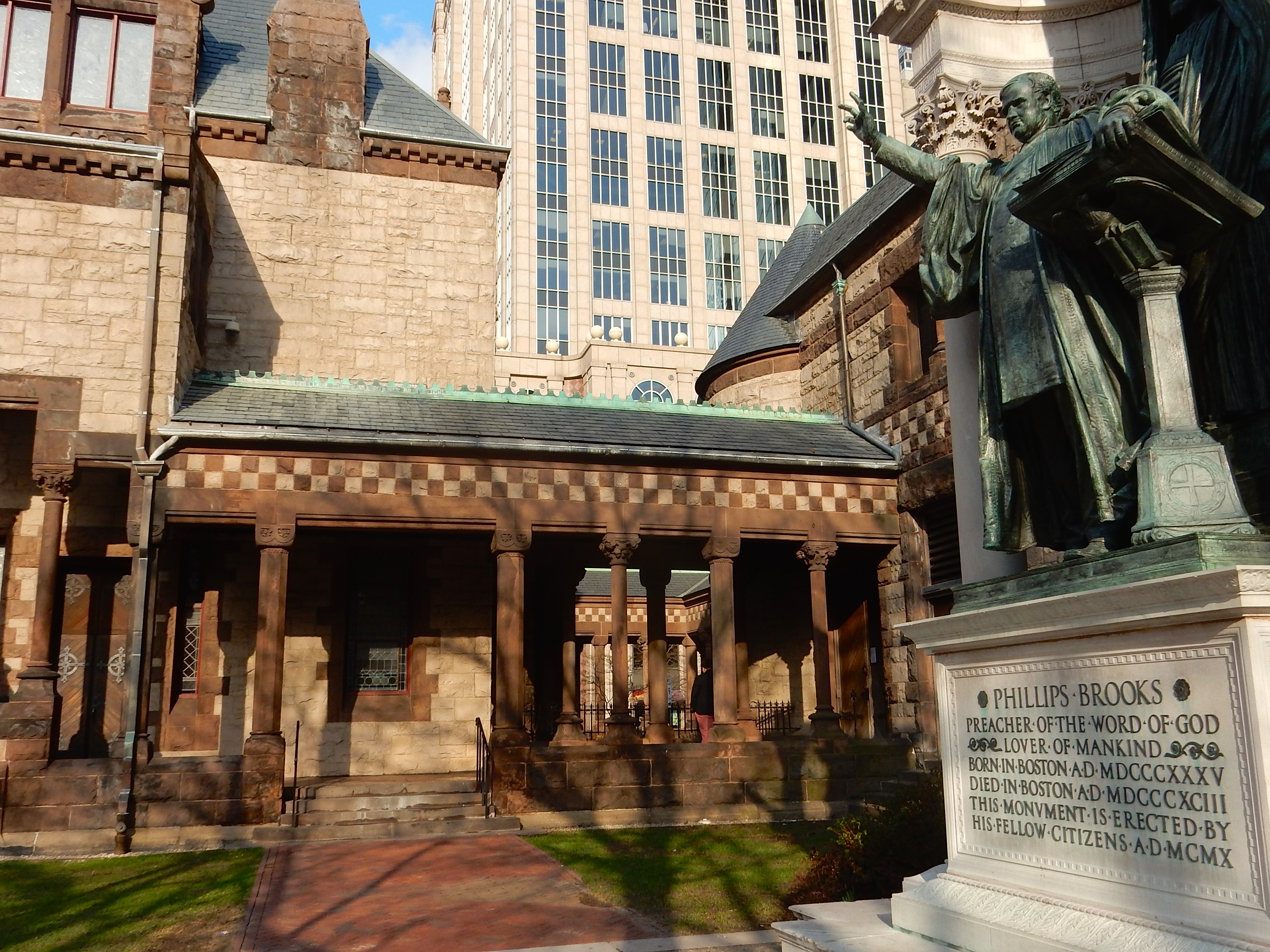
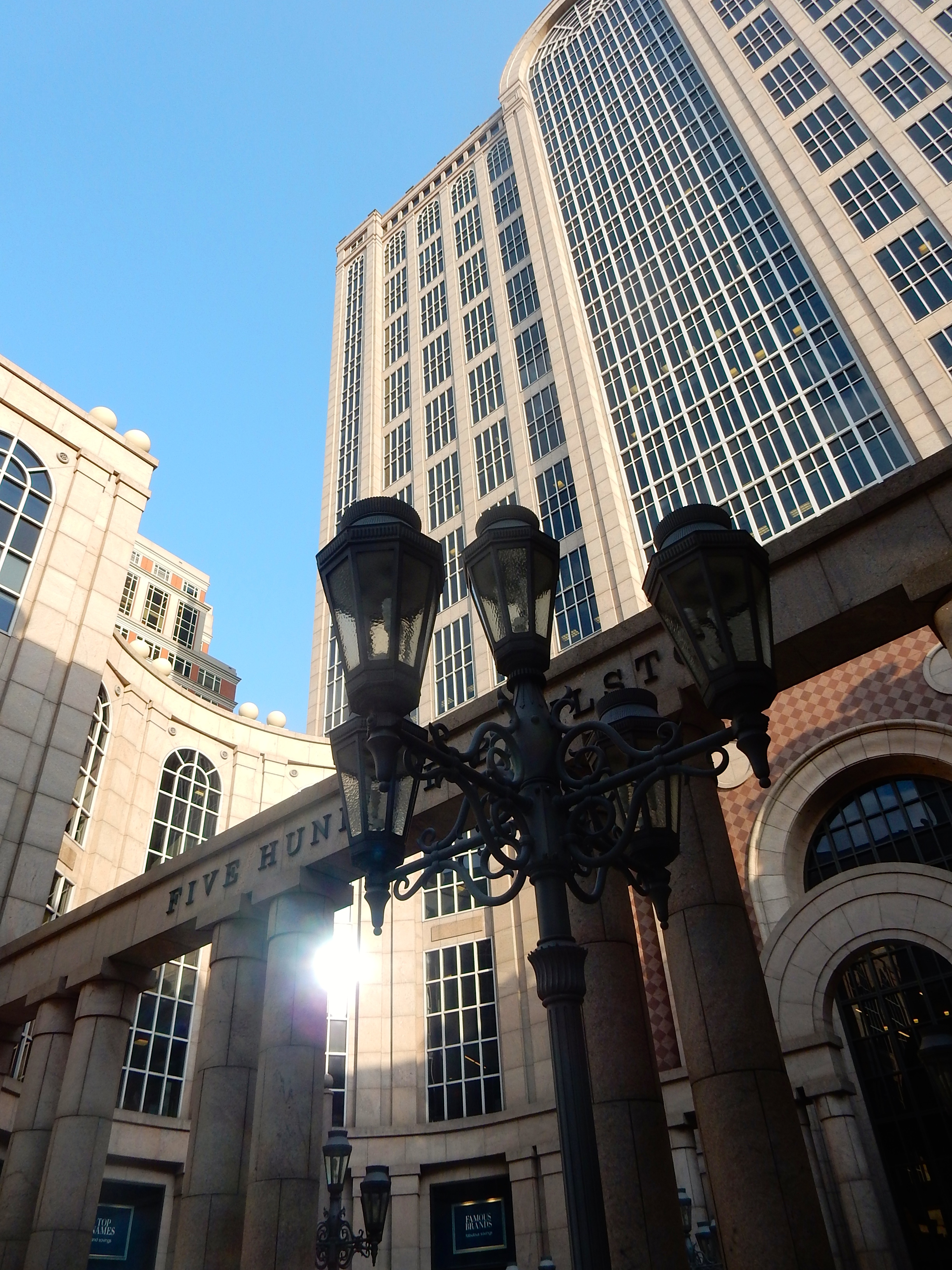
I was up in Boston yesterday to attend the chapter board meeting of the Institute of Classical Architecture and Design. I went by train, MBTA, and emerged at Dartmouth Street, lingered to capture the Richardsonian beauty, and headed on down Boylston, snapping more pictures on the way.

DSCN6342

DSCN6346

DSCN6347a

DSCN6349

DSCN6354

DSCN6356

DSCN6357

DSCN6361

DSCN6365

DSCN6376

DSCN6389a

DSCN6391

DSCN6412

DSCN6400a

DSCN6415a

Posted in Architecture, Architecture History, Art and design, Development, Photography, Urbanism and planning | Tagged , , | 2 Comments

An evocative balustrade

image001My favorite type of classical ornament has long been the baluster. I have a very small collection of balusters, including one from the Rhode Island State House, designed by Charles Follen McKim of McKim Mead & White and finished in 1901, and another from the John Brown House, also in the state capital, completed in 1788 and designed by Joseph Brown, whose client John, a rich China merchant, was his brother. They both occupy places of honor in my living room, the former serving as a table for an ornate lamp at the end of the couch, the latter leaning (alas, in broken pieces) against a charming cement frog just beneath our television set.

The balusters that welcome readers to this blog are arrayed along the front entrance, on Washington Street, of the Providence Public Library, designed by Stone, Carpenter & Willson and finished in 1900. A set of balusters that form a railing is called a balustrade.

I expect that some readers, as they plowed through the initial paragraphs of this post, will not have been able to prevent their attention from straying back to the photo of the curious balustrade that is its subject. Most balustrades feature a set of identical balusters in a row. This one features two alternating sets of balusters. Look at them closely.

Don’t look at the balusters themselves but at the space between each set. You will see that they frame a pair of figures facing each other with heads bowed. The balusters are not sculptures themselves; rather, they mold the space between them into sculpture. On each a sad look can be seen, half-imagined, on its downcast visage.

A tip of the hat to Roy Lewis, who sent the photo of the balustrade to the TradArch list back in March. Here are Roy’s notes about the balustrade in the photo.

I found this variant of the familiar Rubin Vase figure/ground illusion online, but have not yet found its source. [It is a] great balustrade that has a certain affinity with Jože Plečnik [the famous classical architect of Ljubljana, now in Slovenia]. Perhaps, in designing the fabric of an African American history museum, this could be a way of rendering visible the invisible African Americans who built much of America. All that is required to see is a change in focus, what could be a more apt expression Black History these days?

Roy’s comments manifest the eternally evocative quality of classicism, even though these balusters depart prominently from the Greco-Roman canon both in their moldings and in the stylized alternating pairs that form the balustrade. Roy sent them to the TradArch list during a string of threads about two museums that will commemorate the nation’s tragic legacy of slavery – the National Museum of African American History and Culture, under construction in Washington, and the International African American Museum, being planned in Charleston.

Are these balusters classical? That’s the question often posed to the TradArch list by Andrés Duany, who is working on a treatise, Heterodoxia, to expand the reach of the classical. He wants to include noncanonical orders that would expand the expressive range of classicism. These sad balusters demonstrate the emotive possibilities of their type.

Part of Duany’s quest is to recapture such storied architects as Plečnik, who are considered “pioneers of modernism” for breaking from the classical canon. Maybe he is that, but his work speaks more to the expansion of tradition than to the rejection of tradition that modern architecture represents, so it is appropriate to welcome Plečnik and others back into the fold.

And the balustrade above certainly testifies to the more sensitive language of architecture that ought to be used in the design of buildings whose symbolism will, or at least should, help to guide America’s thinking about slavery for centuries.

Posted in Architecture, Architecture Education, Art and design, Development | Tagged , , , , , , , , , | 5 Comments