Easy street to civic beauty

The near absence of any architectural sense of place on the Hope Street Merchants Association website speaks volumes.

The near absence of any architectural sense of place on the Hope Street Merchants Association website speaks volumes.

Even though there may be two, three or more street lamps for every building on a city street, street lamps are far less expensive than buildings. Lining a city block with elegant lampposts is a cheap, fast, easy road to beauty.

Barrington lampposts.

Barrington lampposts.

Benefit Street lampposts.

Benefit Street lampposts.

Westminster Street lampposts.

Westminster Street lampposts.

Federal Hill lamppost.

Federal Hill lamppost.

A decade or so ago, Barrington – long known locally as Borington for its bland presentation of civic self – lined County Road (Route 114) with elegant period lampposts. Along with red brick turn lanes, the posts turned Barrington overnight from an ugly duckling into a swan. Its transformation spurred its town planners to encourage owners of the tedious strip malls that line the road to refaçade those that were not already “colonial” in style to embrace that look. New buildings were given a traditional turn.

Who calls Barrington Borington anymore? Nobody! At least not for appearance’s sake. Liquor sales are illegal within the town, which has almost no restaurants. Maybe that, too, will change. [Indeed. A reader informs me that Barrington voters passed a referendum allowing liquor sales in 2010.]

But the point of this post is not Barrington but Providence’s Hope Street. I “live off Hope” (as they say around here) and got my Summit Neighborhood Association newsletter today. “New lights planned for Hope Street” caught my eye and sent a shiver up my spine.

The Hope Street Merchants Association plans to install “off-the-grid, solar-powered streetlights that will give a distinctive illumination and character to the shopping area.” The lights are being designed by students in Johnson & Wales Prof. Jonathan Harris’s information technologies class. I’m sure their work will be distinctive, but distinctiveness can cut both ways.

If the lampposts are designed in light of the experience of Barrington, not to mention of Benefit Street on College Hill, Westminster Street downtown and Atwells Avenue on Federal Hill, each of which have great period lampposts, Hope Street’s retail district will be improved. It gets scant help from its commercial architecture. Note the near absence of a sense of place on the Hope merchants’ website. If the street is lined with new lampposts designed to impart elegance and beauty, Hope Street merchants may reasonably hope to benefit, as Barrington’s aesthetic renewal was sparked by its new lampposts.

If they are designed to demonstrate the designers’ sense of novelty, or worse, kookiness, then Hope Street will prove itself to be hopeless, or at least clueless. The merchants association’s lighting project is getting assistance from the city – the so-called Creative Capital. That offers greater reason for anxiety among those merchants (and local residents) who hope the new lights will generate pride as well as solar lumens.

The city and state have already erected cobrahead lampposts along all the new streets of the Route 195 redevelopment district. Talk about throwing a wet blanket over the prospect of creating an attractive district. What a boneheaded move! This may not be the kiss of death to its prospects, but it certainly does suggest that a tin ear – or tin eye – is part of the development apparatus of the city and state.

Design of such street furniture as lampposts is a delicate process, easily botched. Let’s hope the designers of Hope Street’s new street lights will burnish rather than tarnish the neighborhood’s rep. Providence should have lined all the other streets downtown and on College Hill years ago, and for that matter every street that has any ambition to shine. Its failure to do so is a missed opportunity going back decades. Maybe Hope Street will turn things around.
Posted in Architecture, Art and design, Development, Landscape Architecture, Providence, Urbanism and planning | Tagged , , , , , , | 3 Comments

Mission impossible in R.I.?

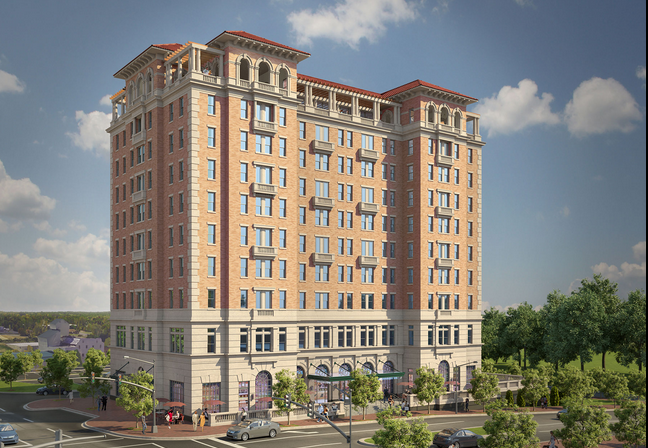
Marriott hotel set for October groundbreaking in Spartanburg, S.C. (DRSM)

Marriott hotel set for October groundbreaking in Spartanburg, S.C. (DRSM)

Here is a 10-story Marriott hotel scheduled for October groundbreaking in downtown Spartanburg, S.C. It is lovely, and it is being proposed, designed and built by people quite as human as those who do such work in downtown Providence, R.I., where two cheesy suburban hotels have been proposed that belong out on Jefferson Boulevard, near T.F. Green State Airport.

Is it truly beyond the capacity of Rhode Island architects to design something as beautiful as what is being built in Spartanburg, S.C.?

Spartanburg, S.C., for Christ’s sake!

Is it truly beyond the capacity of Rhode Island developers to imagine building something as nice as this hotel? Is it beyond the capacity of the political leadership of Rhode Island to imagine why the state should seek architecture of this quality? I say quality, not cost, because mark my words, the folks down in Spartanburg, S.C., are on a budget, too. Who is not on a budget? Is it beyond the capacity of Rhode Island newspaper editors to imagine why we don’t have to build junk in order to create jobs?

To be sure, the architect for the Spartanburg, S.C., proposal is not from Spartanburg, S.C. He is David M. Schwarz,  who runs a firm in Washington, D.C. He puts his pants on one leg at a time. Can’t our architects do that?

Just asking.

Posted in Architects, Architecture, Art and design, Development | Tagged , , , | 1 Comment

Save market in Porto, Port.

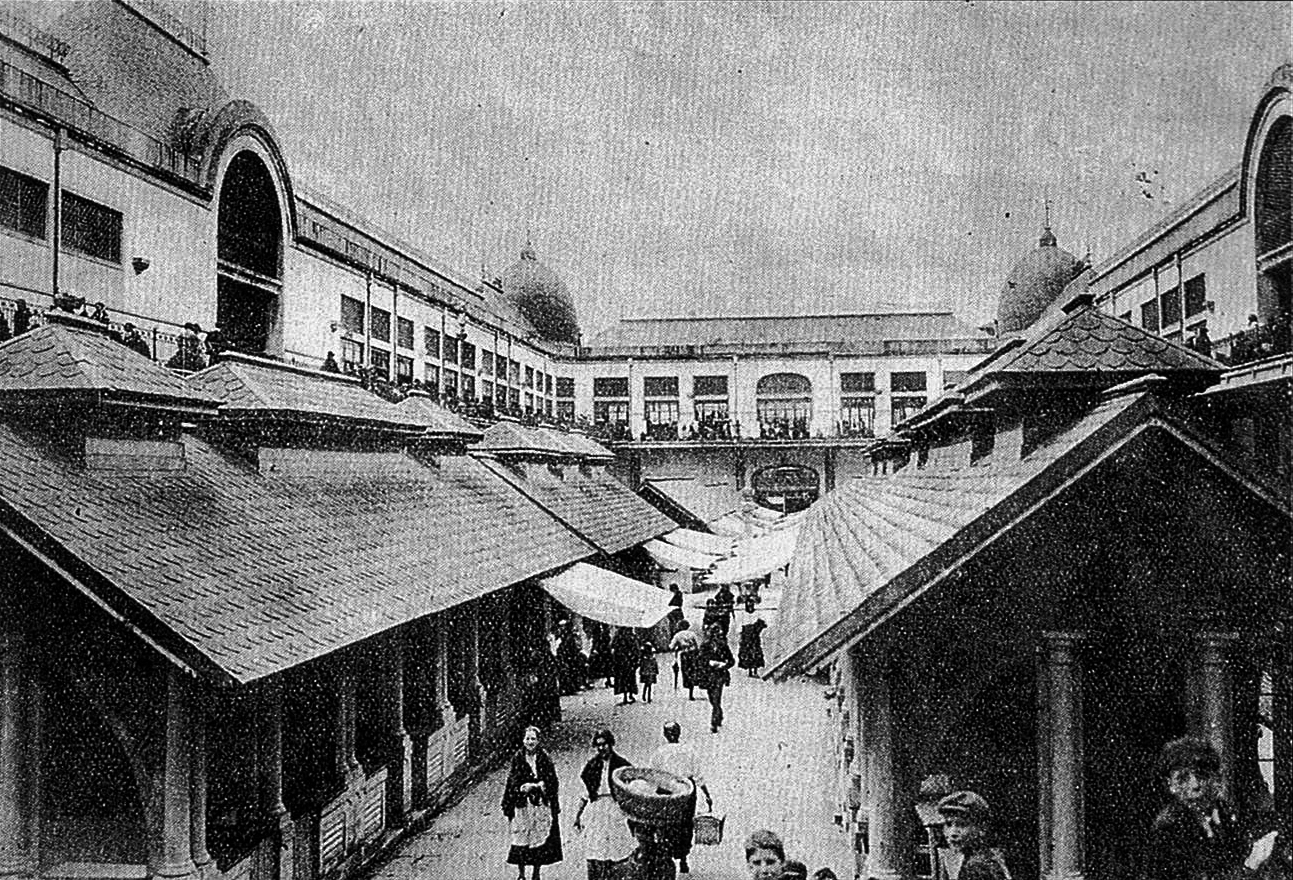
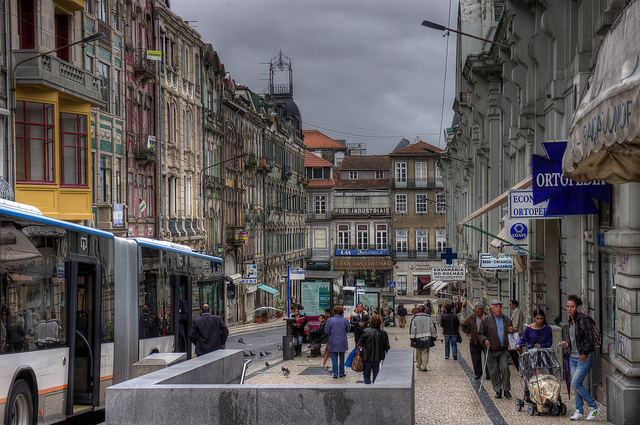
Bolhao Market, in Porto, Portugal, is on right side of street. (blog.crystaltravel.co.uk)

Bolhao Market, in Porto, Portugal, is on right side of street. (blog.crystaltravel.co.uk)

The blog Old Portuguese Stuff is crusading to save the interior of the Mercado do Bolhäo, in Porto, one of Portugal’s most storied cities. It is home to the British architect and engineer Malcolm Millais, author of Exploding the Myths of Modern Architecture. As you see from the photo above, Porto retains much of its beauty, but like all cities everywhere is under modernist attack.

Bolhao Market, Porto.

Bolhao Market, Porto.

In this case, city officials have not gone so bonkers as to place the market’s exterior, built in 1915, at risk, but plans are afoot to gut the interior in the name of renovation, replacing the elegant old market kiosks, or barracas, with a modernist “reinterpretation.”

The Old Portuguese Stuff post, written (it seems) from the point of view of the market itself (and signed as such), was actually written by architects Alexandre Gamelas and Caterina Santos. Here is how they describes the current plan:

It has the merits of restoring all the original features of the building, cleaning it up without in-your-face modernist additions. That is, for the façades facing the streets; inside, as you can see, all the lovely Barracas which we’ve been documenting will be gone in favor of a generic, standard-looking “modern reinterpretation.”

Readers should sign the petition against wrecking the market’s interior. The text in English is supplied toward the bottom. Experienced hands at INTBAU – the International Network for Traditional Building, Architecture & Urbanism – are helping.

OPS proposes restoring the barracas instead of replacing them with skinny, cheesy, glassy skeletons “symbolizing” past beauty with the spartan anorexia the world sees all too often. Curiously, OPS urges also that the two main barracas “would be perfectly compatible with a permanent, beautiful and contemporary glass and steel cover in-between.”

The illustration on their blog indicates something that might fade sweetly into the background – a feigned possibility that modernists frequently use to sell a concept they realize most people will not like. Maybe. I think a better idea would be to leave the “contemporary glass and steel cover” to moulder on its drawing board. A glass roof between the barracas with elegant iron framing would work better. Do I quibble? Yes! That’s my job!

I salute the moxie of Old Portuguese Stuff in trying to save a cherished landmark in their city almost in its entirety. But I also applaud Porto for refusing what must have been great pressure to tear the whole lovely thing down, as is the conventional practice. (And if there was no such pressure, then Porto deserves even more acclaim for having maintained a sanity in their city that is rare almost everyplace around the world.)

Bravo!

Historical photo of interior of Mercado do Bolhao. (Old Portuguese Stuff)

Historical photo of interior of Mercado do Bolhao. (Old Portuguese Stuff)

Posted in Architecture, Architecture History, Development, Other countries, Urbanism and planning | Tagged , , , , , , , | 1 Comment

Top classical WWI entries

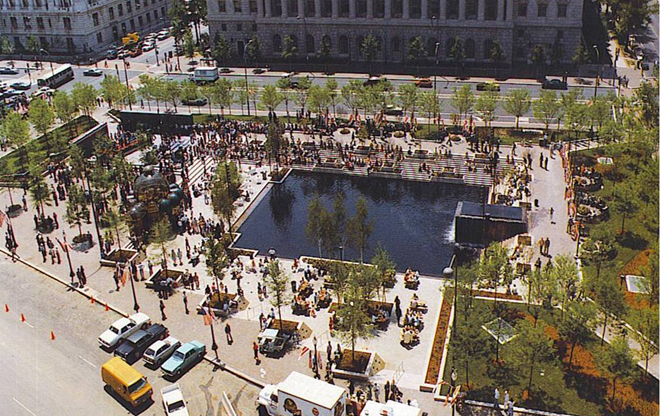
Pershing Square Park, near the White House. It will be renovated to include the new memorial. (asla.com)

Pershing Square Park, near the White House. It will be renovated to include the new memorial. (asla.com)

Here, courtesy of the organization sponsoring the design competition for a monument to commemorate the First World War, are links to some if not all of the classical entries. These are considered “the best” from among a couple of dozen submissions in traditional styles. The competition jury will be meeting in the next few days and will consider public comments submitted by readers of this blog.

Please comment, but you must go to the competition web site to do so. It is here. Hats off to the National Civic Art Society and its president, Justin Shubow, for compiling this set of classical entries. You cannot comment directly from each entry, but must visit the website, which makes all entries, classical and modernist, available for viewing.

http://www.worldwar1centennial.org/index.php/first-round-submissions-for-public-comment.html?task=document.viewdoc&id=382

http://www.worldwar1centennial.org/index.php/first-round-submissions-for-public-comment.html?task=document.viewdoc&id=384

http://www.worldwar1centennial.org/index.php/first-round-submissions-for-public-comment.html?task=document.viewdoc&id=464

http://www.worldwar1centennial.org/index.php/first-round-submissions-for-public-comment.html?task=document.viewdoc&id=489

http://www.worldwar1centennial.org/index.php/first-round-submissions-for-public-comment.html?task=document.viewdoc&id=501

http://www.worldwar1centennial.org/index.php/first-round-submissions-for-public-comment.html?task=document.viewdoc&id=561

http://www.worldwar1centennial.org/index.php/first-round-submissions-for-public-comment.html?task=document.viewdoc&id=606

Posted in Architecture, Art and design, Landscape Architecture, Urbanism and planning | Tagged , , , | 11 Comments

Design for a WWI memorial

One entry among a score with classical or traditional monumental sympathies. (worldwar1centennial.org)

One entry among a score with classical or traditional monumental sympathies. (worldwar1centennial.org)

Not long ago I wrote of an open competition for a national monument for World War I to be built at Pershing Square. The square has honored Gen. John “Black Jack” Perhsing, commander of U.S. forces in Europe, for decades. Near the Mall and the White House, it will soon commemorate the broader war with the addition of a suitable (one hopes) monument. The contrast between this design competition and the competition of 2011 “won” by Frank Gehry for a memorial to Dwight Eisenhower is eye-popping. Now the WWI entries, apparently running into the hundreds, have been made public.

The design above, one of a score or so of entries fashioned as traditional monuments, will strike many as unusual. It features four twin sets of columns rising from a ziggurat sitting atop a tall quadrangular base. Each set of two columns supports an ornate classical cross-beam, or entablature, forming two squares that, laid atop each other, form an eight-pointed star. Here is how its designer puts it:

An empty sarcophagus commemorating all who served and died is lifted high, ringed with columns: a tholos, the ancient shrine of heroes. The columns raise a crown of honor over the sarcophagus. The cenotaph yokes together both halves of a divided tower, which turns to face the rising sun on Armistice Day.

A year or so ago, New Urbanist Andres Duany offered an unusual design alternative to Gehry’s Ike memorial. To me it seemed too like a fortress, and arrayed its classical elements with too much heaviness for my taste. The WWI memorial pictured above is equally unusual but seems more uplifting than downcast. It has, in its verticality, a more traditional air to its novelty.

There can be little doubt that this competition features more than its share of novelty, especially from modernists. The competition is open, and the entries are from all corners of the architectural spectrum. For modernists, novelty has long been the lodestar over beauty, and even over meaning. It’s usually hard to tell what a modernist monument means because modernism has yet to develop a legible architectural language.

Let’s hope the judges this time display a prejudice in favor of beauty and understanding. If they do, one of the classical entries could stand a very good chance of winning.

Readers should comment on the entries through the competition’s website. I will post a list of links to the best traditional entries immediately. The jury meets over the next few days and will have access to public comments.

Posted in Architecture, Architecture Education, Architecture History, Art and design, Urbanism and planning | Tagged , , , , | 6 Comments

Just for the Palladiophobes

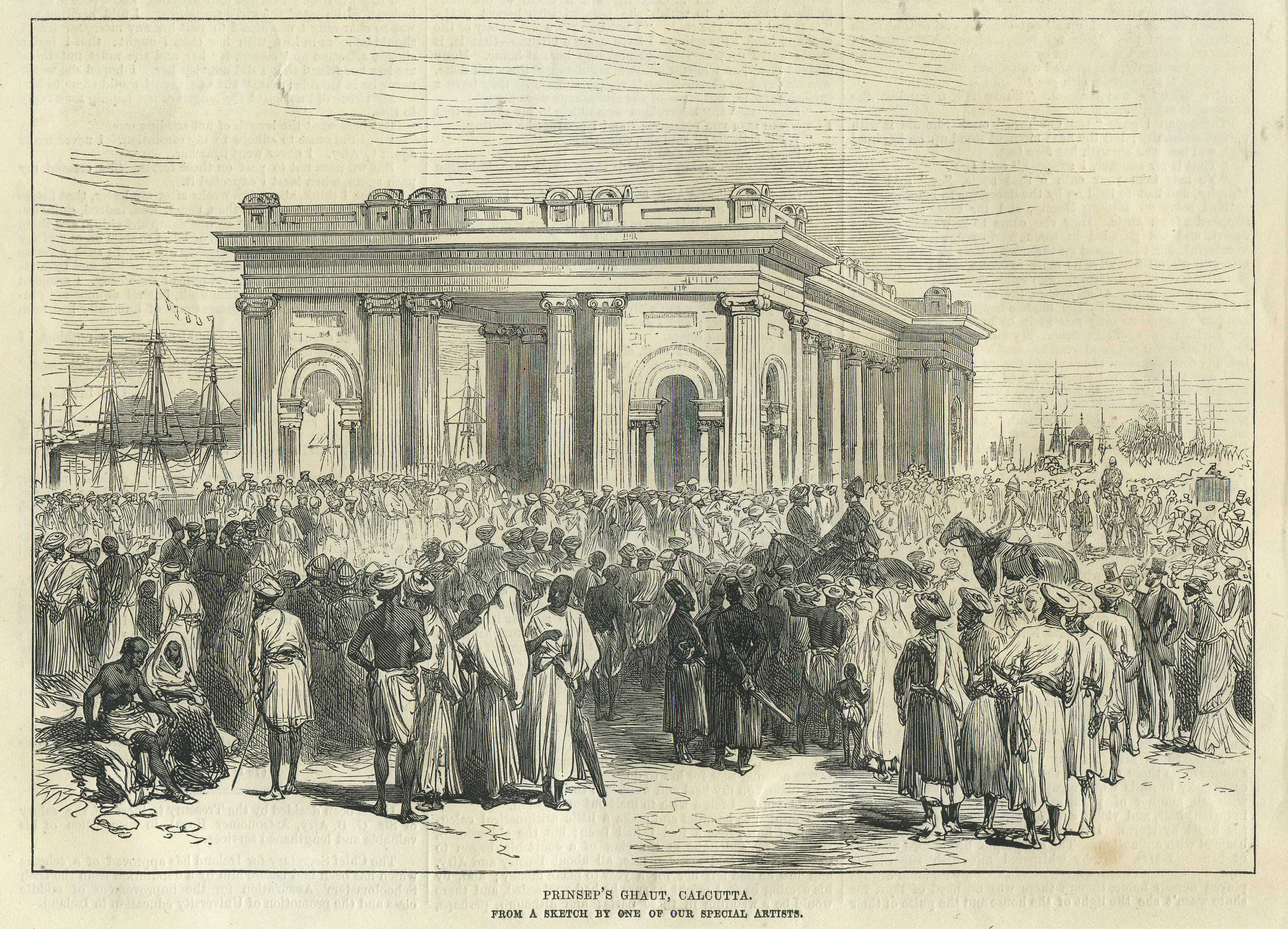
The Palladian porch in Calcutta, in the memory of eminent orientalist James Prinsep, was designed by W. Fitzgerald and constructed in 1843.

The Palladian porch in Calcutta, in the memory of eminent orientalist James Prinsep, was designed by W. Fitzgerald and constructed in 1843.

Here is a brief quote from Humberto Eco’s Prague Cemetery that might shiver some timbers, or not:

And I could tell you about the Knights Templar and Scottish Freemasonry, about the Rite of Herodom, the Rite of Swedenborg, the Rite of Memphis and Misraim (established by that scoundrel and charlatan Cagliostro), and then Weishaupt’s “Unknown Superiors,” the Satanists, Luciferians or Palladians as they are otherwise known – it’s all Greek to me.

I am a Palladiophile. To me the Palladians are as far from the devil as can be imagined, but then I didn’t write the book!

Posted in Architecture, Architecture Education, Architecture History, Books and Culture | Tagged , , , , , | Leave a comment

The satisfactions of Satie

Screenshot of illustration atop Kaz's post on Eric Satie.

Screenshot of illustration atop Kaz’s post on Eric Satie.

Erik Satie is a French composer of whom I know little, but am very familiar with one of his pieces, the first of his three “Gnossiennes,” which I suspect most readers will recognize as well. It is the first video on classical-music blogger Kaz’s latest post. The piece is a lovely, mellow tune and seems to belie much of what Kaz says about Satie’s music, as do several other pieces I’ve listened to by clicking on videos in his post on Satie.

Yet of all the composers I’ve written about so far, arguably none wrote music which bears such close relation to so much of what we listen to today. Satie’s music was an important precursor to minimalist and ambient music in particular, characterized by repetitive motifs, a trance-like quality, free-form compositional structure, and an abandonment of traditional notions of exposition and development.

That may go too far. Later on Kaz compares Satie to Philip Glass. This is like comparing Louis Sullivan to Le Corbusier or Mies (the modernists consider Sullivan a precursor of modern architecture). But Kaz included a piece by Glass to show the likeness, and I have to admit it was nice enough – but is that the real Glass? Not the atonal Glass! From what little I know of Glass, I don’t think so, but I might be guilty of isolating myself from his better work because I dislike most of what I’ve heard of his.

Or maybe Kaz has confused Satie’s music with his life, which he described, in a massive understatement, as “eccentric.”

Perhaps it is hard for anyone, including a blogger on classical music, to refrain from bearing his breast and plumping for the opposite of what he loves. Even I once wrote a column in praise of a building by Frank Gehry, and was roundly denounced for doing so. Don’t believe it? “A modernist building I actually like” ran on March 17, 2011. (Good luck finding it!) Well, as to the relationship of Satie to Glass, let the listener decide.

Posted in Architecture, Art and design, Books and Culture, Video | Tagged , , , , , , , , | 5 Comments

The dark caverns of history

(clickypix.com)

(clickypix.com)

About halfway through Umberto Eco’s The Prague Cemetery I have not stumbled, so far, upon the travelogue sequences I promised to record for readers. But the book has brought us down into the darkest caverns of history, spiced further by fiction. The New York Times marveled at the extent to which the conspiracies described by Eco were real – taken from history, that is, not necessarily real in themselves; the Times reviewer even chided Eco for the lack of imagination required to sustain his plot.

Here is a passage with a flavor of the whole. The protagonist Simonini, a confirmed forger, is compiling a fake document for his spymaster composed largely of other fake documents, including a novel. A source whom he meets at a beer hall in Munich asks questions about his own sources:

I evaded them, talking about other matters and mentioning my exploits with Garibaldi’s men. He was pleasantly surprised, he said, as he was writing a novel about events in Italy in 1860. It was almost finished, its title would be Biarritz, and it would comprise several volumes. Not all the events were set in Italy – it moved about from Siberia to Warsaw to Biarritz (of course) and so on. He spoke of it with enthusiasm and a certain smugness, claiming that he was about to complete the Sistine Chapel of historical fiction. I didn’t understand the link between the various events he was describing, but the story seemed to revolve around the continual threat from three evil powers that were surreptitiously taking over the world – the Freemasons, the Catholics (in particular the Jesuits) and the Jews, who were also infiltrating the first two in order to undermine the purity of the Protestant Teutonic race.

The novel began with the Italian conspiracies of Mazzini’s Freemasons, then moved to Warsaw, where the Freemasons were conspiring against Russia, along with the nihilists – a breed as damned as the Slavs had ever managed to produce, although both (nihilists and Slavs) were mostly Jewish – and it is important to note that their system of recruitment resembled that of the Bavarian Illuminati and the Alta Vendita of the Carbonari, where every member recruited another nine, none of whom must know each other.

Then the story returned to Italy, following the advance from Piedmont southward to the Kingdom of the Two Sicilies, in a mayhem of violence, treachery, rape of noblewomen, dramatic exploits, gallant swashbuckling Irish monarchists, secret messages hidden under the tails of horses, a vile Carbonaro prince, Caracciolo, who molests a young (Irish monarchist) girl, the discovery of magic rings in green oxidized gold with intertwined snakes and red coral at the center, a kidnap attempt on the son of Napoleon III, the drama of Castelfidardo where the battlefield is strewn with the blood of German troops loyal to the pope, and condemnation of the welsche Feigheit – Goedsche [who is describing the novel to Simonini] said it in German, perhaps so as not to offend me, but I had studied a little German and understood he was referring to that cowardly behavior typical of the Latin races. At that point events became more and more confused, and we still hadn’t reached the end of the first volume.

There is a sort of architecture in all this that is, I admit, more literary, a matter of deeply winding tunnels of expanding darkness, than of the structure of a building or a city. I trust readers will be intrigued rather than put off by this descent so far off my beaten track!

Posted in Architecture, Art and design, Books and Culture | Tagged , , , , , , , , | Leave a comment

Hypocrisy of the modernists

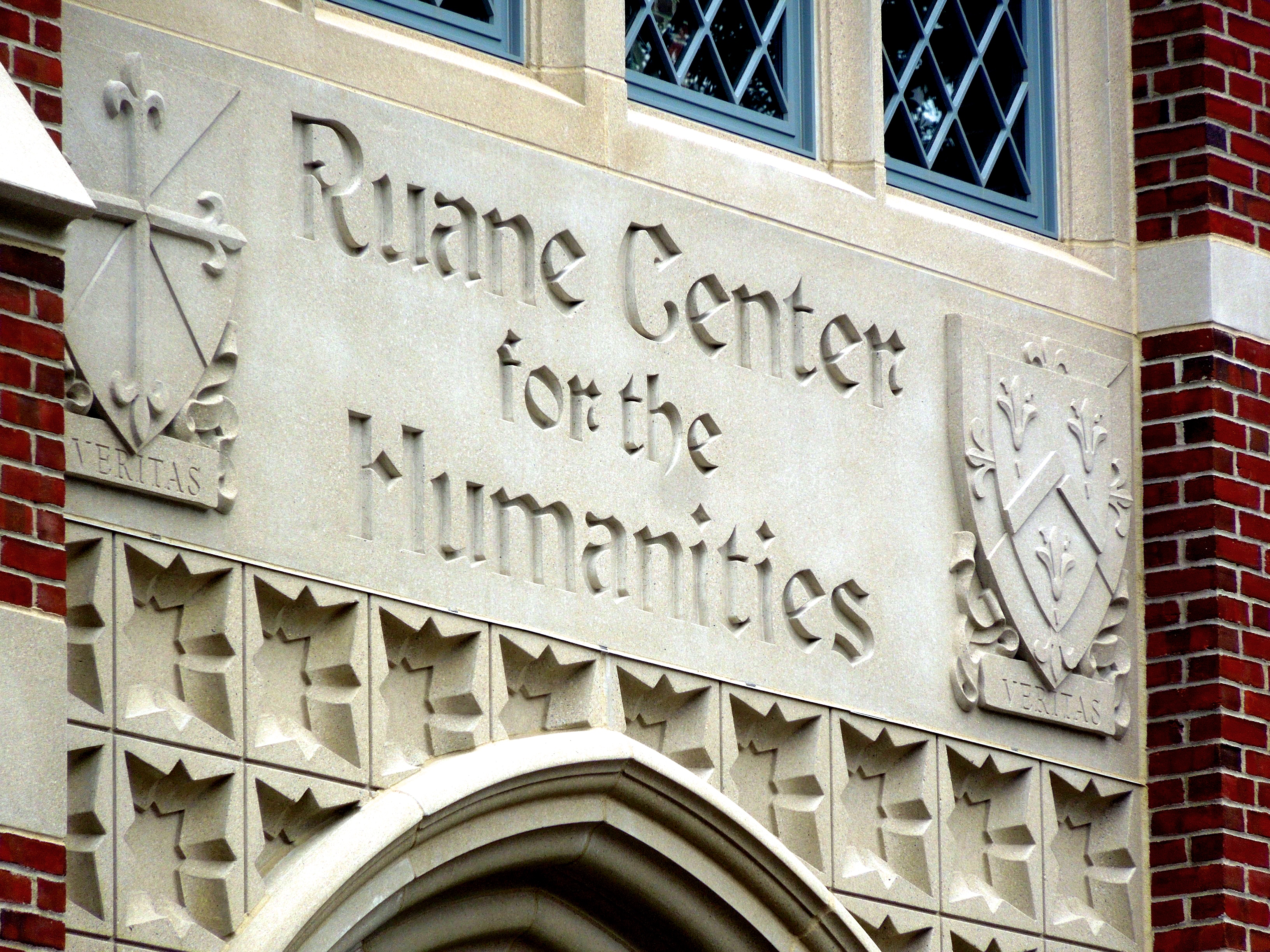
In the 21st century, imported labor with chisels is not required to produce elegant  ornament. (Photo by David Brussat.

In the 21st century, imported labor with chisels is not required to produce elegant ornament, such as this at Providence College’s Ruane Center, recent winner of a Palladio Award. (Photo by David Brussat)

A good friend who is also, by turns, a modernist sent me an old critique of his from when the Ruane Center for the Humanities, at Providence College, was dedicated. I referred to the center in a post today, “Take modernist bull by horns,” and he kindly revisited his criticism upon me. Here is his diatribe, published in “New England Diary,” and here is my response:

The modernists (in which category I place you for purposes of criticizing this piece of writing) call for new materials and techniques but, as here, you complain when they are used. Stamped detail and buttresses and arches that are not structural are a good example of that.

One can rail against PC for producing a building that is in many ways of the 21st rather than the 19th century, but PC did not promise to produce a 19th century building. It was not necessary. And it would have been too expensive to hire Eyetalians imported from Rome to carve its elegant lettering, and yet elegant lettering is what it has.

Your hypocrisy is appalling. You may be right that this is “faux Gothic,” but by complaining about it you reveal a depth of understanding that is inferior by far to the understanding that PC deployed in producing a building of this type.

Is it perfectly satisfying? No, of course not. Is it satisfying enough? Yes. Is it more satisfying than any modernist alternative would have been? A million times so, even if it had been crafted to perfection by the ghost of Mies himself.

Posted in Architects, Architecture, Architecture Education, Architecture History, Art and design, Providence | Tagged , , | 3 Comments

Take modernist bull by horns

Ruane Center at Providence College, by S/LA/M Collaborative, winner of the Palladio Award for new work above 3,000 square feet. (sullivanbuckingham.com; photos below by David

Ruane Center at Providence College, by S/LA/M Collaborative, winner of the Palladio Award for new work above 3,000 square feet. (sullivanbuckingham.com; photos below by David Brussat)

The recent announcement of the Palladio Awards reminds me of how rare it is to find an active pursuit of self-interest, let alone boldness, in carrying out the classical revival since the death, in 2013, of Henry Hope Reed Jr. He led society’s pushback, in America at least, against modern architecture’s attack on beauty in the built environment. The battalion of journals on traditional architecture founded by one of his staunch allies, editor emeritus Clem Labine Jr. of Active Interest Media Group, has kept up the good fight.

DSCN1090.JPG

DSCN1091

DSCN0838.JPG

DSCN0839.JPG

DSCN1073.JPG

The Palladios are handed out by two professional journals, Traditional Building and Period Homes, that represent two primary realms of architecture, houses and buildings. Both publications unabashedly favor the design and development of new houses and buildings in traditional styles, publish essays expressing how a proper understanding of tradition embraces both the past and the future, and carry copious advertising by firms that produce the features of traditional architecture. It is growing in popularity as many in society grow tired of the tarnished “excitement” of modernism.

Traditional architecture dominates the design and construction of houses because people generally buy or build their homes in a style that they find congenial to their expression of self, and have the power to carry out such purchases according to their own lights. Buildings, on the other hand, are larger architectural structures that house more complex human endeavors, such as city halls, banks, churches, museums, universities, etc. Their design is usually chosen by boards whose memberships are marinaded in the false idea that “the future” must look like a Jetsons cartoon, and that traditional ideas of how buildings and streets and cities should look is considered old hat and sneerworthy – even though such ideas reflect what most people still love and want, both in their personal settings and in the settings of places where they work and enjoy themselves.

Modern architecture and planning rose to dominance here over several decades when American society was feeling confident after winning World War II. That confidence was reflected in a popular admiration for design that embraced sleekness and purity of line – fast forward! – which reflected the supposedly utilitarian ideal of running society as if it really were a machine – which became the default idea of the future in popular culture, advertising, etc.

Unfortunately, it hasn’t worked out well, and modernists never figured out how to craft buildings, streets and cities with sleekness and purity of line without seeming to omit aspects of design that reflect the long human penchant for detail in every aspect of life.

Detail, manifested as ornament, reflects not only a desire to put a personal imprint on the artifacts of one’s own life; it also reflects the ordered complexity that is built into our DNA, causing the evolution of human endeavors to reflect, in their development and replication, the structures of natural change and reproduction, the survival of the fittest. Ornament is the metaphor for our prehistoric need for information about our immediate environment – the intuitive capacity to identify where a tiger might be hiding on the savannah.

Modernists wrongly concluded a century ago and today work hard to maintain the fiction that sleekness and purity of line is inconsistent with embellishment. Student architects and designers go to school to cleanse themselves of the instincts for ordered complexity and adaptive structure – which have evolved forward as the attraction to beauty. They are taught to treat the wide public dislike of their work as a feather in their cap, and that is the attitude they maintain as professionals.

The American Institute of Architects is a bastion of modern architecture’s benighted querulousness, its instinct to draw up the bridge against popular taste in the big job of forming society’s vital sense of place.

Some people are tired of having to erect a defense mechanism against the ugliness of what these professionals have created. People want to fight back, and they have the numbers to force change. Traditional Building is one of their few rallying points in the tricky game of confronting the modern (and modernist) development process. and yet it is a battle that in a democracy ought to be relatively easy to win. Some other organizations have had a hard time girding their loins and stepping up to the plate. How sad this is!

Posted in Architects, Architecture Education, Architecture History, Art and design, Development, Providence, Urbanism and planning | Tagged , , , , | 3 Comments