Sniffing at Corbu and E-1027

E-1027, overlooking the Mediterranean. (architectmagazine.com; Manuel Bougot)

E-1027 (1929), overlooking the Mediterranean. (Manuel Bougot; Architect)

Anthony Flint has an intriguing piece in Architect magazine, “Restoring Eileen Gray’s E-1027.” It’s about restoring the rather Corbusian seaside dacha designed by the Irish furniture designer (and lesbian) Eileen Gray. She had befriended the founder of modern architecture, Le Corbusier, who moved into E-1027 when she was away and left a trove of Picasso-esque lewd graffiti on the walls that ruptured their friendship when she found out about it. The essay includes some rarely seen nude shots of the Great Man. Anyway, here is Flint, who is with the Lincoln Institute, in Cambridge, pulling aside the Wizard of Ozian curtain of this farce:

Visitors start with E-1027, proceed to L’Étoile de Mer and the camping huts, and only then do they explore Le Corbusier’s cabanon. Which could lead to some scandalous thinking: How much was he actually inspired by Eileen Gray? The simple dining table, the compact kitchen, the acutely positioned fenestration — suddenly the cabanon looks more derivative and less like a unique creation. Nearly a century later, this is Eileen Gray’s revenge.

Like Flint, I discount the possibility that Corbusier was significantly influenced by Gray. She was probably more influenced by his work, which was relatively well known by the time they met in the early ’30s. Long after, Corbusier died during a swim near E-1027. It was on Aug. 27, 1965. Maybe that was the real revenge of Eileen Gray, leaving aside that of the world.

Flint has written a book about Corbusier, Modern Man: The Life of Le Corbusier, Architect of Tomorrow. Architect of tomorrow? Let’s hope not. Architect of the day before yesterday? I’m afraid that cannot be denied. Flint has also written an excellent book about the clash between Jane Jacobs and Robert Moses, Wrestling With Moses.

Flint continues to scrape the Corbu scab via Gray’s beach house:

Here was a modernist summer home so superb Le Corbusier himself could have created it—but built by someone untrained in architecture, and a woman, no less. Gray had also angered Le Corbusier—not hard to do—by quibbling with his dictum that a home was a “machine for living in.” A home, she argued, was actually a living organism.

“[S]o superb Le Corbusier himself could have created it”? Well, nothing he created was superb, unless one limits the field to other modernist works. And Gray’s house, to  judge by the photos included in Flint’s essay, was no “living organism.” If she did indeed quarrel with Corbu over his notion that a house should be “a machine for living in,” then her beach house cannot be used as evidence for her side of the argument. It is a just another crapatorium in the canon of Corbusier – a house that exalts the sharp angles that humans tend to flee. It, no less than his famous Villa Savoye, is a compendium of elements that are at war with the very idea of a home as a “living organism.”

Notwithstanding “so superb,” it is not a far stretch at all to suppose that someone completely untutored in architecture could design a house that reflects the principles Corbusier has inflicted upon the world!

Corbusier was a jackass, a fact does not absolve him of greatness. Flint also plugs his less admirable qualities in the following paragraph:

[T]he public opening of E-1027 coincides with a new rash of criticism of France’s favorite son. [?!] A recent exhibit at the Pompidou Centre was faulted for omitting the architect’s time in Nazi-controlled Vichy during World War II, which was detailed in two recent books that raise troubling questions about the extent of his fascist sympathies. For those who argue that Le Corbusier is responsible for the destruction of cities, and the proliferation of blank walls and soulless towers, there is no little glee for this latest attack. He was a swaggering figure, not always particularly nice to be around, a serial philanderer, and somewhat parasitic in arranging his personal affairs. His behavior at E-1027 has been likened to a dog marking its territory.

Well said, Anthony Flint. Corbusier was indeed responsible for the destruction of cities. The legacy of Robert Moses in New York City is prime evidence. But, really, that last bit is unfair to dogs.
Posted in Architects, Architecture, Architecture History, Books and Culture | Tagged , , , , , , , | 5 Comments

Salingaros does Metropolis

Illustration by Nikos Salingaros.

Illustration by Nikos Salingaros.

Over the past few days, Nikos Salingaros has three new essays in Metropolis, the magazine of architecture, design and culture. His writing, with frequent literary partner Michael Mehaffy, has appeared in Metropolis before. These latest essays track his research and thinking on the influence of neurobiology on architectural preference. He argues that people like traditional buildings and streetscapes because they are designed in ways that are healthy and emotionally nourishing, insofar as they reflect the biological processes of reproduction and development that have evolved since prehistoric times.

Salingaros, who is a mathematician and theorist of architecture and urbanism at the University of Texas in San Antonio, and teaches at universities around the world, has focused the three essays thus far on a phenomenon called biophilia – literally, the love of living things – which, when it guides design, produces healing environments.

This is from the first essay, “Why We Should Be Living in ‘Living’ Houses“:

[One] source of biophilia comes from biological structure itself: the geometrical rules of biological forms with which we share a template. This structure is believed to elicit a general response in humans of recognizable “kinship” that cuts across the divide between living and inanimate form. Manmade structures with basic properties in common with our own bodies resonate, “strumming the strings” of our biophilia. Mechanisms of living structure are either the same, or they parallel the basic organization of biological systems. Biophilia, therefore, mixes the geometrical properties and elements of landscape with complex structures found in — and common to — all living forms.

There will be ten essays in the entire series, according to an editor’s note introducing the articles. Here are the second, “What Do Light, Color, Gravity, and Fractals Have To Do With Our Well-Being?” and the third, “What Kind of Design Triggers Healing?”

By the way, Metropolis is to be commended for running material that, because it can be interpreted as contradicting the established wisdom of architecture today, might be excluded from other journals of design.

Posted in Architecture, Architecture Education, Art and design, Development, Urbanism and planning | Tagged , , , , , , , , | 1 Comment

The great cities after WWII

Celebration of VE Day in New York. (Time)

Celebration of VE Day in New York’s Times Square. (Time)

Today is the 50th anniversary of the day Japan’s surrender in World War II was announced – a holiday still celebrated in no U.S. state but Rhode Island. It is a day to remember those who died, those who sacrificed, and those who suffer today because of the war. Among the latter are those who live in cities bombed in the war, both Allied cities and Axis cities.

The cities that were bombed heavily suffered mightily during the bombing and – less widely noted – in the decades after the bombing. London, Berlin and Tokyo, to name only national capitals, suffered and still suffer the most. The cities saw huge swaths obliterated, but the civic healing arts that might have been applied to rebuild them went unapplied. Instead, the memory of war that ought to have been a matter of history books and memorials was etched indelibly into city fabric.

These capitals were rebuilt according to new design theories that replaced traditional beauty with the dubious aesthetic of machinery, without even the counterbalancing benefit of actual utility. No lives were lost in this peaceful assault on cities, but the change has taken a toll in damage to the psyche of all citizens, of societies as a whole, the life of entire nations. This reflects an abdication of responsibility on the part of civic leaders in nations across the globe for the past half century and more.

Civic leaders elected for their wisdom (to put the best spin on democracy) turned out far less wise than their electorates, who saw the writing on the wall. They were suspicious of modern architecture from the beginning and eventually turned historic preservation from a pastime devoted to saving such sites as the homes of the nation’s founders to a mass movement to save cities and neighborhoods from the depredations of urban renewal.

A list of the capitals most noted for beauty today can also be read as a list of capitals whose leaders resisted the obviously false mantra that cities must literally look like machines in order to run efficiently, or to “reflect their time.” Machinery was and is a facet of our time, but many other aspects of human nature and society transcend nuts and bolts.

Paris and Rome are the most notable of the cities who held onto this deep truth, but having avoided mass bombing, their civic leaders did not need to choose between beauty and ugliness. Civic leaders in other cities found this choice – to the regret of posterity – easy to make. Many cities did not need to be obliterated by bombing to embrace the fashionable assault on their own beauty. New York may be the most important of those cities. It is still a great city but no longer a beautiful city. That is a huge loss.

It may be assumed that cities with fewer resources than New York lost more than New York when they lost their beauty. Such cities are legion in the United States. Some cities did not lose so much of their beauty, such as Providence, where I live. But it and others – including Paris! – look down and away as an unlovable and unhealthy ugliness knocks at their doors.

It is bad news that an entrenched architectural establishment that honored and practiced beauty could be so swiftly and easily replaced, as happened between 1940 and 1950, by one that honors and practices ugliness. But it is good news that the reverse could also occur. The future is a big place, open to all possibilities. We should think of that as we ponder the 50th anniversary of the end of the worst war in history.

Posted in Architecture, Architecture History, Other countries, Preservation, Urbanism and planning | Tagged , , , , , , | 4 Comments

New HQ for classical revival

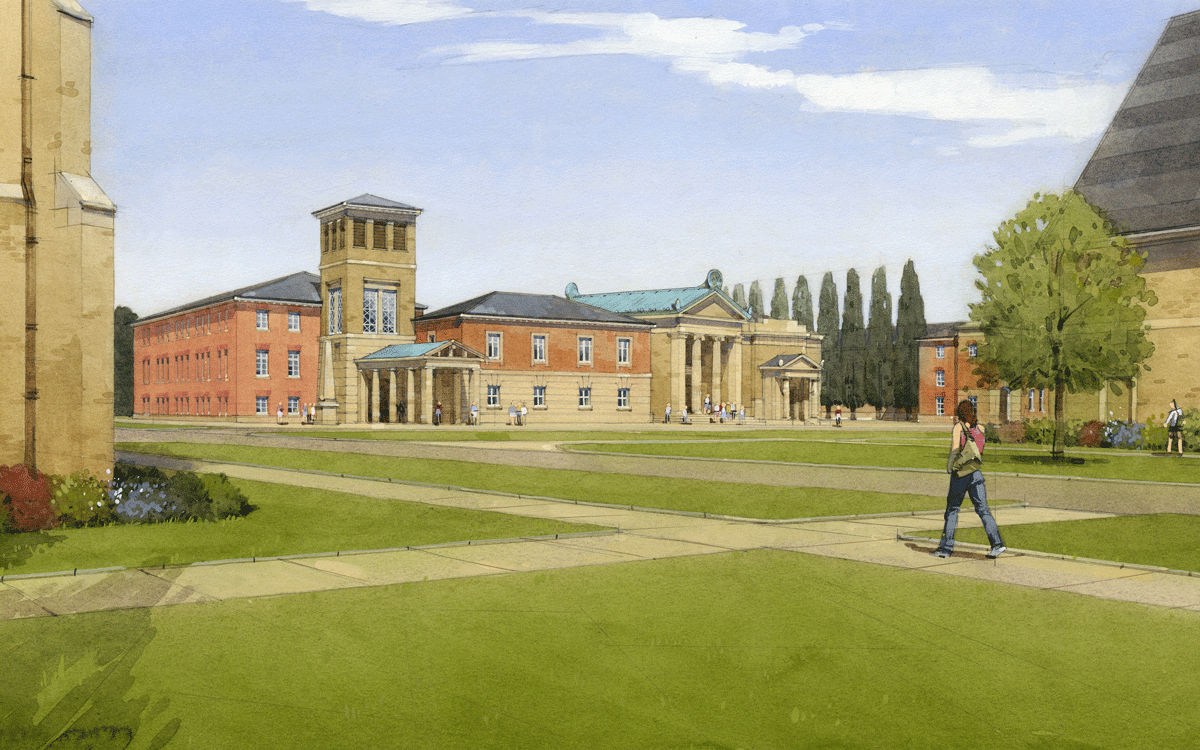
Rendering of the planned new School of Architecture building at Notre Dame. (johnsimpsonarchitects.com)

Rendering of the planned new School of Architecture building at Notre Dame. (johnsimpsonarchitects.com)

The School of Architecture at Notre Dame hosts the only major classical curriculum in the world, so far as I know. There are one or two schools and departments at the university level that offer a choice of curricula, such as at Yale, and some smaller colleges that offer a classical curriculum or courses in classical architecture, such as Judson, in Elgin, Ill. Courses in architectural history are offered at a few. A program devoted to contemporary classical architecture and urbanism has recently been founded at the University of Colorado Denver under Christine Franck. But such progress is not without its steps backward. The Boston Architecture College last year dumped its new classical curriculum for reasons it claimed were entirely financial. Right.

So Notre Dame remains the focus of classicism in the modern world, the unchallenged headquarters of the classical revival, such as it is and may one day be. It has announced a design for the new campus of its school of architecture, designed by John Simpson, the British architect whose firm won last year’s competition. The lovely rendering above, by Chris Draper, and other images on the Simpson website, show that pride may be taken in the school’s decision to build a new campus that beautifully suggests its role in rolling back the continuing attack on the built environment.

May the new campus be swiftly erected, occupied with brio, and boost the spirit of the classical revival!

Hats off to Josh Arcurio for sending the render to TradArch, whose members are already embarked on a spirited debate of the buildings’ design.

And here is a list, sent to TradArch by architect Michael Imber, of the 100 most beautiful campuses in America, a list that contains extraordinarily few modernist campuses. The fact that any modernist campus is listed above the stunning campus of Brown University, however, casts doubt on its compilers’ aesthetic sensibility. Indeed, Brown is not even on the list. For shame!

Posted in Architects, Architecture, Architecture Education, Architecture History, Urbanism and planning | Tagged , , , , | 4 Comments

Movie news of the century!

Leonardo DiCaprio stands before a bird's-eye view of the White City. (Curbed)

Leonardo DiCaprio stands before a bird’s-eye view of the White City. (Curbed)

Return of the White City! World’s Columbian Exposition of 1893 recaptured in celloid! Beaux Arts classical architecture writ large as the silver screen!

Sex, violence, megalomania and beauty? That too!

Nothing excites me more than news from Curbed.com that one of my favorite books, Erik Larson’s historical novel Devil and the White City, is finally going to be produced. “Devil in the Details: Can Scorcese and DiCaprio recreate Devil in the White City?” is the tart headline, and hats off and far up in the air to architect Robie Wood for sending this story in to titillate the tremulosities of the classicists at TradArch.

DiCaprio will play the villain, serial killer H.H. Holmes, who was subject of the first megamurder trial in the nation’s history. The blackguard Holmes built a hotel to accommodate guests flooding into Chicago for the Exposition – some 28 million visitors, a quarter of the nation’s population in 1893. But his hotel had rooms not just to house but to murder guests, especially his “girlfriends,” and “render” their remains for disposal.

Louise McNamara sends additional horror from Britain’s Daily Mail:

Ahead of the 1893 Chicago World Fair, Holmes designed and built a hotel nearby specifically for torturing and killing staff and guests. Subsequently named the Murder Castle, the three-story labyrinthine structure had rooms for gassing, incinerating, asphyxiating and hanging people, as well as giant furnaces, acid vats and lime pits for disposing of their bodies.

Convicted of murdering 27, he may have dispatched up to 200 victims.

I have little doubt that Hollywood, Scorcese, DiCaprio et al. are capable of sending the appropriate chills up the spine of the movie-going public. The question – and the “devil in the details” referred to in the Curbed headline – is whether they will be able to recreate, in detail, the White City. It was designed by the world’s top Beaux Arts architects and was so movingly lovely that it sparked the City Beautiful Movement that brought classical architecture to city centers throughout the nation.

Later, after modern architecture had demolished the City Beautiful Movement, modernist icon Ludwig Mies van der Rohe (father of the glass box) liked to say “The devil is in the details.” And of course generations of architecture oafs have lionized him for such profundities.

Almost all of the White City’s 14 major and scores of minor buildings were made of “a mixture of plaster, cement, and jute fiber called staff,” according to Wikipedia. The place was intended to be demolished after the exposition’s conclusion, and indeed it burned down before it could be razed. That leaves me, at any rate, with a fond hope that Hollywood is fully capable of creating a believable set, and that we’ll be able to enter the White City again. Perhaps this will put some real oomph into the classical revival!

Curbed’s writer, Patrick Sisson, proposed some actors to play certain roles, including many of the starchitects of that era. Here are his suggestions:

  • Daniel Burnham – Nick Offerman
  • John Root – Kiefer Sutherland
  • Geo. Washington Ferris – George Cloony
  • Sophia Hayden Bennett – Lizzy Caplan
  • Louis Sullivan – Jeff Goldblum
  • Frederick Law Olmsted – Anthony Hopkins

Curbed did not say when the film is scheduled for release.

Palace_of_Mechanic_Arts,_1893_World_Columbian_Exposition

Posted in Architects, Architecture, Books and Culture, Urbanism and planning | Tagged , , , , , , , , , , , | 1 Comment

Kingsley Amis bags a statue

Not sure whether this reflects the subject, but it appealed to me. (jenburn.blogspot.com)

Not sure whether this reflects the subject, but it appealed to me. (jenburn.blogspot.com)

The late Kingsley Amis wrote The Old Devils (1988) about a community of old art farts in Wales when one of their old school chums, “media Welshman” Alun Weaver, decides to end his long successful literary career in London and return home to Wales. He had sexual affairs long ago in this community, and so did his wife, the still beautiful Rhiannon, and all of this reverberates upon their return. In this passage, unrelated to sex, Alun presides at the unveiling of a statue of an even more celebrated Welsh poet:

To one side of the porch entrance there had stood, longer than anyone could remember, a short, dingy stone pillar supporting a life-sized figure too badly battered and weathered to be recognisable even as a man, but always vaguely supposed to have portrayed a saint. Today the whole thing was covered with a great red cloth ….

[The mayor] jerked at the end of an ornamental rope or cord that Charlie had not noticed before. With wonderful smoothness the red cloth parted and fell to reveal, standing on a plinth of what looked like olive-green marble, a shape of glossy yellow metal that was about the height of a human being without looking much more like one than the beat-up chunk of stone that had stood there before.

There was a silence that probably came less from horror than sheer bafflement, then a sudden rush of applause. The presumed sculptor, a little fellow covered in hair like an artist in a cartoon, appeared and was the centre of attention for a few seconds. Another youngster, who said he represented the Welsh Arts Council, started talking about money. It came on to rain, though not enough to bother a Welsh crowd. On a second glance, the object on the plinth did look a certain amount like a man, but the style ruled out anything in the way of portraiture, and Charlie felt he was probably not the only one to wonder whether some handy abstraction – the spirit of Wales, say – had pushed out the advertised subject. Those close enough, however, could see Brydan’s name on the plate along with his dates, 1913-1960.

After Alun’s speech, he joins his friends and they are soon joined by a group of arts officials, one of whom wants to discuss the statue:

“Well now,” he said in the kind of husky alto often put down to massive gin-drinking, “what’s the state of feeling about our new piece of sculpture?”

“Oh, Christ,” said Alun as if before he could stop himself. “Er … actually we haven’t discussed it, have we? It’s not what I’d call my field. Gwen, you’re good on art.”

“That’s sweet of you, Alun. Well, it hasn’t got any holes in it. You can say that much for it.”

The group begins to compare the sculpture’s £98,000 cost with that of a torpedo:

“If you don’t mind,” croaked the questioner, “could we forget about torpedoes for the moment and get back to the sculpture? You, Mr. …,” he turned to Charlie, “you haven’t said anything yet.”

“No, well … I thought it wasn’t at all figurative,” said Charlie rather complacently.

“Is that all? Has nobody anything more, er, more, er, more constructive to put forward?”

Nobody had.

“So nobody here shares my feeling that the Brydan monument is an exciting breakthrough for all of us in this town?”

Like everyone else, Charlie at once ruled out the possibility of any sort of irony being intended. There was general silence, with eyes on the floor, until Gwen said in a voice not intended to carry far, “If you’re going to call that, or anything like that, exciting, what do you call the late-night horror movie? When it’s slightly above average?” She frowned and smiled as never before.

Alun nodded weightily. “Very good point,” he said.

“My colleagues and I had hoped [said the art official] for a little bit of encouragement. Here we are going all out, fighting to bring the best in modern art to the people, to whom after all it belongs, and not to any fancy élite, and people like you, educated people, don’t want to know. You don’t, do you? You’re happier with your cosy, musty Victoriana. Safe I suppose it makes you feel. Anything challenging you give a wide berth to. Well, I take leave to doubt whether your reaction is typical. Good day to you.”

The man of position jerked his head at his aides to signal a move in a way that recalled a boss in a different kind of film, returning from a few paces off long enough to add, “You’re entitled to your opinions, it goes without saying, but they’re clearly based on ignorance, whereas the artist in question was selected and instructed by a panel of experts. Kindly take note of that.”

I thought Amis’s perception, at the end, of the authoritarian bent of the art bureaucracy was sharp. More broadly, the passage speaks to the reaction of a general public, even upper-tier sorts, to modern art and, by extension, modern architecture. General opinion on architecture, at least, is often more sophisticated than elite opinion, because the public has as much experience with it as elites do, and is not burdened by design education that eradicates common sense and natural intuition that favor tradition in aesthetic matters.

Posted in Architecture, Art and design, Books and Culture, Humor | Tagged , , , , , , , , | Leave a comment

“Modern is not a style”

Not sure this is precisely the sort of modernism that is targeted below, but as a prototypical modernist cliche it works for me. (danncoffey.com)

Not sure this is precisely the sort of modernism that is targeted below, but as a prototypical modernist cliche it works for me. (danncoffey.com)

Modern in Denver, a Colorado design magazine, has posted what I believe is the first installment of a regular column inviting local modernist architects to comment on design issues, with the hope of generating conversation among readers. Hats off to Denver’s own Christine Franck, who sent it to TradArch, smitten, as I was, by the workaday affection for modernism at USModernist Radio, which recently interviewed Justin Shubow on Frank Gehry. This essay, “Modern Is Not a Style,” by Ken Andrews and E.J. Meade of Arch11 Architecture, reflects the thinking of the conventional architect of today. Here is the authors’ intro to their piece:

THE RECESSION IS OVER; NEW CONSTRUCTION IS BOOMING [in Denver], AND THE DEBATE ABOUT NOSTALGIC NEIGHBORHOOD CHARACTER RAGES IN THE MEDIA. HOMEOWNERS, BUILDERS, AND SPECULATIVE DEVELOPERS ALTER URBAN ENVIRONS FOR BETTER OR WORSE, AND THE PUBLIC BACKLASH IS ESCALATING. MODERN DESIGN SENSIBILITIES SUFFER SCRUTINY, PERHAPS RIGHTLY SO IF THE RECENTLY ERECTED COMPOSITIONS OF STUCCO AND WOOD BOXES THROUGHOUT THE CITY ARE THE MEASURE FOR MODERN ARCHITECTURE.

No traditional editor would allow his magazine to run an entire paragraph in all-caps. First, it is hard to read. Second, in today’s digital world, it signifies shouting at readers. Editors at Modern in Denver apparently did not get the memo that all-caps is impolite. But the larger point is that editors seeking a form of novelty to distinguish their text from more conventional magazine text (to which they revert after the intro anyway) have very few options – font (e.g., Times Roman), type size, type style (e.g., italics), color, all caps, no caps (e.e. cummings, anyone?) – all of which limit the typographical ability of text to convey flexibility in meaning. That is why we have conventions in typography as in so many other things. Abiding by convention permits a wider range of expression. And that segues (a favorite word of editors) right into the angst of Andrews and Meade.

They find that too many modernists in Denver are copying the past – reusing the stylistic tropes of Corbusier and Mies. This upsets them, but short of calling for an increase in genius, what can they do but wring their hands? Avenues for the pursuit of novelty are certain to reach a dead end eventually, especially since modernism has thrown out almost every tool in a design toolbox that took centuries to amass. Now the average modernist, sporting an average architectural education, runs out of ideas on how to be different very quickly, and has recourse either to going wacko – novelty without judgment – or copying the past and basking in someone else’s novelty.

With that in mind, here’s the nut graf (more journo jargon) of this essay by Andrews and Meade:

The resonance of masterpieces by Le Corbusier or Pierre Chareau lies not in recreating those spaces or material assemblies, but in channeling the daring vision, conviction, and innovation that allowed them to break free of the Victorian past and build to authentically match their times. To practice modern architecture is to have the confidence to design poetically mating use and occupancy with place, form, and time.

Yeah, I know, we’ve heard it before. But that’s exactly the point. Like the classicists of the 1930s facing challenges from early modernists, modernists today have no effective rhetoric with which to defend work that grows increasingly tiresome to the public. These are not your top-rank modernists, to be sure, but mark my words, the top-rank modernists have little to say that cannot be mined from this essay.

Snap your fingers and rise up, ye poetical mating of use and occupancy with place, form, and time! Denver awaits you!

Posted in Architects, Architecture, Architecture Education, Art and design, Development, Preservation, Urbanism and planning | Tagged , , , , , , , | 2 Comments

Beauty plays the piano

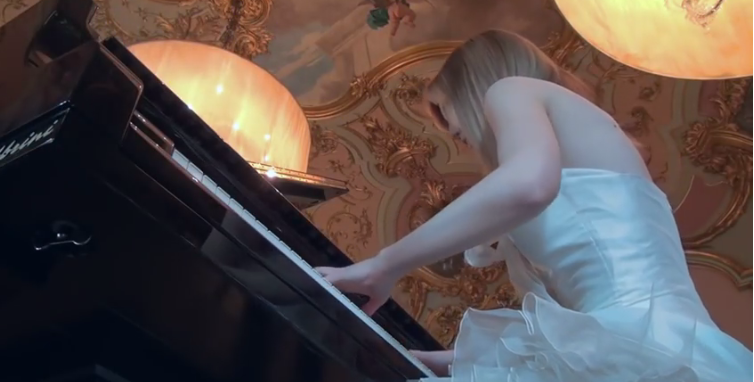
Screen shot of Vanessa Benelli Mosell playing Liszt.

Screen shot of Vanessa Benelli Mosell playing Liszt.

As I’m pulled more and more under the influence of the musical blog of Kaz, YouTube videos of performances by the composers he highlights enchant me with greater and greater frequency. Here I offer his post on Franz Liszt, the native Hungarian composer of the most gorgeously sensual piano music. Kaz regrets that Liszt, who died in 1886, was never recorded playing the piano. Edison invented the phonograph in 1877, which would have enabled such a recording, but using it to record a musical performance was not common until the 1890s. This is indeed a sad accident of history.

Screen Shot 2015-08-10 at 11.28.31 PM

But history made up for its oversight in 2007 with a high-definition video recording of Liszt’s “Liebestraum No. 3 (Love Dream)” played by Vanessa Benelli Mosell. “Regia e direzione artistica Pietro Tagliafferi,” says the video – “Under the artistic direction” I assume in my ignorance of Italian that it says – “of Pietro Tagliaferri.” It goes without saying that Mosell plays Liszt to sweet perfection. Her beauty, her arms, her fingers, her dress, her piano, the floor upon which it sits, the room in which she plays are presented with such loveliness that I urge all readers to luxuriate in this video, to indeed click the “full screen” button so that the beauty is fully in your face. Ahh! Liszt in exaltation! Brava! Grande bellissima! Or, if much of the credit for the beauty that surrounds the beauty of the music and the beauty of the pianist belongs to Maestro Tagliaferri, well then – Bravo! Grand bellissimo!

I must say these Kaz posts are too much – too fine, too fascinating, too beautiful, too addictive. Give me more!

Posted in Architecture, Art and design, Video | Tagged , , , , , , , | 4 Comments

Podcast: Shubow on Gehry

Justin-Shubow-House-hearing-Eisenhower-Memorial-billHere’s a podcast – a first on this blog – of Justin Shubow, president of the National Civic Art Society, appearing on US Modernist Radio to denounce Frank Gehry’s design for a proposed modernist memorial to Frank— oops! I mean to Dwight Eisenhower. The podcast is a short bit down the left of the USModernist Radio website, and lasts about 51 minutes.

Modernist Radio? That’s right. I am posting this podcast despite not having listened to it all. I am listening to it right now. It starts out with a jingle that goes “Mama don’t allow no architecture around here” – or something like that. The very concept of modernist radio strikes me as absurd – and I am joined in that opinion by the moderator of the show, George Smart, and his sidekick, or wingman, Frank King – both no doubt downplaying their own importance in a jocular vein.

So Modernist Radio really is fun, and let’s not forget that they have invited Justin Shubow on to criticize Gehry’s Ike memorial design. And, according to the description on the website of Modernist Radio, the moderators actually agree. Maybe this podcast belongs in my “Architecture that Dare Not Speak Its Name” collection.

On this podcast, although he criticizes the National World War II Memorial on the Mall – unjustly, I believe – Shubow does do a very good job lecturing his interlocutors on what memorials should be if they are to serve their purpose of explaining an American icon to Americans a century from now.

And by the way, the second half of the podcast features an interview with a few quotidian modernist architects whose houses have won low-level modernist prizes. Fascinating!!!

Posted in Architecture, Art and design, Humor, Landscape Architecture | Tagged , , , , , , , | 1 Comment

Shots of Westminster Street

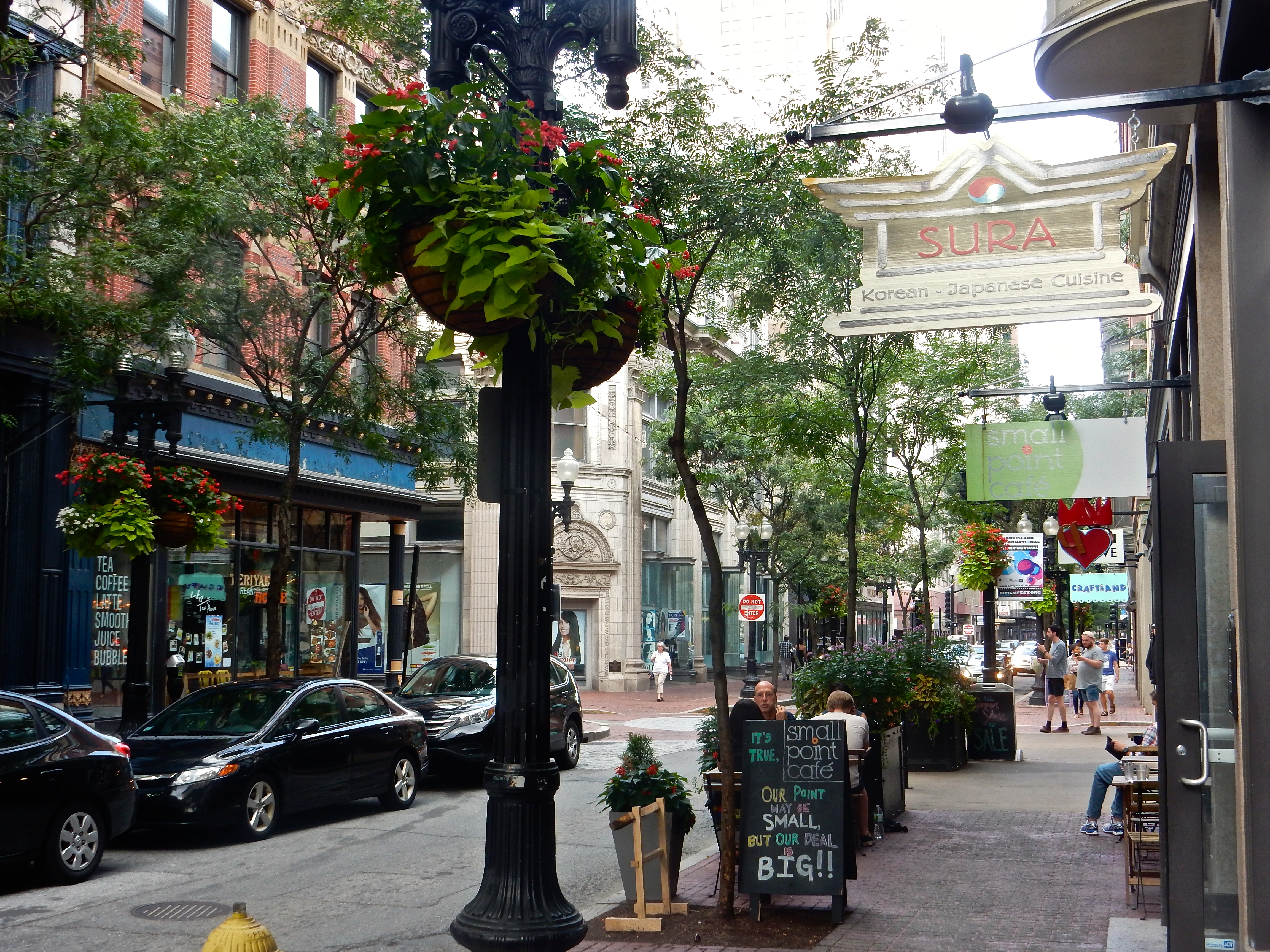
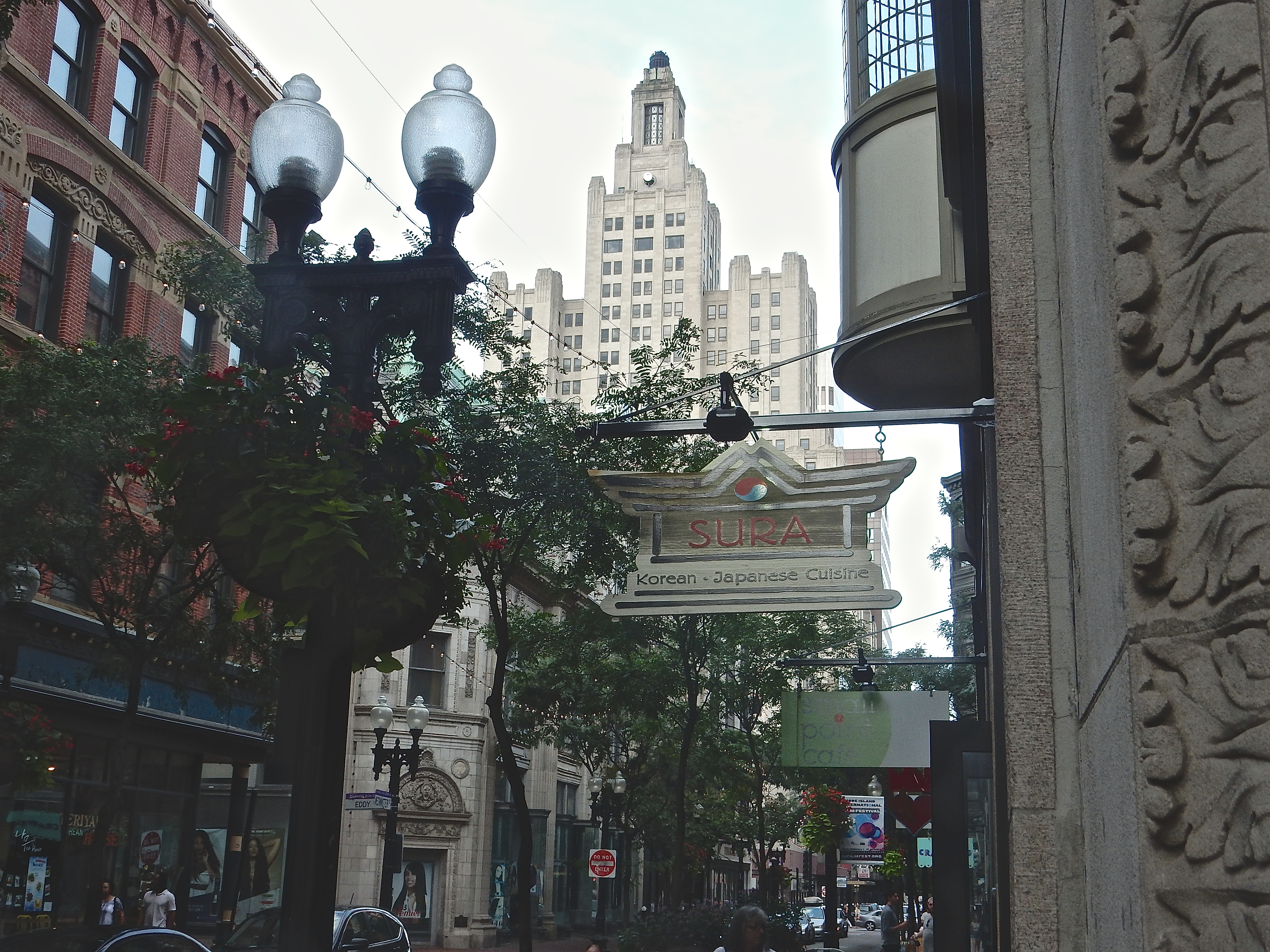
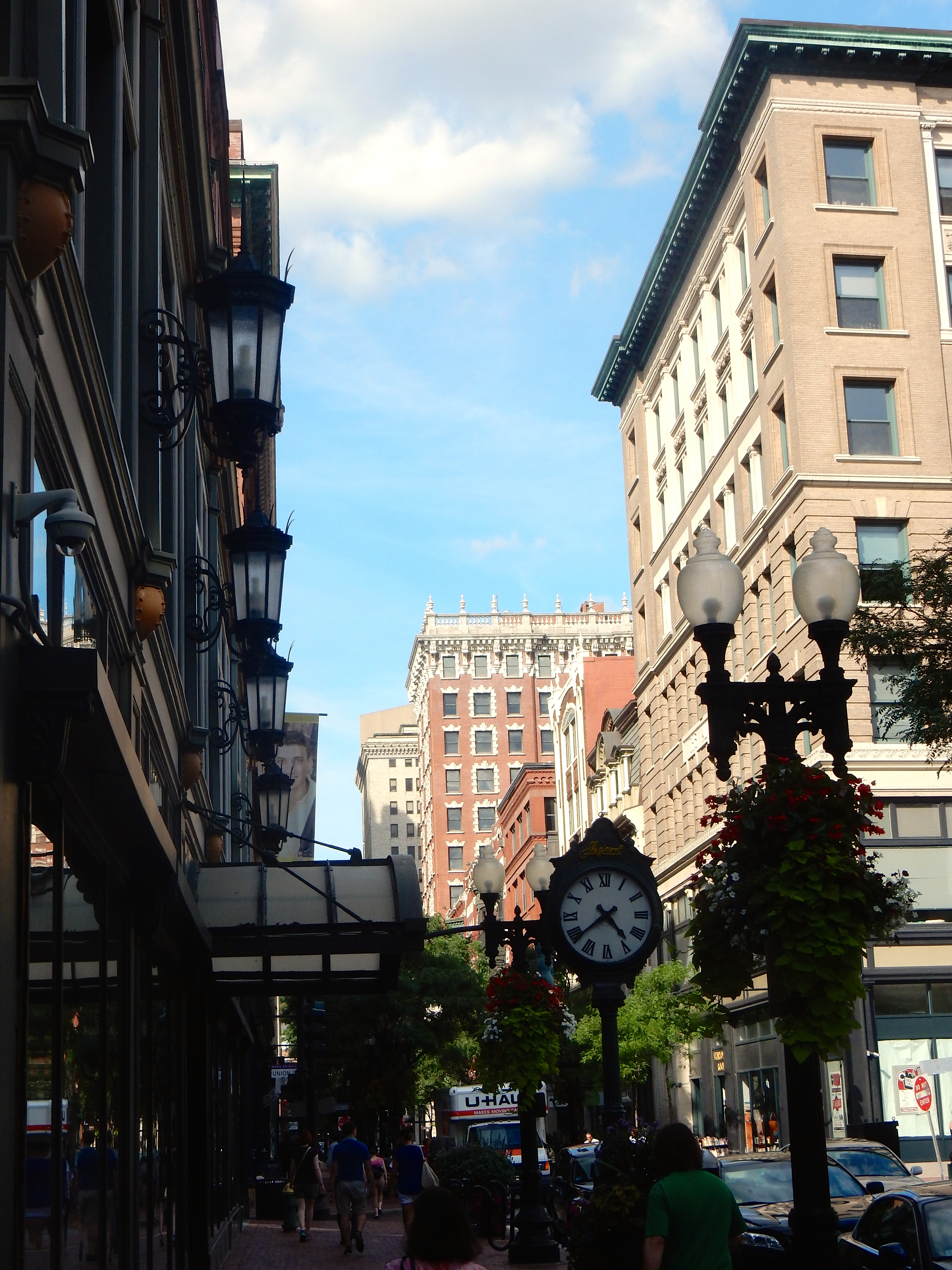
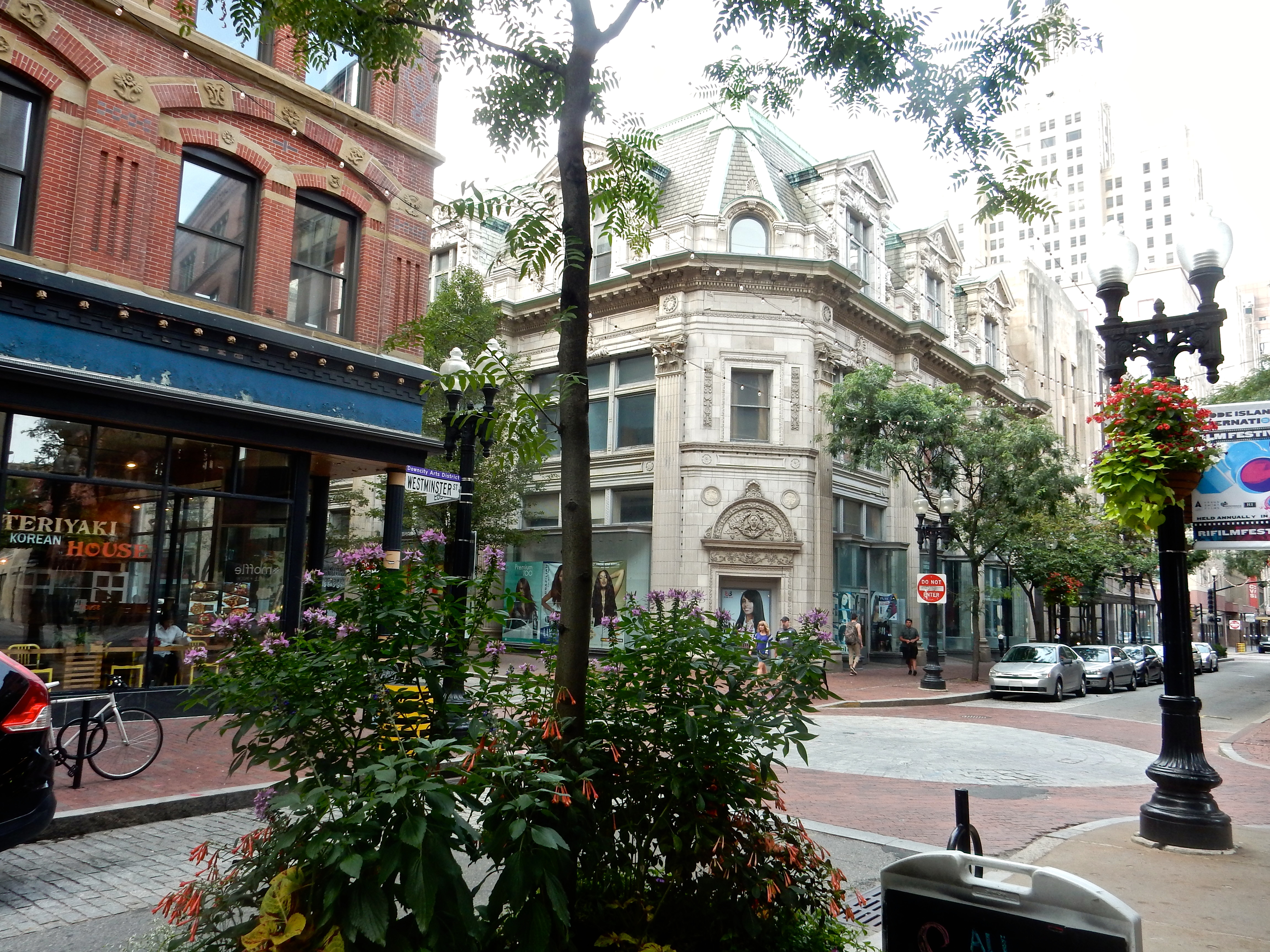
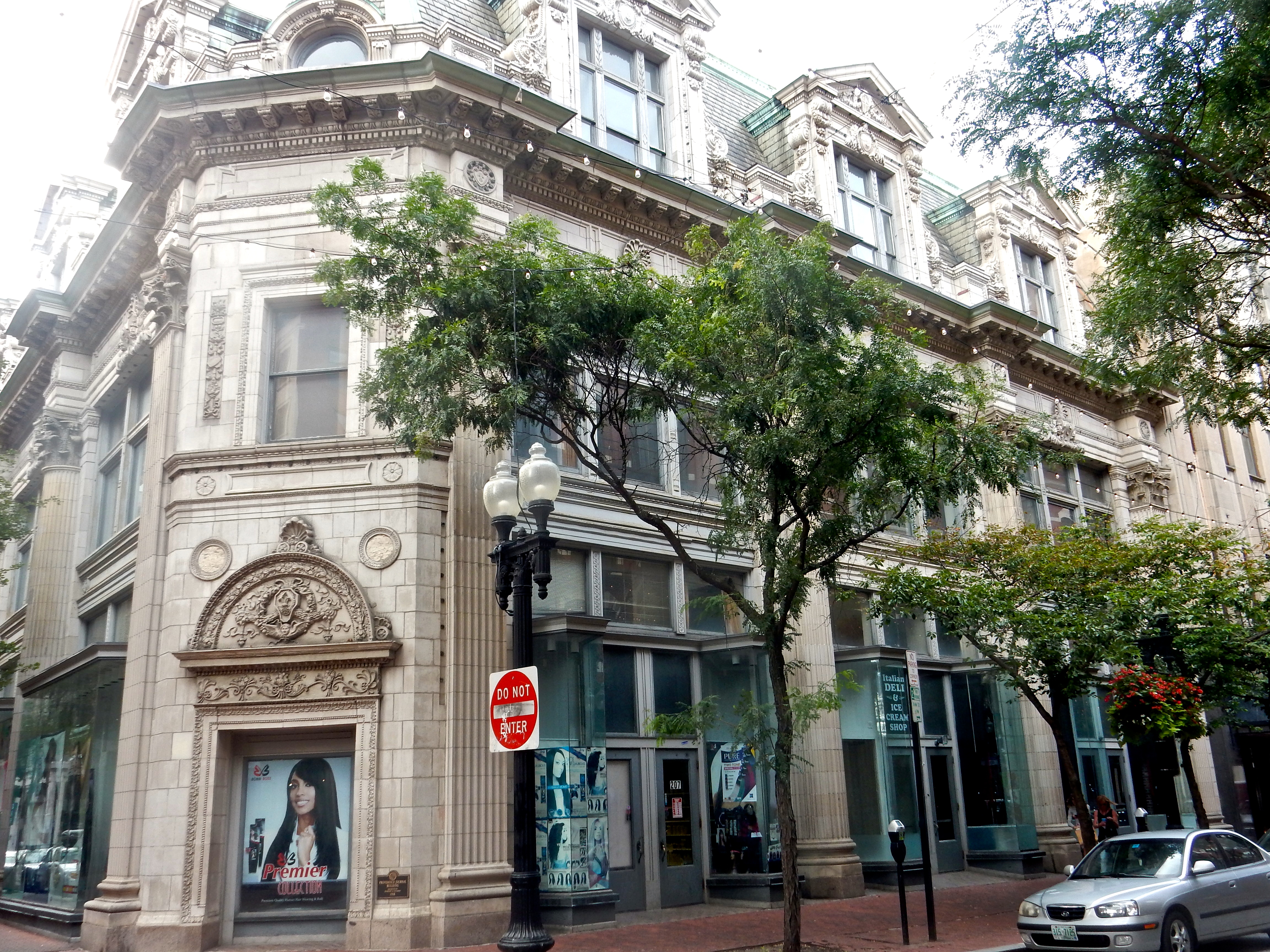
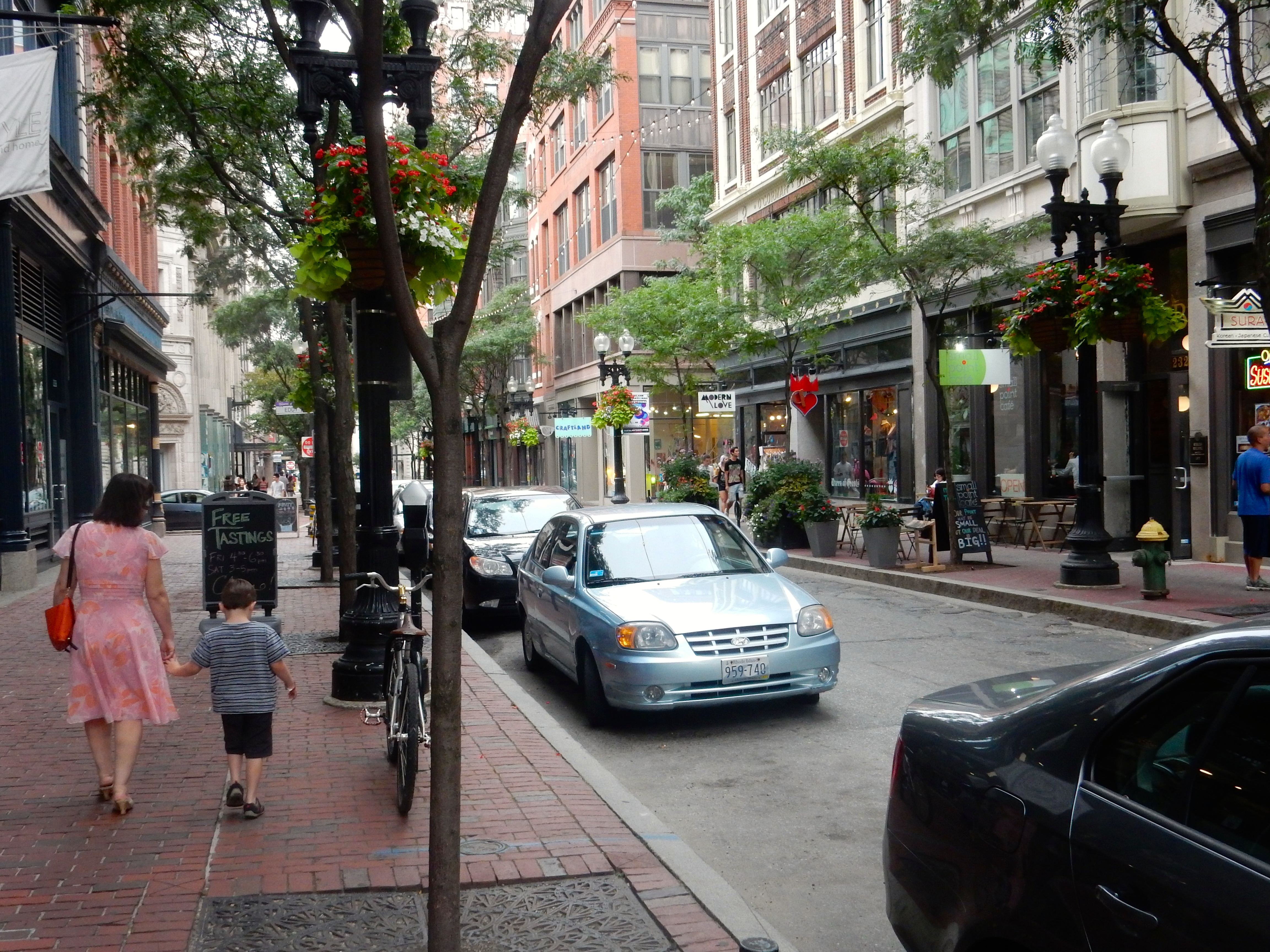
Westminster Street, in downtown Providence, looking east toward College Hill.

Westminster Street, in downtown Providence, looking east toward College Hill.

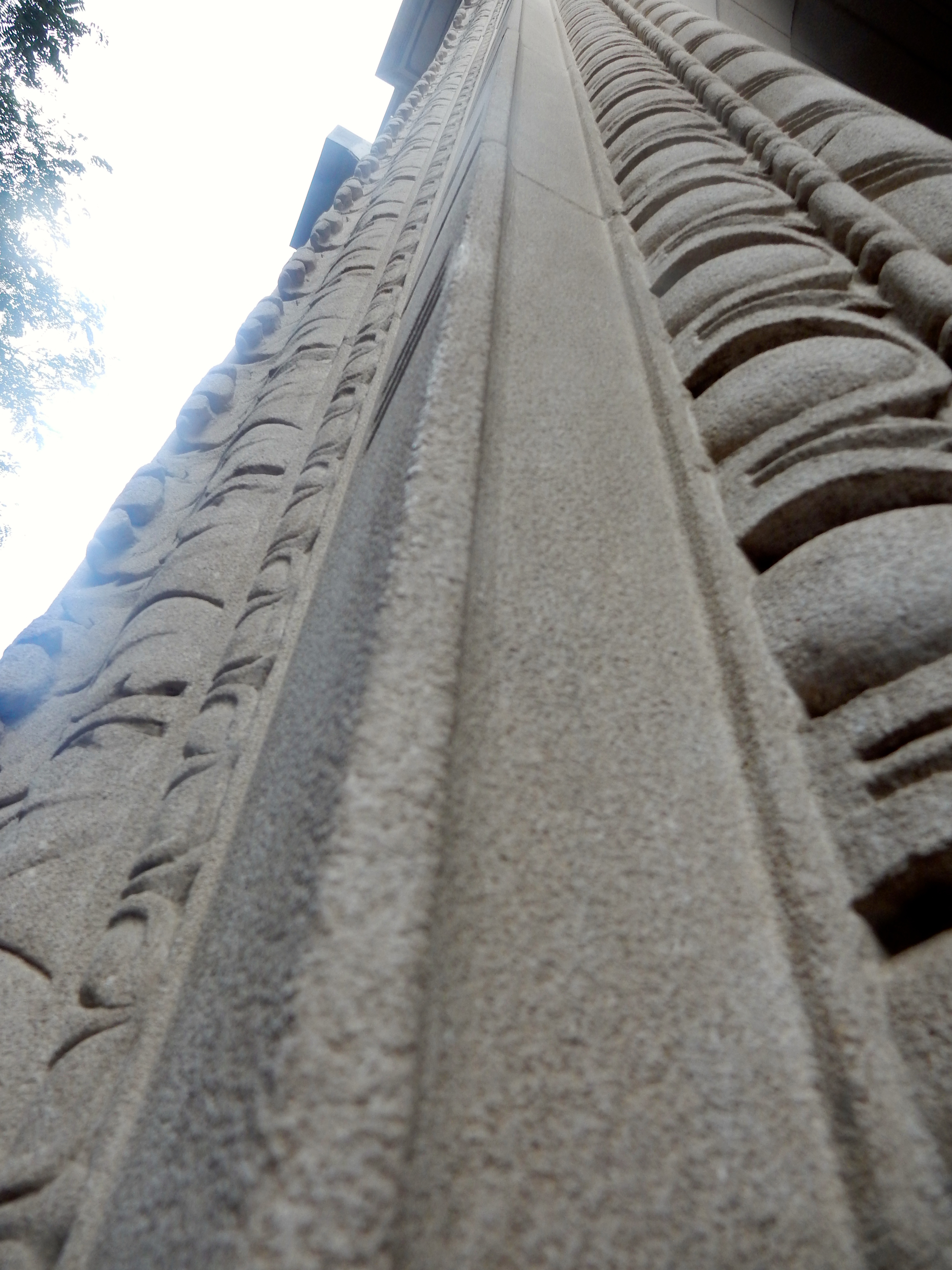
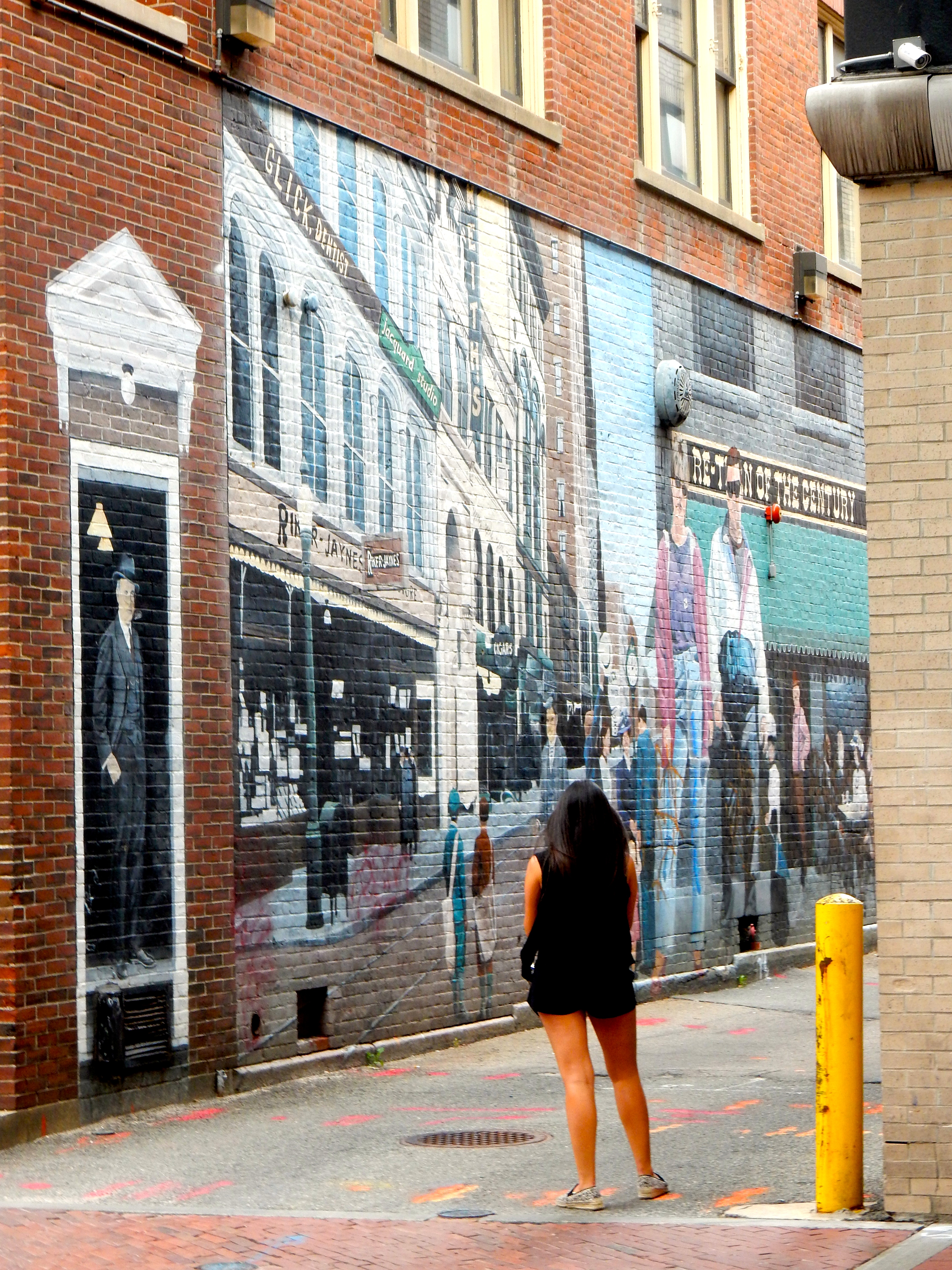
Victoria, Billy and I adventured to Westminster Street to see a friend, Elaine Ostrach Chaika, speak about her book, Humans, Dogs and Civilization, at a bookstore, Symposium Books. Afterwards, we walked up Westminster to Empire, where we dipped into the Foo Fest, an annual block party held by the arts cooperative AS220, I had my camera, and here are some results:

DSCN8273

DSCN8267

DSCN8266

DSCN8288

DSCN8276

DSCN8285

DSCN8295

DSCN8298

DSCN8305

DSCN8310

DSCN8312

DSCN8314

DSCN8315

DSCN8286

DSCN8324

DSCN8329

Heading back to the car after a pleasant afternoon on beautiful Westminster Street in downtown Providence.

Posted in Architecture, Art and design, Photography, Preservation, Providence, Urbanism and planning | Tagged , , , , , , , | 3 Comments