The Parthenon’s shackles


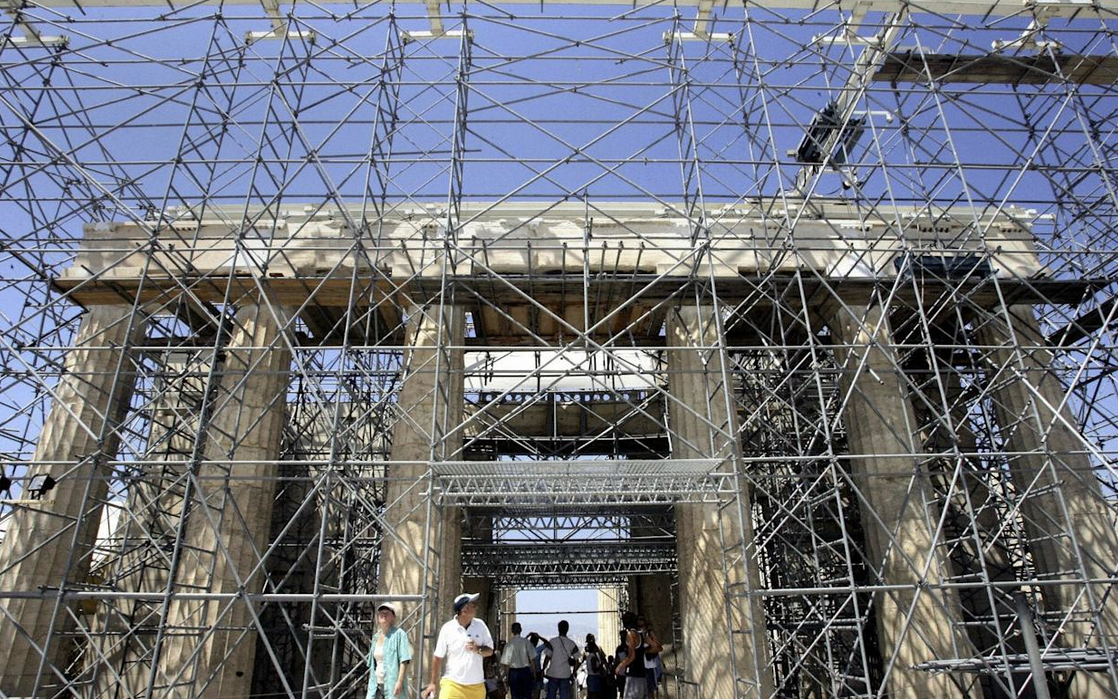
Recent view of thee Parthenon with its scaffolding removed.

The Parthenon skirted in scaffolding before its recent removal.

For the first time in generations, the Parthenon is without its iron scaffolding. Tourists can view the famous Athenian landmark as it had been viewed by visitors to Greece for more than 200 years; it has been cloaked in construction garb for longer than can be remembered. A new set of scaffolding will encase the western side of the Parthenon; in a month, Greece’s minister of culture warns; she warns also that conservation work will continue on the Parthenon until early next summer.

In the world of architecture; this event rates mention  alongside the completion of repairs on fire-damaged Notre Dame in the summer of 2024, in time (just) for the Summer Olympics in Paris. The cathedral weighs in at some 800 years of age; the Parthenon, erected as a temple to the goddess Athena, at more than a thousand years. Built under the direction of Pericles in the Fifth Century B.C., it has withstood earthquakes, fires and explosions.

I can think of no reason to favor this news about the Parthenon over that regarding Notre Dame. I am old. Both are old; the Parthenon is much older; I have written more posts about Notre Dame since its severe damage by fire several years ago; I have visited Notre Dame several times and Athens only once; and there has been much more opinion for me to criticize of how the cathedral should be repaired. I was in love, or felt so, during my visit to the Parthenon and during my main visit to Notre Dame. On balance, I should favor Notre Dame, yet I feel more drawn to the Parthenon. I cannot say that either is more beautiful. My sister-in-law is Athenian (or at any rate Greek), but she is on the outs with my wife (very temporarily, I trust). Notre Dame is closer by hundreds of miles. I have seen no news item about the removal of the Parthenon’s scaffolding on any major television news network. Go figure.

Posted in Architecture | Tagged , | 1 Comment

The Parthenon sheds its scaffolding

Recent view of thee Parthenon with its scaffolding removed. 

The Parthenon skirted in scaffolding before its recent removal. 

For the first time in generations, the Parthenon is without its iron scaffolding. Tourists can view the famous Athenian landmark as it had been viewed by visitors to Greece for more than 200 years; it has been cloaked in construction garb for longer than can be remembered. A new set of scaffolding will encase the western side of the Parthenon; in a month, Greece’s minister of culture warns; she warns also that conservation work will continue on the Parthenon until early next summer.

In the world of architecture; this event rates mention  alongside the completion of repairs on fire-damaged Notre Dame in the summer of 2024, in time (just) for the Summer Olympics in Paris. The cathedral weighs in at some 800 years of age; the Parthenon, erected as a temple to the goddess Athena, at more than a thousand years. Built under the direction of Pericles in the Fifth Century B.C., it has withstood earthquakes, fires and explosions.

I can think of no reason to favor this news about the Parthenon over that regarding Notre Dame. I am old. Both are old; the Parthenon is much older; I have written more posts about Notre Dame since its severe damage by fire several years ago; I have visited Notre Dame several times and Athens only once; and there has been much more opinion for me to criticize of how the cathedral should be repaired. I was in love, or felt so, during my visit to the Parthenon and during my main visit to Notre Dame. On balance, I should favor Notre Dame, yet I feel more drawn to the Parthenon. I cannot say that either is more beautiful. My sister-in-law is Athenian (or at any rate Greek), but she is on the outs with my wife (very temporarily, I trust). Notre Dame is closer by hundreds of miles. Go figure.

Posted in Architecture, Architecture History | Tagged , | 1 Comment

Hasbro absquatulates

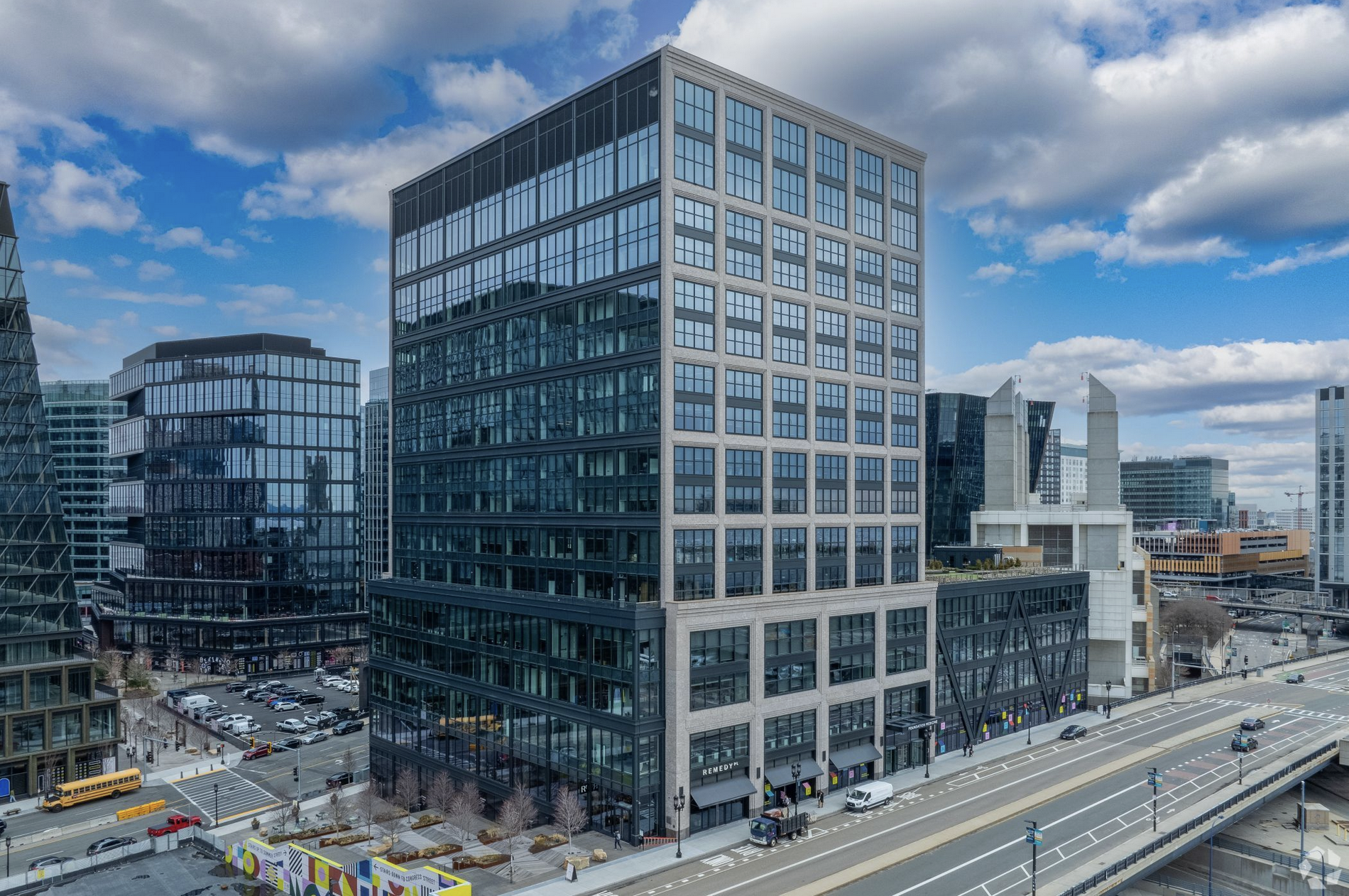
400 Summer St., in Boston’s Seaport District, where Hasbro has chosen to relocate its headquarters building, along with 700 jobs. (Photo courtesy of CoStar News)

Rhode Islanders are mourning the loss of a leading manufacturer, Hasbro, which has announced its departure from its home of a century in Pawtucket, to Boston’s Seaport District, which, as a district, has nothing to do with the sea or ports. Hasbro will share space in an ugly building there (is there any other kind?) owned by WS Development. (WS Development owns the Newport Ceamery in Cranston’s Garden City, which has just been told to move out.) The long-anticipated move (of Hasbro), likely costing some 700 jobs, will elicit a groan from those dependent upon the strategy used to keep the toymaker in the Bucket: state tax credit packages, which was no strategy at all.

The silver lining in the dark cloud of Hasbro’s move, if it is perceived as such – which is highly unlikely – is a warning. To wit, the Ocean State’s continued refusal to promote an attractive, or even useful, environment has failed. Hasbro’s departure should push us to turn our backs on the pitiful architecture for corporate relocation and development. Rhode Island is a state whose historical legacy was for decades supported by its lovely historical architecture, until the advent of modern architecture. The Ocean State’s historical allure is its highest card in the high-stakes regional rivalry for jobs. Historical beauty is our brand. Buildings that reflect the state’s historical legacy are not hard to erect. We need only exert a piddling force of will to make the switch from ugly to beauty. I have been a constant fount of advice for decades here and at the Journal urging such a strategy.

The last time Hasbro was mentioned here was when rumors suggested that it would be relocating to the Industrial Trust (“Superman”) Building. Thankfully, we were spared that disaster. Can you imagine the hash Hasbro would have made of the Supe? Look at what Pawtucket has made of McCoy Stadium – a high school, actually a mashup of three high schools. But instead of the wilds of Pawtucket, it would have been in Kennedy Plaza, in downtown Providence. Yikes!

Rhode Island lost – essentially we gave the boot to – the PawSox several years ago. We have learned nothing. What’s next? CVS? Its headquarters is in Woonsocket. I have heard no whispering from thereabouts of its impending departure … yet.

Posted in Architecture, Art and design | 3 Comments

Save Newport Creamery!

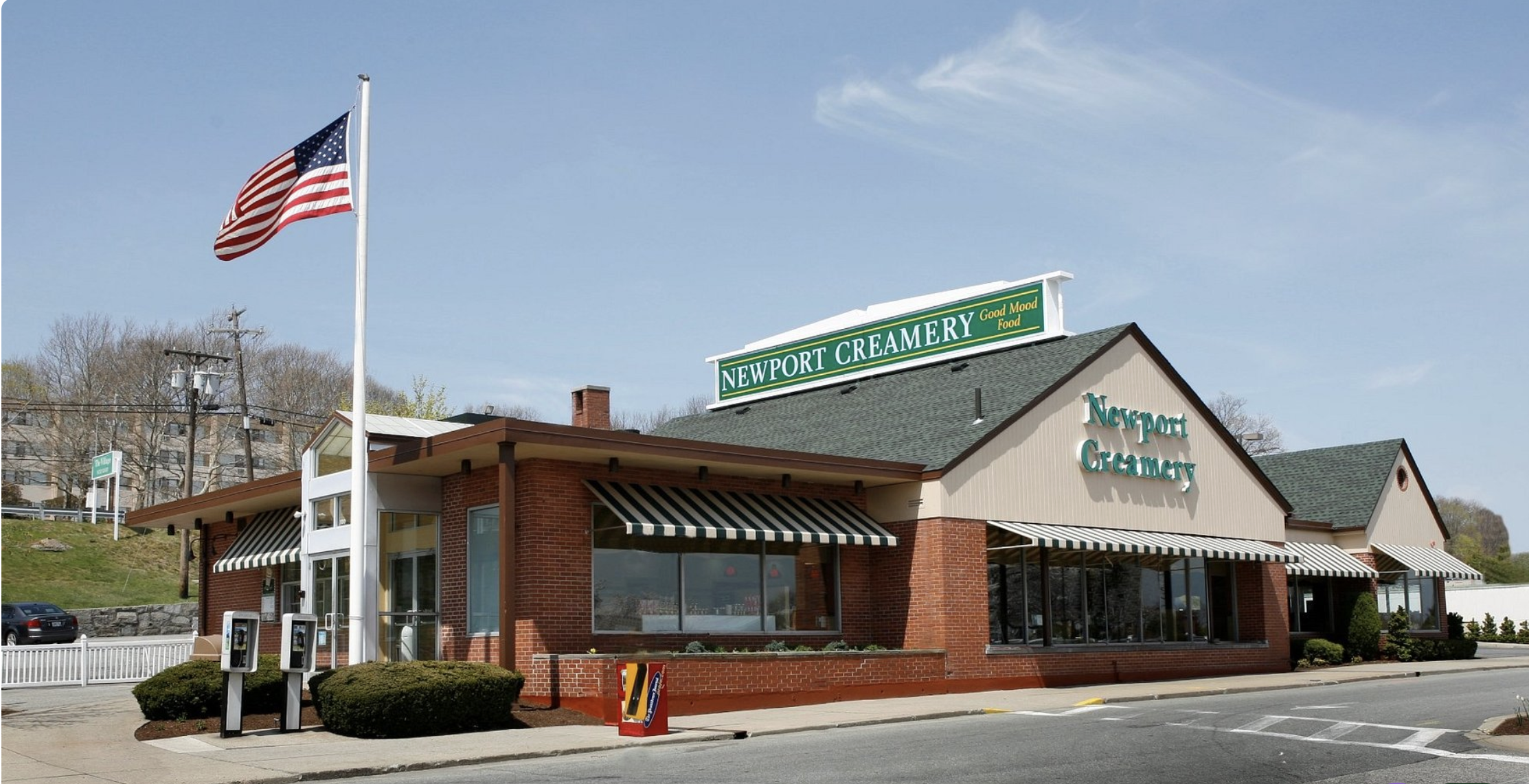
Newport Creamery, in Cranston’s Garden City Center. (Vrbo)

It has been widely noted of late and deplored that Cranston’s Newport Creamery is to be shut down. After 63 years across from the Garden City Center’s gazebo, the center’s owner, WS Development, has announced that the Cranston restaurant will be out of luck in 18 months, its lease terminated, and for no easily apparent reason.

Boo!

Boo times two!

The culprit here is vague. Some wonder whether WS wants to replace Newport Creamery with an Apple Store. No reply. Costco? Crickets. Nancy Thomas, publisher of RI News Today.com., seeking comment from WS, called and was asked to call back – not the reply of an enterprising entrpreneur. Could it be, as some suggest, a Ruth’s Chris steak house that is the target of the developer? “No excitement there,” groans Thomas under the topic of “Changing Times.”

Changing times? Well, history is nothing but an endless string of changing times. When are the times not a-changing? Most people wish the times would slow down, and one technique for accomplishing that, other than classical architecture, is Newport Creamery. The provision of high-quality institutions that remind you of the way things used to be. Newport Creamery provides such experiences in spades, and the one in Cranston is special, in part because of the gazebo. with its frequent popular musical performances. The Garden City Center is centrally located, easy to get to. The closest Newport Creamery to GCC is in the Smithfield Mall.

Yes, there are more Newport Creameries – eight in Rhode Island, including its second in Pawtucket, and two in nearby Massachusetts.

Newport Creamery was founded in Newport, in 1928, by Samuel Rector who opened a “Milk Bar” in a dairy on Van Zandt Avenue. It still does what it is good at. May its days in Cranston not be numbered. Public outcry at this commercial atrocity should swift and sure. Saving Newport Creamery will make time stand still in its tracks. Enjoy it.

Posted in Blast from past, Development | Tagged , , , , , , , , , , | 4 Comments

A White House ballroom

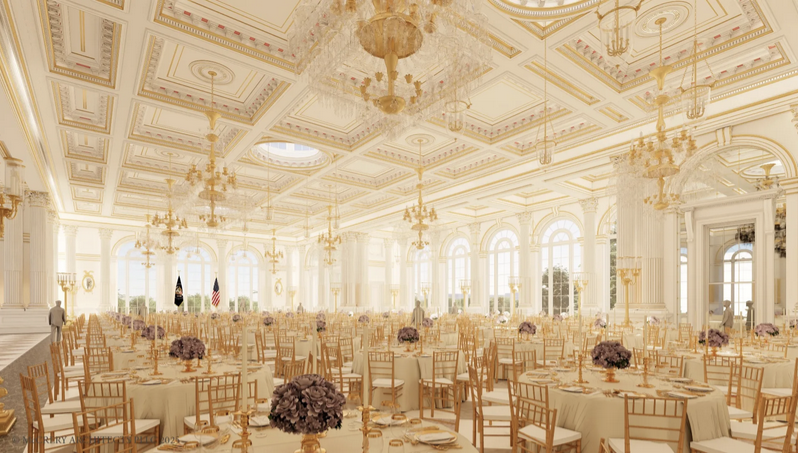
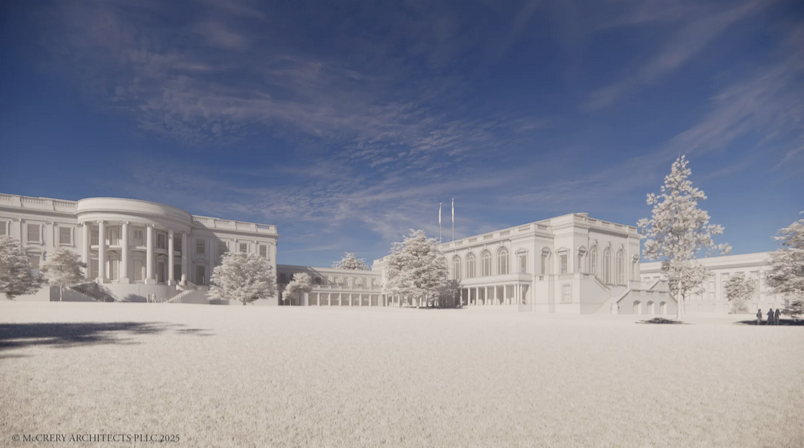
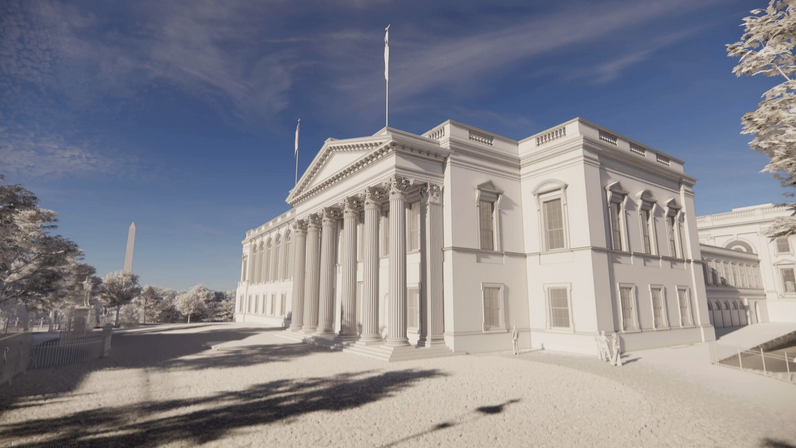
Recently poposed lstate ballroom, to be erected in a building separate from the main presidential installations (East Wing, etc.) at 1600 Pwnnsylvania Avenue. (images courtesy of McCrery Architects)

What we really need in this country, in the nation’s capital for god’s sake, is a grand new state ballroom to host White House guests – dignitaries foreign and domestic – presidents and such like – at yuge parties with a sumptuosity never before seen at the White House.

Whatever you think of Trump, the nation has long ago grown to a stature that calls for dinners, dances and events in a facility of this magnificance. America is clearly reaching out for that stature now. Such a facility has now been proposed. It will not only be good for whatever whim our dancer-in-chief might feel inclined to sport, but American taxpayers will not be required to foot the bill. Trump and other supermoneybags have, in the words of a White House press release, “generously committed to donating the funds necessary to build this approximately $200 million structure.”

Today the White House can host a party of only 200 invitees in a tent 100 feet from the White House entrance. The new ballroom, which will replace the East Wing and be built by McCrery Architects, of Washington, D.C., will host up to 650 people. “It has been untouched since the Harry Truman administration,” said McCrery of the East Wing.”I am honored that President Trump has entrusted me to help bring this beautiful and necessary renovation to The People’s House, while preserving the elegance of its classical design and historical importance.”

The White House chief of staff, Susie Wiles, said that the president “is a builder at heart and has an extraordinary eye for detail. The [p]resident and the Trump White House are fully committed to working with the appropriate organizations to preserve the special history of the White House while building a beautiful ballroom that can be enjoyed by future administrations and generations of Americans to come.”

The East Wing, originally built in 1902, was given a second story in 1940 and renovated or remodeled many times. At 90,000 square feet, the big new room will embrace the heritage and the classicism of the main complex – a style appropriate to presidential buildings. Their current resident’s gilded ego will, I trust, appear rarely if at all in the new building. (It may be expected that Trump’s overgilt style will be avoided by the architect.) James McCrery, has too much taste for that.

Trump has made clear in executive orders and other acts (including those of Congress) since the outset of his administration that he seeks to promote the growing New Classicism movement afoot in the nation today. The ballroom will be a good example of that, as the architect’s illustrations above and below suggest. The project is slated to begin in September and be completed well before the next presidential term,

So, in the words of the immortal Elton John, Saturday night’s all right for fighting. Let’s build this thing!

Actually I suppose, ahem!, they were the words of Bernie Taupin.

The proposed ballroom will be separate from most of the presidential complex.

Posted in Architecture, Architecture History | Tagged , , , , , | 6 Comments

David A. Mittell Jr.: R.I.P.

The Providence Journal Building, 1933- on Fountain Street, in downtown Providence. (Wikipedia)

I can find no other indication that David has passed away, beyond a phonecall from an even closer friend, to the effect that he passed away Thursday morning, age 82. David was a prolific editorial writer and columnist for the Providence Journal in the 1990s and the early 2000s, and other newspapers even before he was hired by the Journal. He was born in April 1943. Wikipedia is silent (so far). I will add more as the facts find their way to me. Here is a short piece that showcases some of his strongly held opinions about his colleagues and friends (among whom I think I may count myself even in the latter category), the Journal, and the practice of its particular arts:

Friends:

Today, the day after Labor Day, some 20 of my last, best former colleagues at The Providence Journal got the sack after 25 to 40 years of loyalty, diligence and skill. Most of them are writers who treated their subjects, their sources, their colleagues, the art of writing and the call of journalism lovingly – I know no other word to describe their methods.

     In the editorial office in which I worked from 1998 to 2008, a staff of 11 in the earlier year is down to two. Boilerplate shall rule. [The editorial department has since been eliminated.]    My grandfather was federal district attorney for Rhode Island under Presidents Hoover and Roosevelt. At six he had been terrified by his full-immersion baptism, and never willingly went to church again. It was said he didn’t believe in God, he believed in The Providence Journal! On April 9, 1960, at 84, he fetched The Journal from his stoop, took it inside and fell dead on the floor.  As Shakespeare put it in Julius Caesar, “the valiant never taste of death but once.” You and I, it seems, are fated to “die many times before [our] deaths” as witness to the tortured death of good reporting and to the ingratitude of little men for faithful reporters.

                                      –D.A. Mittell, Jr.
Posted in Art and design | Tagged | 2 Comments

Leon Krier (1946-2025), R.I.P.

Leon Krier, photographed in 2018 in Poundbury. (Wikipedia)

Léon Krier died Tuesday in Palma de Mallorca, Spain, aged 79. Krier was born in the capital city of Luxembourg after World War II, and observed its degradation thereafter at the hands of modernist architects. His design education was very brief; he left architecture school after one years, hiring on with James Stirling in Britain. He left there swiftly as well. His older brother, the late Rob Krier, was also a classical architect.

Krier spent his life developing an unusual style of classical architecture, which might be described as a mixture of classicism and Art Deco. He tended to think of cities as projects imagined in their entirety. He is most famous for his masterplanning of Poundbury – owned by the Prince of Wales until Charles became King Charles III, and Cayala, outside of Guatemala City. Krier worked extensively on masterplans for Washington, D.C., and Dresden, Germany, where he was the only one of nine experts to vote in favor a citizens’ initiative to rebuild the city’s Frauenkirche and its Newmarkt area after their destruction by allied bombing in WWII. Both were successfully completed.

In 2003, Krier was the inaugural winner of the Driehaus Prize, which today and for many years has been valued at $200,000. Whether he received that amount in 2003 is unknown to this writer.

Krier’s most popular works may be his illustrations of architectural and urbanist principles (see below). His least popular work may have been his book on the work of Nazi architect Albert Speer, a volume that sought to determine whether the work of an artist could subsist alongside the evil of the regime for which he performed that and other work. He was  vilified unfairly for even bringing up the subject, but he does not seem to have cared. Krier wrote that

the whole of Paris is a pre-industrial city which still works, because it is so adaptable, something the creations of the 20th century will never be. A city like Milton Keynes [in Britain] cannot survive an economic crisis, or any other kind of crisis, because it is planned as a mathematically determined social and economic project. If that model collapses, the city will collapse with it.

Wikipedia’s article on Krier has this to say of his city designs:

Krier proposed the reconstruction of the European city, based on polycentric settlement models which are dictated not by machine scale but by human scale both horizontally and vertically, of self-sufficient mixed use quarters not exceeding 33 hectares (82 acres) (able to be crossed in 10 minutes walk) of building heights of 3 to 5 floors or 100 steps (able to be walked up comfortably) and which are limited not by mere administrative borders but by walkable, rideable, driveable boulevards, tracks, park ways. Cities then grow by the multiplication of independent urban quarters, not by horizontal or vertical over-extensions of established urban cores.

My own experiences with Krier came in short, occasional email exchanges over the past decade or so to clarify aspects of his work for my blog posts. Here is my favorite drawing by Krier, which I have reprinted numerous times:

Posted in Architects, Architecture History, Urbanism and planning | Tagged , , , | 4 Comments

Paul Revere’s Ride, on piano

Benjamin Nacar plays the tone poem “The Midnight Ride of Paul Revere” at the Music Mansion on College Hill, Providence, Rhode Island. (YouTube)

William Wadsworth Longfellow’s poem, set to piano music, written and played by the Rhode Island pianist Benjamin Nacar. Ben’s playing brings to life most beautifully the cadence of Paul Revere’s famous ride and its memorialization in poetry. It was performed on the ride’s 250th anniversary at the Music Mansion on College Hill, in Providence, Rhode Island. Here is the YouTube rendition of that performance, accompanied by animated cartography.

I have learned that this event was not, in fact, hosted by the Music Mansion, but by the pianist himself, on his own piano, at home. The concert was not open to the public.

Posted in Art and design, Rhode Island, Video | Tagged , , , , , | 3 Comments

Newport Cottages: 1835-90

Cover illustration of Cannon Hill (ca. 1850), on the west side of Bellevue Avenue, built by a family from Boston. Photo by Aaron Usher III.

This excellent volume is the second describing the splendid dwellings of the summer colony of the City by the Sea, by architectural historian Michael C. Kathrens. It is subtitled “1835-1885: The Summer Villas Before the Vanderbilt Era.” His first volume describes the even more ambitious “cottages” inspired by European classical styles, and is titled Newport Villas: 1885-1935. The second volume, published by Bauer & Dean of New York, with a Foreword by Trudy Coxe of the Preservation Society of Newport County, is illustrated by 176 color photographs by Aaron Usher III, with 336 black-and-white photos, mostly historical.

The word cottages is something of a misnomer. The earliest of these, built even before 1835, were indeed more like mansions than cottages, albeit smaller in scale than those of the Vanderbilt Era. My impression is that Newport’s summer visitors continued to use the word cottage for its charming irony, as set against the word’s conventional quaintly cozy appeal. There may have been a classist element lurking in this usage. Even the early elite summer colony’s cottages were hardly quaint, let alone cozy – though it is likely that many small summer houses erected by the non-elite did, in fact, qualify as cottages in the normal meaning. But they were never examined historically, and are probably almost all gone by now. Maybe this is not strictly true; I invite the author to disagree in the comments below.

It is often noted that the elite summer colony drew families from the American South, which by 1835 was headed for war with the abolitionist North. Certainly Michael Kathrens takes due note of this anomoly. He writes in his introduction: “Of the twelve private cottages known to be standing in 1852, southern families owned eight. … In fact, more seasonal abodes were constructed in Newport between 1865 and 1885 than in the following decades, during what became known as the European Revival period that lasted almost half a century.” (Of course, many of these were larger and occupied vastly greater acreage.)

South Carolina plantation owner John Rutledge wrote in 1801 to ask a friend to push his agent harder:

I will embark in the first good vessel that offers for Newport. When I heard from Mr. Gibbs last[,] he had not obtained a house for me. I wish you would see him, and, if he has not got one, you will greatly oblige by uniting with him in endeavoring to get a house for me. If I cannot get one I shall be obliged to pass the summer at Boston, and I would not like that …”

In the 1840s, “Alfred Smith, an ambitious,self-made developer, had confidence that Newport’s summer colony lay in the direction of individual cottages.

He formulated a plan to convert the open farmland and pastures east and south of town into commodious ocean-view lots that would be accessed by a network of broad avenues. Although there would be many investors involved in this pursuit, only Smith comprehensively grasped the possibilities and carried the plan through to its successful completion.

Born in 1809 on a small farm in neighboring Middletown, Rhode Island, Smith became a cloth cutter in Providence before moving to New York City. There he worked for many years as a tailor in the firm of Wheeler & Co. By the time he was thirty, Smith had saved $20,000, with which he returned to Newport in 1844 to begin a career in real estate.

The following year, Smith formed a syndicate to buy three hundred acres north of Bath Road – now Memorial Boulevard … . He went on to push Bellevue Avenue south to Rough Point, while to the east he created Ochre Point Avenue. … To add cachet, Smith designated each new roadway an “avenue” instead of using a more common-sounding “street” or “road” appellation. … The last leg of Smith’s plan was the creation of Ocean Drive[.]

One wonders whether such a career would be possible in the United States of today.
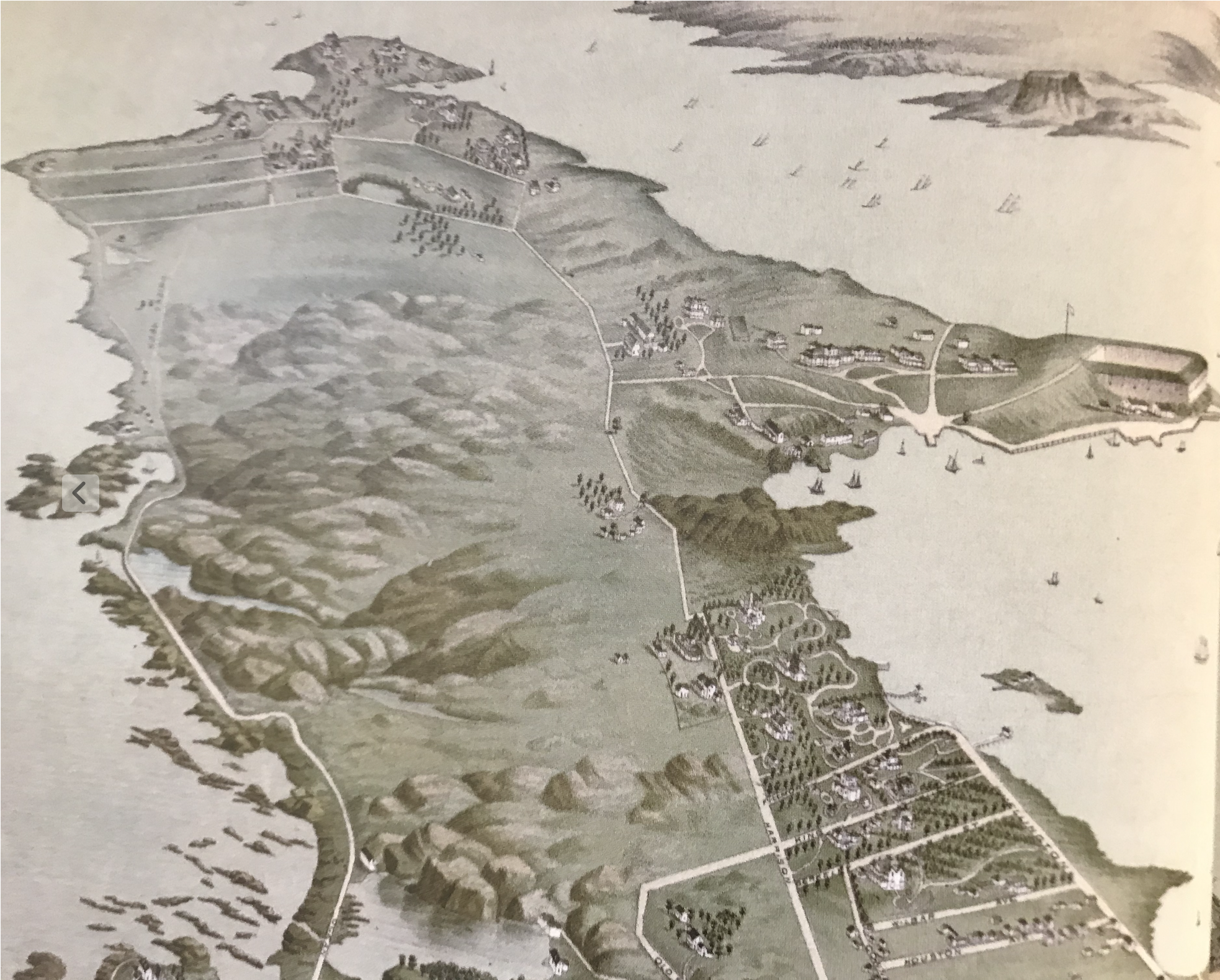
This hand drawn segment of a larger map, or illustration, shows the extent of Alfred Smith’s completed plan for Newport’s summer colony. Fort Adams is at upper right. (Aerial sketch by Galt & Hoy.)

Multiply the items cited above by a dozen, or a score, and you have some idea of the scope of material covered by Newport Cottages.

That suggests my only problem with this voluminous volume, which is also its greatest blessing: There is too much of it. The book’s 400 pages won’t be carried around easily by sightseers to Newport’s summer habitations. And yet the flow of detail from page to page – of a cottage’s lengthy architectural pedigree in addition to that of its ownership history – seems to invite examination during a walking tour of the neighborhoods described. Don’t lug it along. Lay the book out on a coffee table at home after returning from a tour and see if you can match your own photos or your memories to the photos in the book. Come to think of it, a book any smaller, with much of its text and photos edited out, would clearly be a lesser tour de force.

So buy it for Christmas before it actually shrinks, as everything else seems to do.

Posted in Architecture, Architecture History | Tagged , , , , , , | Leave a comment

Notre-Dame de Weybosset St.

Newly completed reconstruction of the Cathedral of Notre-Dame.

It’s a bit late to be hailing the rebuilt Cathedral of Notre-Dame in Paris. How beautiful it looks, inside and out. For a deeper analysis of both efforts I will await word from those more knowledgeable than I. Still, it was thrilling to see the leaders of the world, including President-elect Trump, gathering for the occasion five years after it was almost destroyed by fire. And perhaps it will not be seen as too far-fetched to wonder how the news of Notre-Dame’s revitalization might affect Weybosset Street, here in downtown Providence.

Weybosset Street expands into a plaza of sorts (similar to the Parvis, as the plaza outside of Notre-Dame has long been known), as Weybosset stretches west from Dorrance. PPAC, the Providence Performing Arts Center, forms what could be deemed the Notre-Dame of this neighborhood. It is just a couple of blocks from Providence City Hall, not far from the Providence River, just as the Hôtel de Ville (French for City Hall) sits in similar proximity to Notre-Dame on the River Seine as it flows past the Isle de la Cité.

Readers with long memories may count how many times this writer has urged city planners here to promote a Parisian ambience outside the doors of PPAC, where people exiting shows would have a veritable European choice of cafés and restaurants (both words are of French origin) to sit down and discuss the show they just saw while waiting for the traffic to dissipate.

Such a tasty plaza does not exist in front of Notre-Dame today. It is at present, I think, a site where the facilities set up several years ago to help reconstruct the cathedral are being demolished now that its reconstruction is complete. If the French planners are savvy (not a good bet, to be frank – its mayor is a Socialist), they will turn the Parvis into a paradise de cuisine. My very recent extraordinarily desultory visit to the web site of the musée Carnavalet revealed no evidence that such a usage had ever been carried out on the Parvis, although it is likely that many places to eat and drink existed, prior to the Parvis’s most recent renovation in 1972, on the ground floors of the hospital, the police headquarters and their predecessors if not the cathedral itself.

It could happen at what I’d like to call Weybosset Square. There are already enough restaurants in PPAC’s immediate vicinity, on either side of Weybosset, to bring such a vision to reality. My family and I have eaten at some of them before attending wonderfully exciting shows at PPAC. All it really needs is some good P.R., such as:

Eat, Drink and Relax until traffic clears and God (George Burns) says it’s okay to go get your car from the garage.

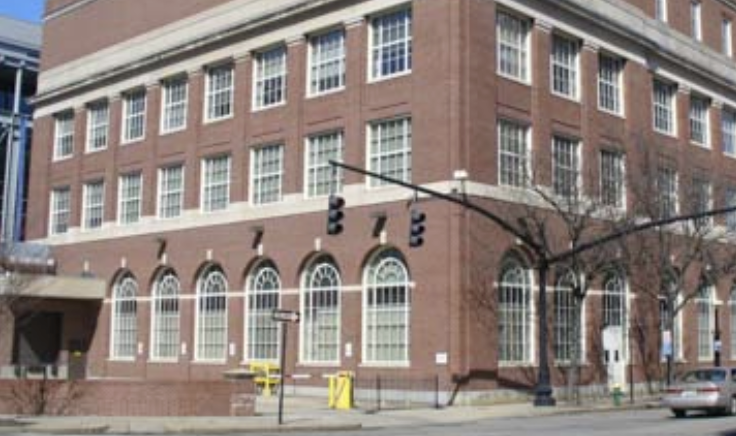
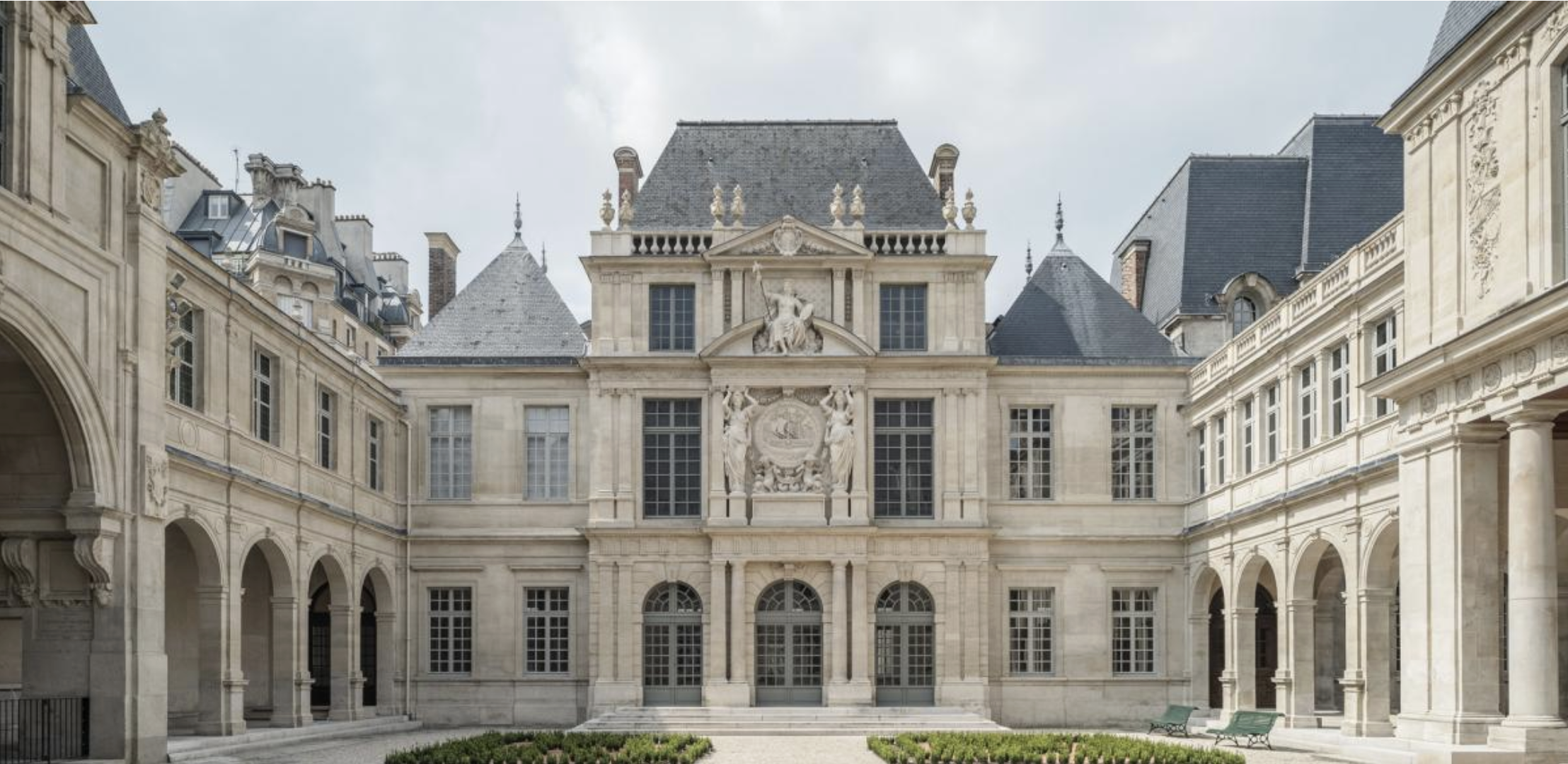
Alternatively, or in addition to that idea, suggestions to build a new structure to house the Providence city archives (several of which have been lately proposed and found wanting for stylistic reasons) could be reproposed. A new building inspired by the architecture of the musée Carnavalet could be built for the archives on the site of the library of Johnson & Wales College, whose campus quadrangle sits just to the east of PPAC. The “East German Embassy.” as the library is known due to its forbidding Stasi-esque appearance, it is sure to be torn down whenver civic leaders decide to develop a spine. The new building could house both the archives and Providence-themed exhibits patterned after those in the museum near the Parvis in Paris. If a new building of such design (see below) is too far beyond the aspirations of the city of Providence, the land could remain vacant until the moxie to build it has been grasped by city fathers, or it could be added to J&W’s excellent quadrangle by the city’s fleet of landscape architects. With a bit of creative thinking, they could be brought into existence again.

Musée de Carnavalet exhibits the buildings that once surrounded the Paris, as the plaza in front of Notre Dame was known for centuries. (carnavalet.paris)

Posted in Architecture, Architecture History, Development, Providence | Tagged , , , , , , | 3 Comments