
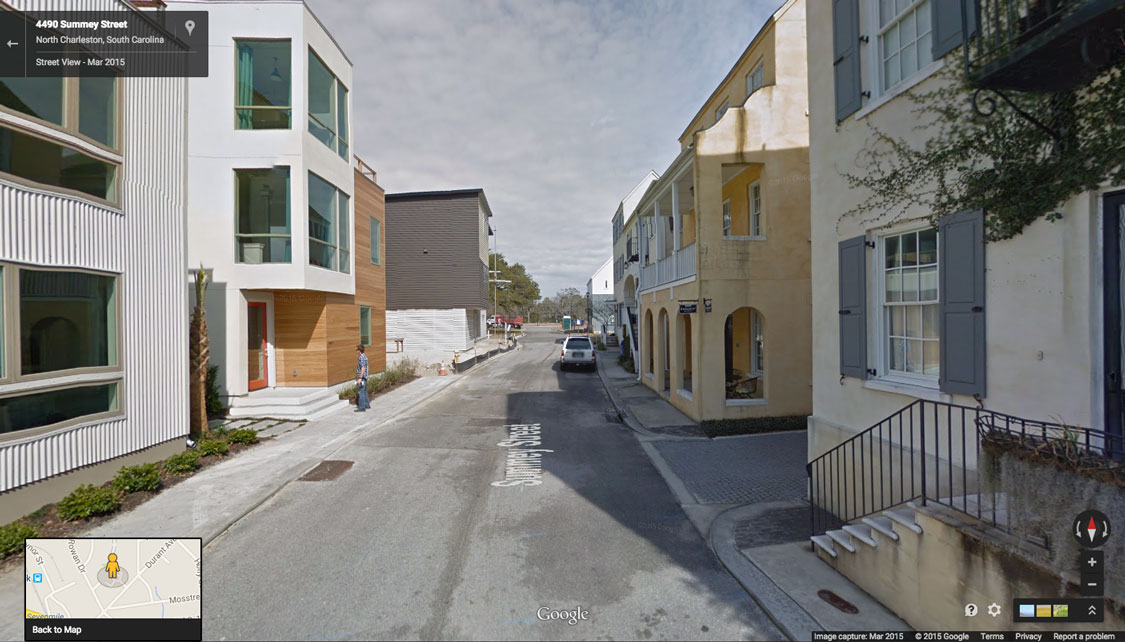
The modern and traditional architecture on either side of this street are part of the same project.
Christopher Liberatos has posted the above image of the most oddball street. A single project, it features modern architecture one one side of the street facing traditional architecture on the other side of the street in North Charleston.
Is this some sort of cruel joke? Who would want to live here? Below is Christopher’s intriguing take on the bipolar psychology (if not psychosis) this must entail:
Take this new street. The people on the left – their view is of buildings whose owners went to the expense of creating an architecture that expresses a hopeful permanence for the community, with real stucco on masonry, quoins, arches and voussoirs, operable shutters and blinds, human-scaled multi-paned windows, expensive porches and porticos, while the people who made such an investment look out onto the houses at the left, which have great Modernist flare and are of corrugated plastic and plate-glass windows that make voyeurs out of those who happen to glance up at them.
Setting that injustice aside – who will love this street? Will people who prefer their architecture to be in styles that embrace the ongoing progress of tradition come to love this street? Will people who prefer their architecture to be rejectionist towards tradition come to love this street? Or neither?
I’m not suggesting any of this be banned, neither the styles on the left nor the styles on the right. I’m suggesting that the issue of architectural style be addressed so that said issue can inform the way we create urban ensembles. In my opinion, the street below would be better if it had either all Modernist Revival buildings or all progressive traditional ones. This street cannot be considered good simply because certain standards of good urbanism have been met.




 Architecture Here and There
Just like Robert Campbell says, the architects design “heroes”: buildings that stand by themselves with no recognition of what’s around them. In this case, whoever came second — and I think you’ve adopted a very moderate tone — simply donned tunnel vision glasses and ignored what was already there. Again, credit to you for not choosing one style over the other, but clearly, only one should have “won”.
LikeLike
Rick, keep in mind that nobody came second here. This street, and its contrasting styles facing each other, were designed and built as one project. If I did not make it clear that the traditional side should have been on both sides, then it was certainly an oversight on my part, for which I apologize. Christopher made it very clear which side he prefers, and rightly so.
LikeLike
That is awful – like a bizarre science experiment. I don’t know why professionals and many academics try to pretend style isn’t important when it so obviously is. Look at those naff planting areas on the left side of the street desperately trying to make up for the ugly buildings whilst on the right traditional buildings ‘look right’ at the back of footpath and would look just as good with planted verges or front yards. Enough said.
LikeLike
in my opinion its an amalgamation of two different styles which is making this street even more facinating
LikeLike