
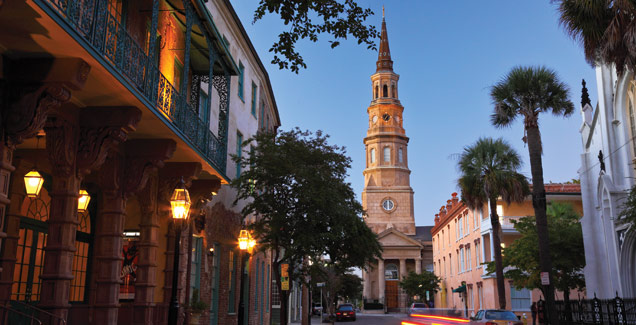
Charleston’s historic district. (charlestoncvb.com)
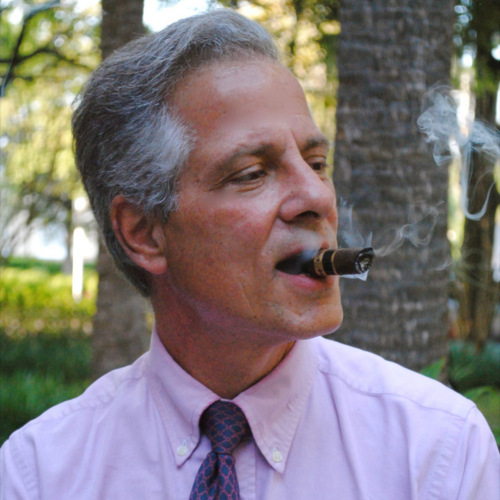
Andres Duany. (vibrantbayarea.org)
It is extremely encouraging to read in the Charleston Post and Courier that Andrès Duany has been hired to help advise the city on how to improve its Board of Architectural Review. By approving a provocative modernist Clemson building in the city’s historic district, the board proved that it has lost sight of the goal for which it was created in 1931 – to protect Charleston’s historical character.
Fortunately, Clemson withdrew the proposal after massive objections from the community. But Mayor Riley may not be entirely familiar with Duany’s role in debates among the community of traditional architects.
The Charleston Post and Courier praised Duany’s hire in an editorial today. After noting his leadership of the CNU, it said: “He is also a proponent of New Classical architecture, which continues the practice of historically based traditional design, in contrast to the modernism that has met with such opposition on the lower peninsula.”
http://www.postandcourier.com/article/20141223/PC1002/141229807/1506/raise-the-architectural-bar
He is certainly a proponent of traditional buildings, but he is writing an ambitious treatise on architecture that, as he puts it, seeks to “capture territory” for classicism from modernism. He has not made it entirely clear what he means, and Charleston should pay close attention to the attitudes he takes into his six-month study of the BAR.
The last thing the city wants is a revised BAR charter that codifies the presence of modernism in its historic district. After all, the BAR’s willingness to push modernism into Charleston despite the clear wording of its own founding legislation precipitated the crisis that the city hopes to resolve, in part, by seeking the advice of Duany.
No doubt Riley hired Duany because of his reputation as a promoter of traditional architecture and urbanism. That reputation has arisen from his role as a founder of the Congress of the New Urbanism, which would not have been as successful as it has been at developing beautiful traditional neighborhoods throughout America if the rest of the world knew of the CNU’s “stylistic agnosticism” that Duany brags on so often these days.
I have every reason to trust that Duany does not plan to insert stylistic agnosticism by stealth into a rewritten BAR charter. He is a highly intelligent provocateur in the architectural style wars, but beyond that he is a highly intelligent entrepreneur who understands the needs brought to the table by his clients. Charleston is his client now, and Andrès Duany knows very well what Charleston needs.




 Architecture Here and There
The style agnosticism of CNU wasn’t something Duany advocated at the beginning, as I understand it. Rather, it was a reconciliation of the founders, some of whom were Modernists and some of whom did traditional work. With just DPZ and Moule & Polyzoides as the founders, it’s apparent they felt it wouldn’t be a movement per se so much as a just four friends agreeing on an idea. Krier famously didn’t sign the Charter as a result, of course. And since then, the Modernist founders (particularly Calthorpe) have been less active than the traditionalists, but I concur with the move, because without it, the movement likely would not have existed. And let’s face one really important fact: the New Urbanism is hands-down the greatest seedbed of traditional architecture today. It just is.
LikeLike
I’m not entirely conversant with the history of CNU’s founding, Steve, but if it is true that it might not have had enough oomph to take off without positing a stylistic agnosticism, then I am more than glad they did. It remains clear, however, that its success has arisen not in the least due to its stylistic agnosticism but in spite of it – because of its traditional brand.
LikeLike
Yes, it’s a two-edged sword, David… the New Urbanist leadership has felt the necessity of allowing for transgressional Modernism (not to be confused with lovable modern buildings) while many of the rest of us have not. No, there would never have been a New Urbanist movement had they not made that choice. And so I will not contest that. But that doesn’t mean I have to support transgressional Modernism. I guess it’s multiple layers of cognitive dissonance… but it’s what we have to get through in order to get to a place of reliably lovable architecture.
LikeLike
Steve, From now on, I am going to incorporate your pithy description of Modernist Grotesque as “Transgressional Modernism” into my lexicon. Thank you.
Russell Versaci
LikeLiked by 1 person
“Modernist Grotesque”… another great term I hadn’t heard until now… thanks, Russell!
LikeLike
David, I agree with your cautions re. Andres’ “agnosticism,” which has always struck me as another way of saying, “I want to have it both ways,” without being pinned down on style. It will be informative to read his forthcoming treatise, and its justifications, when published. I do applaud Charleston and Mayor Riley for having the wisdom to understand that they need a well-qualified outside advisor to grapple with updating the BAR guidelines. As you know, my personal choice will invariably be to use “tradition” in all its various permutations as my guiding star.
Russell Versaci
LikeLike
Yes, indeed, and to add to my reply to Steve Bass below, I still hold out hope that Andres will not go too far but stick with rescuing genuinely classical heroes of the past whose reputations have been kidnapped by the modernists.
LikeLike
David –
On the whole I think having Duany rework the Charleston BAR is probably a good thing. Personally I’m less optimistic about the coming book. I think there are problems with the way he defines classical architecture and tries to recreate architectural history so as to ‘retake territory’ from modernism. He’s not codifying the presence of modernism so much as defocusing the concept of what classicism is. He’s also proposing a new view of history – and while we certainly need one that begins before 1850, his periodic ‘reversion’ theory doesn’t fit with my own evaluation of certain classical modes. For myself I think a conceptual or ‘non-temporal’ history might be more useful.
Best wishes –
Steve Bass
LikeLike
I generally agree. I have said many times that I worry that Andres will go too far and erase the very bright line between traditional and modern architecture, thus undermining the classical revival’s most powerful strategic advantage over the status quo.
LikeLike
This is one of the most uninformed articles I have read in quite some time. Please educate yourself on Charleston and the BAR specifically before writing articles such as this one.
LikeLike
The anonymous commenter provides no examples, of course.
LikeLike